
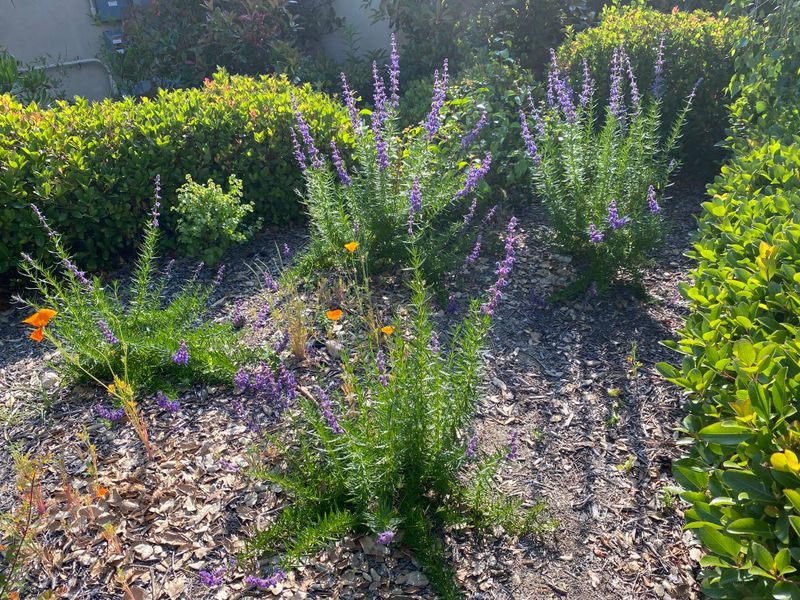
Agapanthus, also called lily of the Nile, has lined California driveways and medians for decades. It looks tidy, but it offers little food for local hummingbirds and native bees, and it often gets more water than our dry summers can spare.
More homeowners are swapping it out for native flowers that bloom bright, feed wildlife, and get by on far less irrigation. Here are ten tough, beautiful natives that can take over those spots and bring your yard back to life.
1. California Fuchsia (Epilobium canum)
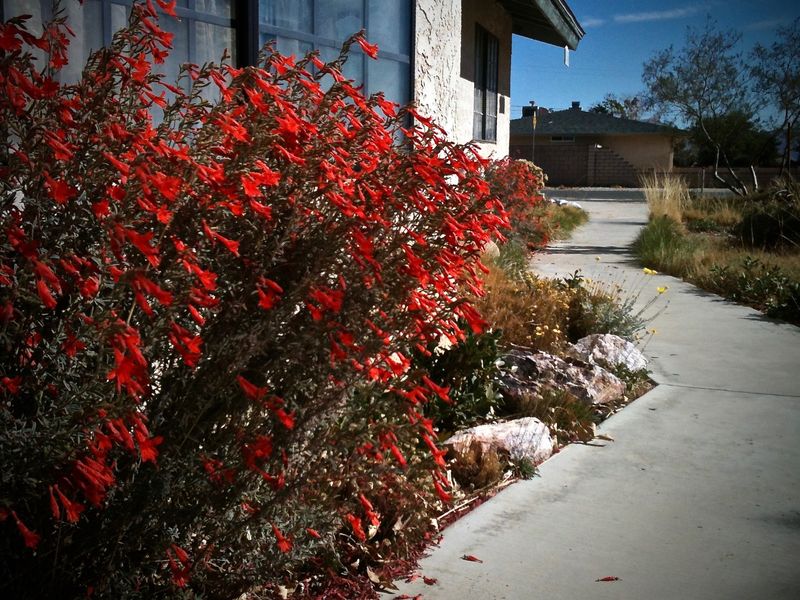
Late August in California can feel like the garden has given up. Then California fuchsia lights up like a string of red firecrackers, right when most plants look tired and crispy.
Its tubular flowers are shaped for hummingbird beaks, and they can provide nectar during a stretch when few other plants are blooming. Many gardeners report hummingbirds visiting within days of the first flowers opening.
Once established, it usually needs only occasional deep summer watering, if any, in coastal and inland valley gardens. Plant it in full sun with fast-draining soil, and cut it back hard in late fall so it returns fresh and bushy after winter rains.
2. Hummingbird Sage (Salvia spathacea)
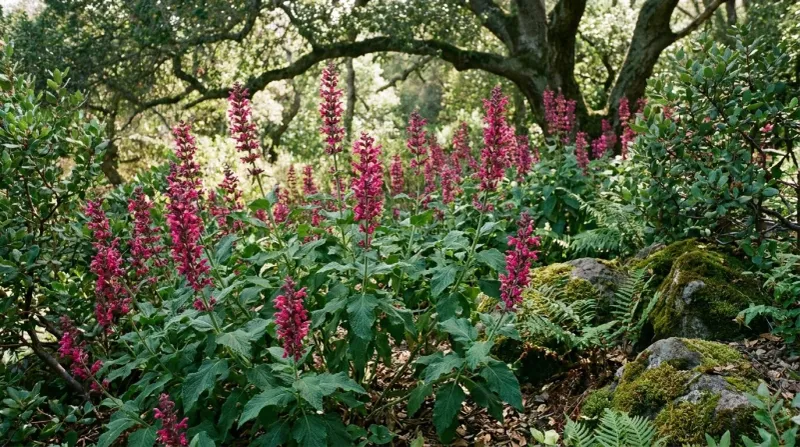
Here is the shade plant that agapanthus never was. Hummingbird sage thrives under oaks and along north-facing walls, where those strappy blue clumps tend to sulk.
Its rosy-magenta flower spikes appear from late winter into spring, giving early-nesting Anna’s hummingbirds a reliable meal. Rub a leaf and you’ll get a fruity, resinous scent that makes weeding nearby a small pleasure.
It spreads slowly by underground stems, forming a soft groundcover over time. Water through its first summer, then let it rest; it naturally goes semi-dormant in the dry season and may look a bit rough, which is normal.
3. Cleveland Sage (Salvia clevelandii)
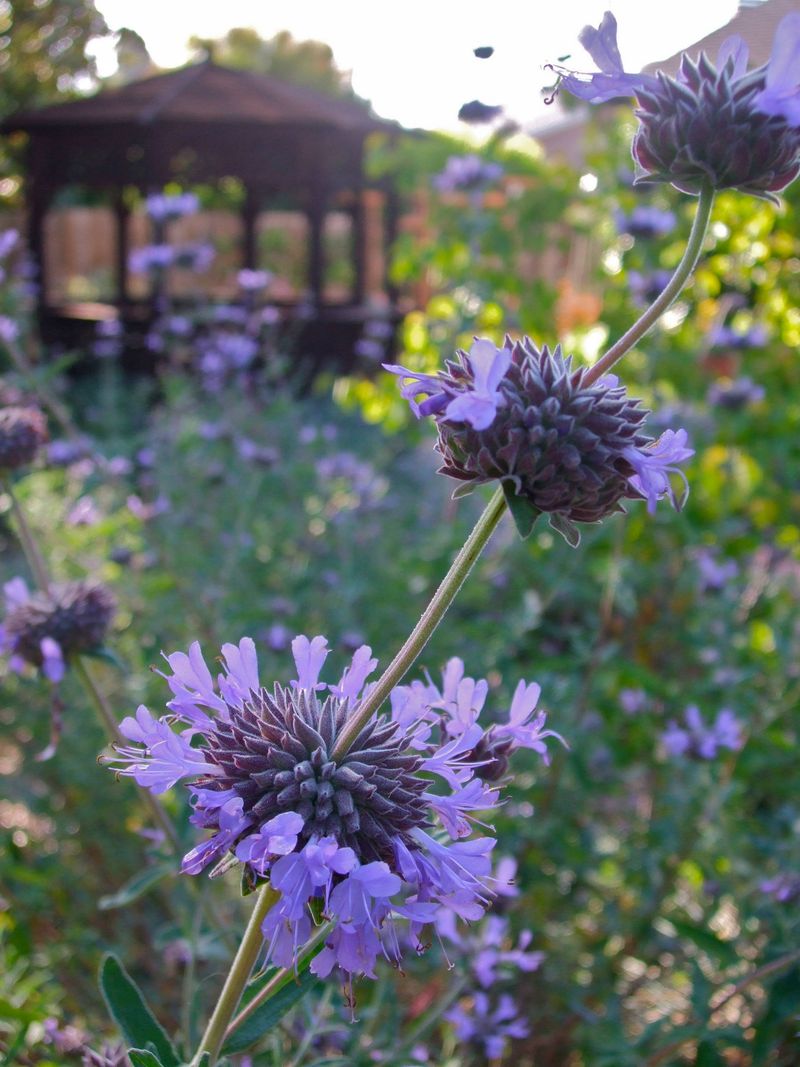
Love the blue of agapanthus? Cleveland sage delivers that same cool color, plus a fragrance that drifts across the yard on warm evenings.
Native to dry slopes in San Diego County and northern Baja, it is built for long, rainless summers. Its stacked lavender flower whorls draw hummingbirds, native bees, and butterflies from late spring into summer.
Give it full sun, good drainage, and very little summer water once settled; overwatering is the most common way people lose it. Popular selections like Winnifred Gilman and Allen Chickering stay a bit more compact for front-yard beds.
4. Scarlet Monkeyflower (Erythranthe cardinalis)
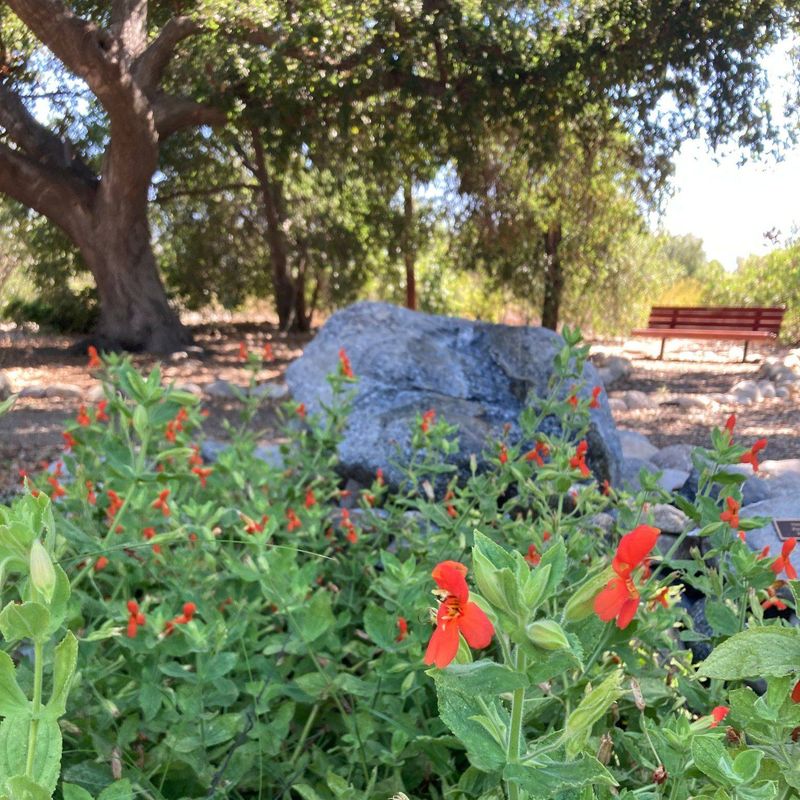
Got a damp corner near a downspout or a leaky hose bib? Scarlet monkeyflower turns that soggy patch into a hummingbird hangout.
In the wild, it grows along streams and seeps, so it appreciates a bit more moisture than most natives on this list. Its bold red flowers have petals that curl back, perfectly shaped for hovering birds rather than bees.
Fun fact: researchers have used this plant and its pink cousin to study how flower color steers pollinators. Plant it in part shade inland, full sun near the coast, and enjoy blooms from spring into late summer.
5. Sticky Monkeyflower (Diplacus aurantiacus)
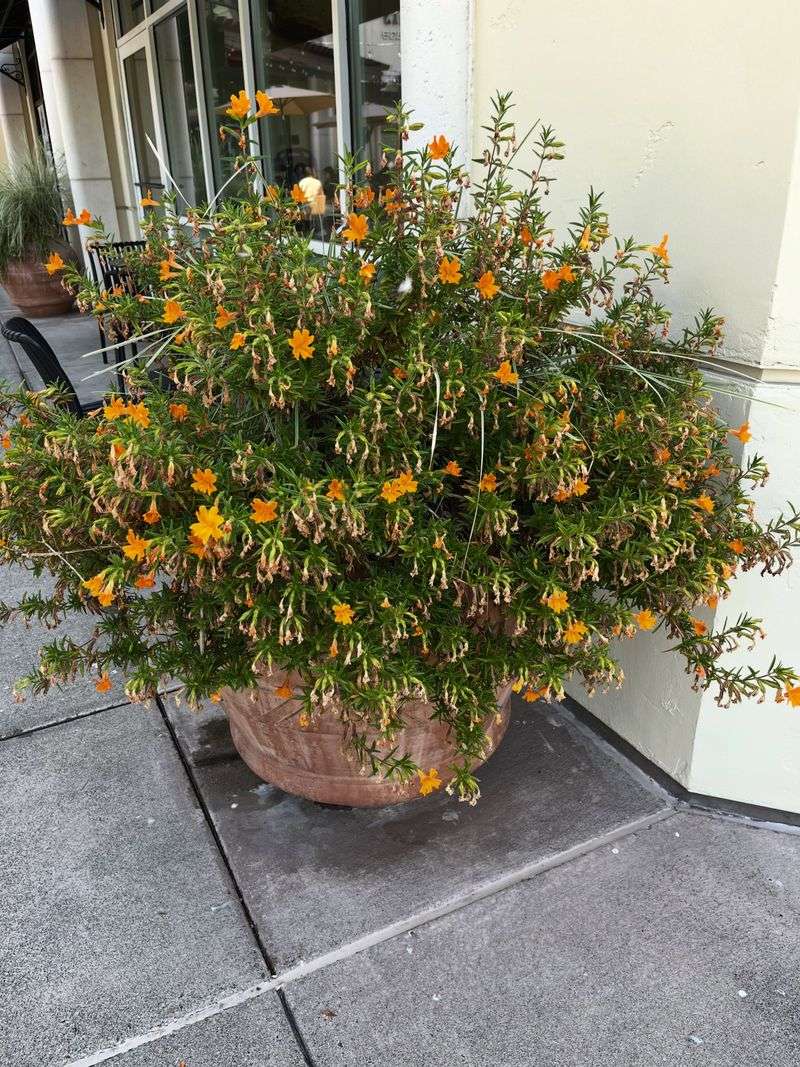
Tough as old boots and twice as cheerful, sticky monkeyflower covers itself in apricot, orange, or butter-yellow blooms with almost no help from you.
It handles dry slopes and poor soil, and it can survive on winter rain alone in many areas once rooted. Hummingbirds sip from it, and it serves as a host plant for the variable checkerspot butterfly.
Shrubs can look leggy by midsummer and may drop some leaves to save water. A light trim after the main bloom keeps them fuller, and nurseries now carry many colorful hybrids that fit tight entry beds.
6. Western Columbine (Aquilegia formosa)
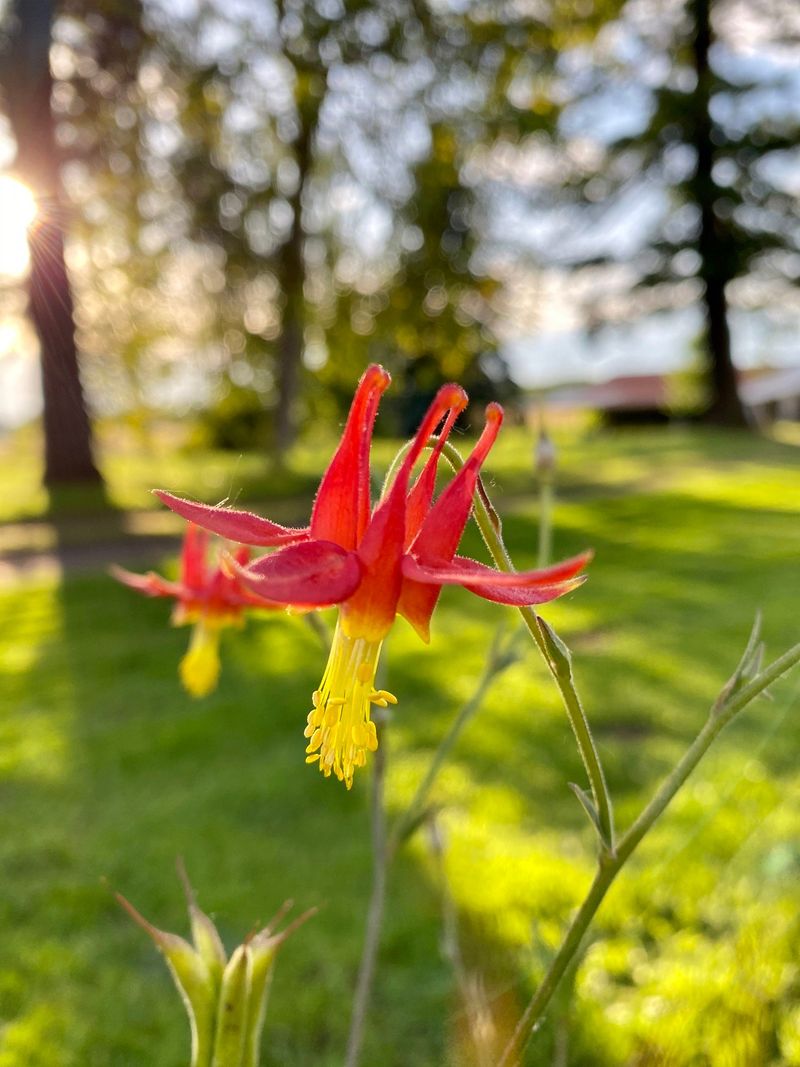
Picture tiny red-and-yellow lanterns swaying on wiry stems. Western columbine brings an almost fairy-tale look to the shady side of the house.
Each flower has long spurs packed with nectar at the tip, a design that suits hummingbird tongues beautifully. It blooms in spring and pairs nicely with ferns, coral bells, and hummingbird sage.
Columbine prefers partial shade and moderate moisture, so tuck it where agapanthus once soaked up extra irrigation. It is short-lived but reseeds gently, often popping up in fresh spots each year.
7. Heuchera (Coral Bells, Heuchera maxima and hybrids)
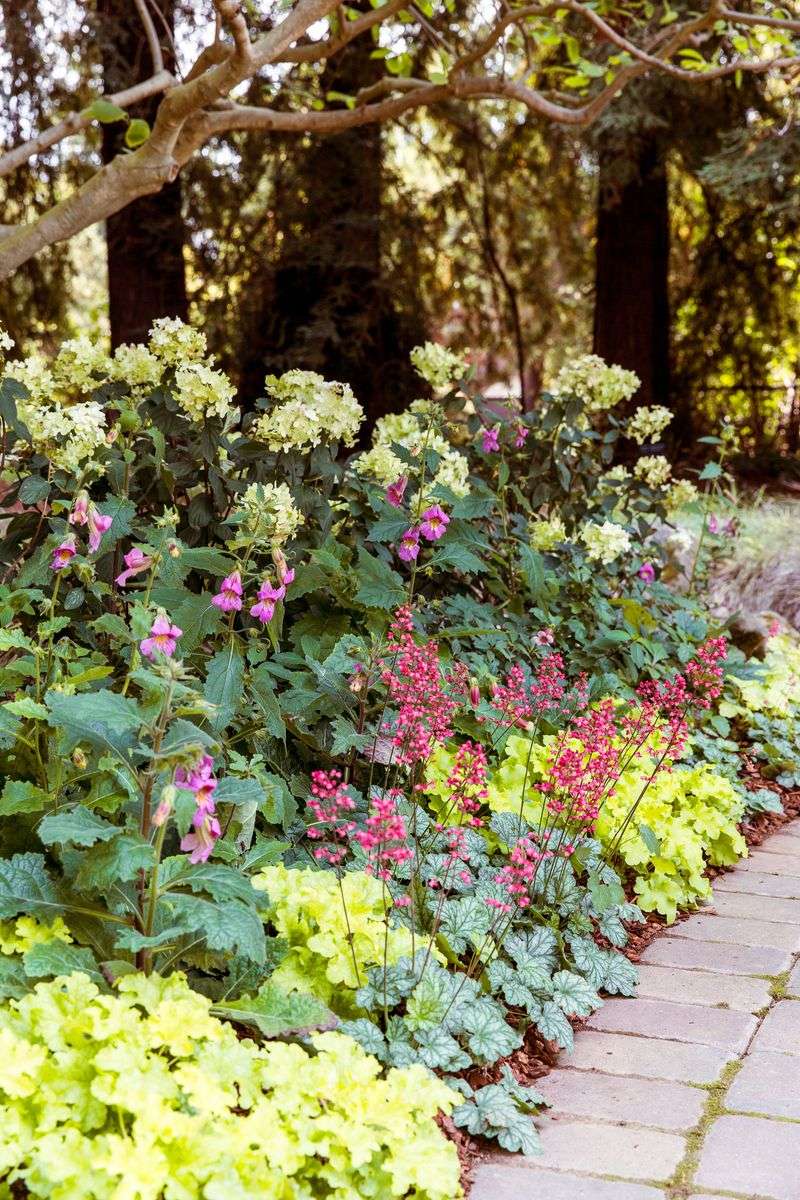
Edging is where agapanthus earned its reputation, and coral bells can take over that job neatly.
Island alumroot, Heuchera maxima, comes from the Channel Islands and forms tidy mounds of scalloped leaves. In spring, airy wands of white or pink flowers rise above the foliage, and hummingbirds work them steadily.
Hybrids like Wendy and Canyon Pink offer brighter blooms. They do best in light shade with occasional summer water, making them a smart choice along porches, paths, and under eaves.
8. Penstemon (Margarita BOP and Scarlet Bugler)
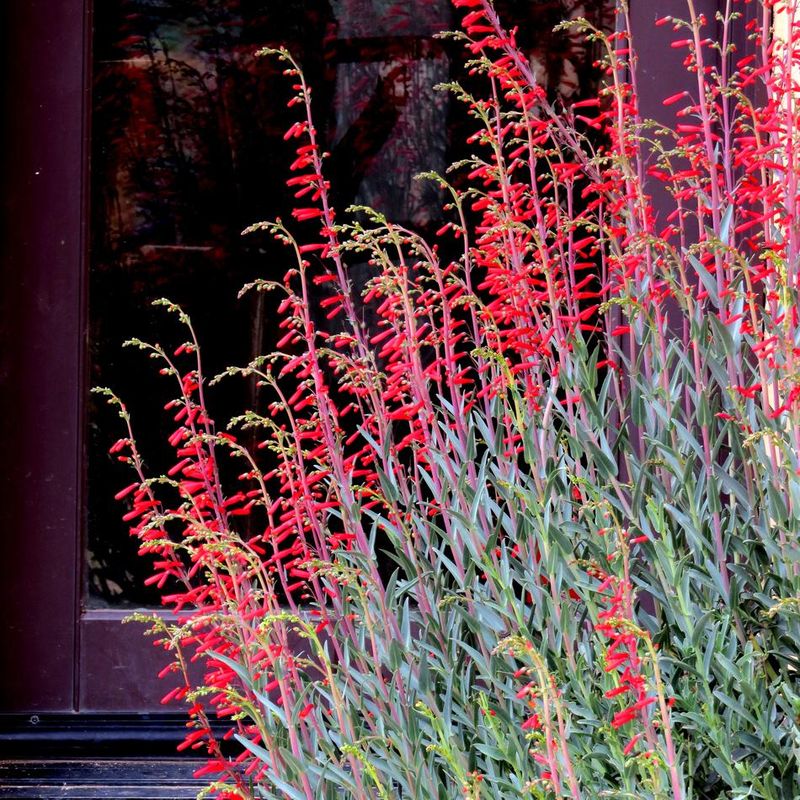
Some gardeners call penstemons the closest native match to agapanthus in shape and color. Upright flower spikes, tubular blossoms, and shades from violet-blue to brilliant red make them easy front-yard stars.
Margarita BOP is a forgiving hybrid with blue-purple flowers that tolerates regular garden conditions better than many natives. Scarlet bugler, Penstemon centranthifolius, is a red-hot hummingbird magnet for dry, sunny spots.
Both prefer excellent drainage, and many penstemons can rot in heavy clay with frequent watering. Plant on a mound or slope, deadhead spent spikes, and you may get a second flush of blooms.
9. Woolly Blue Curls (Trichostema lanatum)
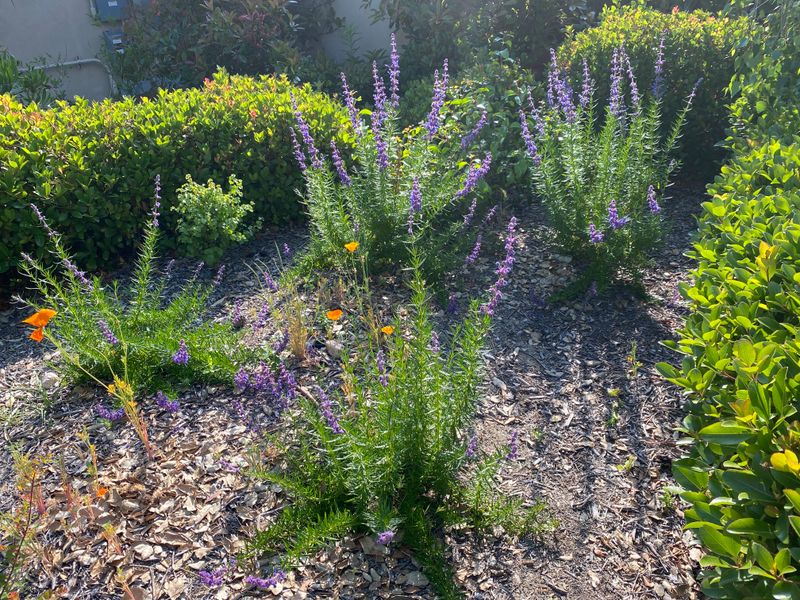
Few plants get gasps from visitors the way woolly blue curls does. Its fuzzy purple flower stalks and long, curling stamens look almost too strange to be real.
This coastal sage scrub native blooms for months in spring and summer, and hummingbirds and bees visit constantly. The foliage has a strong, pleasant scent that some people compare to rosemary.
Fair warning: it can be fussy and short-lived in gardens. Give it a hot, sunny slope with gritty soil and almost no summer water, and treat it as a rewarding showpiece rather than a permanent foundation shrub.
10. Island Bush Snapdragon (Gambelia speciosa)
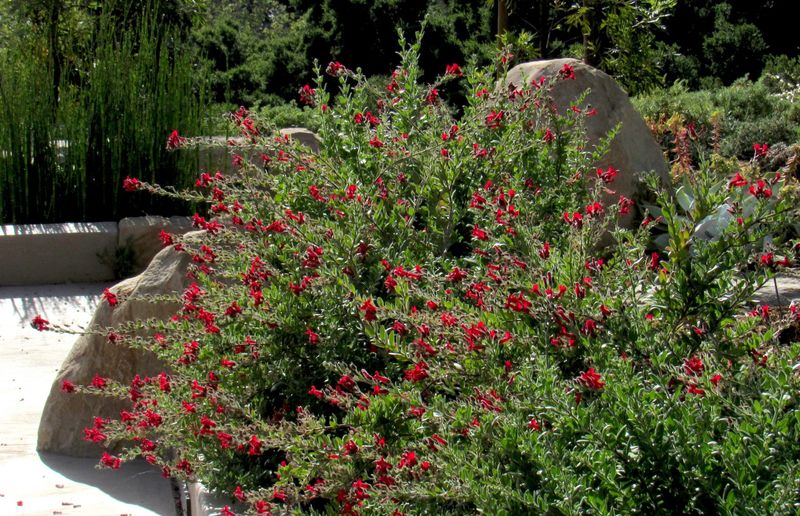
Rare in the wild but easy in the garden, island bush snapdragon hails from Guadalupe Island and California’s Channel Islands. Its glossy leaves and scarlet tubular flowers bring a lush look without a lush water bill.
It can bloom on and off for much of the year in mild coastal areas, giving hummingbirds a dependable stop. The sprawling habit is lovely spilling over walls, containers, or slopes.
It handles sun near the coast and prefers afternoon shade inland, with occasional deep summer watering. To swap it in, dig out agapanthus completely, since leftover roots can resprout, then convert nearby spray heads to drip and enjoy the visitors.