
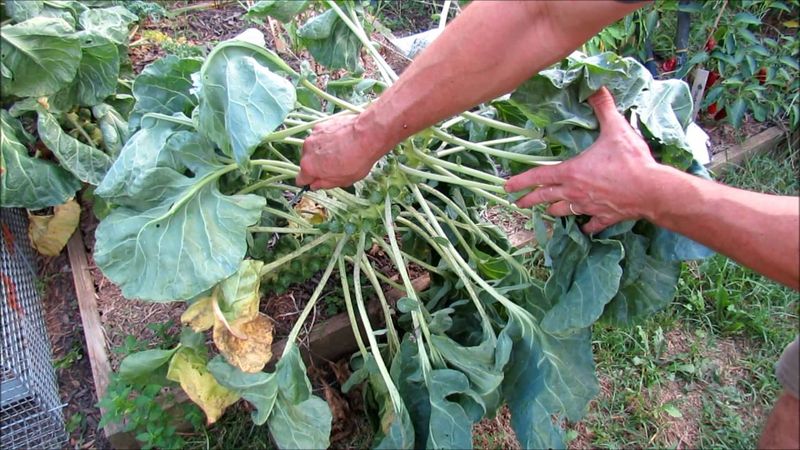
Loose, leafy Brussels sprouts can be a letdown after months of care. Some gardeners hear that snapping off the top of the plant will tighten them up.
Topping can help in certain situations, but it is a tool that depends on the plant, the timing, and how you plan to harvest. Here is how to decide whether it makes sense in your Florida or Texas garden.
Loose sprouts are not always a topping problem
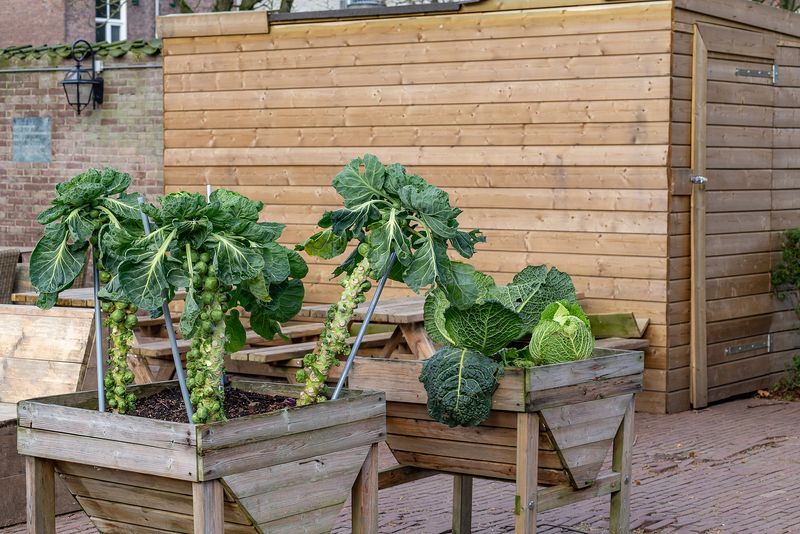
Brussels sprouts are a long-season, cool-weather crop, and they like to finish maturing while the weather is mild. When the stalk matures in hot, dry conditions, sprouts may turn bitter or fail to form compactly, according to Maryland Extension guidance for home gardens.
That matters because a loose sprout is a symptom, and the cause is not always the same. Warm spells late in the season, dry soil, a variety that naturally forms open sprouts, or too much nitrogen can all play a part.
Check those things first, since a cut at the top of the plant cannot be assumed to undo them.
Topping is better thought of as a practice with mixed results. What it does depends on the cultivar and on how far along the plant is when you do it.
The next section explains what the cut actually changes, so you can judge whether it fits your plants.
Topping can affect growth, but results vary
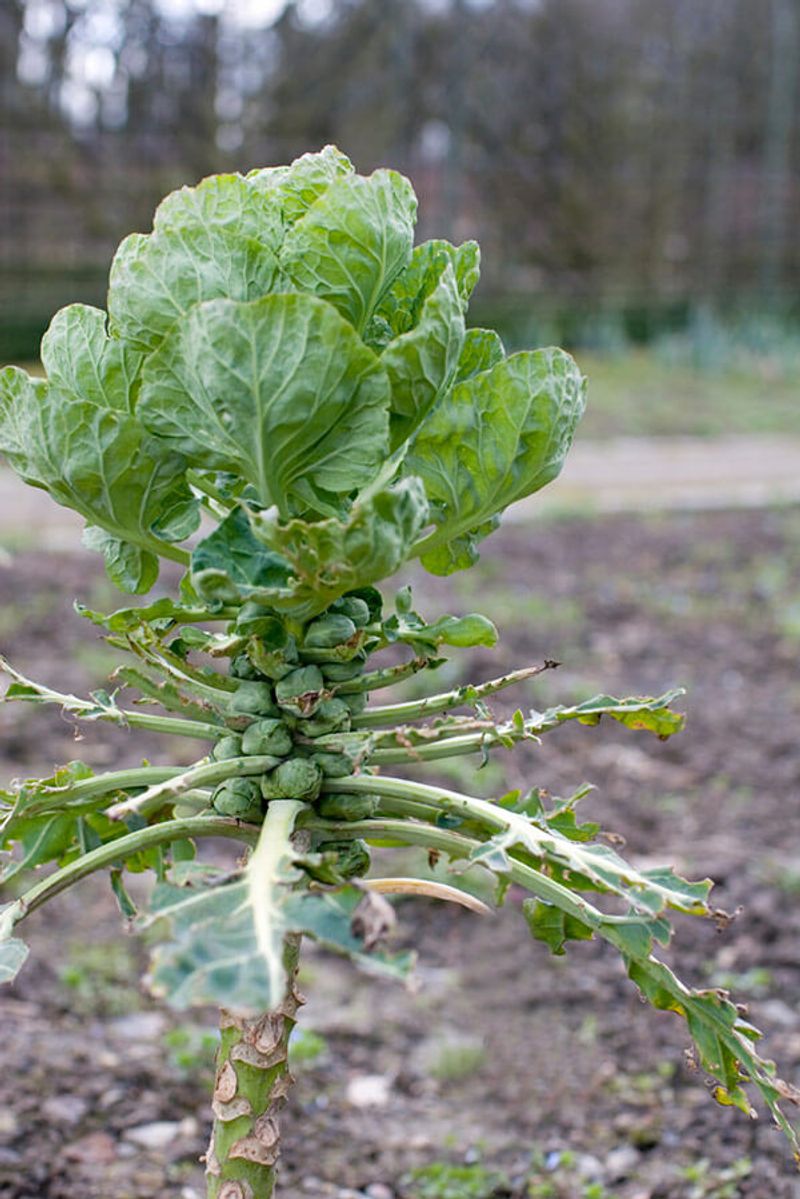
Topping means removing the plant’s growing point, the tuft of young leaves at the very top of the stalk. Once it is gone, the stalk stops getting taller.
It can also affect the size and uniformity of the sprouts already developing below.
A New Hampshire field study, described in a peer-reviewed HortTechnology paper and in a UNH Extension research report, tested topping on several cultivars. Some early and midseason cultivars benefited when they were topped at a suitable stage.
Responses differed from one cultivar to the next, and topping too early reduced the benefits.
Those results came from New Hampshire, so they should not be copied directly onto Florida or Texas gardens or onto every variety. Treat the study as a sign that topping can sometimes help, not as a promise of tight sprouts or a rule for the South.
Use sprout development and harvest timing as cues
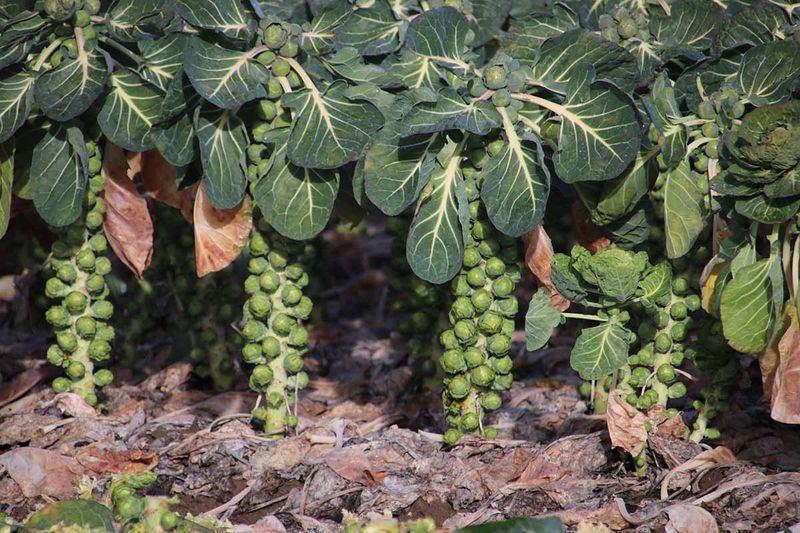
Two practical cues are worth knowing, and they are separate recommendations. Maryland Extension advises topping when the bottom sprouts are about 1/2 inch in diameter.
You can check this with a ruler or by comparing the sprouts to a dime.
UNH guidance takes a calendar-to-harvest approach instead. It suggests topping roughly 30 to 60 days before you plan to harvest, once the lower sprouts are approaching marketable size, and waiting if harvest is more than 60 days away.
You can read it in the UNH topping-timing guidance.
Those two cues do not combine into one formula, so pick the one that suits how you garden. Cultivar and harvest method also affect the decision, which the later sections cover.
If your lower sprouts are still tiny, or harvest is far off, waiting is a reasonable choice.
In Florida and Texas, October may be planting time
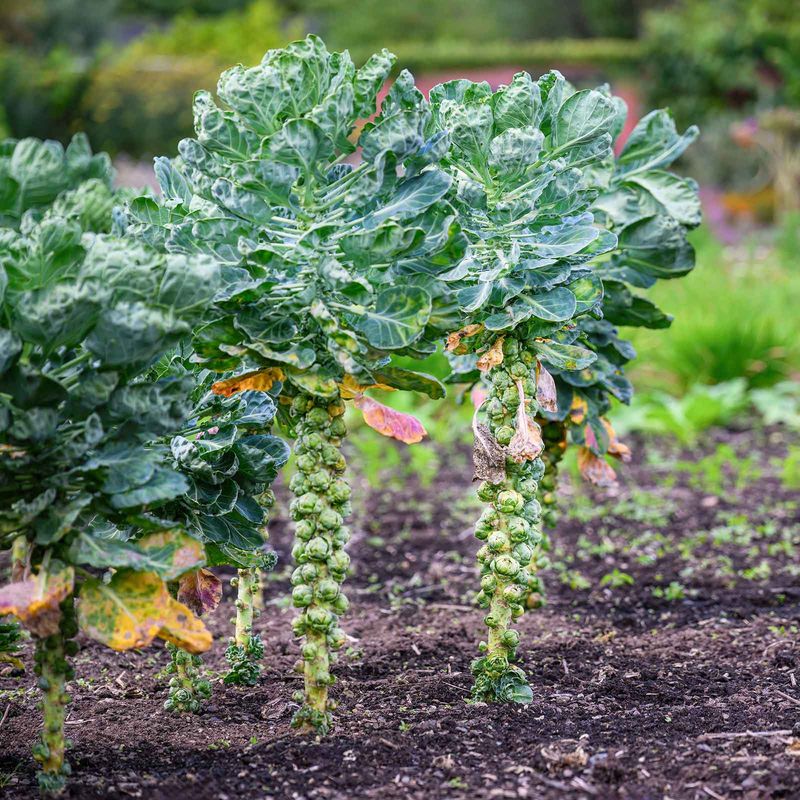
A month-based topping rule falls apart quickly in the South. UF/IFAS lists planting windows of August to February in North Florida, September to February in Central Florida, and October to January in South Florida.
Texas varies just as much. Texas A&M cole crop guidance and the Fall Vegetable Gardening Guide for Texas put fall transplanting anywhere from July in Region I to November in Region V.
So in October, one gardener may be setting out transplants while another is watching sprouts swell. Plants set out months apart will not be at the same stage on the same day.
Sprout size and your expected harvest date are far better guides than any single month.
Your harvest method changes the topping decision
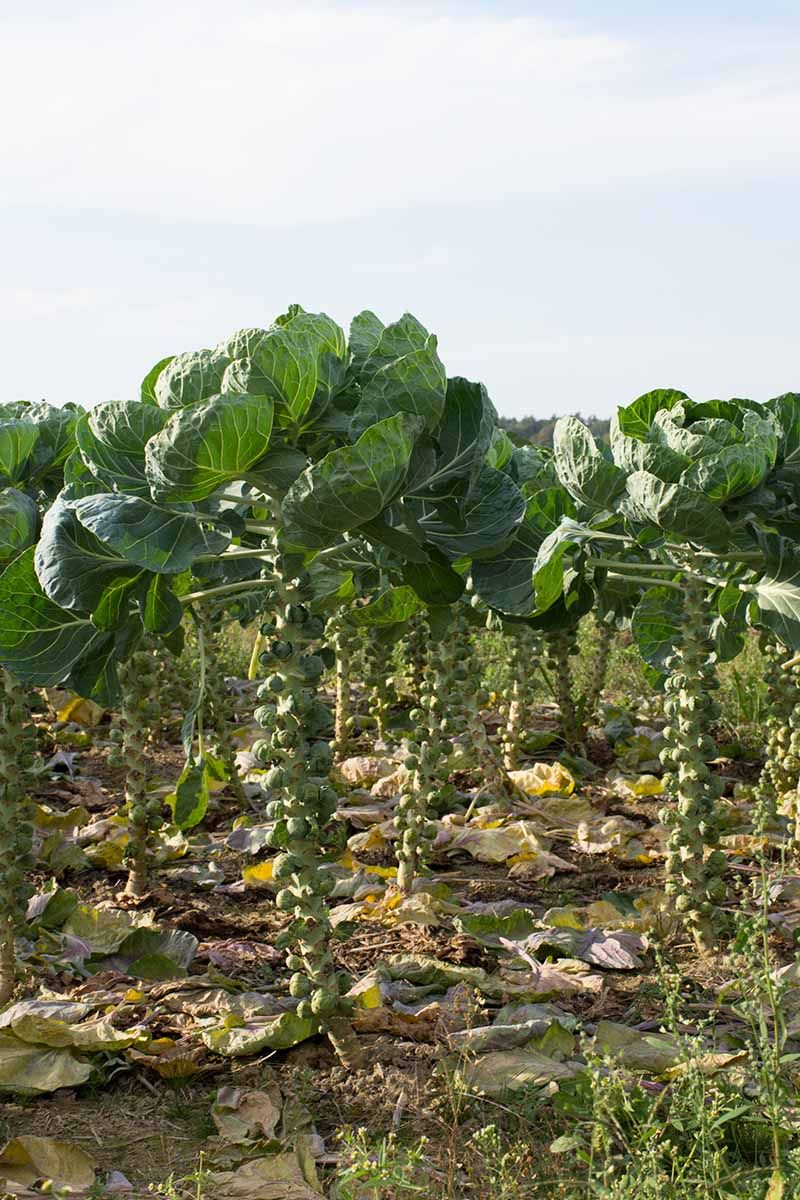
Some gardeners want everything at once. If you plan a once-over harvest of the whole stalk, topping may help the sprouts size up more evenly, and the UNH trial work looked at topping in that setting.
Many home gardeners prefer to pick a few sprouts at a time as they mature. For that style, Illinois Extension notes that topping may start harvest earlier but can reduce total yield.
Here is a simple way to weigh it. If you want one tidy harvest for a freezer batch or a dinner party, topping is worth considering.
If you want a small, steady supply over several weeks, leaving the top alone may give you more sprouts overall. Neither choice is wrong, and topping is not needed in every garden.
Harvest firm sprouts from the bottom upward
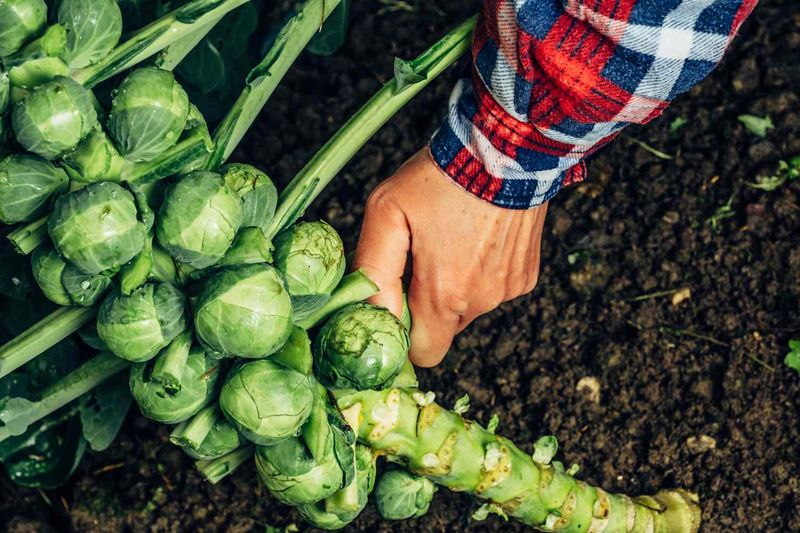
Sprouts mature from the bottom of the stalk upward, so the lowest ones are ready first. Pick them when they feel firm and compact.
Maryland Extension gives about 1 to 1 1/2 inches as a good harvest size.
Snap or twist each ready sprout off the stalk and leave the smaller ones higher up to keep growing. Iowa State Extension also describes working upward as sprouts reach size.
Picking ripe sprouts is not the same as topping. Harvesting removes finished sprouts, while topping removes the growing point of the whole plant.
You can harvest all season without ever topping, so a cut at the crown is a choice, not a requirement.
Frost does not make topping an emergency
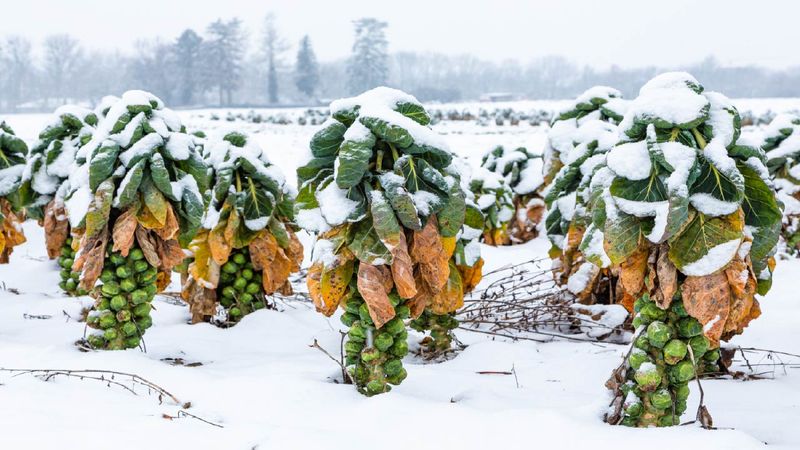
A common worry is that you must top the plant before the first hard freeze. Brussels sprouts are tough in cold weather, and Maryland Extension notes that their flavor may improve after frost.
Texas A&M reports that plants can survive around 20 degrees F or lower when temperatures drop gradually. That is a general range, not a promise.
A sudden, deep freeze or a young, tender plant can still be damaged.
Watch the forecast and cover plants if a sharp freeze is coming, especially after a warm spell. But a cold snap by itself is not a reason to cut off the top.
Base that decision on sprout size and harvest plans instead.
Make the decision from the plant, not the calendar
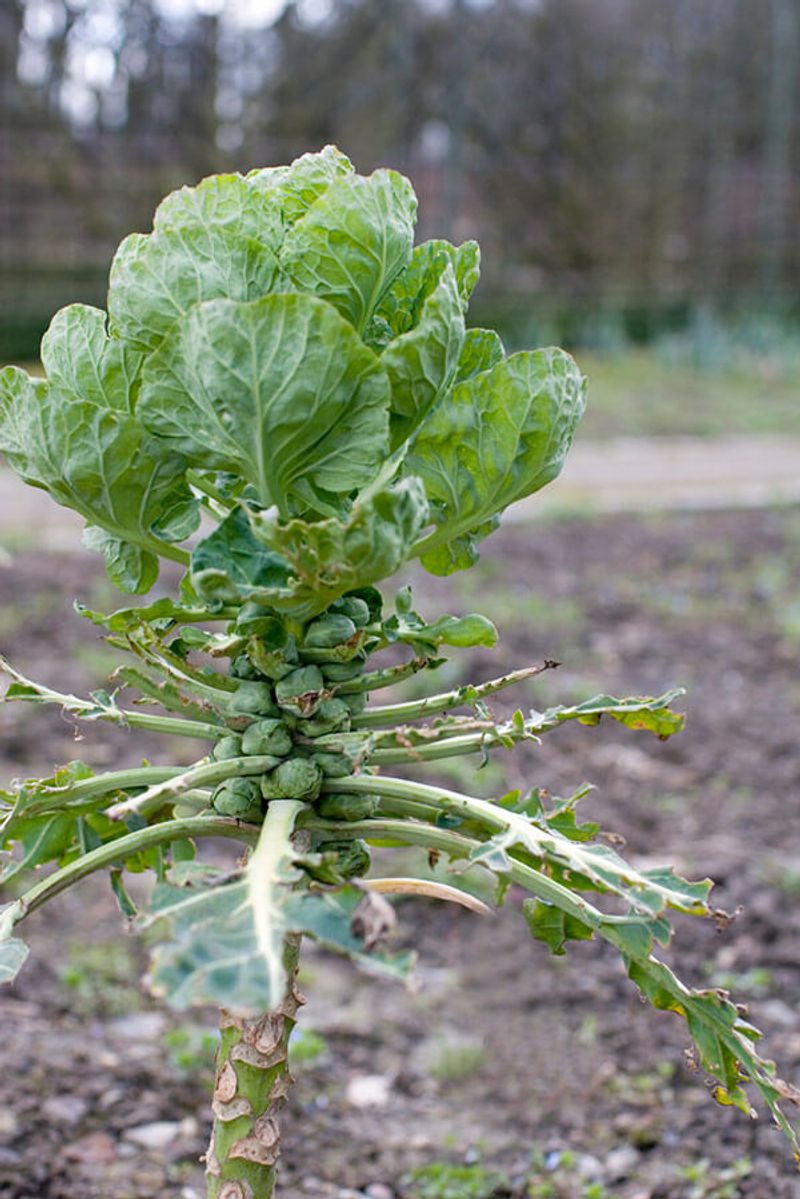
Start by looking at the lower sprouts. If they are about 1/2 inch across, Maryland’s cue says topping is an option.
If they are still tiny, hold off.
Next, think about harvest. UNH guidance suggests topping about 30 to 60 days before harvest and waiting if harvest is more than 60 days away, as described in its topping-timing guidance.
Then ask whether you want one stalk harvest or a slow pick over weeks, and factor in when your region planted.
Topping may help under the right conditions, but it cannot promise compact sprouts, and heat or dry soil still matter, as Maryland Extension points out. Your next step is simply to measure a sprout.
The plant will tell you more than the calendar ever will.