
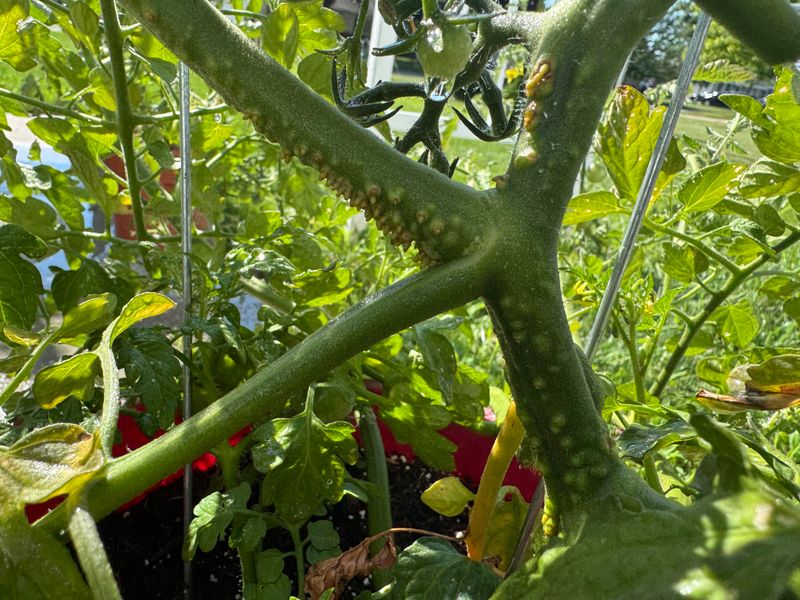
You run a hand down a tomato stem and feel small, bumpy swellings that were not there last week. It is easy to worry that something is wrong.
Many times these bumps are tiny root starts, but not always. A quick look at the whole plant can tell you what to do next.
Small stem bumps may be harmless root initials
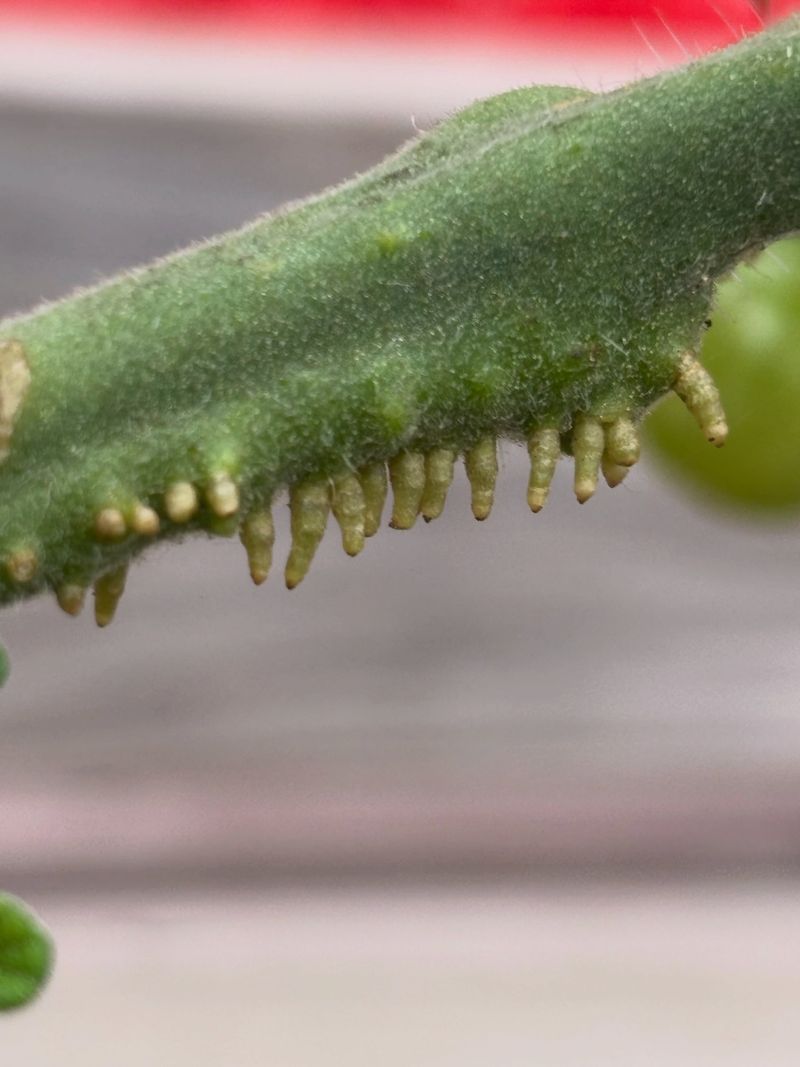
Gardeners often call these bumps air roots, and that nickname is a handy shorthand. A more precise name is adventitious root initials.
They are early root growths that may turn into roots if conditions allow, so they are not necessarily working roots yet.
Tomato stems can produce them above the soil line. University of Maryland Extension says typical small knobs or swellings on stems are generally harmless and need no action.
Here is the catch. A description like lumpy and brown cannot confirm what a swelling is, and a photo can be just as misleading, because some stem disorders look similar.
It also would be wrong to say every bump is harmless.
So treat the bumps as a clue, not a verdict. If they are small, scattered, and the plant looks healthy, you can usually leave them alone.
The next sections show how to check the rest of the plant before you decide.
Several factors can influence warty stem growth
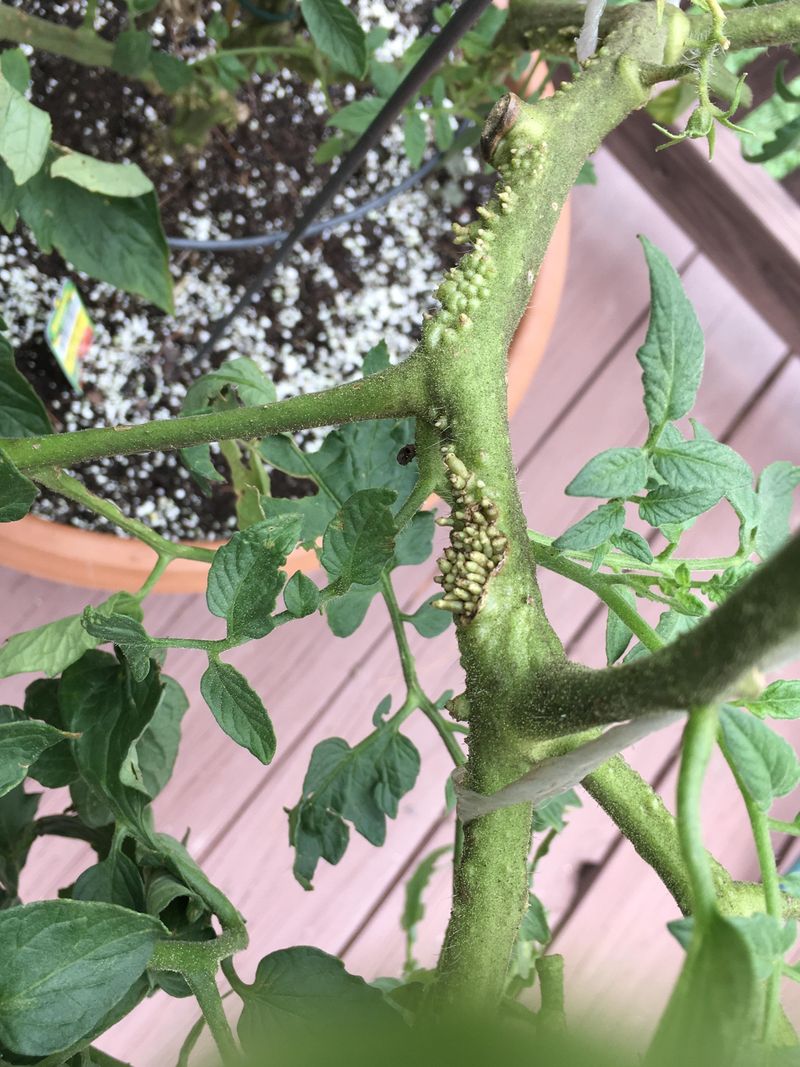
Why do some plants get more bumps than others? Extension guidance points to a mix of influences.
Cultivar, weather, and growing conditions all play a part, and some varieties, particularly heirlooms, show these knobs more readily than others.
Wet conditions matter too. Kansas State Extension notes that waterlogged soil can make warty stem growth more likely.
It also says some growth-regulator herbicides, including 2,4-D, can induce it.
These are influences, not answers. None of them proves what caused the bumps on your plant.
A soggy bed, a drift of herbicide, or a variety that simply grows knobs could each be involved, or none of them.
If you remember a recent herbicide use nearby, jot it down, since it could help a diagnostician later. Otherwise, keep the focus on how the whole plant is doing.
Check for other signs that can accompany pith necrosis
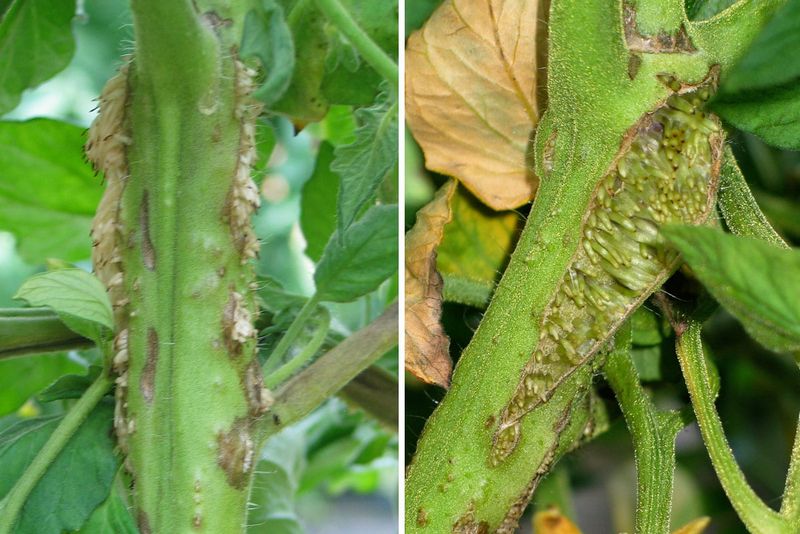
Plentiful adventitious roots can also show up with tomato pith necrosis. University of Maryland Extension describes this disease as one that may occur under cool, humid conditions, often with cool nights and fast growth or heavy nitrogen.
Cool, damp weather by itself does not diagnose it, and neither do bumps. What matters is the pattern.
Look for roots forming in clusters along an affected stem, yellowing or wilting leaves, and stem splitting.
You can also look inside. With pith necrosis, the stem’s inner pith may be discolored or hollow.
If you see only a few bumps and a healthy, green plant, this is likely not the story. If several of these signs overlap, it is time to get a closer look from a local expert.
Cankers, streaks, and wilt warrant closer attention
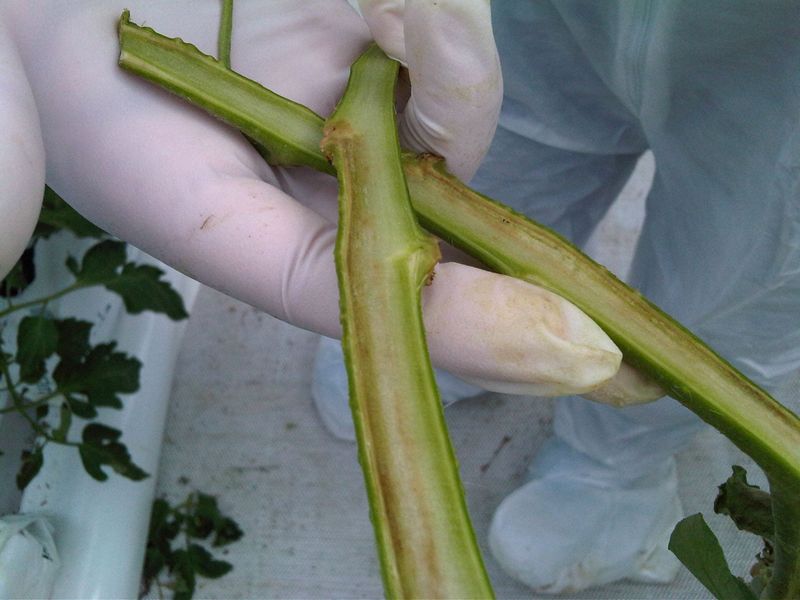
Bacterial canker is another tomato problem that can involve stem damage and wilting. University of Minnesota Extension lists brown vascular streaks, long brown stem cankers, and sticky yellow fluid from a cut stem as concerning signs.
Wilting leaves, especially when the soil is not dry, deserve attention as well.
Here is where care is needed. Bacterial canker and pith necrosis can have overlapping symptoms, as Maryland’s pith necrosis guidance also suggests when it stresses looking at the whole plant.
One symptom, or one photo, is not enough for a firm answer.
Avoid guessing. Write down what you see, take clear photos of the stem and leaves, and note when the changes began.
That record helps whoever you ask for help.
Check soil moisture before changing care
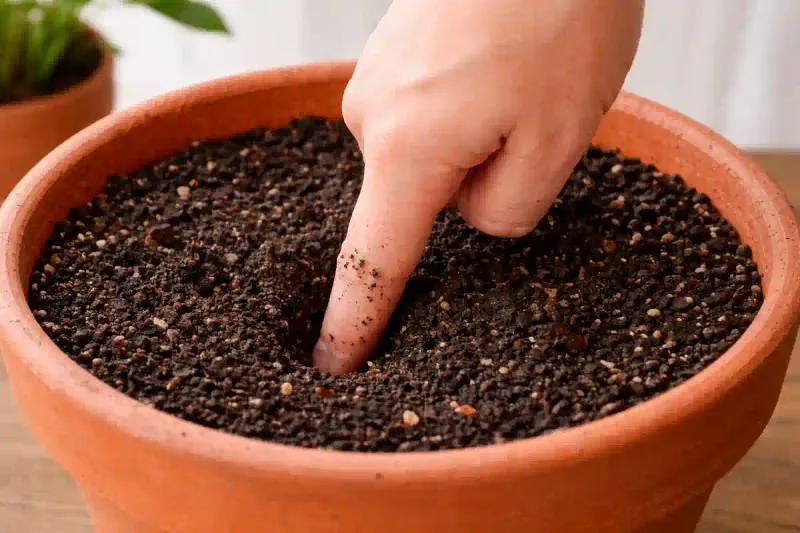
Before you reach for the hose, check the soil. Push a finger a few inches down near the base of the plant.
Texas A&M AgriLife Extension advises watering thoroughly only when plants need it, and warns that soaking-wet soil can lead to root rot and plant decline.
Bumps are not a reason to add water. As Kansas State points out, waterlogged soil is linked to warty growth, so extra water could make things worse.
Please do not cut, spray, or discard a plant just because of isolated bumps. If you suspect disease, stay out of the wet foliage and avoid pruning it, since bacterial pathogens can spread through handling and tools.
Wait for dry leaves, then look things over again.
Seek local help if the plant is declining
Here is a simple rule. If the bumps are small and scattered and the plant looks healthy, keep an eye on it.
Check the stems and leaves every few days and note any change.
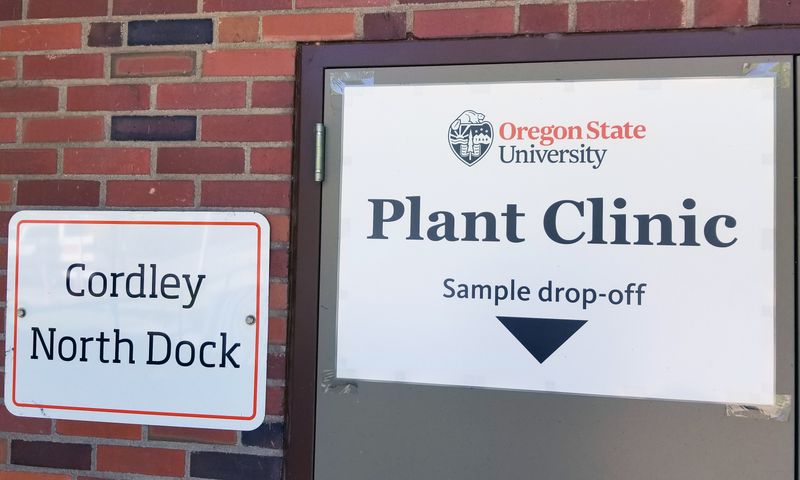
If the plant wilts, develops lesions or splitting, or shows other worrying signs, contact your local Extension office or a plant diagnostic clinic. Minnesota Extension recommends a plant-disease clinic when the diagnosis is uncertain, and that applies here too.
Bring clear photos, a short timeline, and notes on recent watering, weather, and any nearby herbicide use. Ask before cutting or moving plant parts, since handling can spread some diseases.
The stem bumps are only one line in the story. The rest of the plant writes the ending.