
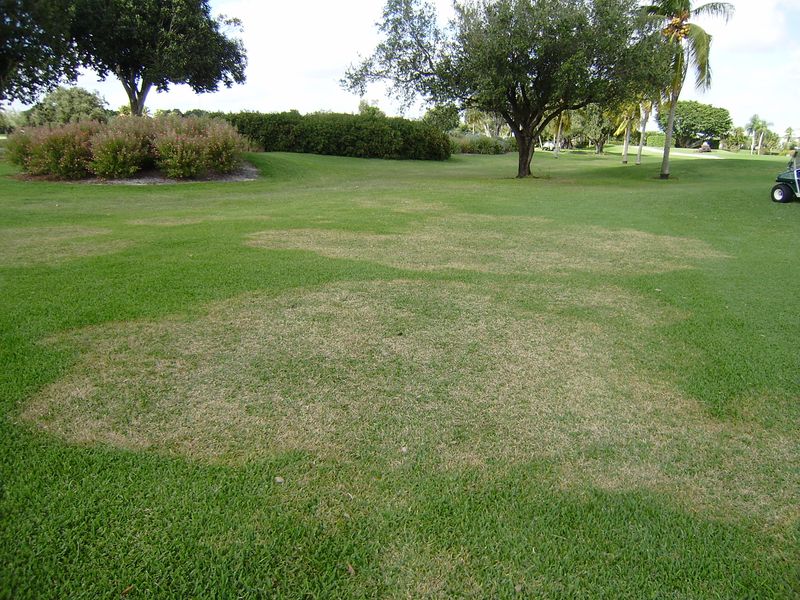
A brown circle that grows a little wider each week can make any Florida homeowner nervous. In St. Augustinegrass, that ring is a clue worth following, because a common fall and spring lawn disease called large patch often looks like this.
Knowing what to check, and what you can and cannot do about it, helps you avoid wasted money and wasted effort. Here is how to look closely at your turf and choose sensible next steps.
Fall Rings Make Large Patch a Suspect, Not a Verdict
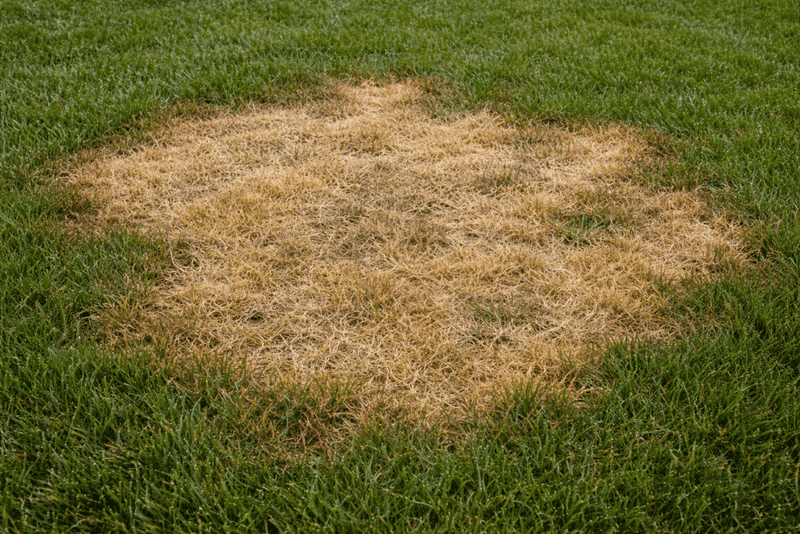
Cooler nights in fall bring a familiar surprise to many Florida lawns: a round patch of thinning, browning turf that seems bigger every time you look. Large patch, caused by the fungus Rhizoctonia solani, is a common fall-and-spring disease of St. Augustinegrass, so a spreading ring is a good reason to consider it.
Timing matters, but it is not the same everywhere. UF/IFAS Gardening Solutions describes large patch as most often observed in Florida from November through May.
Onset can start earlier or later depending on where you live and on weather conditions that season.
Here is the catch. A ring is a clue, not proof.
Other problems can leave round or irregular dead spots, and the right fix for one problem can be useless or even harmful for another. A fungicide will not help a lawn damaged by insects, for example, and extra water can make a fungal problem worse.
Think of the ring as the start of an investigation. Walk out to the patch, look at the edge, pull on a few blades, and note what the soil and surrounding grass look like.
The next section covers exactly what to look for, so you can decide whether the disease fits or whether you need a second opinion from your county Extension office before you spend a dime on treatment.
Photos help too. Snap a picture of the patch each week from the same spot.
A record of how fast it grows, and where, gives you and any Extension agent a much better picture than a single glance.
Which Clues Separate Large Patch From Lookalikes?
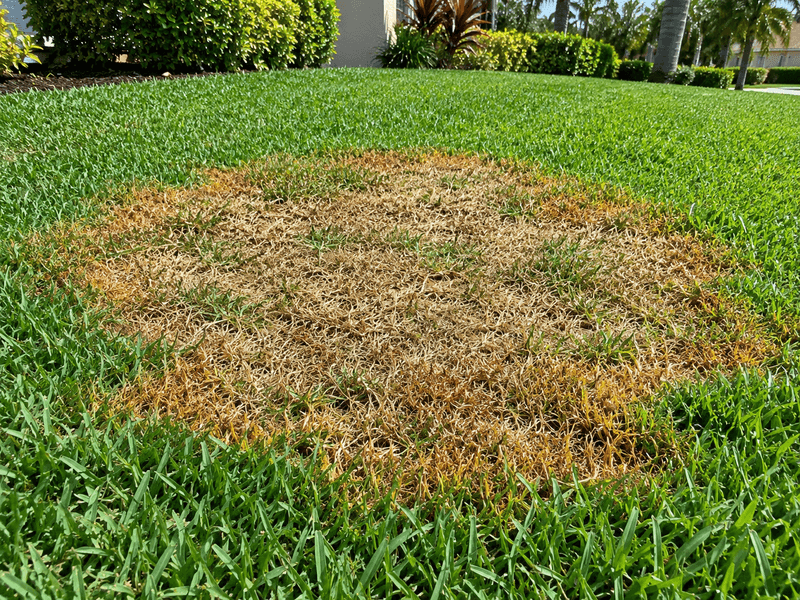
Start with the shape. Large patch tends to show up as a round area that enlarges over time, sometimes with healthier-looking turf left in the center.
The active margin may look dark, yellow, or orange, and damaged turf can appear slightly sunken. Notice that the color is at the edge of the patch, not an orange stripe on each blade.
University of Georgia Extension describes similar patch symptoms on warm-season grasses.
Next, tug a few shoots from the edge. A UF/IFAS publication on large patch notes that a diseased blade often pulls away easily and has a dark, soft, rotted base, sometimes with a rotted smell.
Herbicide injury can also make leaves pull from the sheath, but the base usually lacks that dark, foul-smelling rot.
Other lookalikes exist. Take-all root rot tends to show short, blackened, rotten roots and thinning, irregular patches, and insect damage can look much like disease, as Texas A&M AgriLife Extension points out.
Checking roots and looking for insects in the thatch can help sort these out.
One more naming trap: you may hear large patch called brown patch. UF/IFAS notes that brown patch more accurately describes a separate disease, and the common brown patch of cool-season grasses involves a different strain of the fungus.
Large patch affects warm-season grasses like St. Augustinegrass.
No single sign settles it. Visual diagnosis can be difficult, as the UF/IFAS homeowner fungicide guide explains.
If your clues do not line up clearly, take photos and a sample to your county Extension office.
Less Moisture and Less Nitrogen Reduce Favorable Conditions
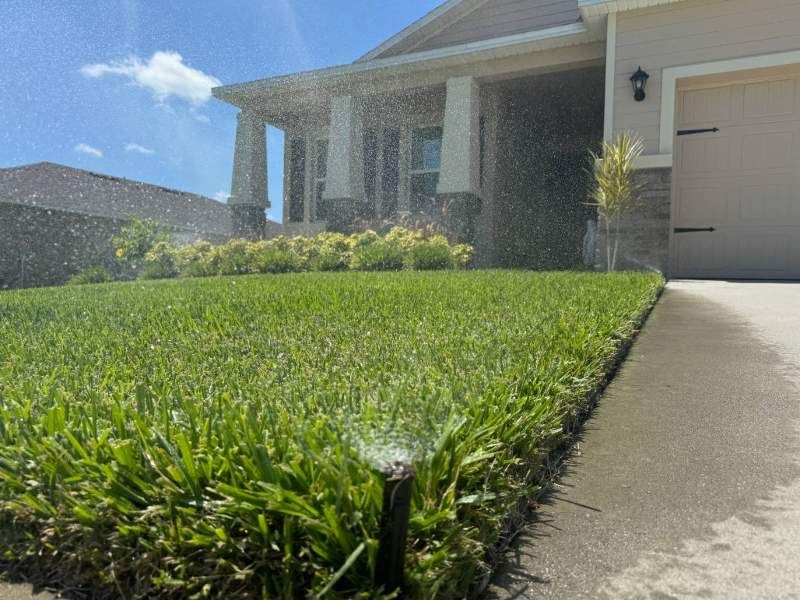
Fungi in lawns thrive when grass stays wet for long stretches. You cannot change Florida’s humidity or a stretch of rainy fall weather, but you can avoid adding to it.
Water only when the turf shows it needs a drink, and do it in the morning so blades dry during the day. Skipping automatic cycles after a good rain is one of the easiest changes.
Look around the lawn for spots that stay soggy. Poor drainage, heavy shade, and excess irrigation all favor the disease, according to UF/IFAS guidance on large patch.
Where practical, adjust sprinkler heads that overshoot into low areas, and consider trimming tree limbs that block morning sun.
Nitrogen deserves the same caution. A lush push of growth from heavy feeding in disease-prone months can feed the problem.
UF/IFAS advises sparing use of slow-release nitrogen following Florida lawn recommendations. Georgia extension specialists, writing about their own region, advise against applying nitrogen when soil temperatures stay below 70°F.
Fertilizer timing differs across Florida, so skip any one-size calendar. Check the UF/IFAS lawn recommendations for your part of the state, and follow the plan for your lawn rather than a neighbor’s.
These steps reduce favorable conditions. They do not guarantee the patch will stop growing.
Keep Mowing From Moving Diseased Turf
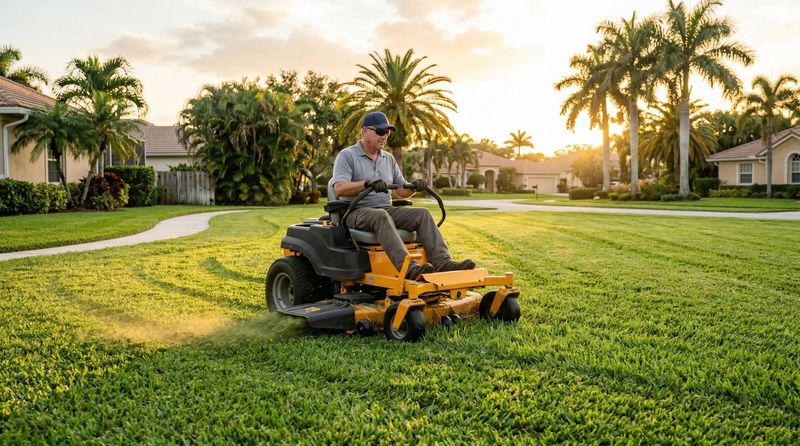
Every pass of a mower can carry bits of infected grass from one spot to another. The simplest rule while a patch is active is to skip mowing you do not need.
Texas A&M AgriLife Extension says mowing is discouraged until disease activity halts, and in cooler months St. Augustinegrass grows slowly anyway.
Sometimes the lawn needs a cut regardless, such as before a gathering or after a stretch of warm weather. In that case, UF/IFAS advises mowing the affected areas last and cleaning the mower blades afterward.
A practical routine looks like this: mow the healthy turf first, finish with the patch and its margin, then brush off clippings and wipe or rinse the deck and blades before you put the mower away. Bag or sweep up clippings from the diseased area rather than blowing them across the yard.
Treat this as a way to limit movement of diseased material, nothing more. It does not promise the fungus will stop spreading, since the disease also moves through the turf on its own when conditions favor it.
Fungicides Can Suppress Spread, but Recovery Takes Time
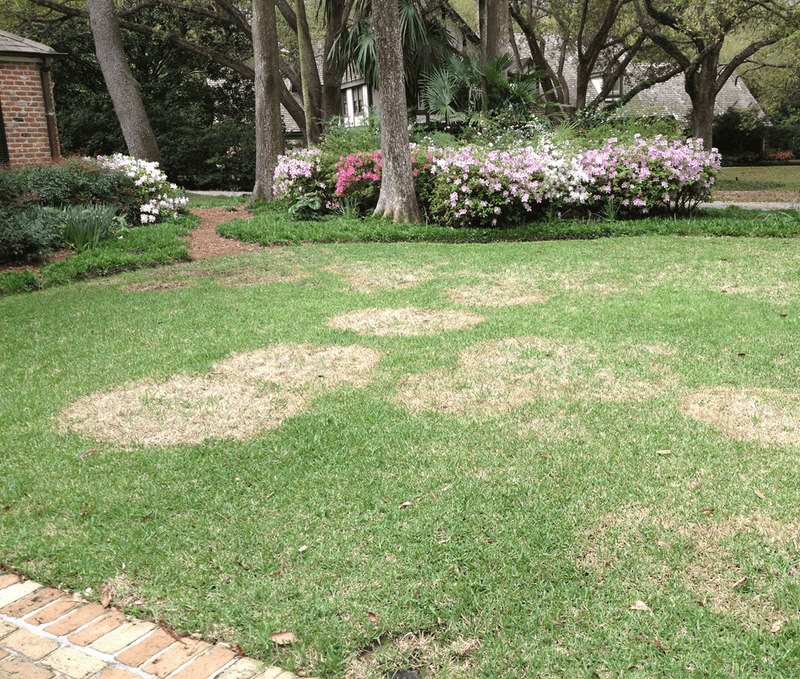
A fungicide is a tool, not a rescue. According to UF/IFAS, an appropriate product can stop the spread in the short term, but the damaged area still has to fill back in with new, healthy growth.
That recovery can take one or more growing seasons.
Preventive applications tend to be most useful in areas where the disease comes back year after year. The best window differs between North and South Florida, so a single date for the whole state would mislead you.
If your lawn has had a patch in the same place before, ask your county Extension office about timing for your area.
Confirm the diagnosis first. Fungicides target specific diseases, and the UF/IFAS homeowner fungicide guide stresses that correct identification comes before treatment.
Spraying a lawn with insect or herbicide damage wastes money and adds chemicals for no benefit.
If you do choose a product, use only one whose label lists the disease and residential turf use. Labels and permitted uses differ among products and change over time, so read the current one every time.
The EPA’s Read the Label First advice is a good reminder to follow all directions, including application and household and pet precautions.
No product name or schedule belongs in an article like this, because the right choice depends on your lawn, your location, and the label in your hand.
Confirm the Cause, Then Choose Your Next Step
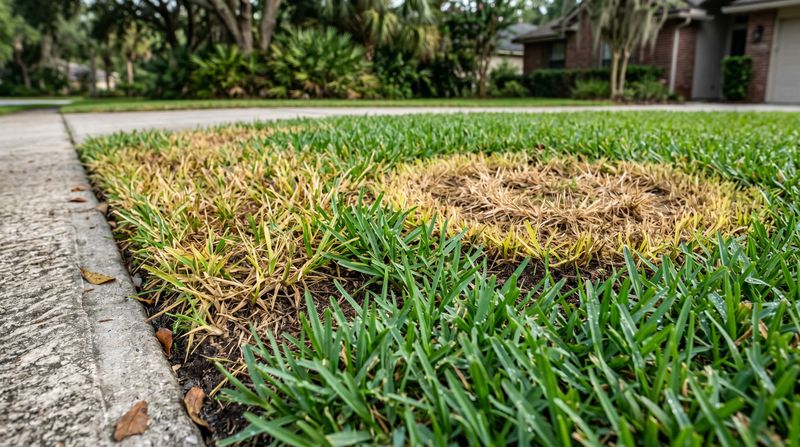
Begin by inspecting the patch: check the shape, the color at the margin, and whether shoots pull away with a rotted base. If the signs do not clearly fit, or you simply are not sure, contact your county Extension office, as UF/IFAS recommends when identification is uncertain.
While you wait, cut back on extra water and nitrogen and handle mowing carefully. Those steps support management, but they cannot promise the patch stops before winter.
A lawn is slow to forgive and quick to show its history, so patience pays.