
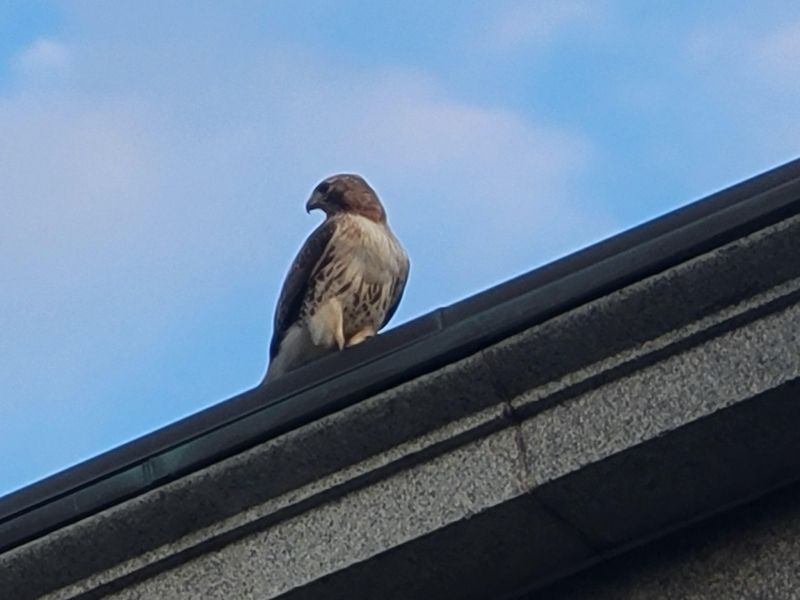
A big hawk drifting in slow circles over your yard is hard to ignore. Many people assume the bird is sending a message about the animals below.
The truth is more modest, and knowing it helps you decide what is worth checking in your garden and at your feeders. A few simple observations can tell you much more than the flight path alone.
Why a hawk may circle
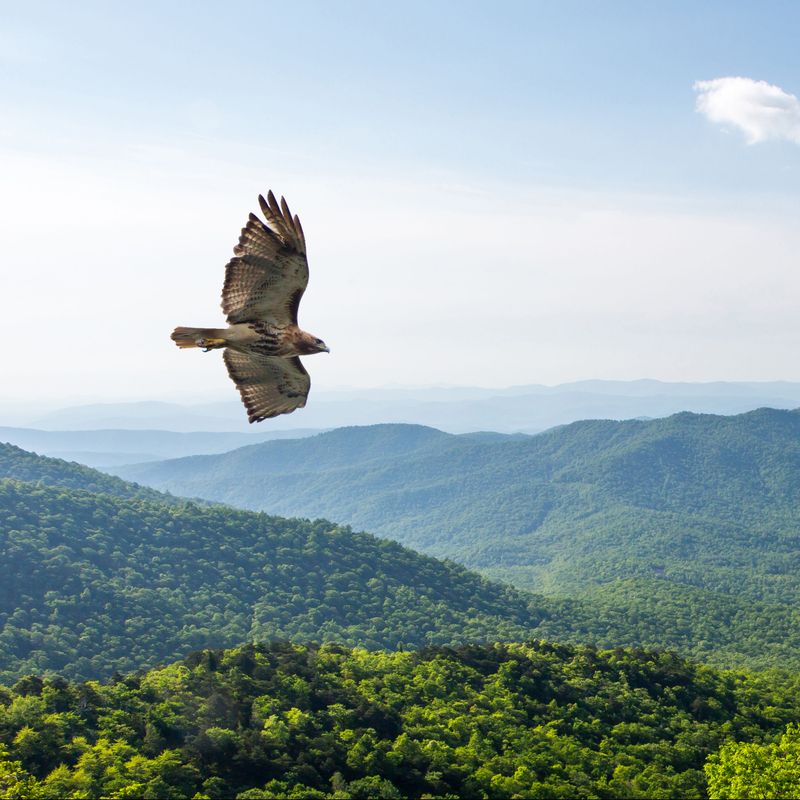
Picture a warm morning in the Piedmont. A red-tailed hawk climbs in lazy loops without a single wingbeat.
That sight has a few possible explanations, and the circling itself cannot tell you which one applies.
The North Carolina Wildlife Resources Commission notes that red-tailed hawks soar over open areas while scanning for prey. The agency also notes that migrating hawks ride warm thermals, which are columns of rising air.
A bird using a thermal circles simply because that is how it gains height with little effort.
Courtship is a third documented reason. Cornell Lab of Ornithology describes courtship displays that include wide circles at great height, usually performed by a pair.
If you see two hawks circling together, that may be what you are watching.
So a hawk looping overhead might be hunting, might be riding warm air, or might be showing off for a mate. From the ground, those three look much alike.
Rather than guessing at this bird’s intent, treat the circling as a reason to pay attention for a few minutes. Notice whether it dives, whether a second bird joins, and whether it keeps drifting along on its way.
A circling hawk cannot inventory your yard
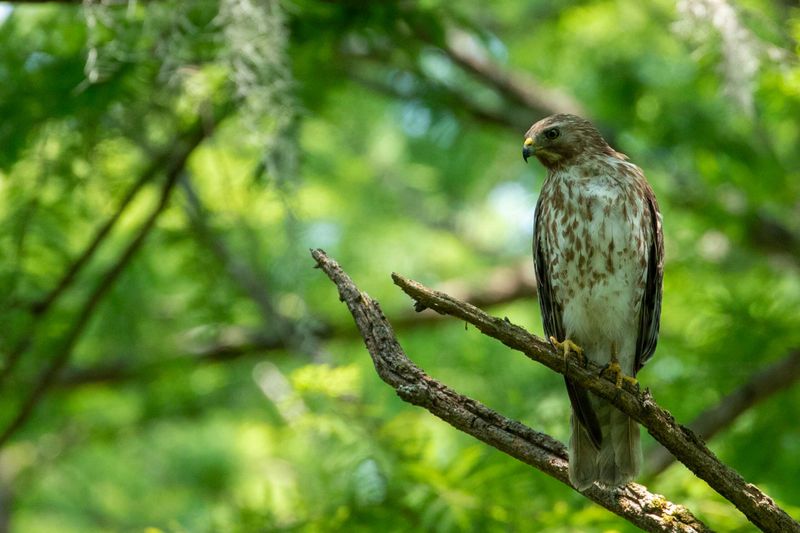
Red-tailed hawks are found statewide in North Carolina, from the mountains to the coast. They favor open areas and woodland edges, which describes a lot of suburban and rural property.
Seeing one over your street says more about the bird’s range than about your garden.
The state wildlife agency lists rodents, rabbits, amphibians, reptiles, and insects among the foods these hawks take, often spotted from a high perch. Cornell adds that the diet varies by location and is mostly mammals.
That is a list of what the species can eat, not a report on what lives under your shrubs.
A hawk can pass over a yard rich in small animals and never look down. It can also hunt a yard with very few.
Even a bird that circles the same spot several times has not counted your voles, chipmunks, or rabbits for you.
Think of the sighting as a prompt, not a census. If you are curious about the small animals near your beds, go look for direct evidence on the ground.
The next sections cover how.
Feeders and beds support different food pathways
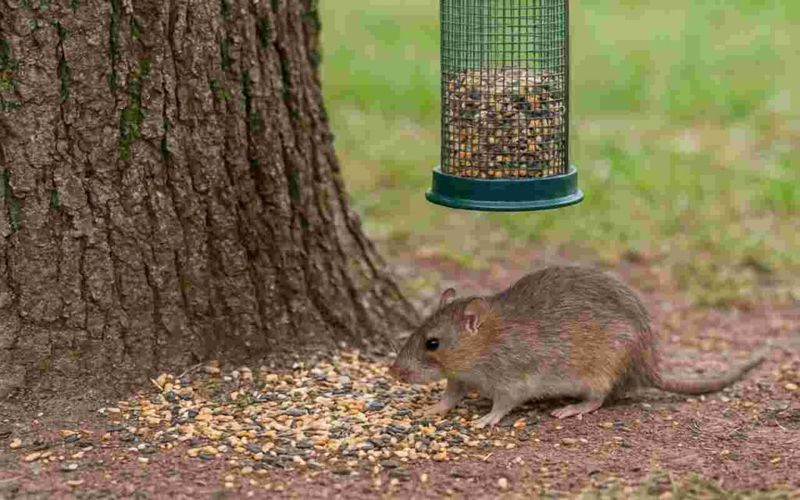
Two separate things can happen around a feeder, and they should not be blended together. The first involves the ground.
UF/IFAS Extension says scattered bird food can attract rodents, so spilled seed and hulls may feed mice and other small gnawers.
The second involves the birds themselves. Virginia Cooperative Extension points out that feeders can concentrate small birds, and a crowd of finches and chickadees can draw bird-hunting hawks.
Those hawks are usually not red-tails. Cornell says Cooper’s and sharp-shinned hawks are more likely than red-tails to visit popular feeders.
Red-tails eat mostly mammals, which is a different menu from songbirds.
It is tempting to connect the dots: seed brings rodents, rodents bring the hawk. Nothing proves that chain for any single red-tailed hawk.
Feeders and garden beds may change what is available to small animals, but they do not explain why one hawk circled your yard on one afternoon.
If a hawk swoops at your feeder, check its shape and size before deciding what is happening. A slim, long-tailed bird darting through is a different story from a broad-winged soarer high overhead.
Check the ground for direct signs of vole activity
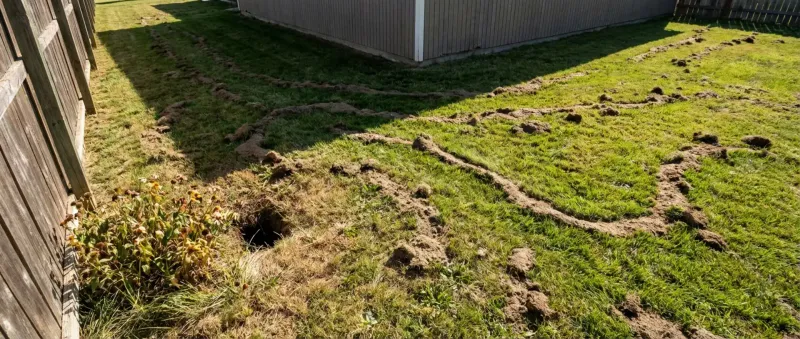
If you wonder about small rodents, skip the sky and kneel at the bed. Voles leave clues you can see.
The University of California Statewide IPM Program lists fresh trails, burrows, droppings, and garden feeding damage as signs to check.
Look for narrow, worn runways through grass or along the edge of mulch. Check for small, round burrow openings and for gnawed bark, bulbs, or roots on plants that suddenly look unhealthy.
The same guidance notes that heavy mulch and dense cover can give voles shelter. A thick blanket of mulch piled against stems is worth a peek, especially where plants have been struggling.
Pulling it back a bit to look underneath can show you more than any amount of sky watching.
Keep in mind that this is general extension guidance from California, not a North Carolina finding, so treat it as a checklist rather than a diagnosis. Without fresh signs, there is no reason to assume voles are present.
Damage can also come from other causes, such as moles, rabbits, or disease.
A quick walk around your beds this weekend, noting what you find, will tell you far more than the hawk did.
Respond only if a hawk actively hunts feeder birds
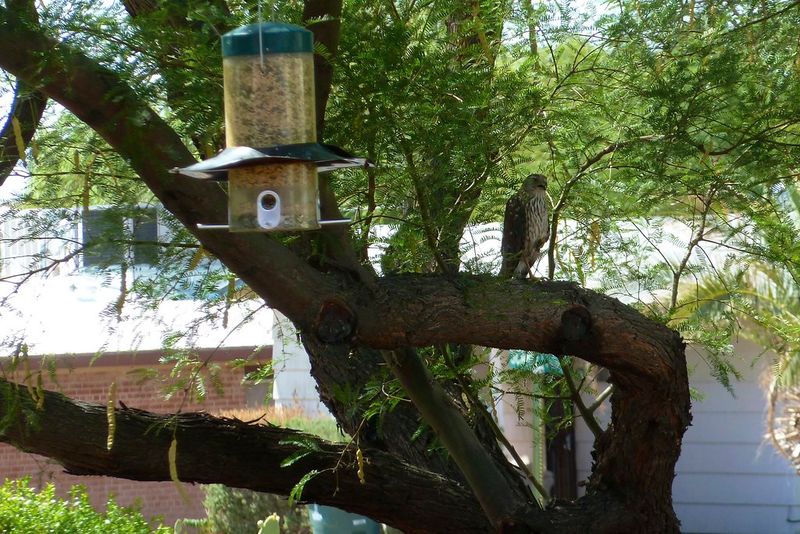
An overhead sighting is not a feeder problem. A hawk that glides by, circles, and leaves has done nothing that calls for changes.
The situation is different if you actually watch a hawk strike at birds around the feeder, or find feathers piled beneath it.
Start by identifying the bird. Red-tails are broad, heavy hawks that mostly eat mammals, and Cornell says they are less likely than Cooper’s or sharp-shinned hawks to visit a popular feeder.
The culprit at your feeder is more likely one of those smaller, quick bird hunters.
If a hawk is truly hunting there and you want a temporary response, Penn State Extension suggests taking feeders down for a few days. The same guidance recommends a well-planted yard that gives songbirds places to hide.
In North Carolina, native shrubs and small trees near the feeding area can provide that cover. Dense evergreen plantings, for example, give birds a quick place to duck.
None of this guarantees the hawk will leave. It may hunt elsewhere, or it may come back when feeders return.
Hawks hunting birds are part of normal wildlife behavior, so a short break is a choice, not an obligation.
Observe without disturbing the hawk
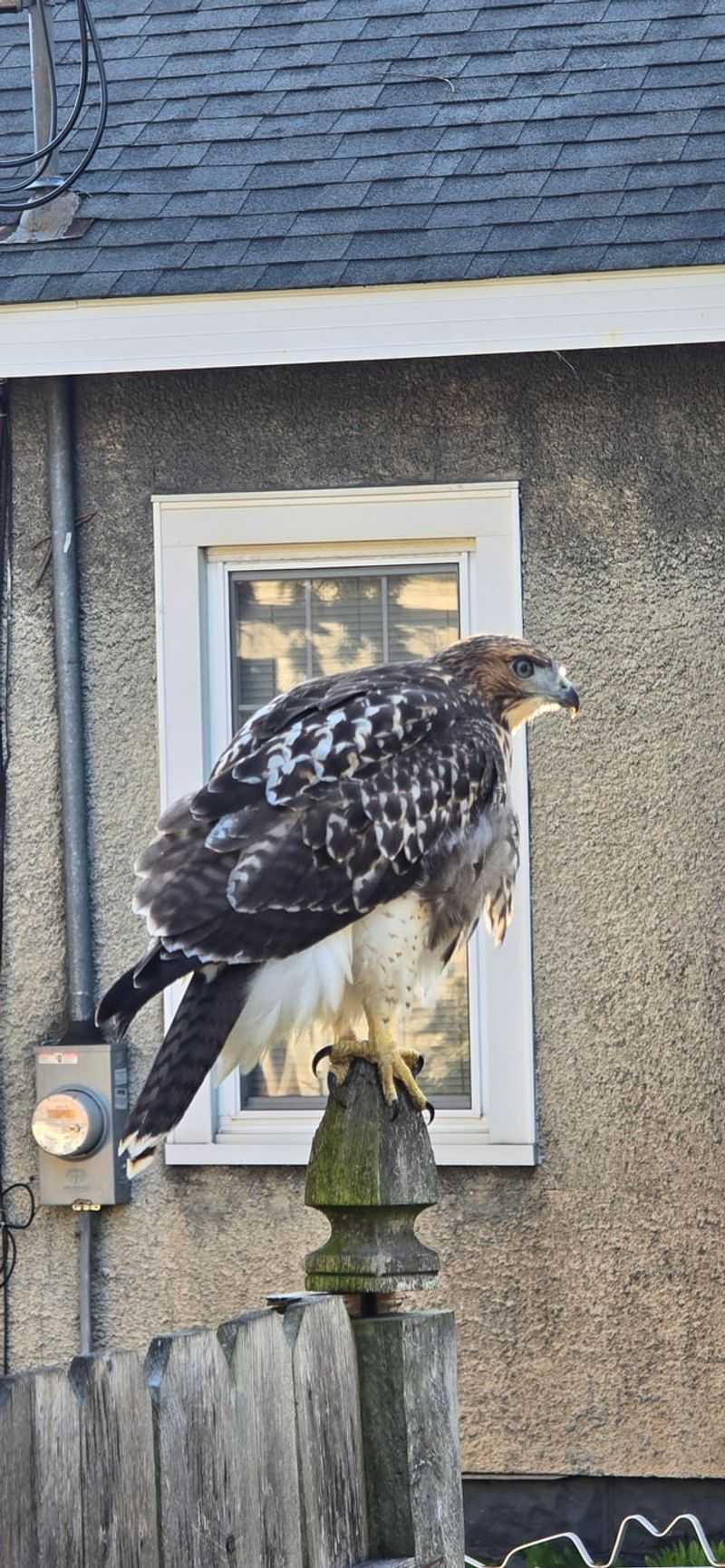
A few easy habits cover most situations. Sweep up spilled seed and hulls under feeders, since scattered food can attract rodents.
Then check your beds for direct signs before drawing any conclusions about who lives there.
Leave an overhead hawk alone. Do not try to scare, trap, or harm it, and keep clear of any nest.
The state wildlife agency says native hawks and active nests are protected under federal and state law.
If a hawk looks injured, do not pick it up. Contact a licensed raptor rehabilitator and let trained people handle it.
Grab binoculars and enjoy the show. A hawk wheeling above the treetops is a good reason to look up.