
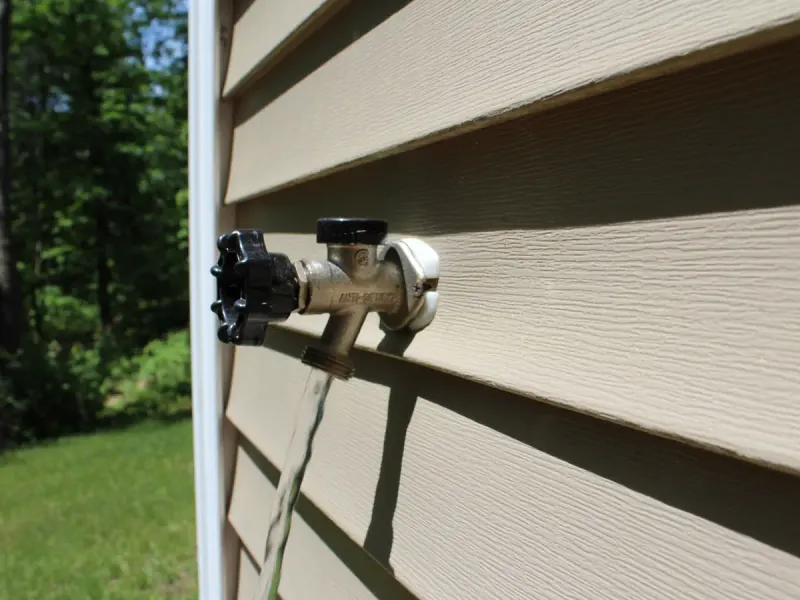
Picture a garden hose still hooked to the outdoor faucet when a cold night rolls in. Water may stay trapped in the faucet tube, and if it freezes, the tube can crack where you cannot see it.
You might not find out until the next warm day, when water starts leaking where it should not. A few minutes of prep this week can lower that risk.
A hidden rupture is possible, not inevitable
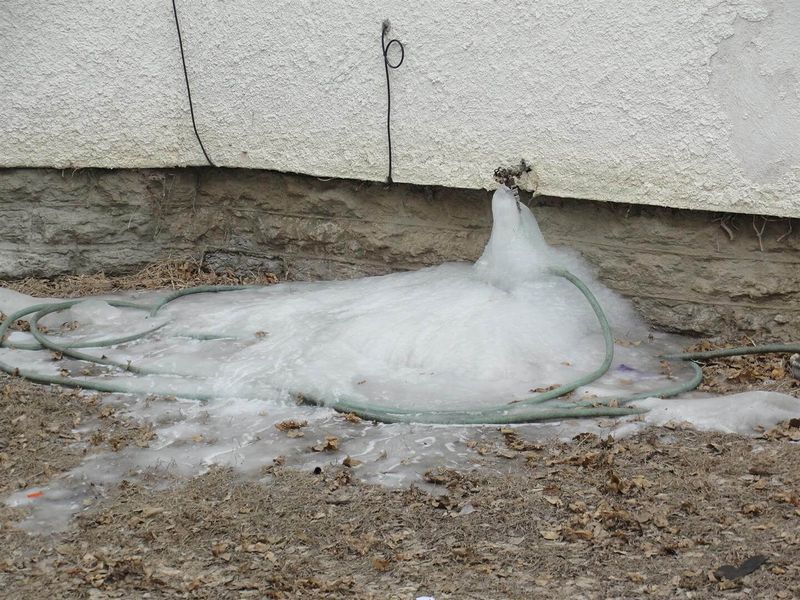
Here is the catch with some frost-free faucets. If water stays trapped in the long tube and freezes, the ice can push outward and split the tube.
According to Woodford’s explanation of how these faucets work, a split can happen in the tube past the shutoff.
That spot may be hidden in or near the wall. The leak often stays quiet while the faucet is off, so the first sign may come after a thaw when someone turns the water back on.
Where the break lands and how much damage follows depend on how the faucet was installed and how the house is built.
The headline’s certainty needs a correction. A hose left on does not guarantee a split, and a first hard freeze does not guarantee one either.
Many faucets come through fine. But an attached hose can keep a faucet from draining, and that raises the odds of trouble.
Legend Valve installation instructions point to drainage as part of the design.
How a frost-free faucet drains

Ordinary faucets keep their shutoff right at the spout. A frost-free sillcock moves that valve deeper, inside the heated part of the building.
When you turn the handle off, the water in the exposed section is meant to run out through the spout.
Frost-free does not mean freeze-proof in every situation. The design depends on two things.
The inlet and shutoff must sit in heated space, and the faucet must be installed with its specified downward pitch so gravity can pull the water out, as the Legend Valve installation guide describes.
A shutoff in an unheated garage or crawl space, or a faucet tilted the wrong way, can leave water behind. Drainage also needs an open outlet.
If something blocks the spout, air cannot get in and water cannot get out, so the clever design stops doing its job. A quick look at how the faucet sits against the wall can tell you a lot.
Remove hoses and accessories so the faucet can drain
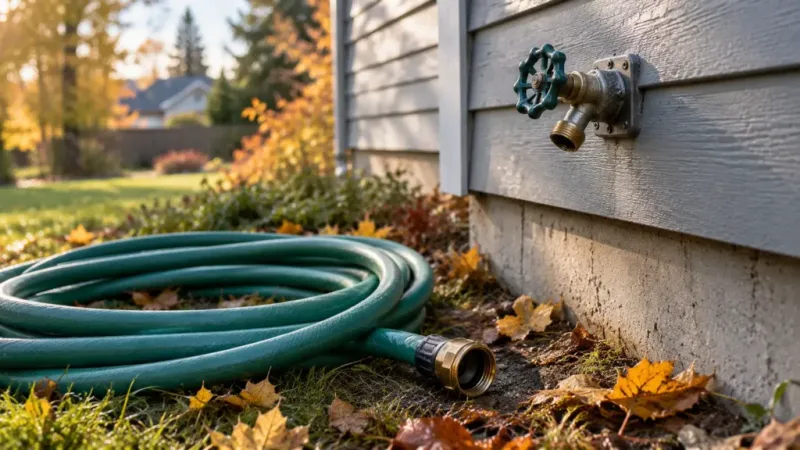
Grab the hose before the cold front arrives, not after. Unscrew it from the spigot, and take off anything else threaded on the end, such as a splitter, a watering timer, or a hose-end filter.
Any of these can hold back the flow of draining water.
Not every attached hose will cause damage, and plenty of faucets survive a night with one on. Still, a restricted outlet is the kind of setup that can leave water sitting in the tube, so removal is cheap insurance.
The manufacturer’s instructions treat drainage as a condition of frost protection.
Next, deal with the hose itself. UF/IFAS Extension advises disconnecting and draining exterior hoses.
Lift one end to let water run out, coil it loosely, and store it in a garage or shed so ice does not crack the fittings or the rubber.
A conventional outdoor faucet may need a different step
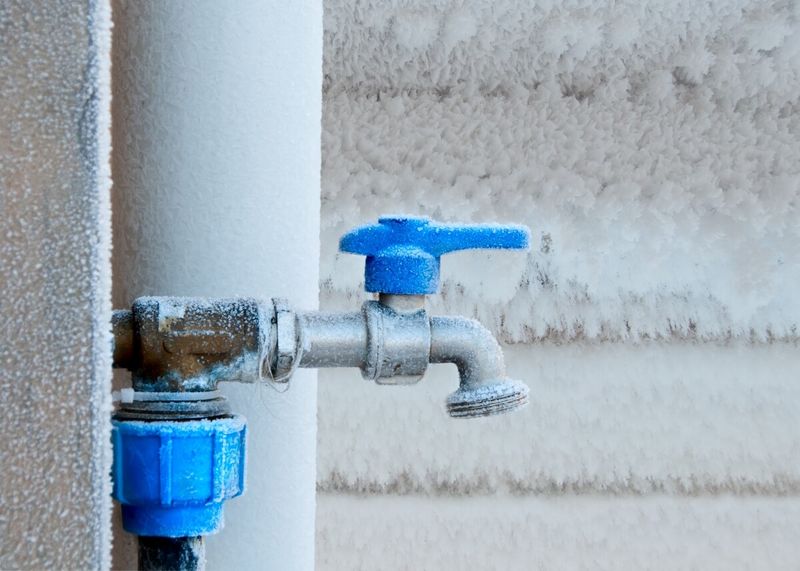
Plenty of outdoor faucets are not frost-free at all. A conventional faucet has its valve at the spout, so water sits in the pipe leading to it.
Pulling off the hose helps, but it may not winterize that plumbing by itself.
If your conventional faucet has its own indoor shutoff, the usual routine is to turn that valve off and then drain the line as appropriate. The City of College Station advises shutting off and draining outdoor faucet lines before freezing weather.
Details differ from house to house. Some faucets have a small drain cap on the shutoff, and some have no indoor valve at all.
Follow the instructions for your fixture, and if you cannot tell what you have, a plumber can identify it in a short visit.
Check for leaks the next time you use the faucet
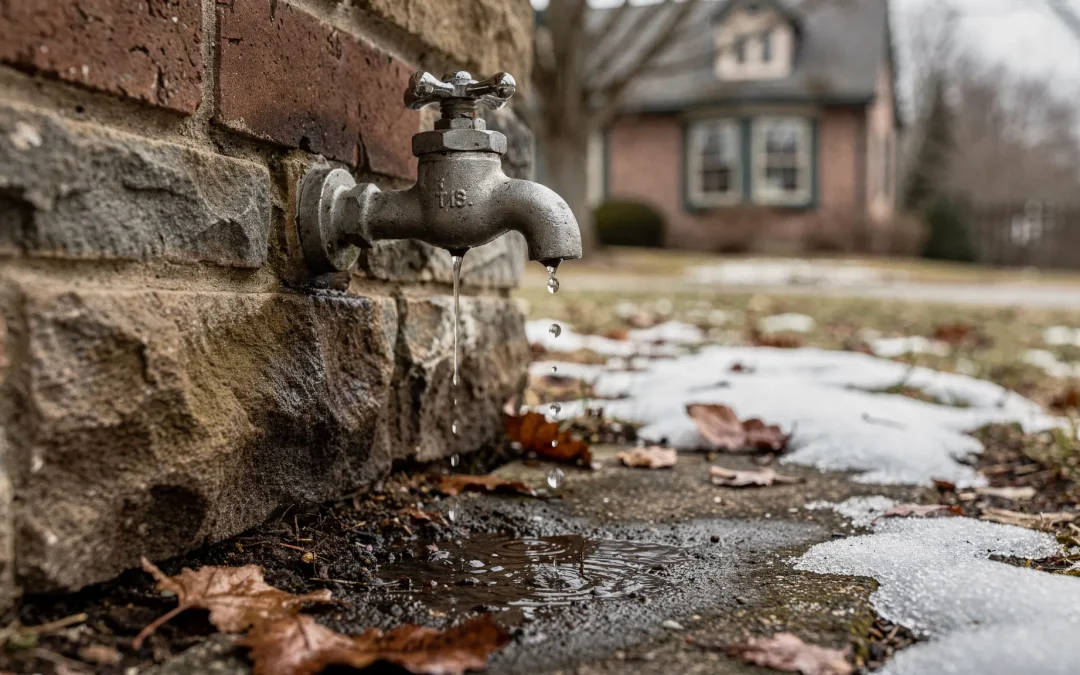
After a freeze, the first time you turn the water on is the moment of truth. A damaged tube may hold together while it is empty or frozen, then leak once water flows again.
As the manufacturer’s documentation suggests, a split can hide behind the shutoff.
Open the faucet slowly and stay nearby. Look for water around the faucet base, dripping from the spout when it is off, wet siding, or damp spots on the inside wall, ceiling, or floor near that spot.
Signs can vary, and some damaged faucets will not look like others.
If you find a leak, shut off the water and call a plumber. Do not use an open flame to thaw pipes, a warning echoed by the NYC Department of Environmental Protection.
A quick check now can keep a small leak from soaking a wall for weeks.
Use local forecasts, not a universal freeze date
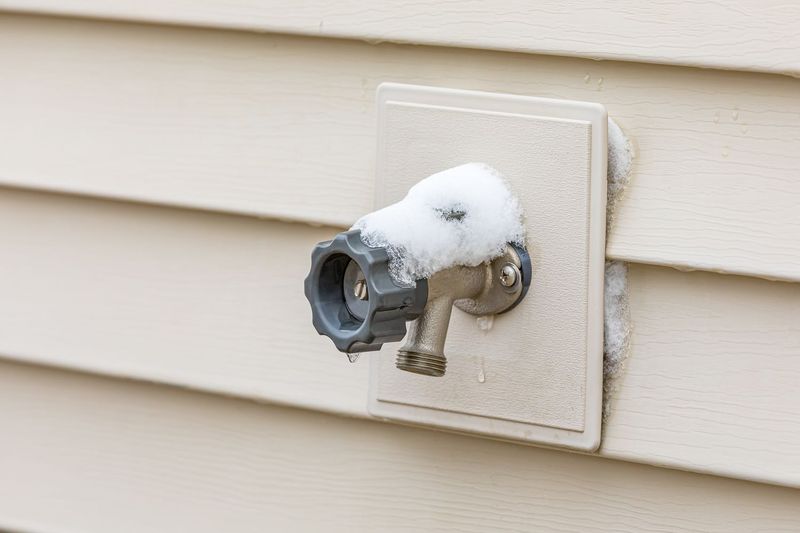
Skip the calendar and watch your own forecast. A hard freeze, as the National Weather Service defines it, is tied to damage to plants, not to the moment a particular faucet freezes.
A Houston porch and a Panhandle backyard will hit risky weather on very different dates.
Here is a simple plan. When freezing weather shows up in the forecast, pull hoses and outlet accessories off first.
Then walk the yard and note which faucets are frost-free and which are conventional, so each gets the right step.
Florida gardeners get cold snaps too, and UF/IFAS Extension frames hose draining as a precaution for those nights. A faucet that is ready early costs you nothing, and one that is caught off guard can cost a wall.