

Fire ant mounds can keep popping up in North Carolina lawns well into autumn. Fall is a smart time to act, because ants that are still out feeding will carry bait back to their colonies.
Some yards need only bait, and some may need a follow-up drench. Here is how to check, choose, and time your treatment with realistic expectations.
Treat while ants are active, not by the calendar alone
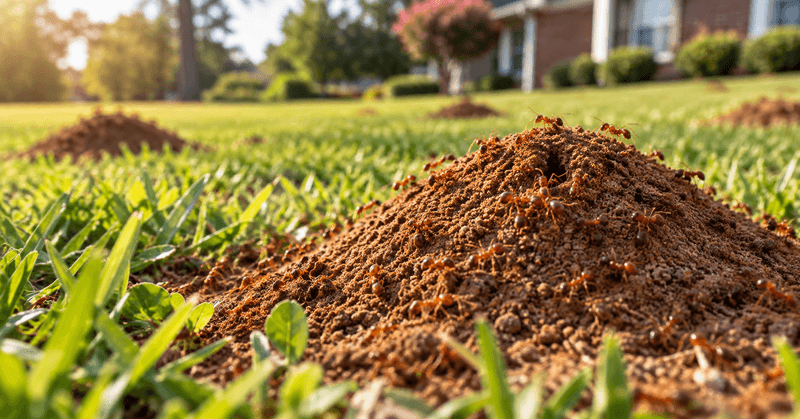
Timing matters more than most homeowners expect. NC State Extension guidance names late September to early October as the preferred treatment window, when ants are still actively foraging and before the soil cools.
Chemical control tends to work best when ants are out looking for food, because bait only works if workers pick it up and carry it home.
That window is a general guide, not a promise that every yard has identical timing. Mountain, Piedmont, and coastal plain yards can warm and cool at different paces, and a sunny slope may stay busy longer than a shady corner.
Ant behavior in your own yard is a better clue than the date on the calendar.
If you are reading this on or after October 23, 2026, this year’s preferred window has passed. That does not mean active colonies can never be treated.
On suitable warm days, when ants are still feeding, treatment may still reduce activity. You simply should not expect the ideal fall conditions.
As soil temperatures drop, foraging slows. UGA Extension notes that foraging slows when soil temperatures fall below roughly 65 to 70 degrees Fahrenheit.
Treat that figure as general background on cooling, not as a North Carolina cutoff. Slower foraging is also not the same as every colony going dormant, since some mounds stay active through winter.
The practical plan is simple. Confirm that ants are feeding, treat with a labeled product, and keep expectations realistic.
Bait followed by a drench is an option, not a requirement for every yard.
Check for feeding before you apply bait
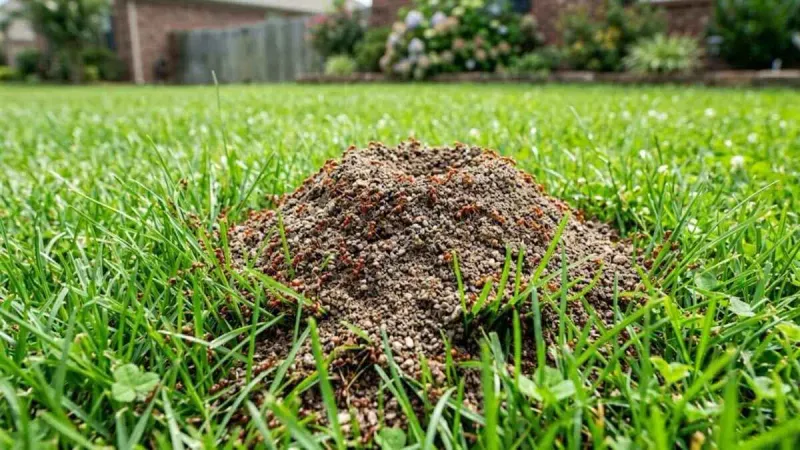
A mound in the grass does not prove ants are feeding right now. Before spending money on bait, run a quick test.
Place a small food lure, such as a potato chip, near the mound, but not on it, and keep your feet and tools away from the nest so you do not disturb it.
According to NC State’s turf guide, you can check after about 5 to 10 minutes. If ants swarm the chip and start hauling it off, they are foraging and bait has a good chance of being picked up.
If nothing shows up, wait for a warmer part of the day or another day.
Also make sure you are dealing with the right pest. NC State describes imported fire ants as widespread in the state, but that does not mean every mound or ant in your yard is one.
Conditions also vary from place to place.
If you are unsure, collect a specimen and take it to your county Extension center for positive identification. NC State’s biology resource backs this step when the pest is in doubt.
A correct ID keeps you from treating harmless ants with products meant for fire ants.
Match the treatment scale to the number of colonies
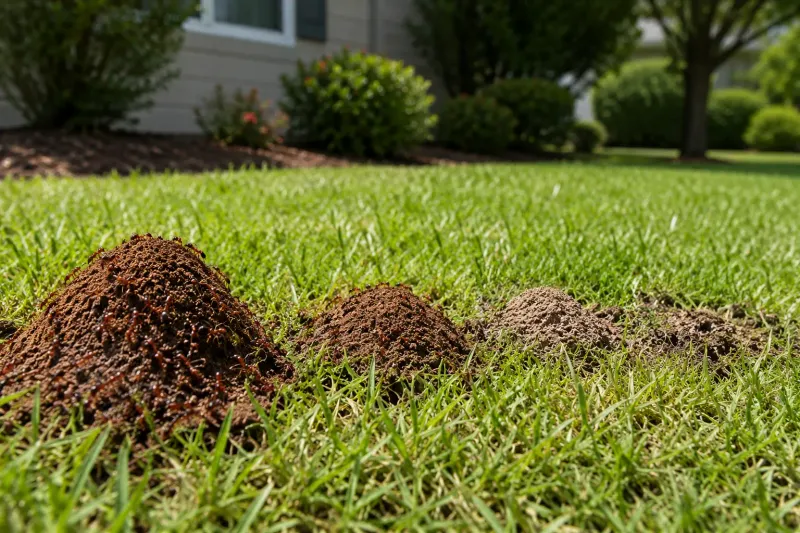
Two mounds by the mailbox call for a different approach than twenty across the back lawn. Scale is the main thing to weigh before you buy anything.
For a few mounds, treating each one individually is a reasonable choice. NC State’s turf guidance notes that individual mound treatment typically uses less insecticide and may have less impact on beneficial insects.
That appeals to homeowners who want to keep chemical use low.
When many colonies are scattered across a lawn, walking to each one gets tedious. Baiting or broadcasting a bait product over the area can be more practical in that case.
The NC State Entomology fire ant page offers further background on the options.
Neither approach is best for every yard. A small, tidy property may do fine with spot treatment, while a large lawn with heavy activity may suit bait.
Nothing says you must do both. Pick the method that fits your mound count, then judge the results before deciding on anything more.
Place fresh bait where foragers can carry it back
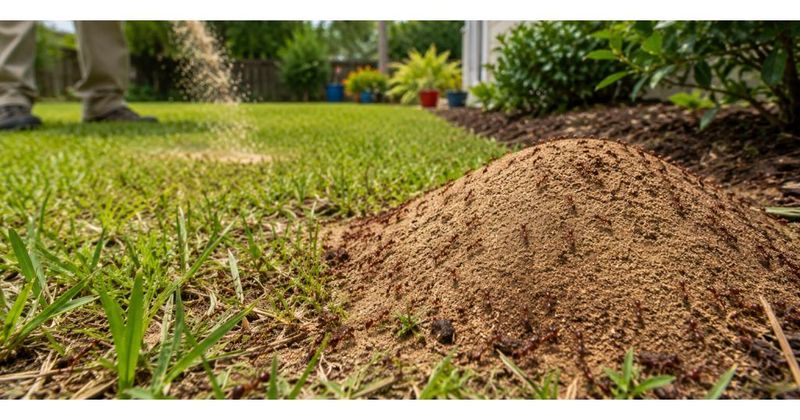
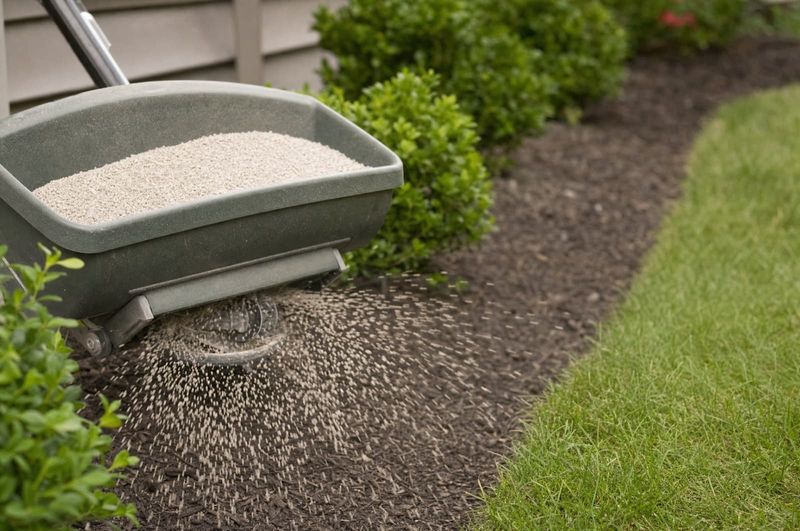
Bait works like a delivery service. Worker ants pick up the granules, carry them back to the colony, and share them.
That is why you want ants actively out and moving before you spread anything.
Start with fresh product. Old or damp bait may be less attractive to foragers, so check the package and storage condition.
Sprinkle it around the mound, not on top of it, so you do not stir up the nest and send workers scattering.
The NC State publication on fire ants in North Carolina describes bait as a slower route than treating a mound directly. Patience is part of the deal.
Give it time to work before judging the results.
The label sets the rules for weather conditions, application rate, and where the product may be used. NC State’s turf guide stresses following label directions for rate and conditions.
More bait is not better, and a heavier hand can waste product.
Slower does not mean a drench must follow. In many yards, bait alone may be enough, particularly where many mounds are present and a fast result is not essential.
Check the results first, then decide.
Consider a drench only after checking the results
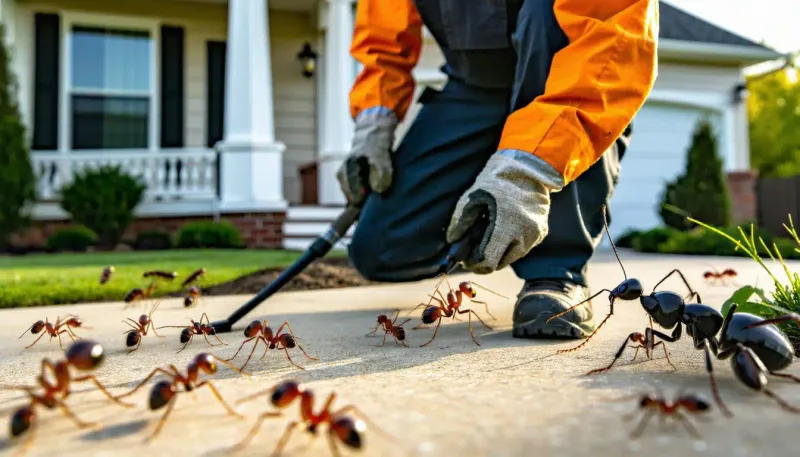
A drench is a follow-up, not an automatic second step. Wait about 5 to 7 days after baiting, then look at the mound again.
If ants are quiet, you may be done. If activity persists, or you want faster control, a drench is worth considering.
NC State’s landscape guidance warns against applying bait and drench at the same time, since that wastes bait. The waiting period lets foragers carry the bait home first.
When you do drench, aim for mid-morning, when ants are near the surface. Avoid disturbing the nest as you work.
Water amounts depend on the product you choose, so read the label before you fill a bucket.
For liquid drenches on turf, NC State’s turf guide mentions about 2 gallons per mound. If your product label says something different, the label controls.
Keep expectations in check. A drench can act faster than bait, but NC State notes that killing every worker and the queen is difficult.
A mound that looks quiet may still hold survivors, so keep watching it.
Let the product label set the safety limits
Before you open any container, take two minutes with the label. It spells out where the product may be used, how much to apply, and what precautions to take.
Not every product suits every spot. NC State advises checking labels for use around vegetable gardens, edible plants, pets, and livestock.
Never assume a product is fine near these. If the label does not permit the site, choose another product or method.
Water is another concern. NC State’s turf guide notes that some insecticides can harm aquatic organisms.
Keep that in mind near ponds, ditches, and streams.
Some home remedies are simply unsafe. Do not pour gasoline, diesel, chlorine, or ammonia on mounds.
NC State warns they are dangerous and can contaminate soil or groundwater.
A quick check before you start: read the label, confirm the site is permitted, note the rate and conditions, and keep kids and pets away during application.
Recheck treated areas and set realistic spring expectations
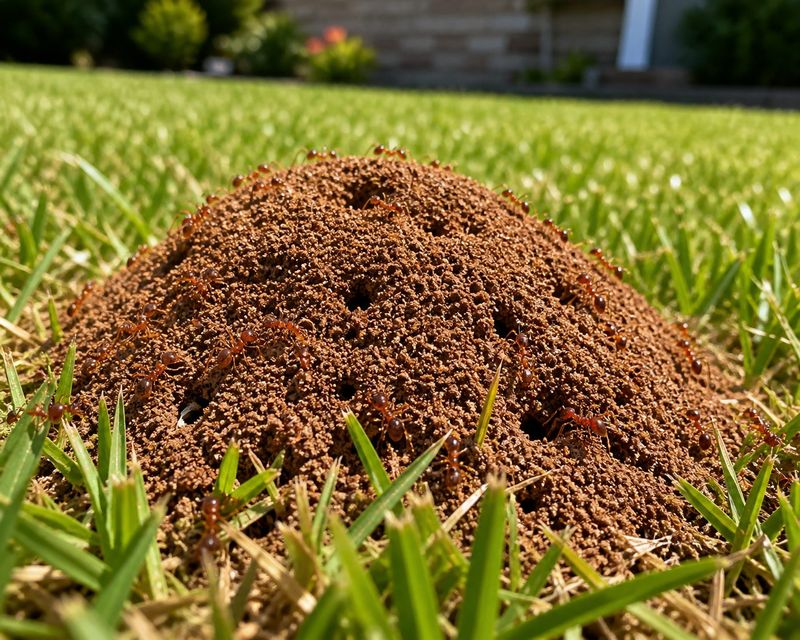
One treatment is not a guarantee. A visible mound may be only part of a colony, and NC State’s biology resource notes that colonies can produce satellite mounds nearby.
Walk the treated areas every week or two while it is still mild, and again as spring warms.
Winter outcomes vary. NC State reports that some small late-fall colonies will not survive winter, but not all.
Others can persist, and new ones can move in.
That is why NC State’s landscape guidance points to reinvasion as a normal part of fire ant management. If new mounds appear, repeat the feeding check and choose a labeled treatment again.
The goal is fewer active problem mounds, not a perfect lawn. Fall treatment gives you a head start, and watching your yard does the rest.