
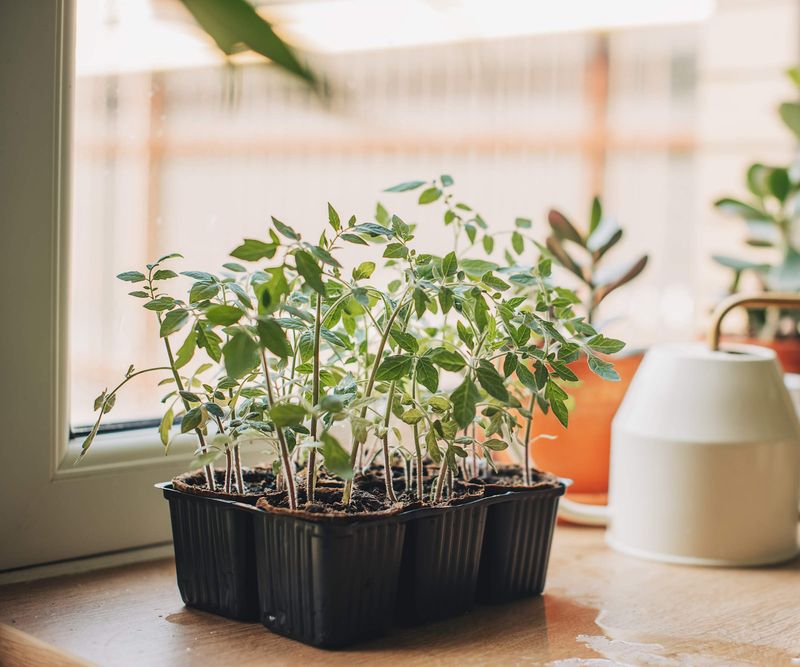
A tomato seedling that leans, stretches, and flops over can make you worry that you have already lost the season. Light is a common reason this happens, but it is not the only one.
A few simple checks can help you figure out what is going on and keep new growth sturdier. Here is how to sort out the cause and what to do next.
Why indoor tomato seedlings may get tall and floppy
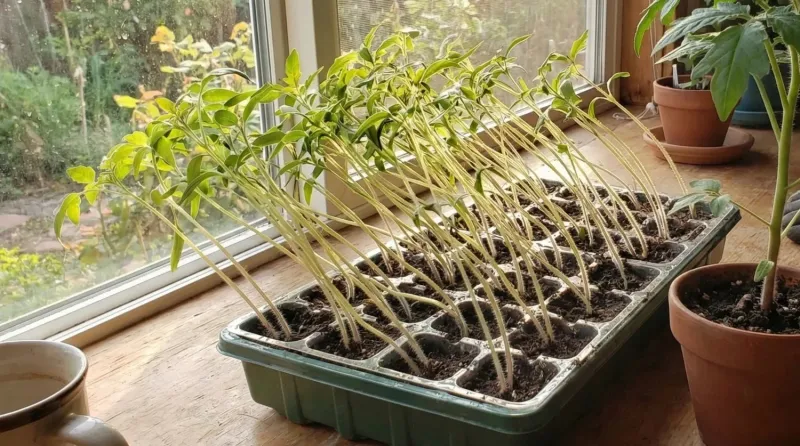
Seedlings that stretch toward a window are often reaching for more light. Even a sunny window may not give enough, because the light is weaker and shorter-lived than plants need.
University of Minnesota Extension notes that overhead lighting often helps seedlings grow sturdier.
Still, a tall, thin look does not prove the cause. Looking at a plant alone cannot tell you whether light, heat, crowding, or feeding is behind the problem.
Several of these can overlap, and each one can push a seedling to grow long and weak.
Think of this as detective work. Utah State University Extension lists warm conditions, crowding, and too much fertilizer among the possible contributors.
The next sections walk through each clue so you can adjust your setup with confidence.
Give seedlings a daily stretch of light
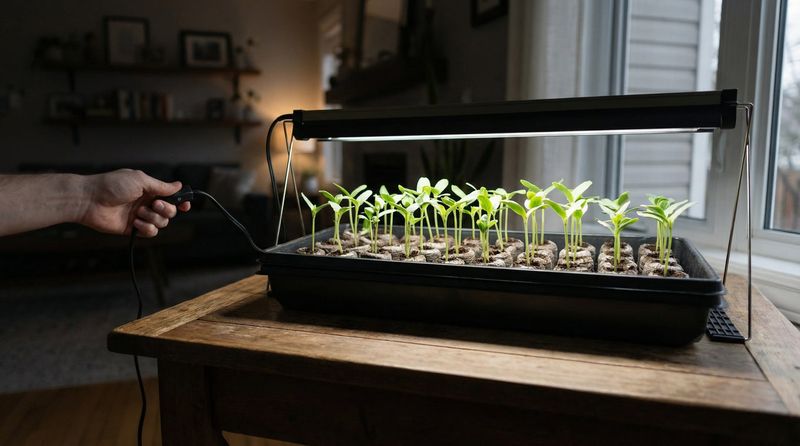
Once seeds have sprouted, aim for roughly 12 to 16 hours of light each day. A cheap outlet timer takes the guesswork out and keeps the schedule steady.
Minnesota Extension seed-starting advice points to a long daily light period for seedlings.
Plants also need a rest. Leave the lights off for part of every 24 hours rather than running them nonstop, a point reflected in lighting guidance for indoor plants.
Treat the hour range as a practical starting point, not a strict rule. Recommendations shift with the type of light and the setup, as Iowa State Extension explains.
Watch how your seedlings respond over a week or two and adjust from there.
Position the light for your fixture
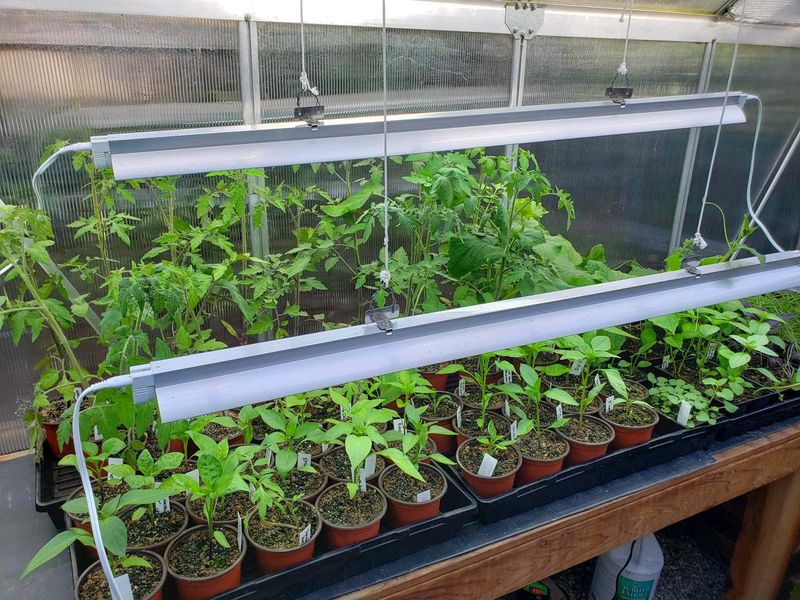
Moving a light closer to the plants raises the brightness they receive, because intensity drops quickly with distance. That is why a light hung too high can leave seedlings stretching.
Extension sources, including Utah State University, suggest keeping lights fairly close.
No single distance fits every fixture, though. Advice ranges from a few inches to about 4 to 6 inches, since bulbs and fixtures differ in output and heat.
Iowa State Extension also stresses that hot fixtures can harm plants when placed too near.
Start with the distance in your fixture’s instructions. Raise the light as the seedlings grow so the leaves never touch it.
If you see bleached, crispy, or curled leaf edges, lift the light and check again. Chains or adjustable stands make this easy, and the Minnesota seed-starting guide shows similar setups.
A basic shop light can work
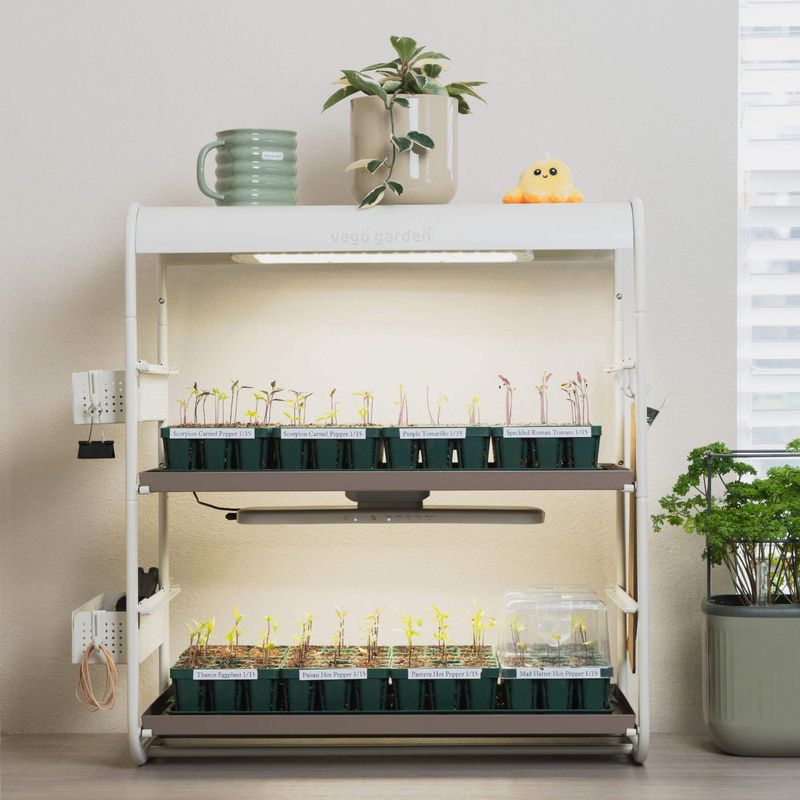
You do not have to buy an expensive, specialized grow light to get started. Iowa State Extension describes standard fluorescent or LED shop fixtures as workable choices for home seed starting.
That is good news if your budget is tight. A plain fixture from a hardware store, hung over a shelf or table, can give seedlings far more light than a windowsill does.
Skip the hunt for a magic brand or special number. What matters most is that the light sits over the plants, runs on a regular schedule, and can be raised as they grow.
If the seedlings stay compact and green, your setup is doing its job. If they keep stretching, look at the other clues in the next section.
Check for causes beyond light
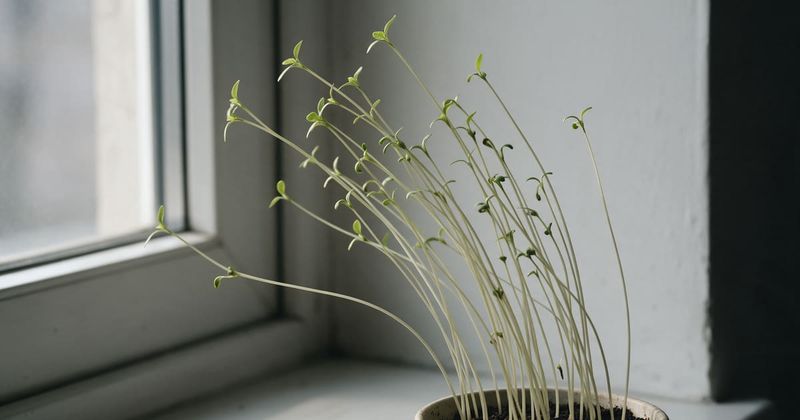
Before blaming light alone, look at the whole setup. Crowded seedlings shade each other, so space them out until leaves do not overlap.
Utah State University Extension names crowding, warmth, and too much fertilizer as contributors to weak growth.
Warm rooms can speed stem growth faster than the plant can thicken. Extra fertilizer does not fix floppy seedlings and may add to the problem, so feed lightly as Minnesota Extension advises.
Also notice how the problem looks. Gradual stretching over days points toward legginess.
A seedling that suddenly topples at the soil line, with a thin or pinched stem base, may have damping-off, a disease problem rather than a lighting one. Removing affected plants and improving airflow may help protect the rest, though results are not guaranteed.
Plant a leggy tomato deeper at transplanting
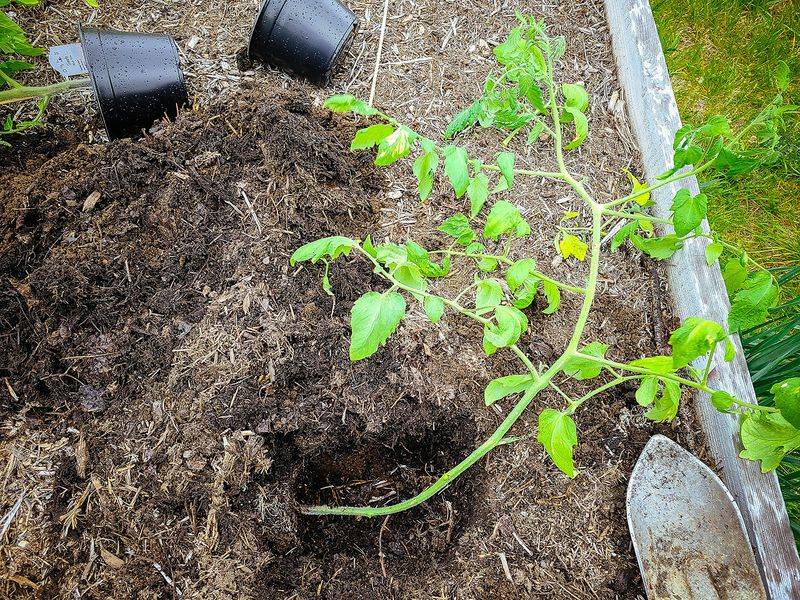
Tomatoes have a handy trick. They can form roots along buried stem tissue, so a leggy tomato can be planted deeper when it moves outdoors.
University of Minnesota Extension notes this option for tall tomato transplants.
Strip the lower leaves and bury the bare stem, leaving the top leaves above the soil. Extra roots along that stem may help the plant anchor itself and take up water.
Keep the limits in mind. Deeper planting happens later, at transplanting, and it does not fix your indoor light setup.
It also does not shorten the stem that has already stretched, and it cannot promise that a badly weakened seedling will recover. This tip is for tomatoes only, so do not bury peppers or other seedlings the same way.
Check local fall tomato planting dates
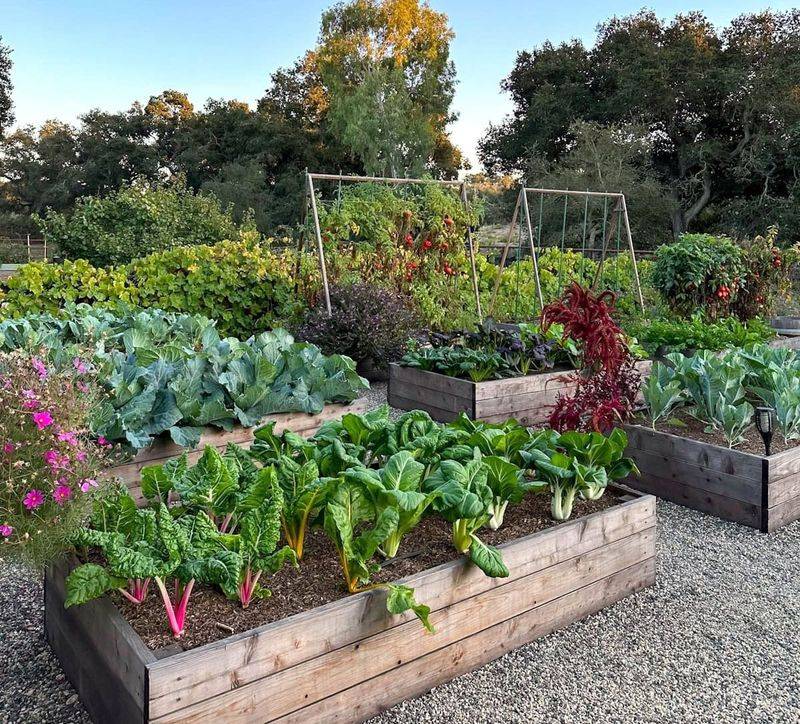
Timing outdoors depends heavily on where you live. The Texas A&M fall vegetable guide lists different last good dates for setting out tomato transplants in different parts of the state.
Florida varies too. UF/IFAS Extension gives different outdoor tomato planting windows for north, central, and south Florida.
These are outdoor planting schedules. They do not mean you should start tomatoes indoors all through fall and winter.
Use them to work backward from your own area, and check with your county Extension office for exact dates.
A stocky seedling ready on time beats a stretched one that missed its window.