
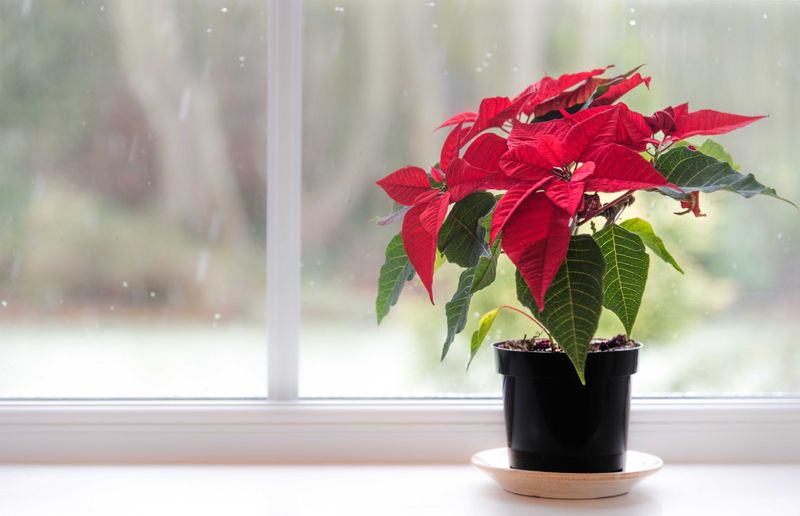
That poinsettia you kept alive since last December is probably sitting there with plain green leaves. Many gardeners have heard that a dark closet can bring the color back.
The idea has some truth to it, but the details matter a lot. Here is how nightly darkness works, how to do it, and what to expect.
A closet can help create the long nights a poinsettia needs
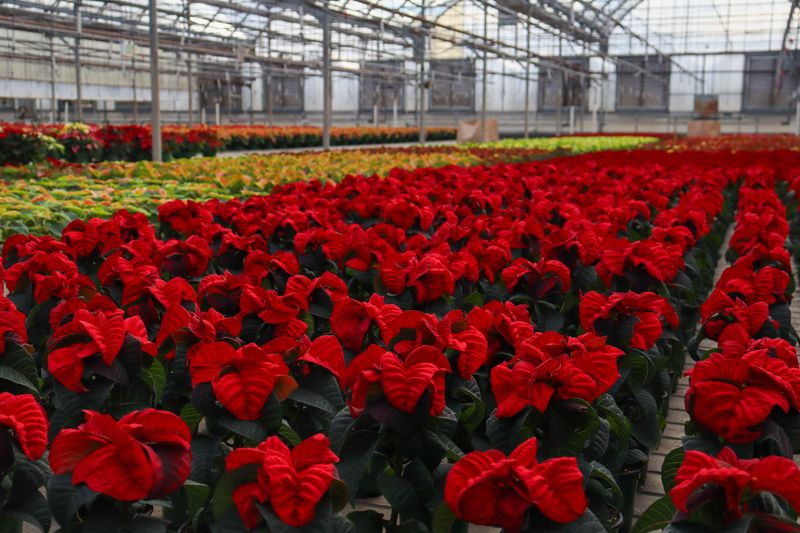
Yes, a closet can help. A saved poinsettia needs long, uninterrupted nights to start forming colored bracts, and a closet is a handy place to get them.
Mississippi State Extension describes giving the plant a long dark period each night as the way to encourage reblooming.
The closet itself is nothing special. A spare room with no lamps, a large box, or a light-blocking cover over the pot can do the same job.
What matters is that the darkness is complete and lasts long enough, night after night.
Darkness is a signal, not a guarantee. UF/IFAS explains that the plant’s response depends on its cultivar and growing conditions.
So a closet can improve your odds of holiday color, but it cannot promise a particular shade or a full display by Christmas.
The colorful parts are bracts, not the tiny flowers
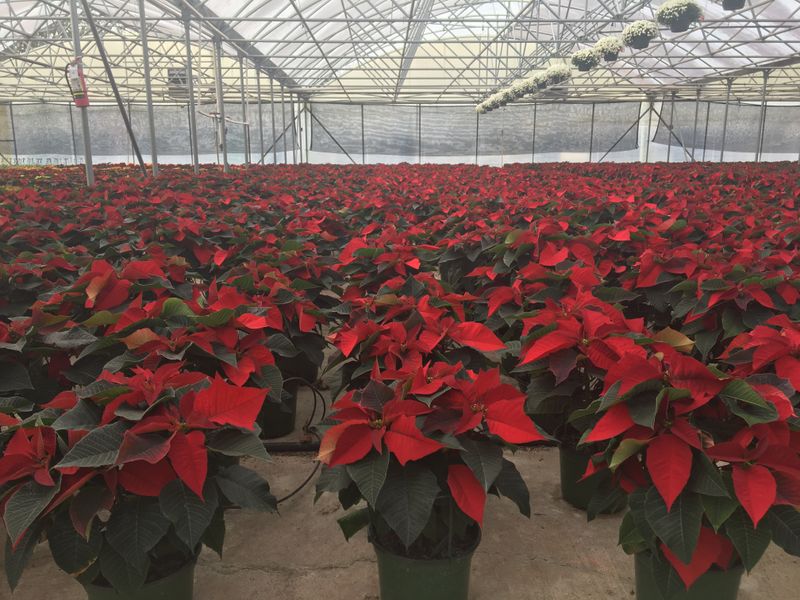
Most people call the bright part of a poinsettia the flower, but it is really a set of modified leaves called bracts. The true flowers are the small yellowish clusters in the center.
According to University of Maryland Extension, those bracts are what give the plant its showy look.
Bract color comes from the cultivar. A plant bought as a red variety can return red, but a pink, white, or speckled one will come back in its own color.
So the goal is holiday color, and red is only possible if your plant was a red type to begin with.
Long nights are what nudge the plant toward flowering and bract color. Still, the closet does not paint anything red.
As UF/IFAS notes, nights are one part of a bigger process, and the plant’s genetics decide what color shows up.
Give the plant long, uninterrupted nights and bright days
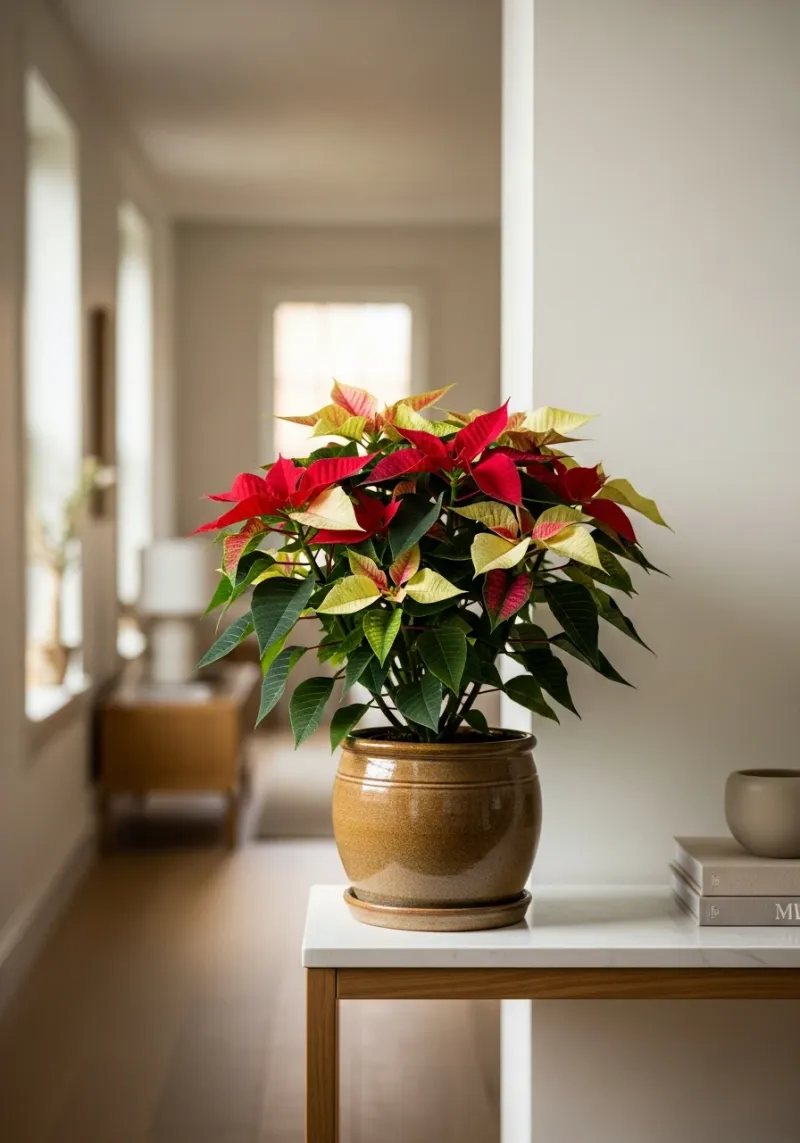
A good home routine is about 12 to 14 hours of total darkness each night. Many gardeners use the full 14, such as 5 p.m. to 7 a.m.
UF/IFAS Extension Orange County suggests 14 hours of darkness followed by about 10 hours of bright light.
In the morning, move the plant out of the closet and into the brightest spot you have. Daytime light matters just as much as the dark, because the plant still has to feed itself.
Never leave it in darkness all day.
Treat the numbers as a practical target, not a magic switch. Texas A&M AgriLife Extension reports that flowering can begin with dark periods around 11 hours 45 minutes in many cultivars, while 14 to 14.5 hours generally starts it faster.
Pick a schedule you can repeat daily, since steady habits help more than perfection.
Start the schedule about eight to ten weeks before the display
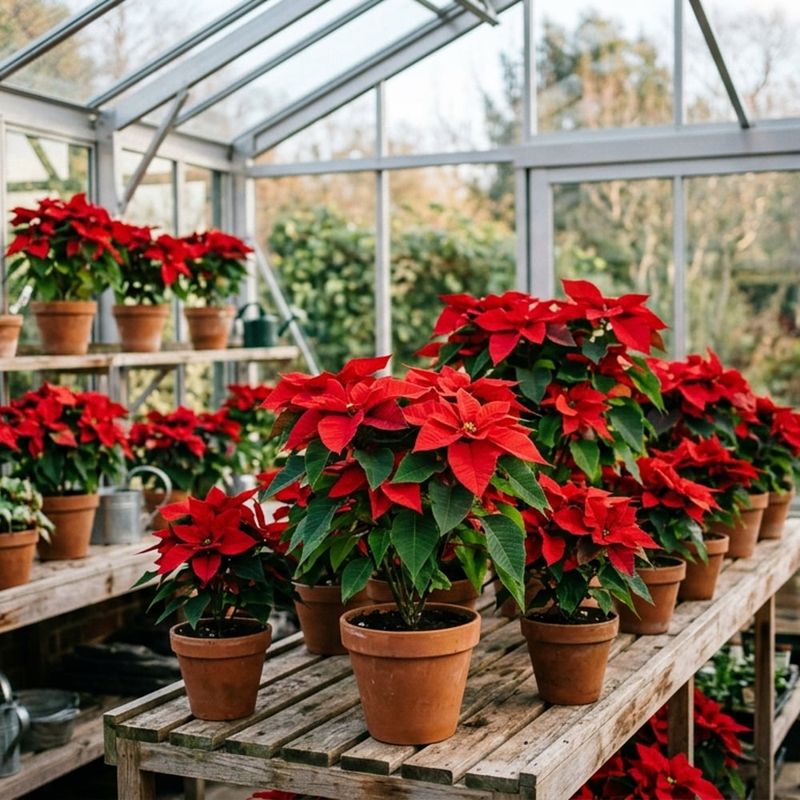
Count backward from the day you want color. Most sources suggest starting roughly 8 to 10 weeks ahead.
For Christmas, that lands in early October, and UGA Extension uses around October 1 as its start date.
Think of that date as a starting line, not a deadline. Texas A&M documents different response times among cultivars, so one variety may show color earlier than another.
Your home conditions can shift things too.
If you begin late, you may still get color, just closer to New Year’s than Christmas. And Mississippi State Extension calls reflowering challenging, so go in hopeful but flexible.
Mark your start date on the calendar and check the tips of the plant every week for new color.
Support reblooming with care throughout the year
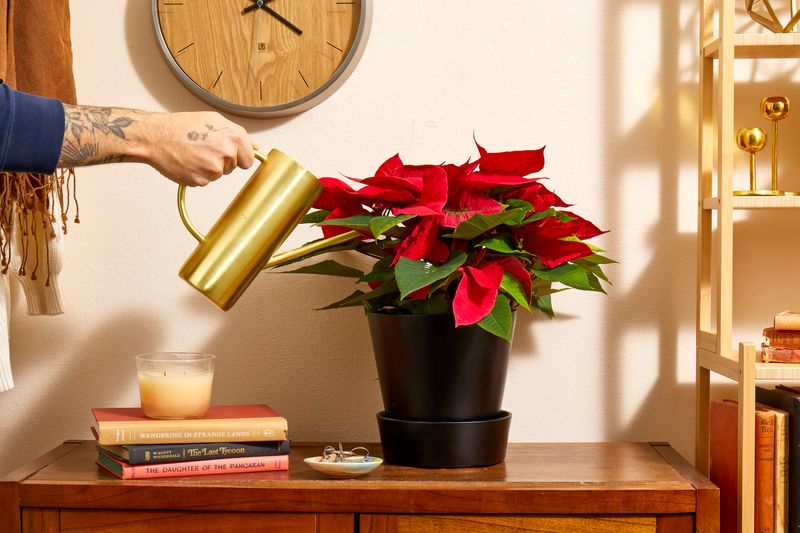
A fall closet routine works best on a plant that has been looked after all year. Give it bright light, water it when it needs it, and keep it away from cold.
A tired, thirsty, or chilled plant has little energy to build new bracts.
Mississippi State Extension says getting a poinsettia to rebloom is challenging. It also notes that single-stemmed plants may not rebloom well, so a leggy one-stem plant may disappoint you no matter how careful you are.
Water carefully rather than on a rigid timetable. Check the soil, and let extra water drain so the roots are not sitting in a soggy saucer.
If a plant is thriving but stays green, you can still enjoy the leaves as a houseplant.
Stray light and temperature can affect the result
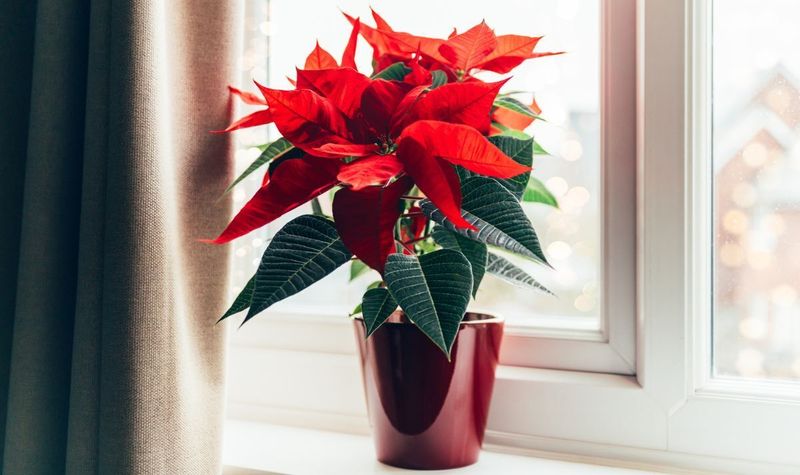
Even a perfect routine can run late. Light during the dark period can delay or disrupt flowering.
Mississippi State Extension warns that nighttime light can hold flowering back, and Texas A&M describes poinsettias as very light-sensitive in production settings.
That does not mean one quick peek ruins everything. It means repeated exposure from a hallway light, a phone screen, or a closet door left cracked is a risk worth avoiding.
If color is slow, check for light leaks first.
Temperature plays a part too. Texas A&M reports fast initiation under commercial conditions around 60 to 70°F, and UF/IFAS warns that temperatures above 79°F can delay it.
Those are source-specific figures, not a home prescription. Cultivar also changes timing, so treat a cooler, steady spot as helpful rather than guaranteed.
Southern warmth does not guarantee a dark outdoor setting
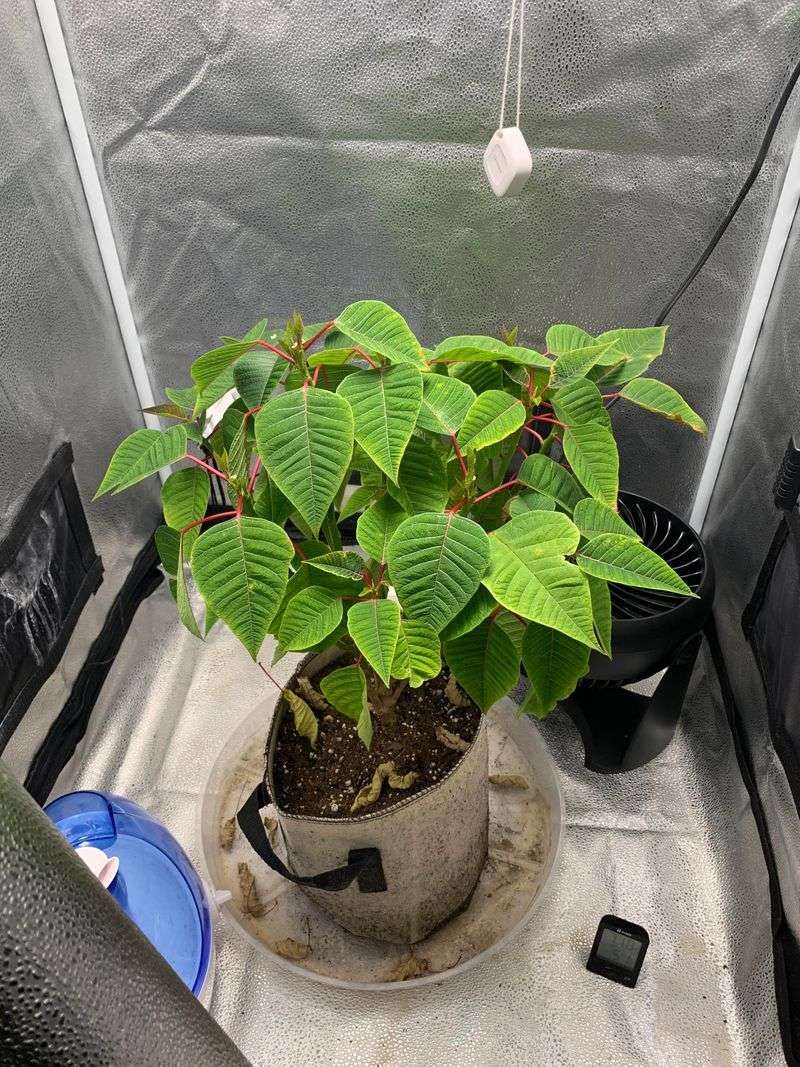
In Florida and Texas, poinsettias may grow outdoors in suitable warm locations, and UF/IFAS covers how they are used in landscapes. Growing outside, though, is a separate question from reblooming on time.
Outdoor nights are rarely truly dark. Porch fixtures, streetlights, pool lights, and security lamps can break up the dark period.
UF/IFAS Extension Osceola County notes that such lighting can interfere with flowering, and that cold can delay it or harm the plant.
If your plant is in a pot, you have an easy fix. Tuck it into a dark garage, shed, or closet each evening, and bring it inside before a cold snap threatens.
A plant in the ground has fewer options, so pick a spot away from lights.
Warm weather helps the plant survive, but it does not make color certain. Darkness and good timing still do the heavy lifting.