
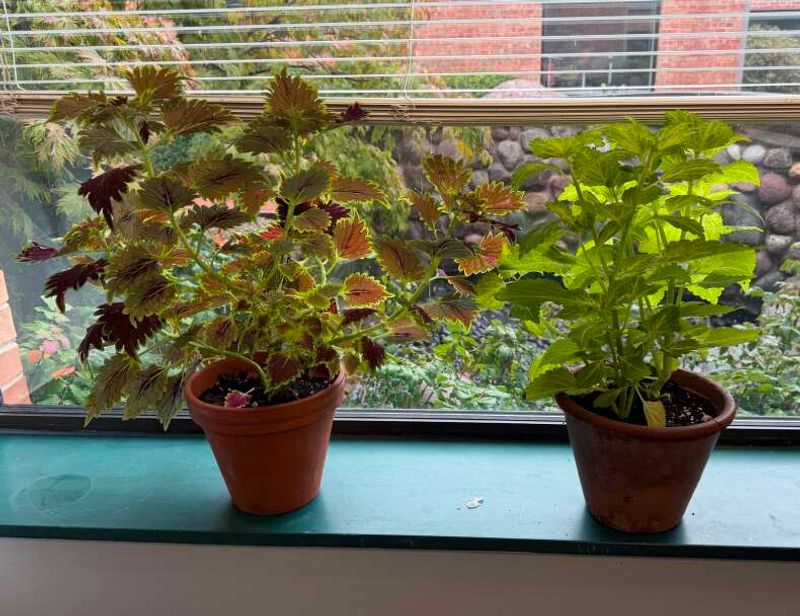
A favorite coleus can fade fast once fall nights turn cold in North Carolina. Hauling a big, sprawling pot indoors is a hassle, and it often brings bugs along for the ride.
A few stem cuttings take up far less room and can carry your best colors toward spring. It is an attempt, not a sure thing, so the timing and the details matter.
When should North Carolina gardeners take cuttings?
Cold can hurt coleus long before the first freeze arrives. UConn Extension notes that coleus can suffer cold injury when temperatures dip below 50°F.
That means waiting for a freeze warning can leave you too late.
Use the forecast as your trigger, not the calendar alone. When a run of cool nights shows up in the ten-day outlook, it is time to take cuttings.
Taking them early also gives you healthier stems to work with, since plants that have been chilled may already look stressed.
Freeze timing swings a lot across the state. NC State’s average first-freeze table lists October 7 at one Ashe County station in the mountains, October 30 at Raleigh Airport in the Piedmont, and November 18 at Wilmington International Airport on the coast.
Treat those as location-specific averages, not deadlines or promises. Some years the first freeze comes earlier, and some years it holds off.
Check your own county’s numbers, then watch the local forecast so you can start cuttings with plenty of time to spare, especially if you garden in the mountains or on higher ground where cold arrives sooner.
Choose healthy stems before you make the cut
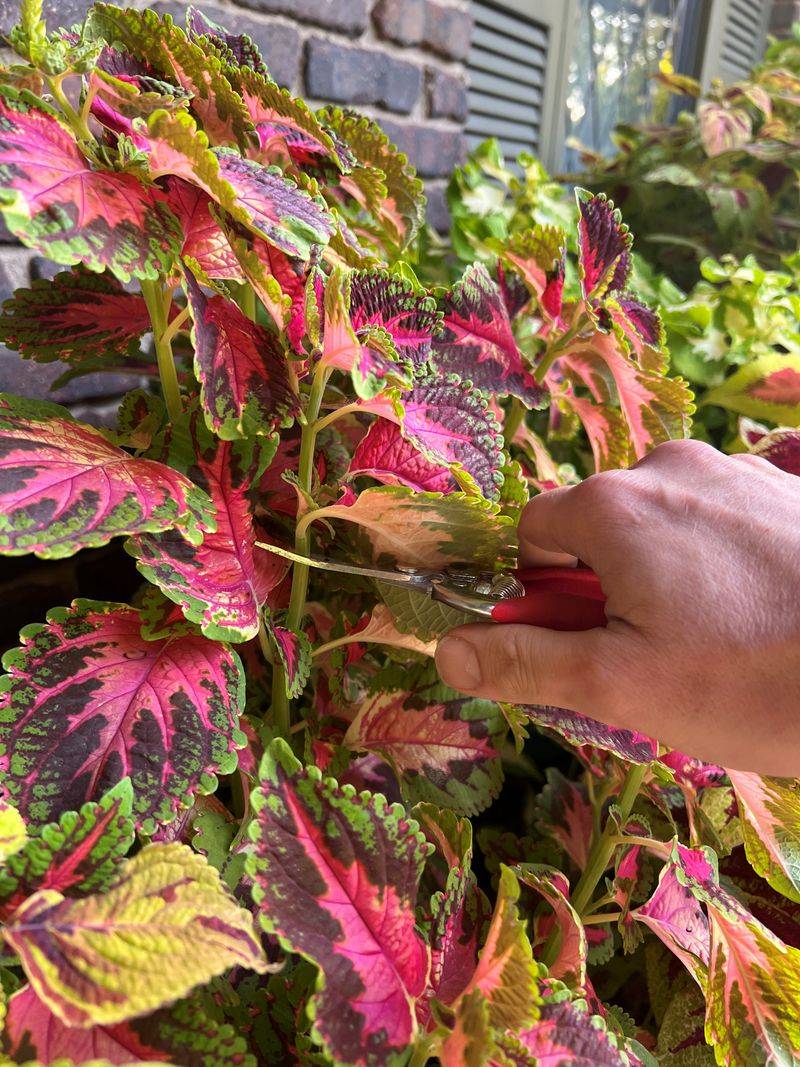
Pick the best-looking plant in the bed. You want sturdy stems and clean leaves with no spots, wilting, or chewed edges.
A sick parent plant tends to produce sick cuttings, so skip anything that already looks tired.
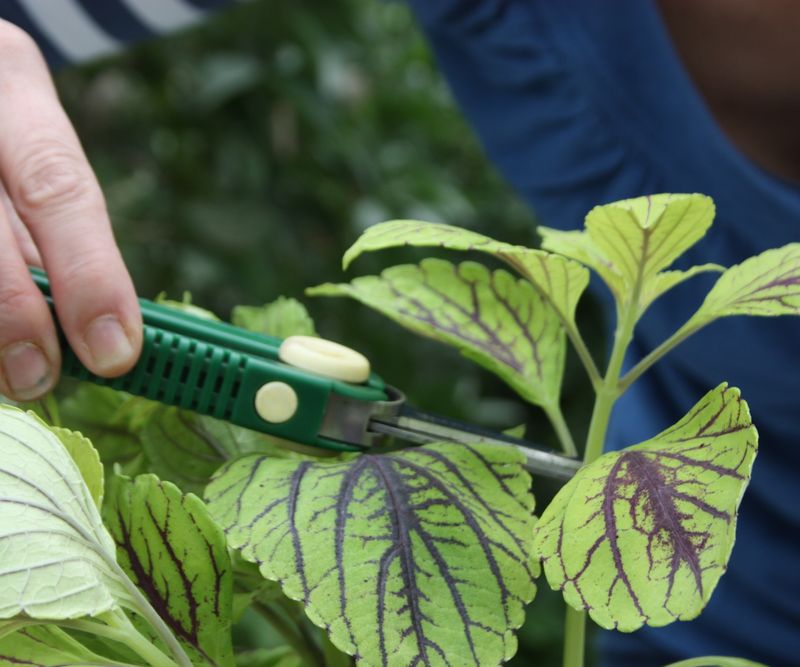
UF/IFAS recommends a clean, sharp cut on a stem section of about 2 to 6 inches. Wipe your snips or scissors with rubbing alcohol first.
A crushed or ragged cut is harder for the stem to heal.
Look for a piece of stem that has a few sets of leaves near the tip. If the plant has flower spikes forming, choose a stem without them, or pinch them off so the cutting puts its energy into roots.
Next, strip the lower leaves from the bottom portion of the stem, and leave the foliage on the upper part. Those bare nodes are where roots are likely to form.
NC State’s plant profile says coleus cuttings can root in water or clean potting soil, so you have options once the cuttings are ready.
Use a jar to get the roots started
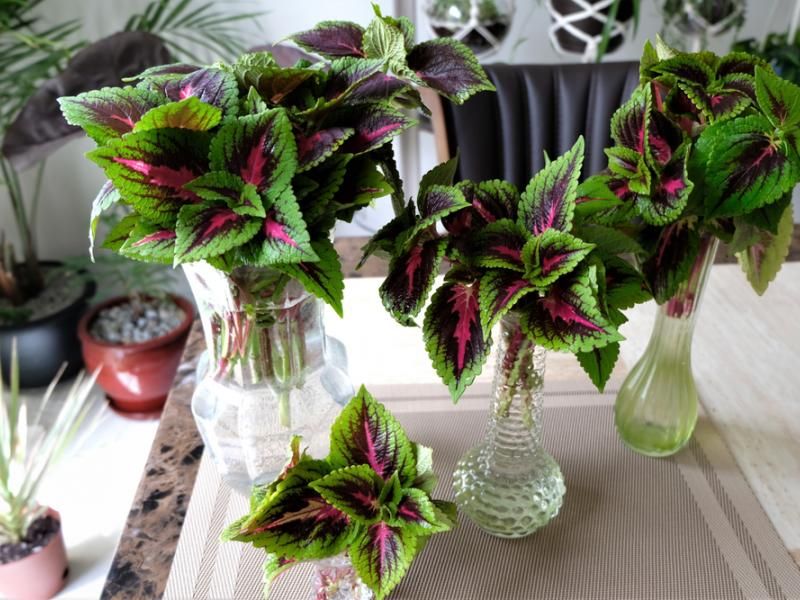
A clean jar or glass is all you need for the first stage. Fill it with room-temperature water and set the bare lower part of each stem into it.
Keep every leaf above the waterline, since submerged leaves rot quickly and cloud the water.
University of Minnesota Extension gives two to three weeks as a typical rooting period. Treat that as a ballpark.
Warmth, light, and the cultivar itself can speed things up or slow them down.
Park the jar where it gets bright light but not hot, blazing sun. Swap in fresh water every few days, and toss any cutting that turns slimy or black at the base.
Remember what the jar is for. It starts the roots, and that is its whole job.
It does not guarantee a cutting will make it, and it is not a recommended winter home for the long haul. Once roots form, the next step is moving each cutting into potting mix.
Pot the cutting when its roots reach 1–2 inches
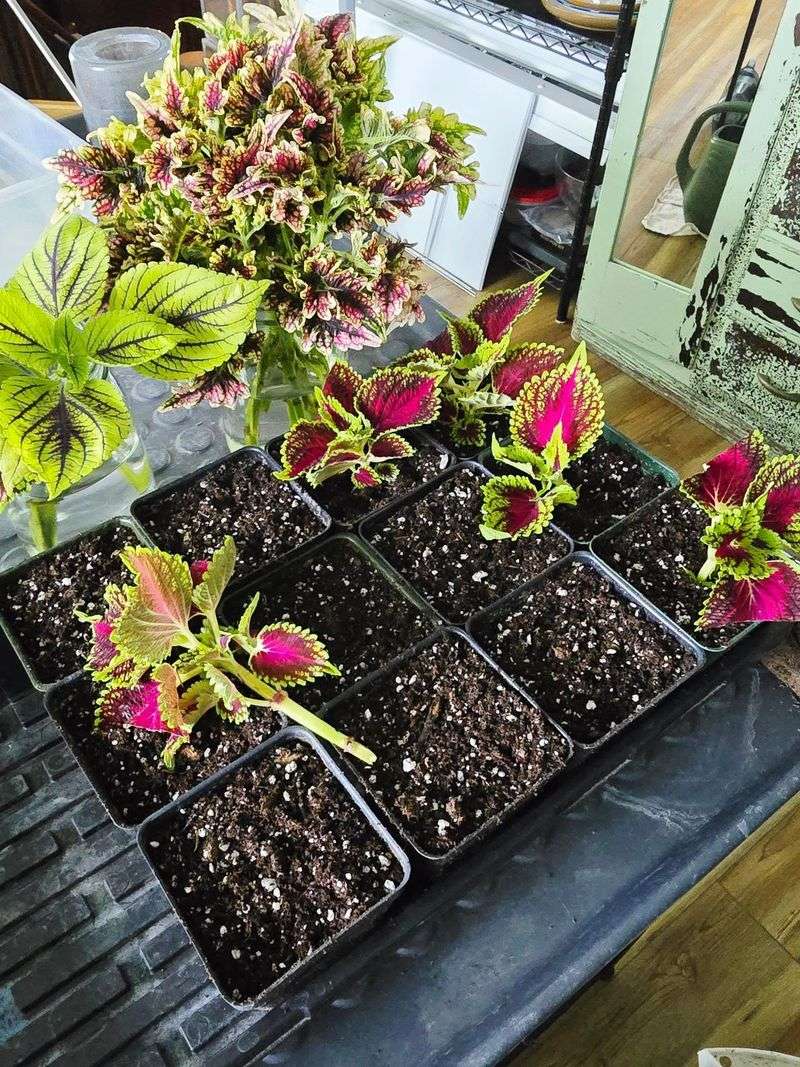
Roots about 1 to 2 inches long mean it is time to pot up. Waiting much longer can leave you with fragile, water-adapted roots that struggle to adjust.
A small pot with drainage holes works well for each cutting.
Handle those roots with care. The University of Washington’s Miller Library points out that water-grown roots are less sturdy than roots grown in soil.
Make a hole in the mix first, lower the roots in, and firm the mix lightly around the stem.
Choose a well-draining potting mix rather than heavy garden soil, which can pack down and hold too much water. Water gently after planting to settle everything in.
From here on, aim for mix that stays moist but not soggy. Soggy mix can rot young roots, while bone-dry mix can stress a cutting that is still getting established.
Check with a fingertip before watering. This is the point where you move from propagation to real winter care.
Give the potted cutting suitable indoor conditions
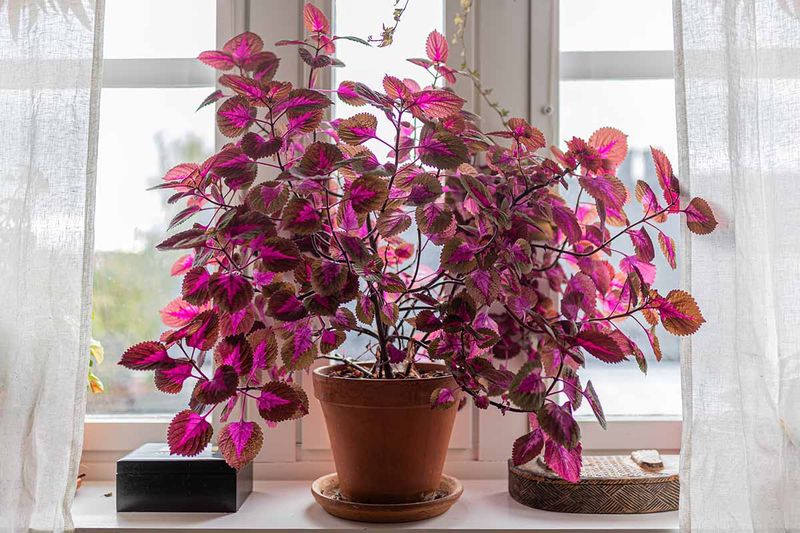
Light is the big one. Coleus wants bright light, but intense direct sun through glass can scorch leaves.
A spot near a bright window, or one softened by a sheer curtain, is a good place to start.
Not every windowsill will work. Some are dim in winter, and others sit over a heating vent or beside a leaky glass pane.
Hot blasts and cold drafts can both stress a young plant, so move the pot if the spot feels extreme.
Keep the potting mix moist but not soggy, and adjust based on how the mix feels rather than a rigid schedule. Homes differ a lot in warmth and humidity, so your routine will too.
Expect some leaf drop after the move indoors. University of Vermont Extension’s tender perennial advice covers how plants brought inside often adjust by shedding leaves.
A few fallen leaves do not mean the cutting is doomed, especially if the stem stays firm and new growth appears at the tips.
Check for pests and keep expectations realistic
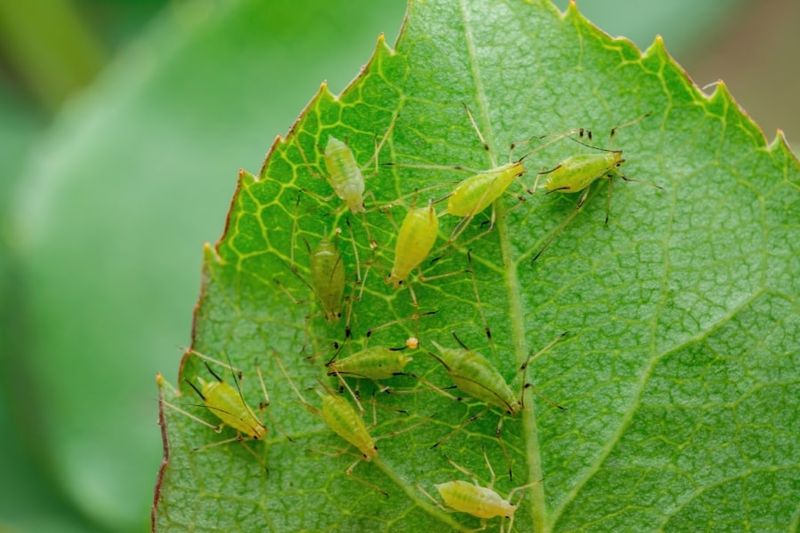
Look over every cutting and its parent plant before anything comes inside. South Dakota State University Extension notes that aphids, whiteflies, and mealybugs can travel indoors on coleus.
Check leaf undersides, stem joints, and any cottony white patches.
If you find pests, pick a different stem or clean the cutting carefully before rooting it. Keep new cuttings apart from your other houseplants for a while so a hidden problem does not spread.
Set your expectations at a sensible level. No particular number of cuttings guarantees success, so some people root several and still lose a few.
Others have luck with fewer, and results vary from home to home.
Also know that a cutting may not match its parent perfectly. The Miller Library notes that some cultivars can revert or produce a sport with different-looking foliage.
Many cuttings come true to the parent, but a surprise now and then is part of growing coleus.
Treat spring color as a goal, not a guarantee
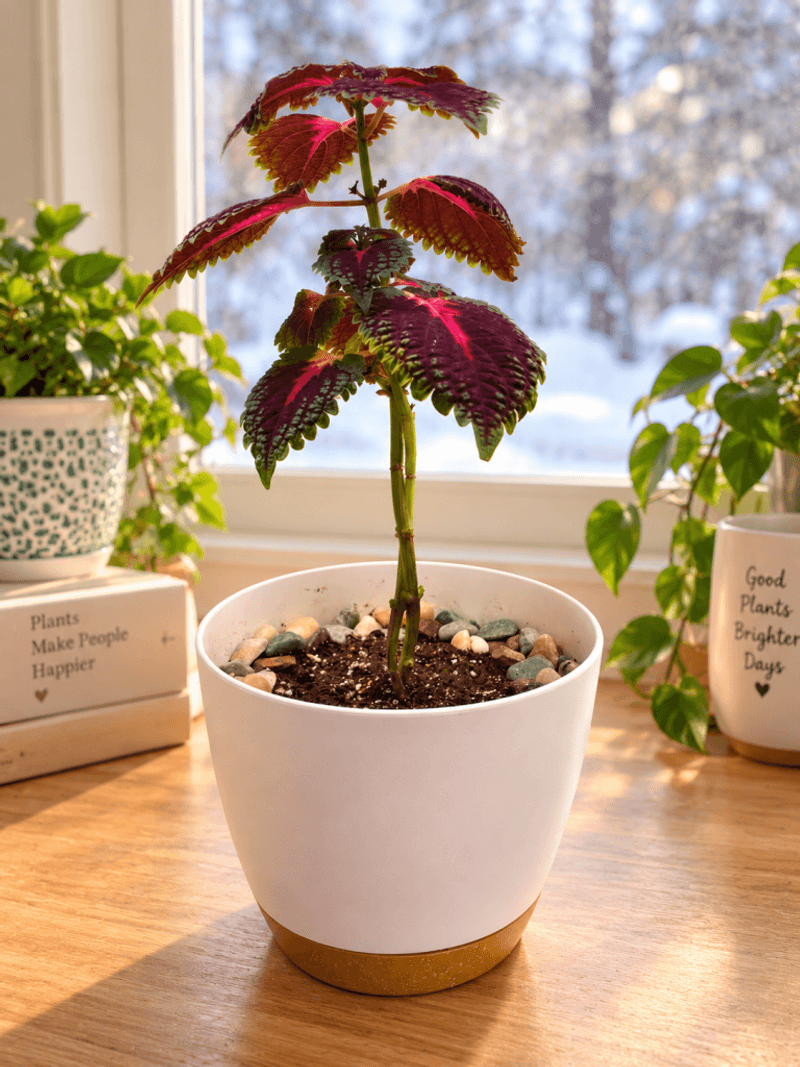
The sequence is simple: take cuttings before cold threatens, root them in water, and pot them up for winter care. It lets you try to save a favorite coleus without hauling a large pot inside.
Survival, perfect foliage, and a workable windowsill are never promised.
Plants that go through a winter indoors sometimes look rough by March. If even one cutting hangs on, you still have a head start on spring.