
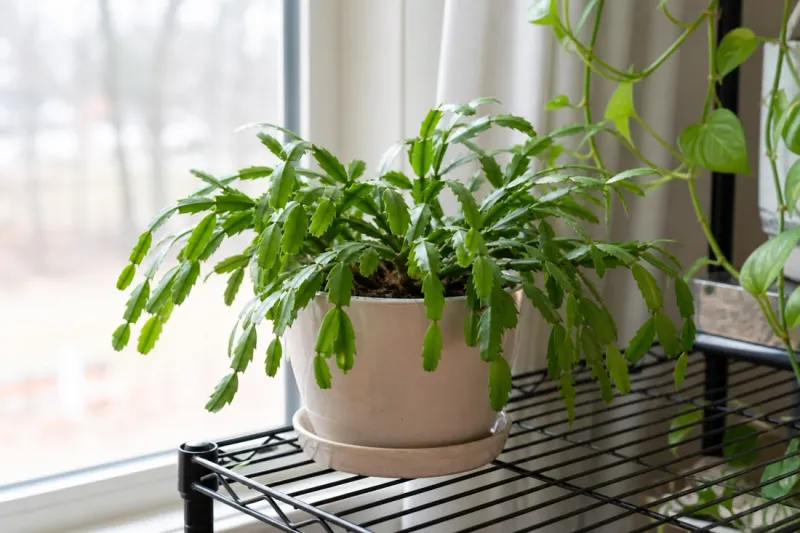
A holiday cactus with no buds in late October can feel like a missed deadline. The plant is probably not ruined, and a few simple checks may point you toward a fix.
Light at night, cool evenings, and even the type of cactus you own can all play a part. Here is how to sort out what your plant may need.
Does a budless cactus have one obvious cause?
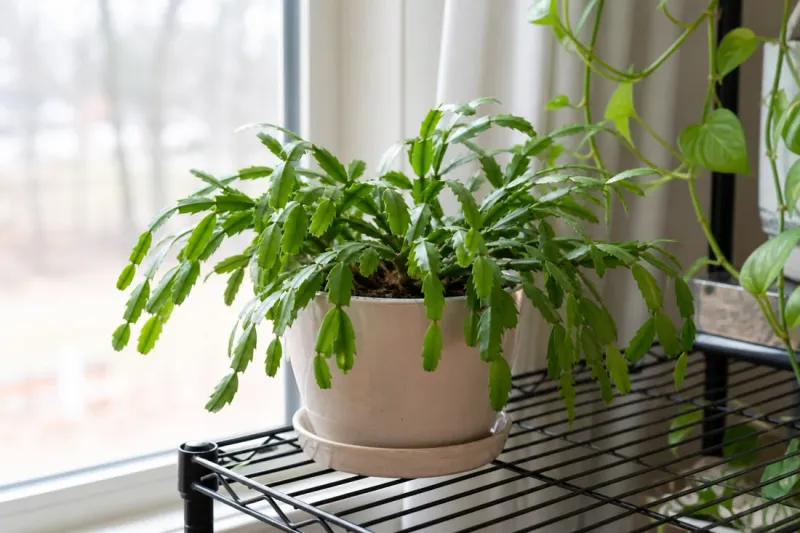
Seeing bare stem tips in late October is worrying, but it does not point to a single cause. Light, temperature, plant condition, and timing can all affect whether buds form.
Variety matters too. Many plants sold as Christmas cactus are really Thanksgiving cacti or hybrids, and North Carolina State Extension explains how the types differ.
A plant that blooms early or late may simply be following its own schedule.
Iowa State Extension notes that cultivars differ in how they respond to day length and temperature. So think of light and temperature as two things worth checking, not a verdict that fits every plant.
If your plant looks plump and green, you still have good options.
Nighttime light can interrupt the flowering signal
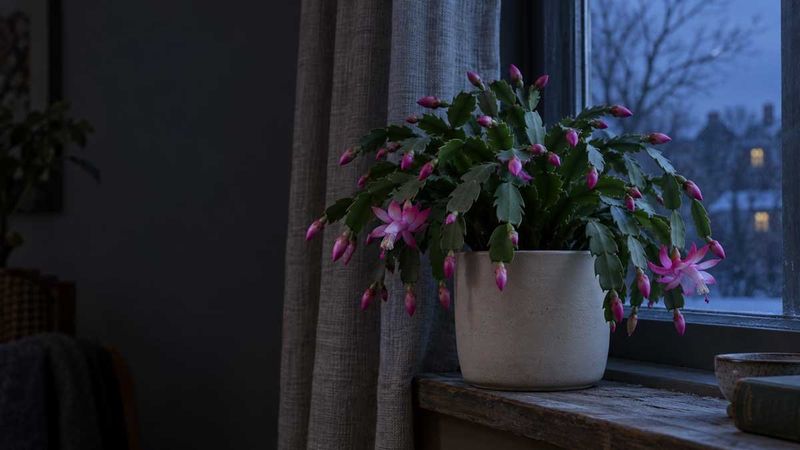
Holiday cacti set buds in response to the long nights of fall. When artificial light shines during that dark period, the plant may not get the signal it needs.
UF/IFAS Extension mentions artificial sources such as streetlights as a possible problem.
The concern is interrupted darkness, not the fact that your plant lives indoors. Natural shortening of days can do the job if nothing disturbs the night.
Take a look at the plant after dark. A lamp, a TV glow, a hallway light, or a bright porch fixture could be reaching it.
Illinois Extension also ties flowering to day length and temperature. Night light is a clue worth checking, but not a sure explanation.
Build a workable darkness routine
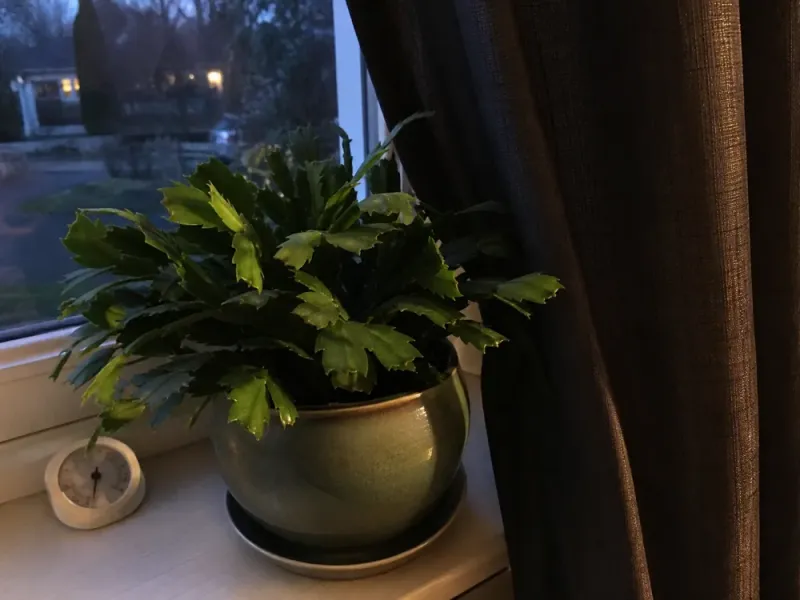
Aim for two things: bright light during the day and real darkness at night. Do not keep the plant in a dim spot or shut away all day, since it still needs good daytime light.
Guidance on hours varies. Illinois Extension recommends at least 12 hours of darkness for 5 to 6 weeks.
Iowa State says many cultivars need 14 to 16 hours, though some respond to 12. Treat those numbers as a range rather than one fixed rule.
If your living room stays lit in the evening, try a spare room with no nighttime artificial light. University of Wisconsin Extension also advises keeping the plant steady once it is set up.
Pick a spot, stick with it, and let the nights stay truly dark.
Cool evenings help; very low temperatures may cause bud drop
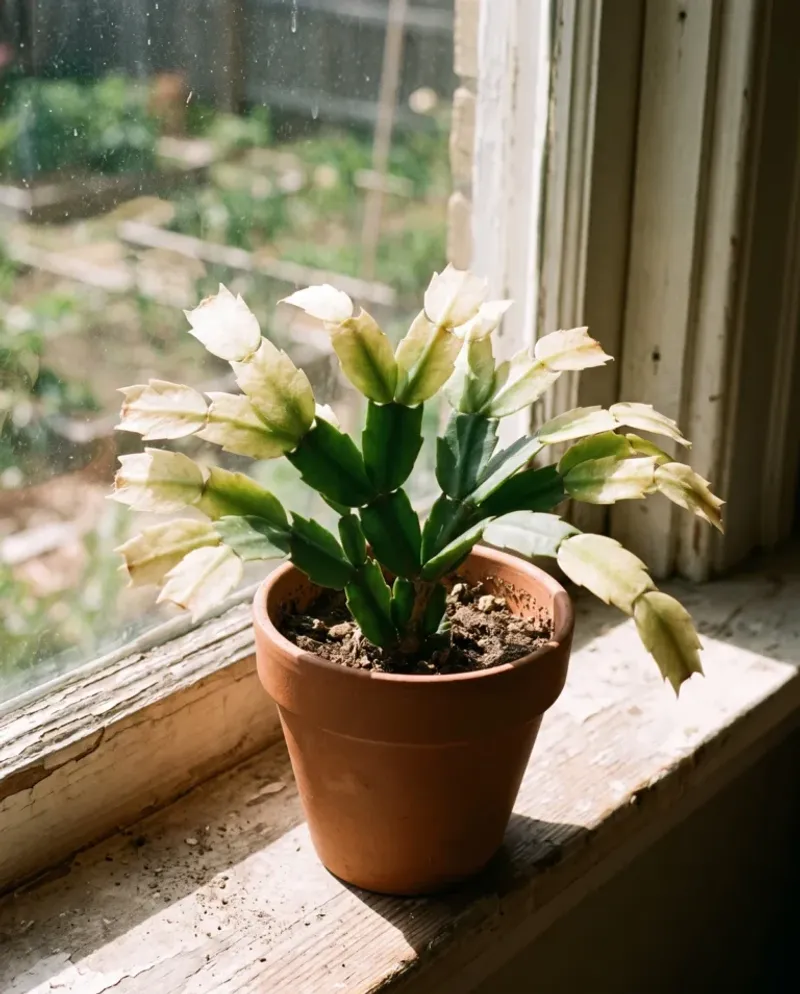
Temperature is a second lever, separate from darkness. Illinois Extension suggests daytime temperatures of 65 to 70°F and evenings of 55 to 65°F.
It says nights near 55°F may promote flowering, while temperatures below 50°F may cause buds to drop.
Sources do not agree on one cutoff for warm nights. University of Minnesota Extension says blooms are unlikely when nights stay above 65°F, while Iowa State says temperatures above 70°F prevent flowering.
In warm Southern homes, a cooler room with steady conditions may help. Avoid chilly drafts and cold windows, and do not treat any single number as a guarantee.
What can a late-October reset realistically change?
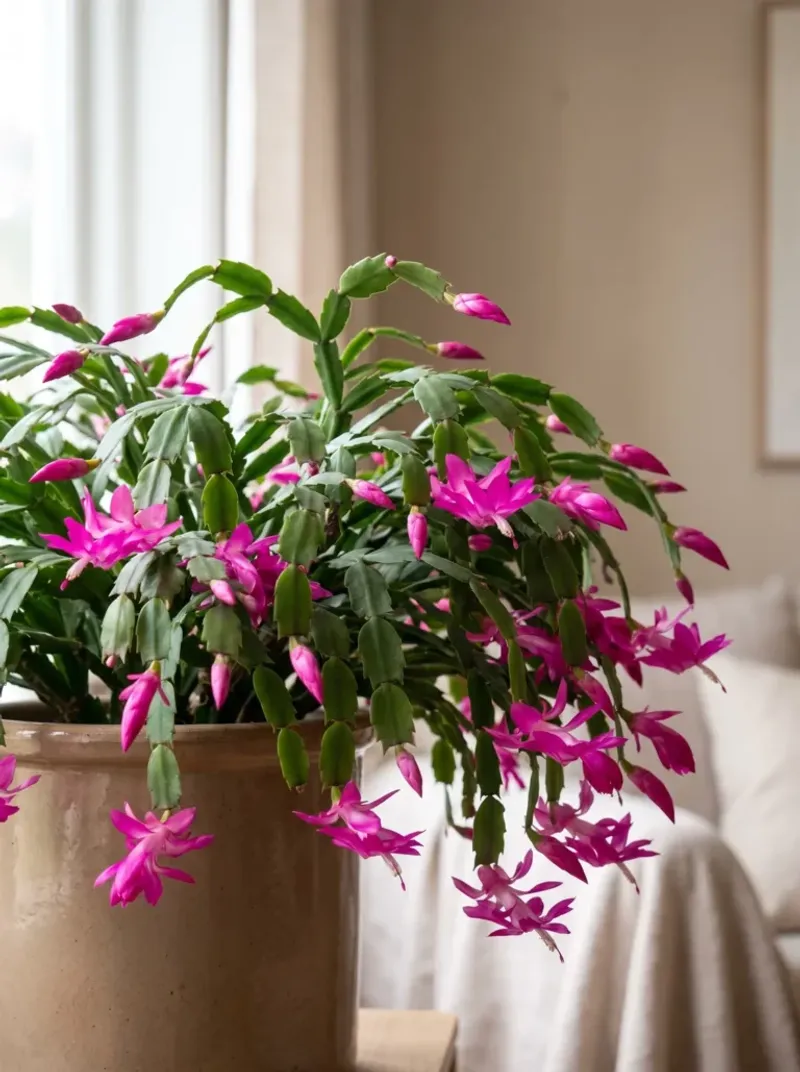
Starting in late October may still help, though it needs patience. UF/IFAS describes six weeks of short-day treatment followed by roughly ten weeks until full bloom.
Count that out on a calendar and you can see why a late start does not promise flowers by Christmas. The reset may encourage a bloom later in winter instead.
That is still a good outcome. A plant that flowers in January or February is doing what you hoped, just on a slower clock.
Making the change now gives it a chance, and waiting only pushes the timeline back further.
If buds form and fall, troubleshoot a different problem
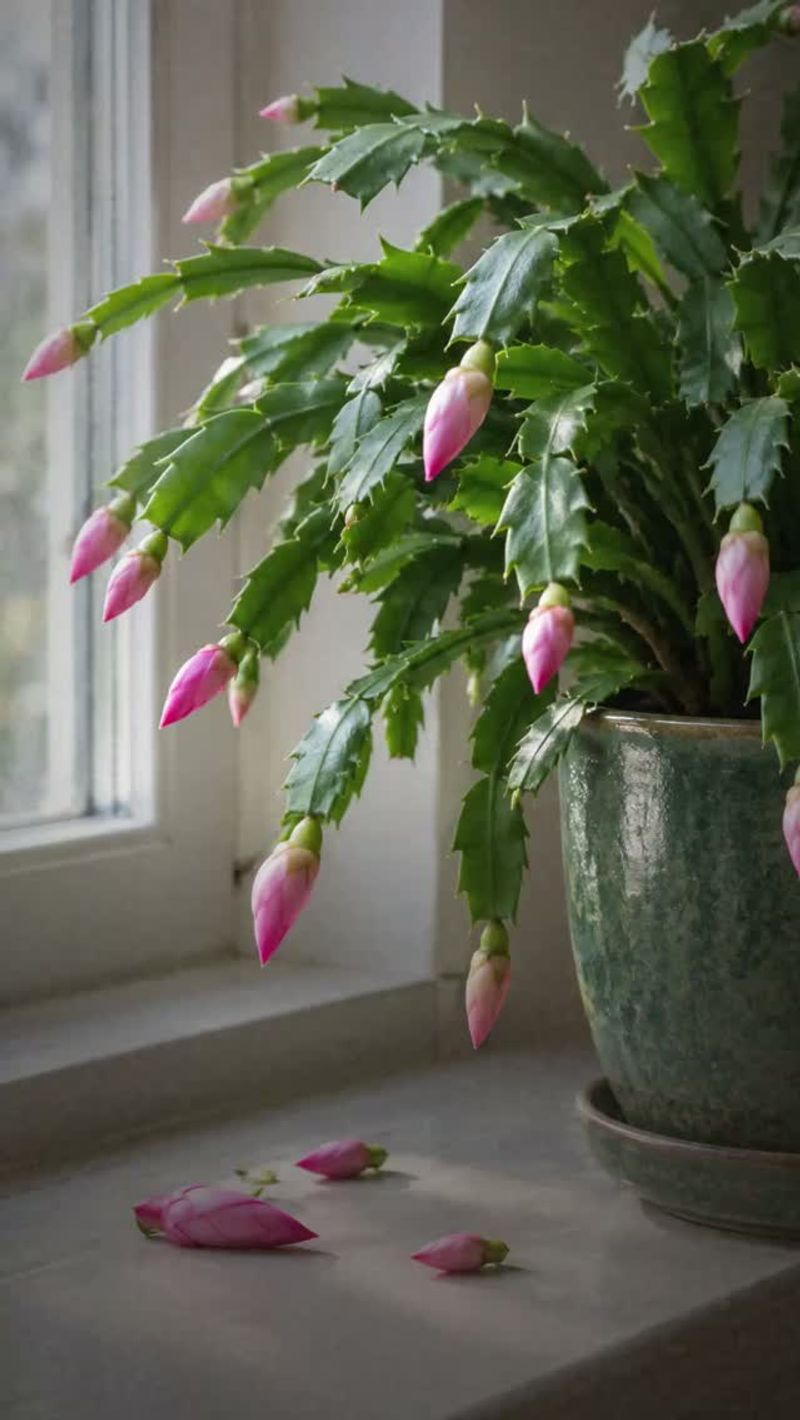
Failing to form buds and dropping buds are separate problems. Light and temperature mainly influence whether buds start.
Once they appear, other stresses can make them fall.
The cited causes include sudden changes in light or temperature, drafts, heat, and watering problems. Illinois Extension lists these stresses, and Iowa State also warns about excessive dryness.
Keep the plant in one spot, away from vents and cold glass. Water consistently, use a pot with drainage, and empty the saucer so roots do not sit in water.
University of Minnesota Extension also links both overwatering and underwatering to bud loss. Avoid withholding water to force buds, since dryness can cause them to fall.
Keep conditions steady and give the plant time
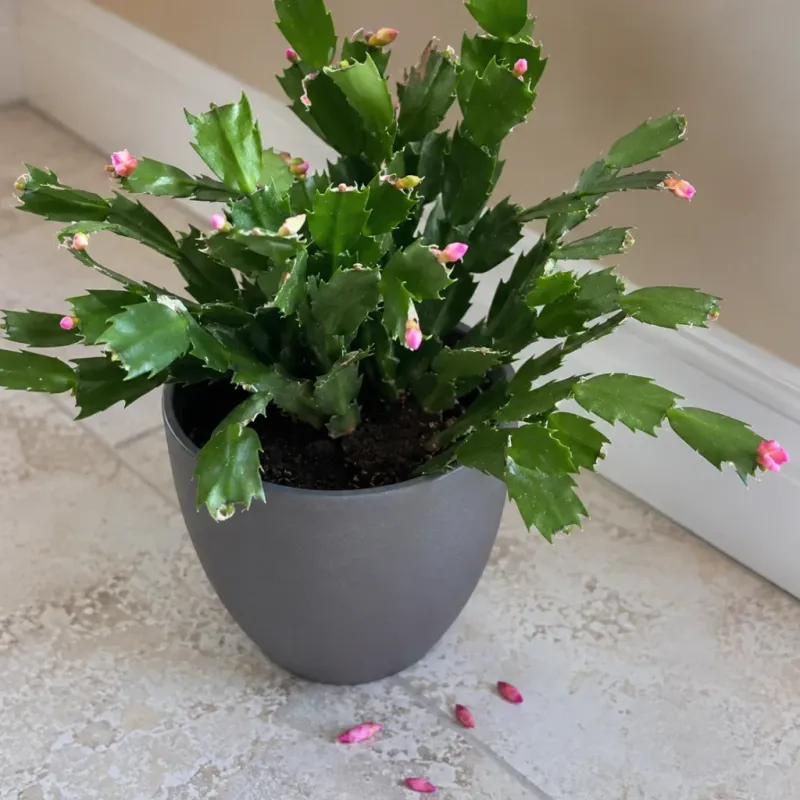
Check for night light, give bright days and dark nights, keep temperatures cool but safe, and avoid sudden changes once buds appear. UF/IFAS and Illinois Extension support this approach.
It may encourage flowers, but it cannot promise a Christmas bloom or prove light was the cause. A holiday cactus keeps its own calendar.