
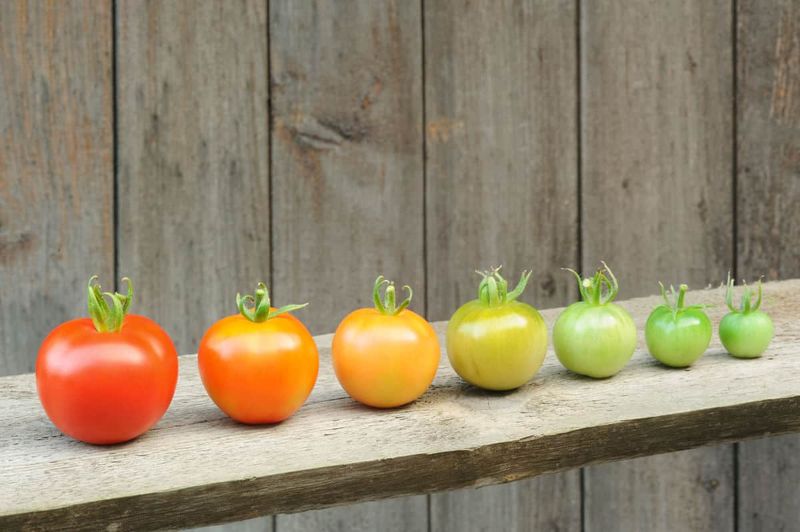
A cold snap can end your tomato season overnight, and the vines are often still loaded with green fruit. Many of those tomatoes can still turn red on your counter if you pick them at the right stage.
A paper bag, a little patience, and sometimes a ripe banana can help. Here is how to save the ones worth saving and what to expect from them.
Harvest before frost reaches the vines

Frost is the deadline. Once a freeze kills the vines, fruit left outside can be damaged, so the goal is to bring in the suitable tomatoes before that night arrives.
Southern weather does not follow one calendar. A gardener in the Texas Panhandle may face frost weeks before a gardener in Central Florida, and some Gulf Coast spots may skip a hard freeze in some years.
Rely on your local frost forecast instead of a fixed date, and check it often once nights start dipping toward the 30s.
When a freeze warning shows up, pick that day or the day before. Extension guidance on green tomatoes supports harvesting before the vines are killed by frost.
Keep a basket or shallow box handy so you can move quickly. Sorting out which fruit deserves a spot indoors comes next, and that step makes the biggest difference in how your tomatoes turn out.
Choose tomatoes mature enough to ripen
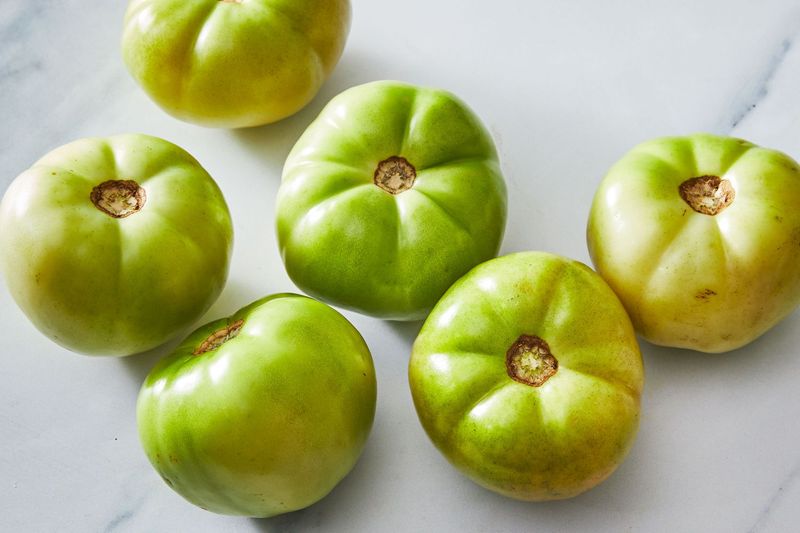
Not every green tomato is ready to finish ripening. Look for fruit that is full-sized and firm, with a color that has lightened from deep, dark green.
A pale area or star at the blossom end, opposite the stem, is a good sign, and so is a faint blush of pink or yellow.
Fruit at the breaker stage, where the first color is showing, is the most reliable candidate. Alaska extension guidance and UF/IFAS both point to these maturity signs.
Small, hard, deep green tomatoes are a different story. University of Minnesota Extension warns that truly immature fruit may not ripen to good flavor, and UF/IFAS reports that its earliest maturity stage will not ripen properly.
Those tomatoes may shrivel or rot instead of turning red. Fried green tomatoes or relish are a smarter use for them.
Prepare a ventilated paper bag
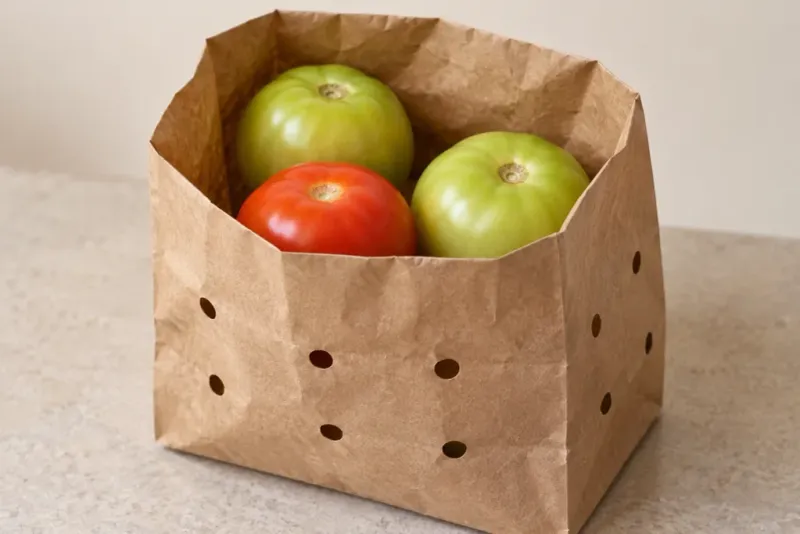
A paper bag is simple and cheap. Start with dry tomatoes, since moisture on the skin invites decay.
Wipe off any dirt gently and let the fruit air-dry if needed.
Place the tomatoes in the bag stem-end up. Keep the batch small, and avoid piling fruit on top of each other so you can check each one easily.
Punch several holes through the bag for airflow, then fold the top over loosely rather than sealing it tight.
The bag works because tomatoes give off ethylene, a natural ripening gas, and the paper can hold on to some of it. Illinois Extension describes this perforated bag method and estimates a few days for fruit that is ready.
Other guidance, such as this Alaska publication, gives longer estimates. Timing depends on how mature the tomatoes were when you picked them.
Use a banana only if you want to speed ripening
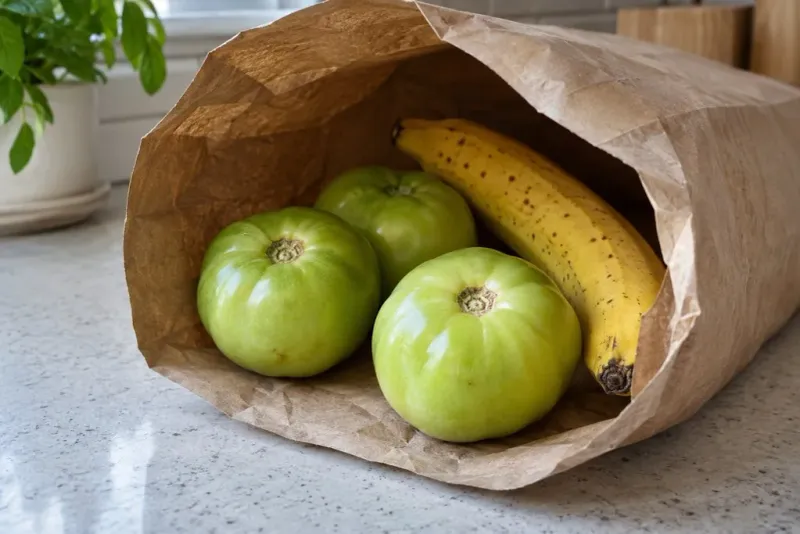
Bananas are a bonus, not a must. A ripe banana gives off ethylene, so tucking one into the bag may hasten the process.
Colorado State Extension says adding a banana or a red tomato can make ripening faster.
Tomatoes make their own ethylene, and mature-green fruit responds to it, as UC Davis postharvest researchers note. That is why the bag alone can work, as Illinois Extension explains.
Do not expect a banana to rescue weak fruit. It cannot make immature tomatoes ripen well.
The sources also do not say that exactly one banana is the right amount, so treat it as a nudge. If you have no banana on hand, a ripe red tomato in the bag can play a similar role.
Keep the bag moderate and inspect the fruit daily
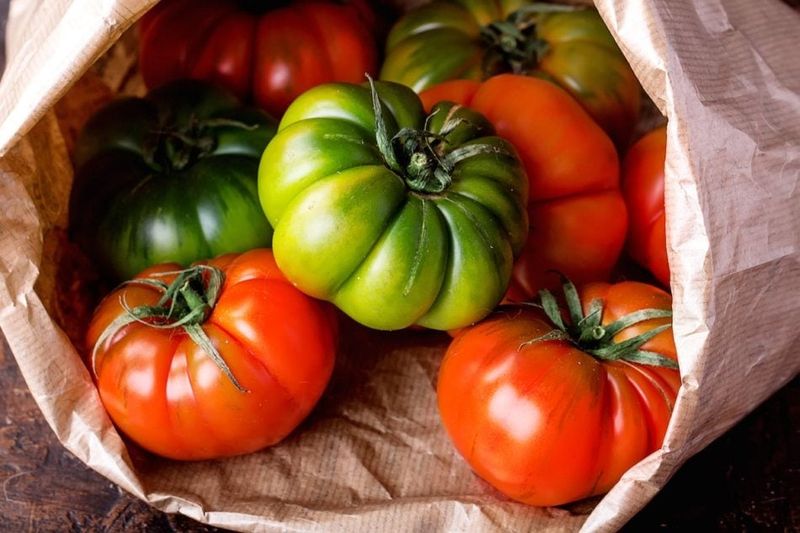
Aim for a comfortable room, not a hot one. Guidance varies a bit: UF/IFAS lists 68 to 72°F for the best red color, while UC Davis gives 65 to 70°F and cautions that temperatures above 77°F can produce softer, less-red fruit.
A Florida or Texas garage or sunroom can run warmer than that, so an interior room or pantry is often a better choice.
Sunshine is not needed. Extension guidance says light is unnecessary, so a shelf or cabinet works fine.
Open the bag daily. Pull out tomatoes that are turning red, and remove any that feel mushy or show mold so decay does not spread.
Ripening time varies with maturity and room conditions, and Illinois Extension’s one-to-five-day estimate is a best case, so be patient.
Set realistic expectations for color and flavor
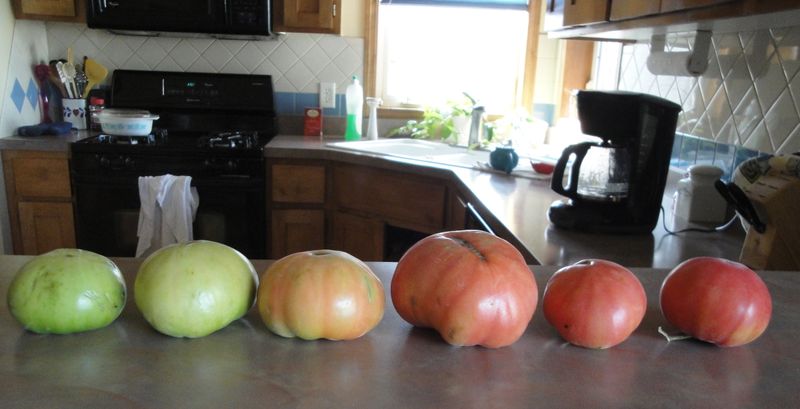
Some tomatoes will come out beautifully, and a few may not. Breaker-stage and mature-green fruit are your best prospects, while immature fruit often disappoints.
Colorado State Extension says breaker-stage fruit can ripen without flavor loss, while mature-green fruit may have less-developed flavor.
That means a counter-ripened tomato may not taste like one picked from a healthy vine at peak season. Still, it is usually far better than losing the fruit to frost.
Use the milder ones in sandwiches, sauces, and cooked dishes where flavor gets a boost.
The bag and the optional banana help suitable fruit along, but neither guarantees red, flavorful tomatoes. The University of Minnesota and UF/IFAS both note that maturity at harvest decides most of the outcome.
Think of it as a good rescue, not a perfect redo.