
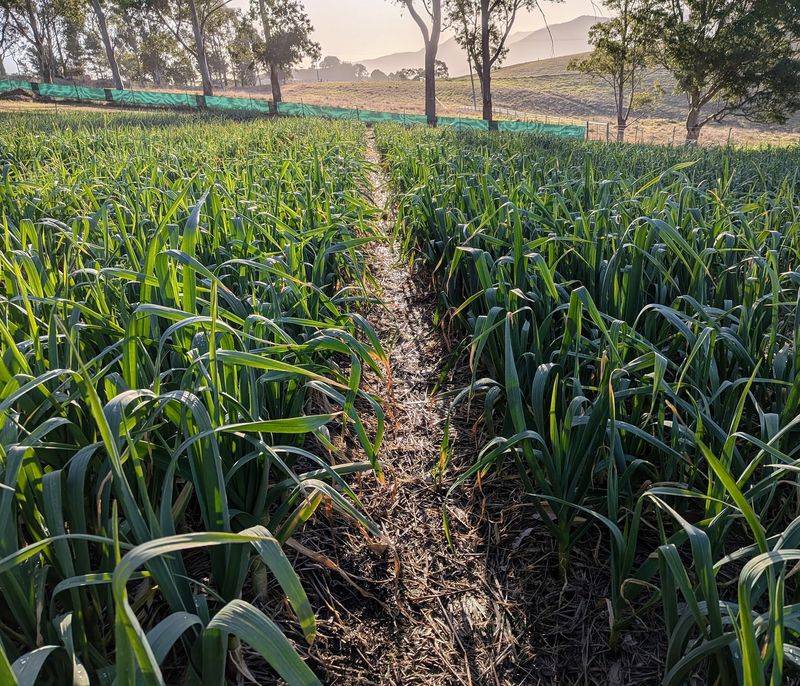
Garlic goes into the ground in fall, and plenty of Southern gardeners wonder if they have missed their chance. The answer depends on where you garden, what kind of garlic you plant, and how you handle it.
Florida, Georgia, and Texas all have different calendars. Here is how to figure out whether your window is still open and how to give your cloves a strong start.
Early November is not a universal cutoff
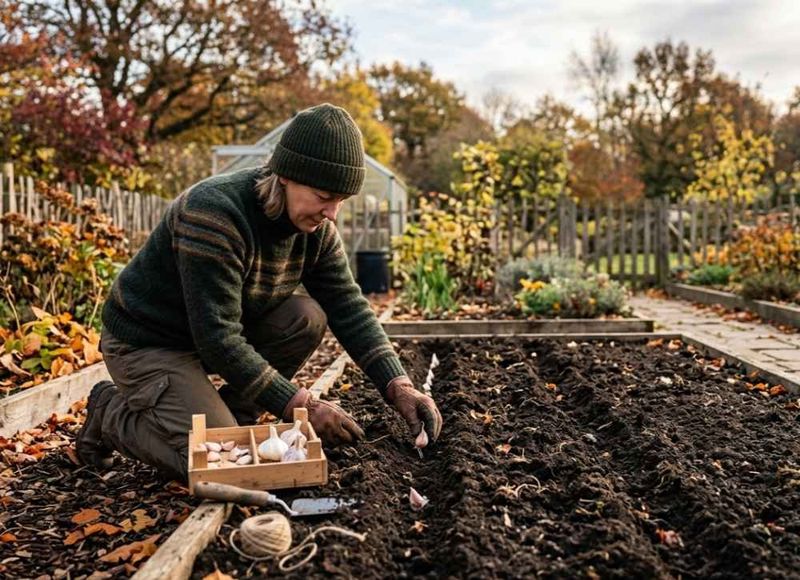
Garden lore often treats early November as a hard deadline for garlic, but Southern guidance is more flexible than that. Georgia’s home-garden recommendations allow planting through November, so a clove that goes in during the first weeks of that month is still inside the stated window.
Variety matters here. Georgia extension guidance on garlic production says later-maturing varieties planted in November may not have enough time to size up before summer heat slows growth.
Earlier-maturing varieties may still perform satisfactorily from a November planting.
So late planting can trim a bulb’s potential, especially for slower varieties, but it does not guarantee small heads. Clove size, the growth the plant makes before it starts bulbing, and your local conditions all play a part too.
If you are weighing a late planting, treat it as a reasonable gamble rather than a lost cause. The University of Georgia’s home-garden garlic guide is a good place to start when picking your plan.
Check the planting window where you garden
Dates that suit one Southern state can be wrong for another. Georgia’s guide recommends planting from late September through November, and UGA’s garlic guide for gardeners lays out that range.
October 26, 2026, falls inside it, though that only speaks to Georgia.
Texas is more complicated. Texas A&M AgriLife’s fall gardening calendar lists garlic planting months by region, and the overall span runs from July through December.
A gardener in the Panhandle and one on the Gulf Coast will not follow the same schedule.
Florida guidance stretches later. UF/IFAS Gardening Solutions points to late fall into early winter.
Instead of borrowing a date from a neighbor two states over, look up your own county extension calendar and plan from there.
How timing, variety, and clove size affect bulb potential

Picture garlic as a plant that needs to build its leaves and roots before it forms a bulb. Georgia’s guidance ties yield potential to that early growth, which is why UGA’s home-garden recommendations favor timely fall planting.
More growth before bulbing begins gives the plant more to work with.
Maturity group changes the picture. Later-maturing types planted in November risk running short on time before summer heat slows them, while earlier-maturing types may handle it fine, according to Georgia’s production guide.
Clove size counts as well. Larger planting cloves tend to produce larger mature bulbs, so a big clove planted a bit late can sometimes beat a small one planted early.
Cold, day length, and soil temperature also influence bulbing. Texas A&M’s garlic guide discusses them, but the needs differ by variety and place, so check local advice.
Choose cloves and varieties suited to your region
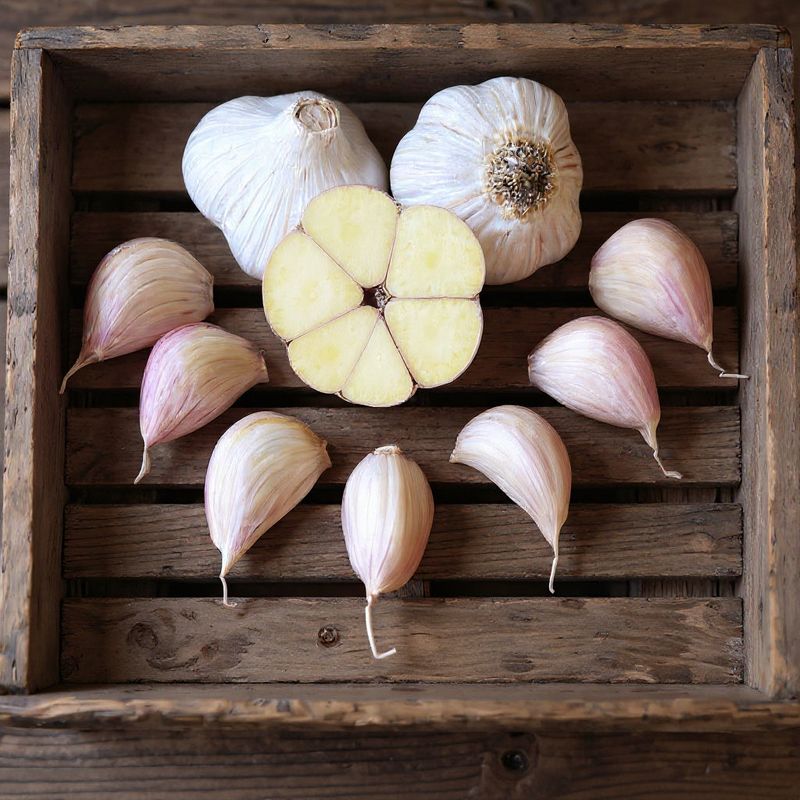
Start with the biggest cloves on the bulb. UGA advises selecting large outer cloves and keeping them unpeeled until planting, since the skin protects them.
Variety choice is regional. For Florida, UF/IFAS suggests soft-neck Artichoke and Creole types.
For Texas, Texas A&M lists California Early, California White, and elephant garlic among its recommendations. Think of these as examples from each region, not a universal shopping list.
Where you buy matters too. Look for planting stock from sources that know your area, such as local nurseries, seed companies that describe their garlic’s adaptation, or your county extension office.
Locally adapted cloves give you a better chance of a good harvest, though no variety can promise a particular bulb size.
Plant cloves at locally recommended depth and spacing
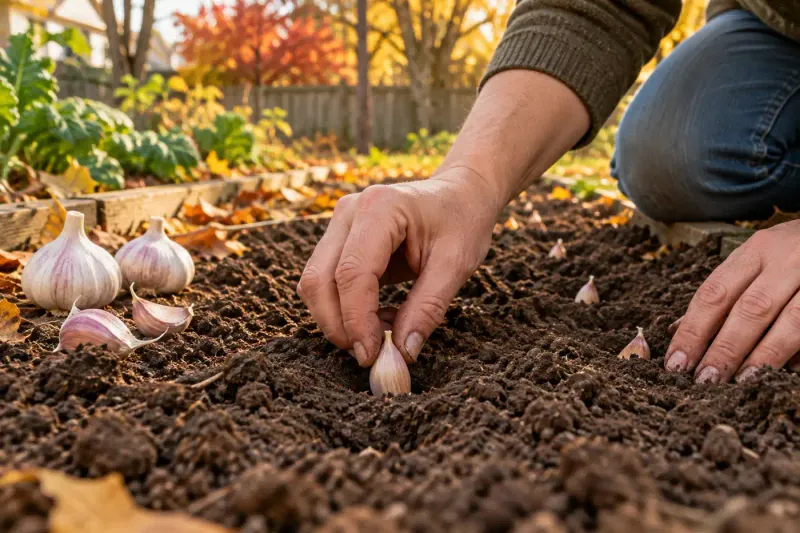
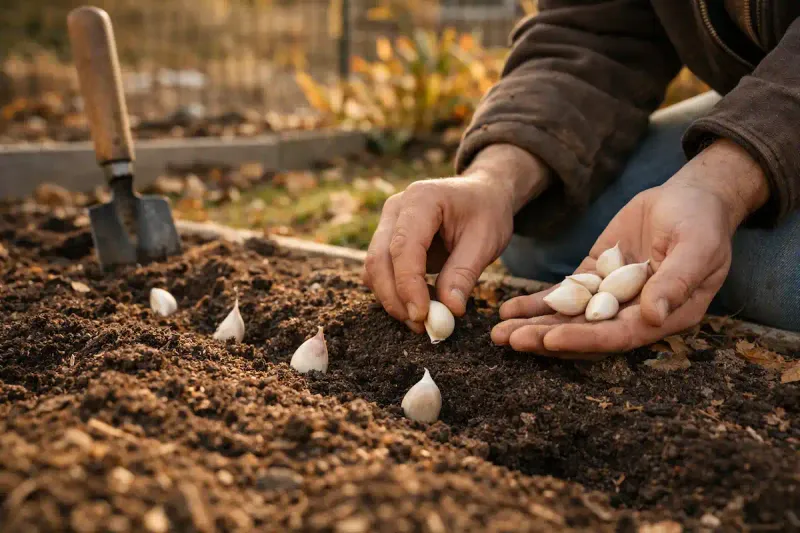
Once your planting window and cloves are settled, the work is simple. Break the bulb apart just before planting, leave each clove’s papery skin on, and set it in the soil with the pointed end up.
Depth and spacing vary by source. UGA recommends cloves 1 to 3 inches deep and 6 inches apart.
Meanwhile, UF/IFAS Pasco County suggests 1 to 2 inches deep and 4 to 6 inches apart.
Neither number is wrong. They reflect different regions and soils, so treat them as ranges.
If your county extension office publishes its own garlic guide, follow that one first. When no local advice exists, a middle-of-the-road choice within both ranges, such as about 2 inches deep and 6 inches apart, fits what both sources describe.
Support growth without expecting a guaranteed harvest
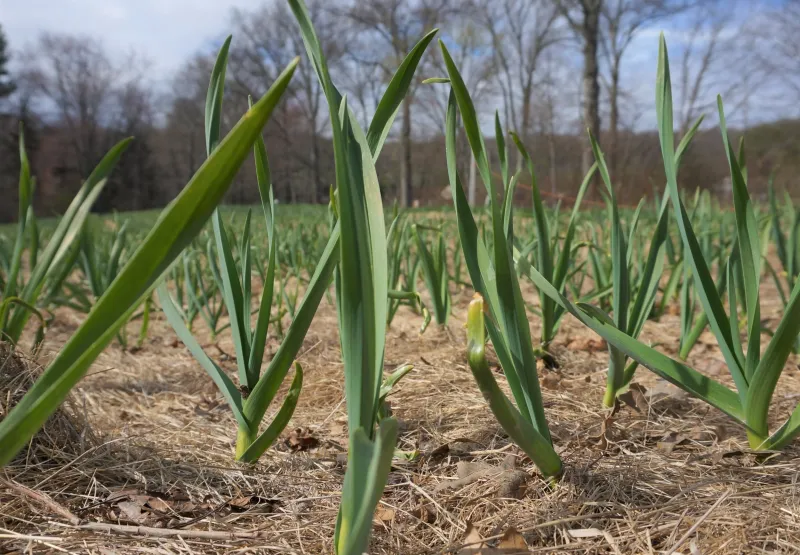
Garlic does best in full sun and well-drained soil. Keep moisture steady, but avoid soggy ground.
UGA warns that excess water can contribute to bulb rot, and Florida guidance also cautions against waterlogged soil.
That means extra watering is not a shortcut to bigger bulbs. A raised bed or amended, drained soil helps in heavy clay, and a finger test a couple of inches down tells you more than a schedule does.
Texas gardeners can check AgriLife’s regional calendar to see whether their window is still open. If it is, plant promptly.
Good timing and care give your garlic a fair shot, but weather and variety have a say too. Even a modest bulb from your own bed tastes better than nothing at all.