
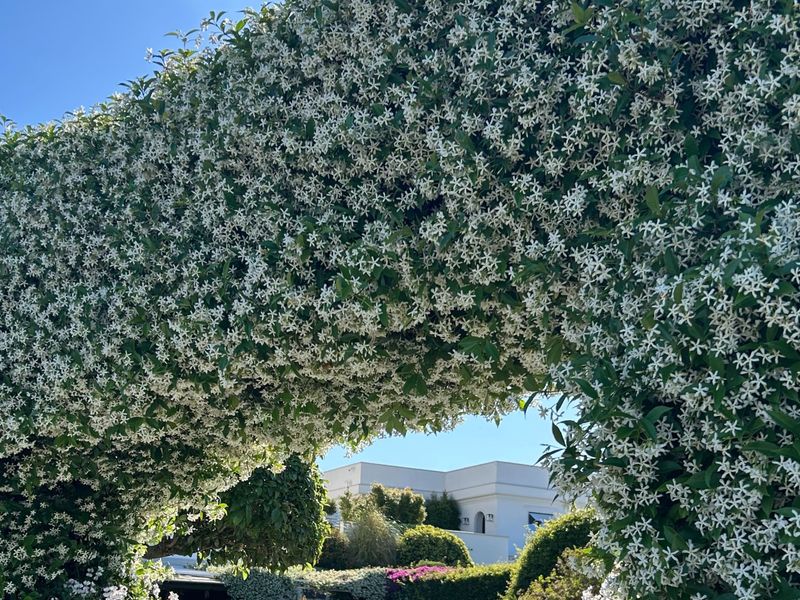
A glossy green vine covered in sweet-smelling white flowers is a favorite along California fences. Many people smell it before they ever learn its name.
The vine is star jasmine, and it grows into a thick, woody plant over time. Knowing what it is and what kind of support it needs can help you enjoy it for years.
Identify the fragrant white vine as star jasmine
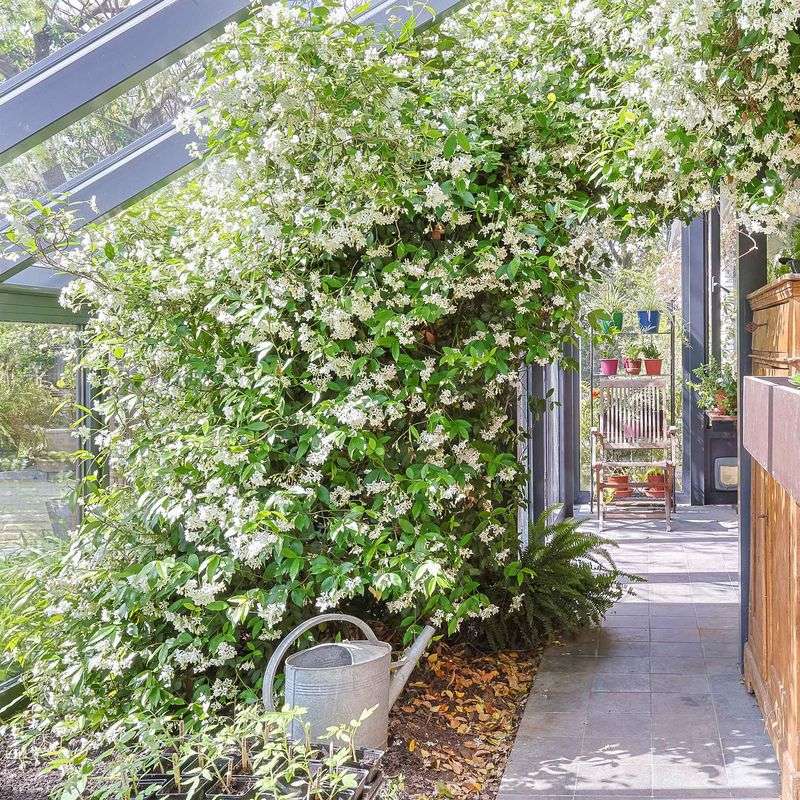
The fragrant white vine most people are thinking of is star jasmine, whose botanical name is Trachelospermum jasminoides. You will also hear it called Confederate jasmine.
Despite the name, it is not a true jasmine from the genus Jasminum, so the common name can be a little misleading.
Look at the leaves first. UC Statewide IPM describes glossy, evergreen foliage that stays green through the year.
The flowers come in clusters, and each one is white, fragrant, and shaped like a small pinwheel.
Scent is often the giveaway. On a warm evening, a fence covered in star jasmine can perfume an entire yard.
That is a big reason homeowners plant it as a living screen.
Local guidance shows how it gets used. UC Master Gardeners of Napa County note that it does well on fences, gazebos, and trellises in Napa Valley.
That tells us about its use in one region. It does not mean the vine is spreading everywhere in California, and it says nothing about fence damage.
Getting the name right matters because care advice depends on the plant. Once you know you have a twining vine that becomes woody, the next question is what it will climb on.
Star jasmine twines around a support
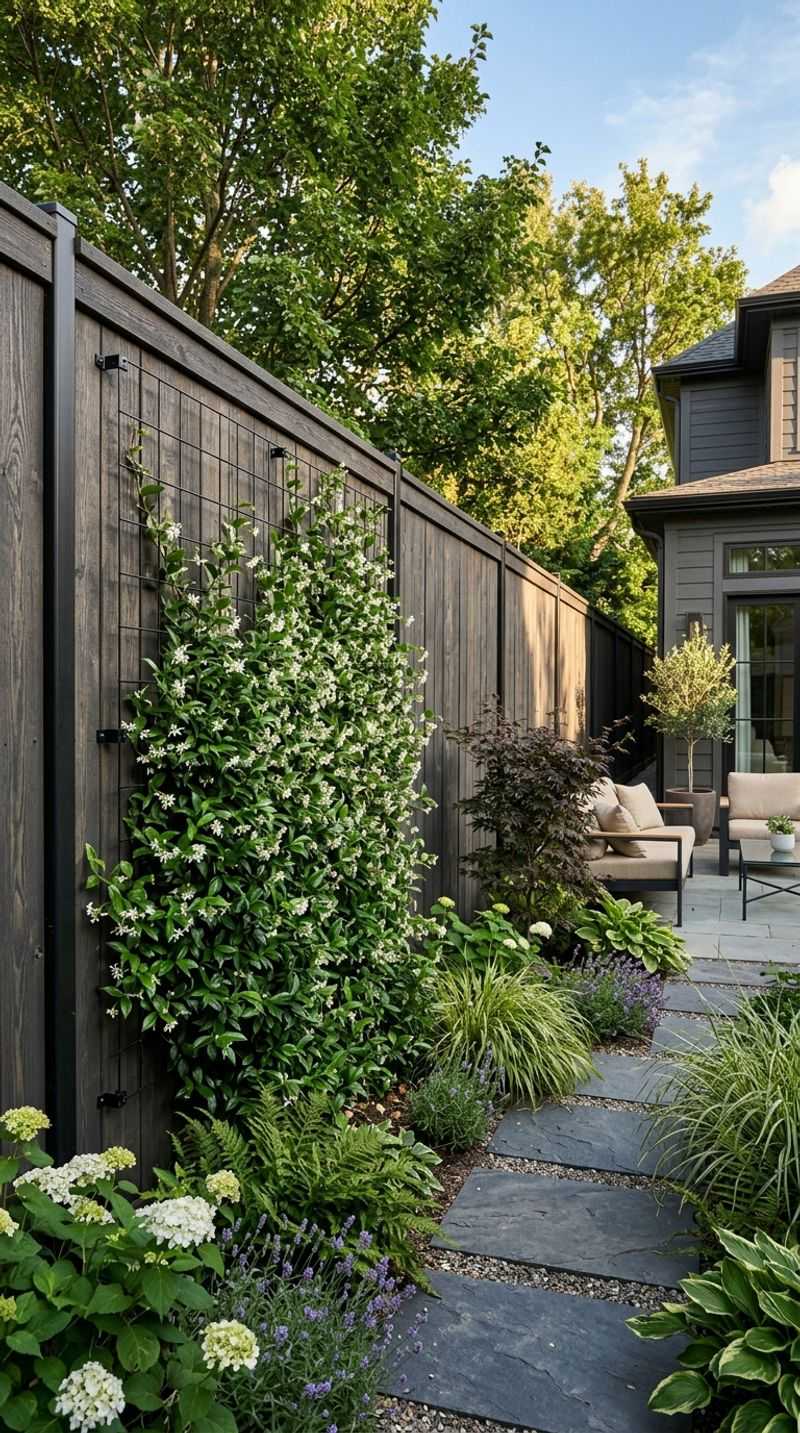
Watch a young star jasmine shoot for a few days and you will see how it climbs. It wraps itself around whatever it can reach, like a slow spiral staircase.
That habit is called twining. UF/IFAS lists star jasmine among twining vines.
Twining is different from clinging. English ivy and some other vines grab surfaces with aerial roots or sticky pads.
Star jasmine does not attach itself to fence material that way. It needs openings, wires, slats, or a trellis frame to wrap around.
That means a smooth solid wall or a tight board fence gives it little to hold. An open fence, taut wires, or a lattice-style frame works better.
Without something to wrap, shoots tend to flop and tangle.
Growth habit matters for another reason. UC Davis describes the shoots twining around supports and eventually forming thick, woody branches.
A young plant looks light and wispy, but a mature one carries real weight.
So when you pick a spot, think about the plant you will have in several years, not the small nursery pot in your hands.
Choose a support suited to mature growth
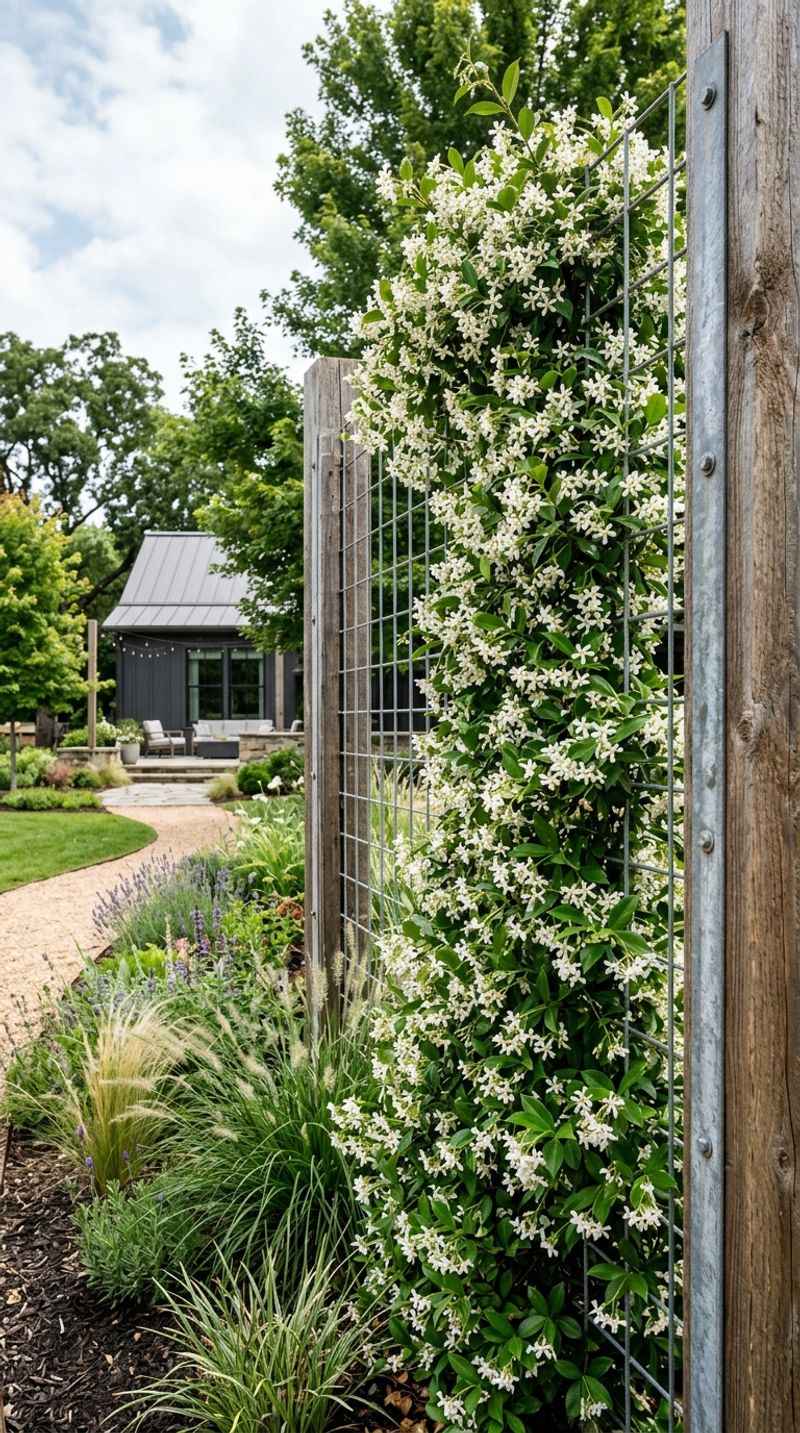
Before you plant, take a walk along the fence and inspect it closely. Push on the posts, look for soft or rotting wood at the base, and check for leaning sections or loose rails.
A fence that is already tired is a poor partner for a vine that will thicken over the years.
University of Maryland Extension advises that vines that grow large need sturdy, rot-resistant structures. Star jasmine fits that description once mature, since its branches turn thick and woody, as the UC Davis trial notes.
The Royal Horticultural Society also lists it as a climber that needs a framework to grow on, so its climbing guidance is a useful reference.
This is a precaution, not a prediction of disaster. The sources reviewed do not show that star jasmine commonly pulls down fences, and a sound fence with good posts can carry it well.
The condition of the fence matters most.
If the fence is weak, you have choices. Repair or replace it first, or give the vine its own freestanding trellis or wire system anchored in solid posts.
A decorative panel only lightly screwed to a fence is the kind of support that may not hold up.
Also think about future repairs. If you will need to paint or replace boards, mounting wires on posts a few inches off the surface leaves room to work.
Guide young shoots as they grow
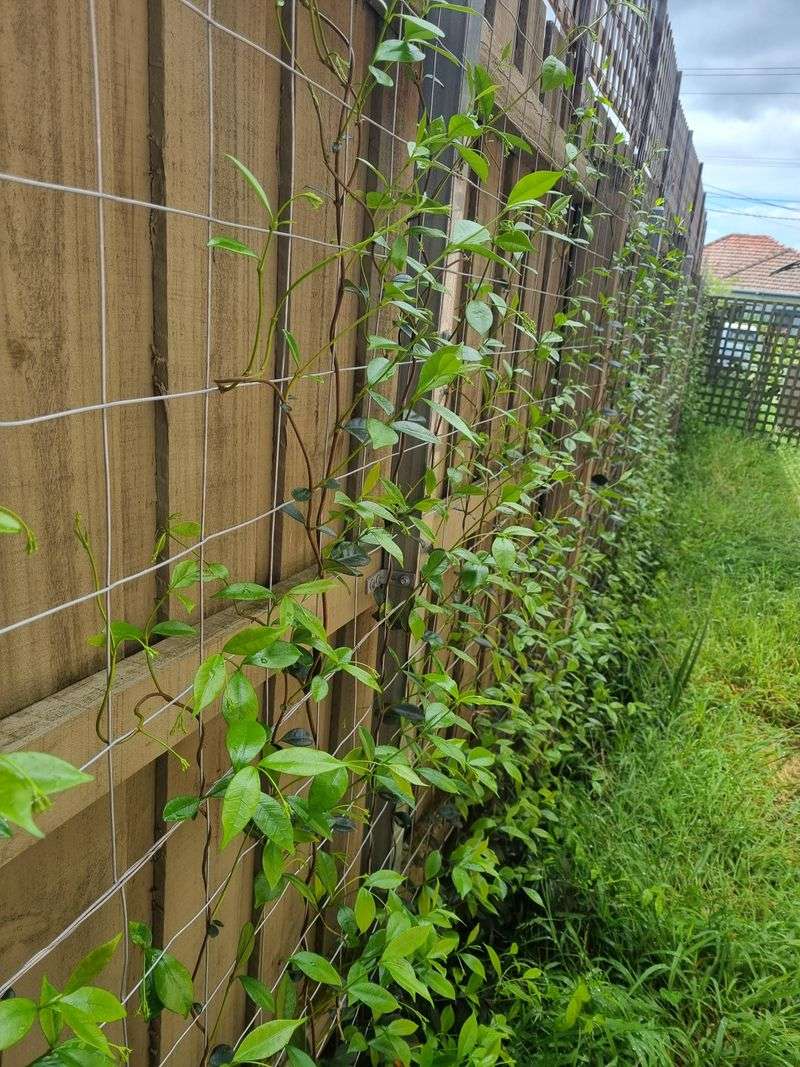
New growth will not always head where you want it. Young star jasmine shoots often reach straight up or wander off into the air.
A little guidance in the first seasons makes a real difference.
UF/IFAS recommends weaving new shoots sideways through a fence or trellis and continuing to train them as they grow. Sideways growth helps fill gaps and gives you fuller coverage, rather than a bare bottom with a tangle on top.
Try this routine. Every couple of weeks during the growing season, check the vine.
Tuck loose tips through openings, and loop long shoots gently so they have something to wrap.
Work with soft tissue in mind. Young stems bend easily, but forcing them can snap them.
If a shoot resists, give it a different path.
Training has limits. It helps direct the vine and gets it established on its structure, but it does not make a weak fence stronger.
It also does not guarantee you will skip future maintenance. Think of it as steering, not reinforcement.
A vine trained early tends to be easier to manage later, since the main stems are already lying where you want them.
Prune to manage the vine’s size
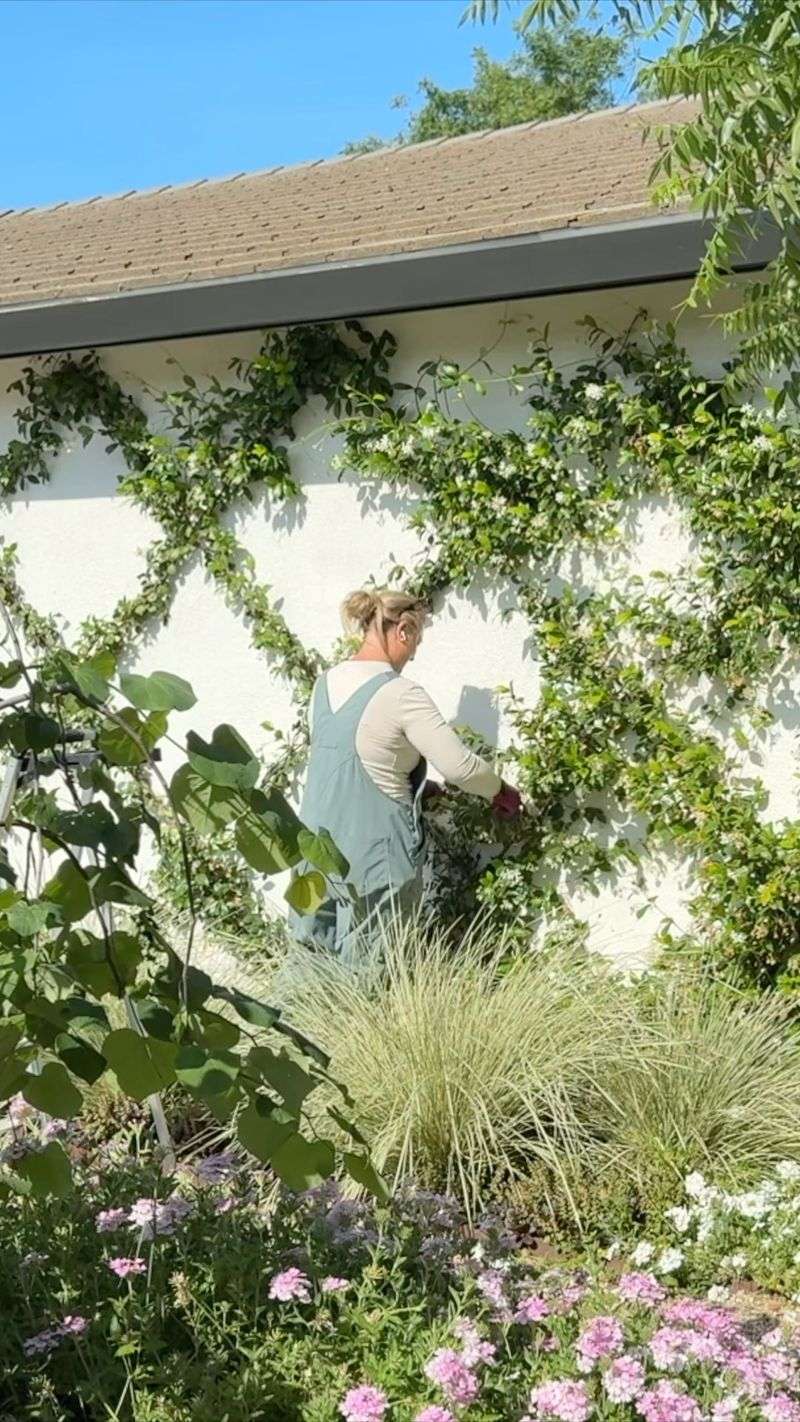
Pruning keeps star jasmine within its space. California guidance gives clear timing.
A UC foothill plant maintenance guide recommends pruning after flowering, with light pruning in late summer if needed.
That timing lets you enjoy the blooms first and trim afterward. The Napa Master Gardeners also suggest light annual pruning to keep it in check.
Cut back stray shoots, trim growth that reaches over a neighbor’s side, and keep it from crowding gutters or vents.
Wear gloves and eye protection while you work. UC IPM notes that cut stems release milky sap.
That is a good reason to keep it off your face and to clean your tools afterward.
Pruning has a limited job. It manages size and shape, but it cannot make up for a failing support.
If posts are rotting or the trellis is leaning, trimming the vine will not fix that.
Water needs vary by region, so watch your own garden. Established plants may need only modest irrigation in some areas, while other guides call for regular water.
Inspect the fence before planting
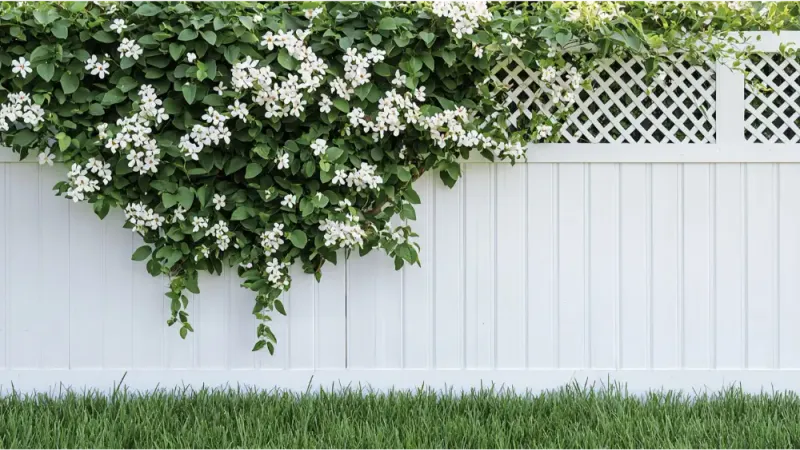
Start with the plant, then check the structure. Confirm you are dealing with star jasmine, Trachelospermum jasminoides, then look over the fence and its posts.
Add wires or a trellis that gives twining stems something to wrap, as University of Maryland Extension suggests for sturdy, lasting supports.
The goal is matching support to the mature vine, which UC Davis describes as developing thick, woody branches. It is a sensible precaution, not a sign that every star jasmine fence is headed for collapse.
A few minutes with a sturdy post and a level can save years of fixing.