
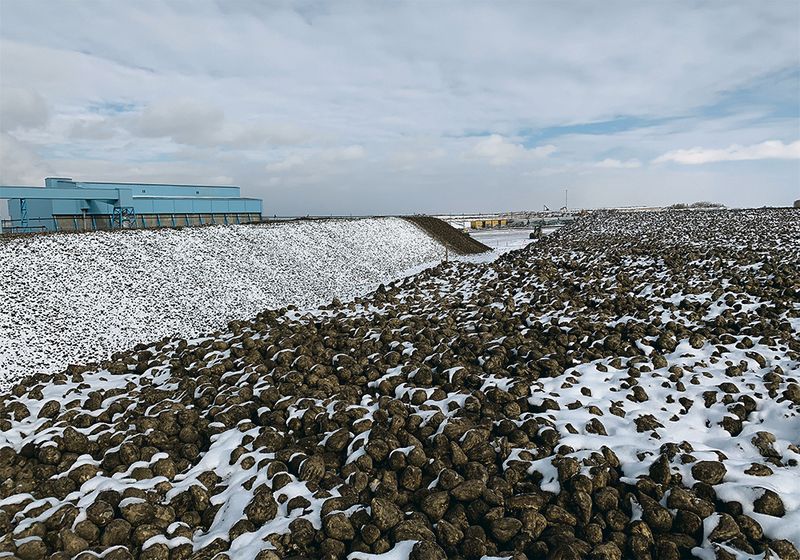
You pulled a big batch of beets from the garden, and now you want them to last. Beets can keep for months, but only when the storage space is right.
Many Southern homes simply do not stay cold enough, so it helps to know where your space stands before you pack anything away. Here is how to match the method to the conditions you really have.
How long can beets really keep?
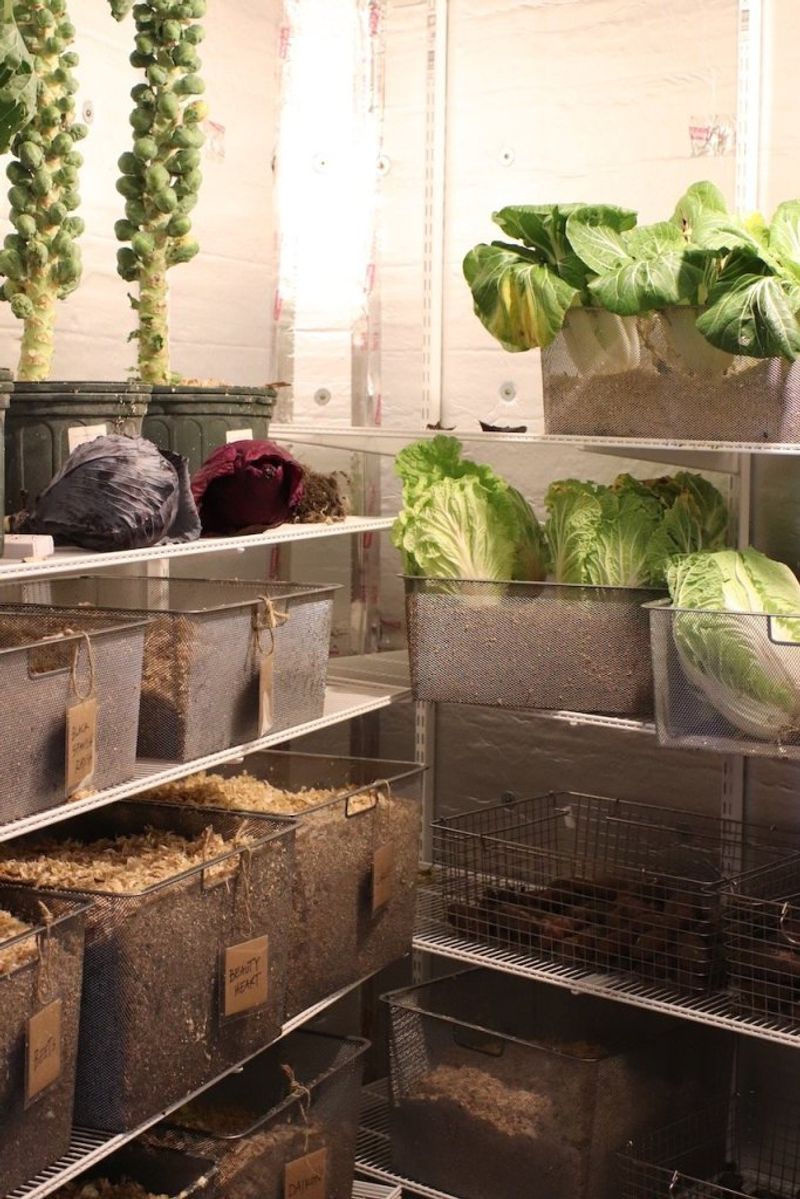
Plan on a range, not a promise. Oregon State guidance cites four to six months at 32°F when conditions are suitable, while Utah State estimates three to four months for bagged, topped roots.
Those numbers describe best-case storage, not a typical kitchen or garage.
The long timelines depend on two things: temperatures near freezing and very high humidity. Cold slows decay, and humid air limits shriveling.
A warmer or drier spot shortens the window, sometimes by a lot.
A pantry or garage in most Southern homes does not meet those needs. That does not make spring storage impossible for everyone, since a truly cold, humid cellar can get there.
Also keep in mind that Texas A&M guidance says storage does not improve a vegetable’s quality. Storage buys time.
It does not add sweetness or guarantee firm roots.
Choose and trim roots before storing
Gentle handling starts at harvest. Lift beets carefully so you do not nick or bruise them, because cuts and damaged spots invite decay.
Missouri Extension notes that injury and decay can cut storage life.
Sort as you go. Keep firm, undamaged roots for storage and eat the scarred, soft, or split ones first.
Careful prep cannot rescue a root that is already damaged or starting to rot, so a bad beet in the pile is a bad bet for the long haul.
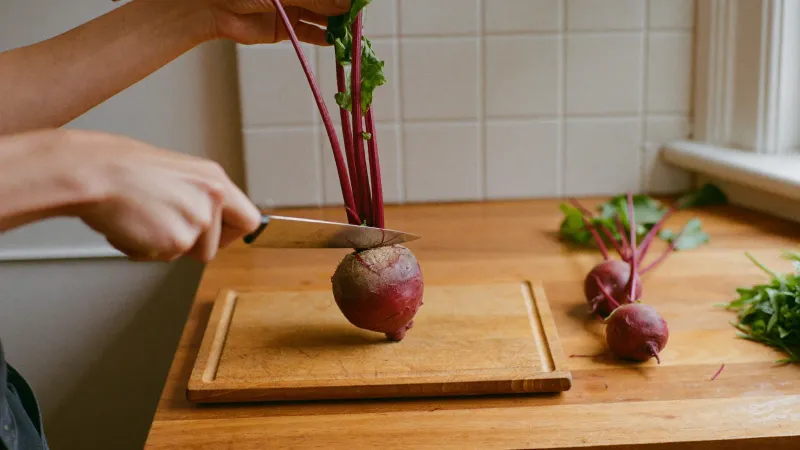
Next, remove the greens and leave about one-half to one inch of stem, as University of Alaska Fairbanks guidance describes. Cutting too close can let the root bleed and dry out.
Skip washing if you plan to use the root-cellar method, since that advice calls for unwashed roots. Other recommendations differ, so unwashed is part of this one method rather than a rule for every approach.
Use a root cellar only if it stays cold and humid
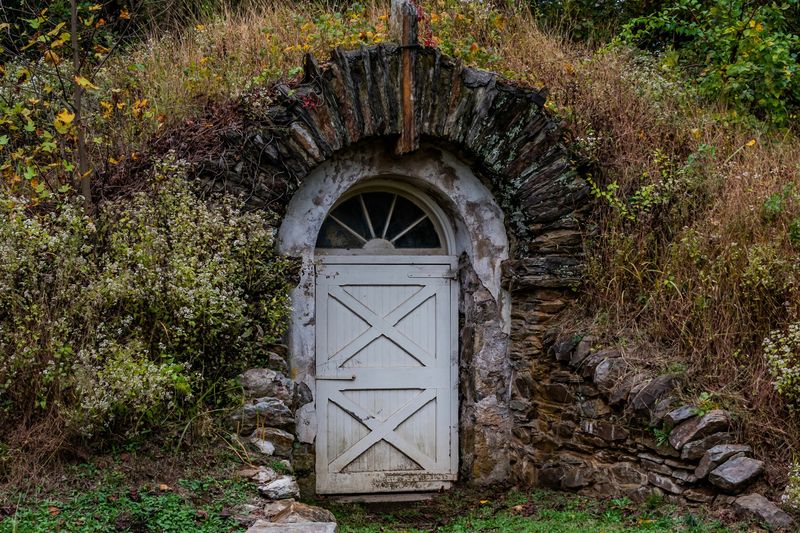
The space matters more than the container. For root cellars, Missouri Extension gives targets of 32 to 40°F and 90 to 95 percent relative humidity.
Utah State recommends 32 to 35°F and 98 to 100 percent humidity for bagged, topped roots.
A ventilated box or bin works well in a place that already holds those conditions. It cannot cool a warm room.
If the air around the bin sits at 70°F, the bin sits at 70°F too.
Be honest about what you have. A typical Southern garage, pantry, or basement runs far warmer than a root cellar, even in winter.
Put a thermometer in the spot for a week or two before you commit your harvest. If readings stay well above the target range, the refrigerator is the better plan.
Pack roots in moist material without trapping condensation
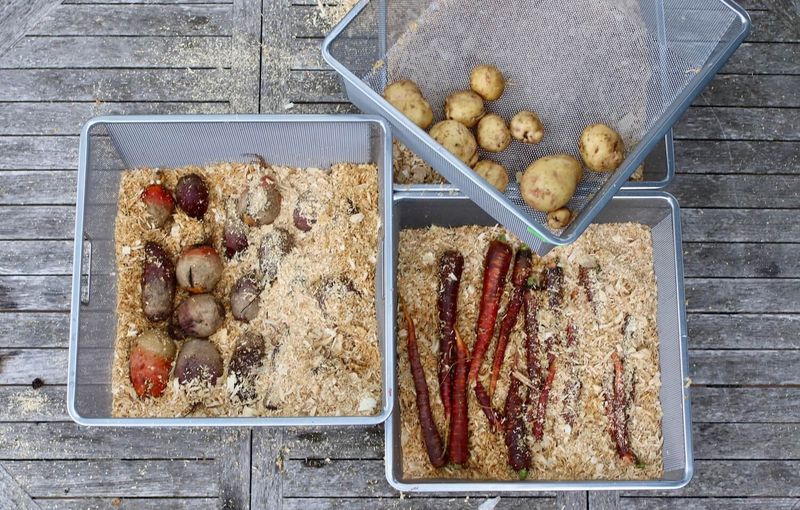
Once you have a qualifying space, packing is simple. Set unwashed, topped beets in a ventilated box or bin, and surround them with moist sand or sawdust, as University of Alaska Fairbanks guidance describes.
Layer roots so they do not touch each other.
Aim for damp, not soggy. A handful of packing material should feel like a wrung-out sponge and should not drip when squeezed.
Standing water breeds trouble.
Airflow matters. Slatted wood, a crate with holes, or a bin with gaps lets moisture escape instead of pooling.
University of Minnesota Extension warns that unperforated plastic can trap condensation and encourage mold or bacteria.
So skip sealed tubs and wet plastic bags. Check the bin every couple of weeks, and pull out any root that feels soft or smells off before it spreads.
Treat refrigerator storage as a shorter-term option
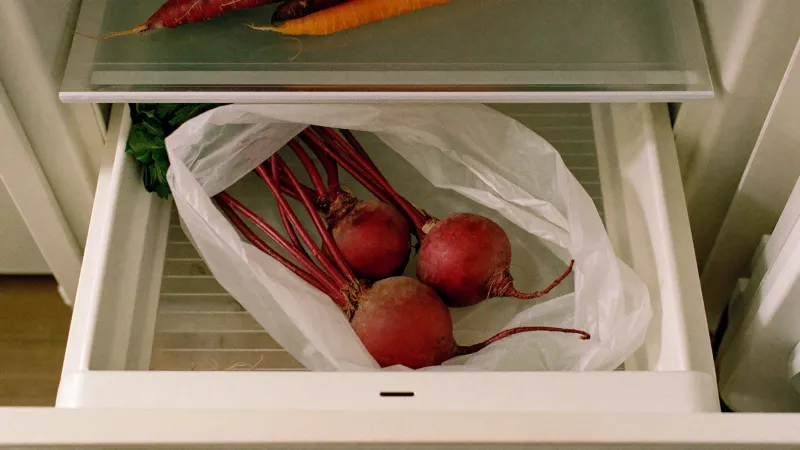
No root cellar? The refrigerator is the more realistic choice.
Cut off the greens first, then place the roots in a bag that lets some air move, such as a perforated produce bag.
Expect a shorter window. Texas A&M AgriLife gives about one to two weeks for beets in plastic bags in the fridge.
You may see longer numbers elsewhere. University of Minnesota Extension estimates about five months for beets under cold, moist conditions.
That figure comes from different guidance and a different setup than a bag in a home crisper drawer.
Treat the two estimates as a spread, not a guarantee. Your results depend on your fridge’s temperature and humidity and on the condition of the roots.
Check them weekly and use the softest ones first.
A Southern growing season does not guarantee cold storage
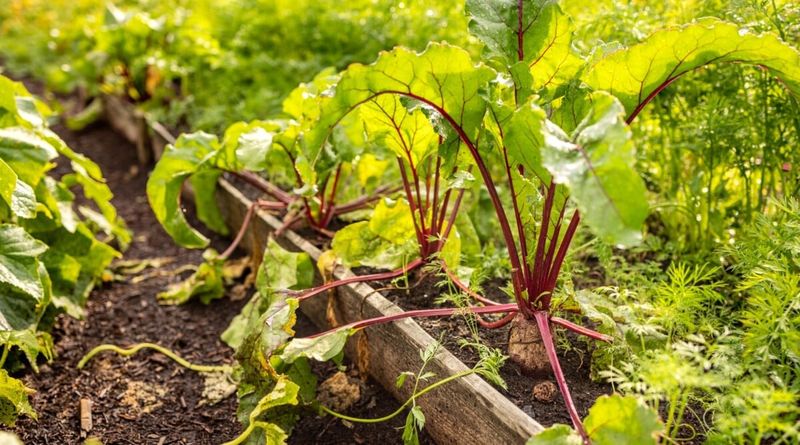
Southern gardeners get a long beet season, which is a real advantage. UF/IFAS says Florida planting may run from August through February, depending on location.
In Texas, Texas A&M guidance describes beet growing extending into winter in many South Texas areas.
Those facts are about growing, not storing. A mild winter that keeps plants happy in the bed does not keep a harvested root cold in your kitchen or garage.
Warm indoor spaces do not meet long-storage needs.
That is why Texas A&M’s consumer guidance still gives only one to two weeks for bagged roots in the refrigerator. One practical option is to leave some beets in the ground and harvest in smaller batches, where your climate allows.
Match the storage method to the space you have
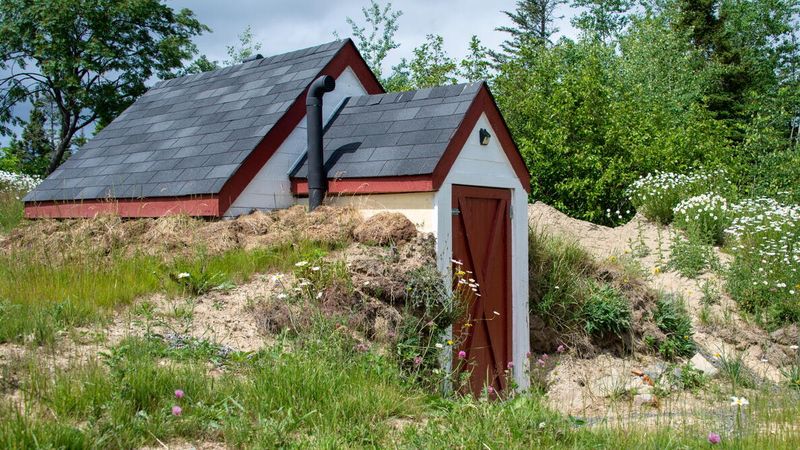
Here is the simple decision. If you have a space that truly stays near freezing and very humid, use a ventilated container with moist packing and aim for the multi-month range.
Utah State gives three to four months for those conditions.
If you do not, use the refrigerator and plan on a shorter window. Texas A&M puts bagged roots at one to two weeks.
Neither method supports a promise of spring-long storage or sweeter beets.
Eat the best roots first and enjoy the rest while they are at their peak. A realistic plan beats a hopeful one.