
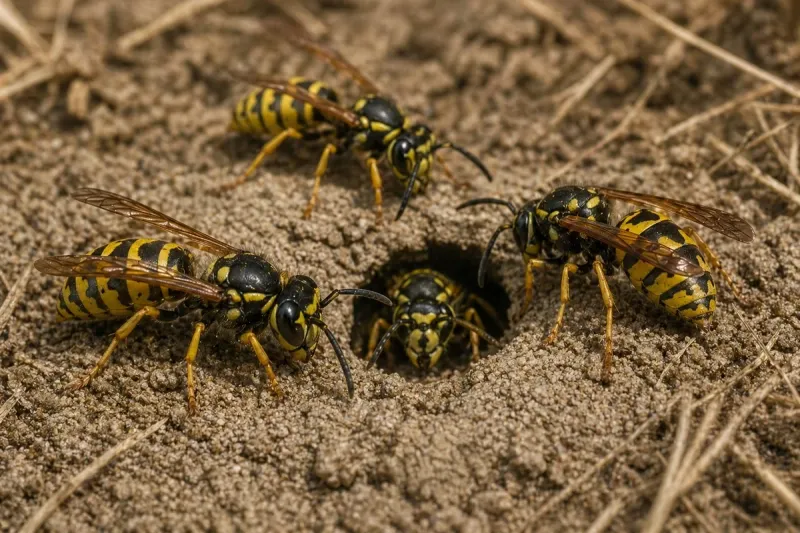
You step onto the patio on a mild fall afternoon and a yellowjacket is already circling your drink. Next door, the neighbor is raking leaves and barely sees one.
Yellowjackets can stay active in North Carolina late in the season, and the reason one yard gets more visitors than another is not always obvious. Knowing what draws them, and what might signal a nest nearby, helps you stay calmer and safer.
Yellowjackets can remain active late in the fall
Yellowjacket colonies start small in spring and grow all summer. By the time fall arrives, a healthy colony can hold a large number of workers, and those workers keep heading out to find food.
That is why you can still see yellowjackets in North Carolina well after the summer heat fades.
According to NC State Extension, the eastern yellowjacket is the most abundant species identified in the state. Southern yellowjackets also occur here, so local conditions and species both shape what you see in your own yard.
Late summer and early fall bring a change inside the nest. Eastern yellowjacket colonies produce new queens and males, and only the mated queens survive the winter.
The rest of the colony, including the workers, does not carry on. Old eastern yellowjacket nests are not reused the next year, so a nest you spot in November will not become next spring’s home base.
These seasonal facts make late-fall activity believable, but they do not mean every yard is overrun. Nothing here shows that activity is unusually widespread or intense across the state.
There is also no single date when yellowjackets stop flying in North Carolina. Mountain, Piedmont, and coastal plain yards can differ, and a warm stretch can keep foragers moving longer than a cold snap would.
So think of late-fall yellowjackets as a normal end-of-season pattern that varies from place to place, not as a sudden invasion.
Why neighboring yards may see different activity
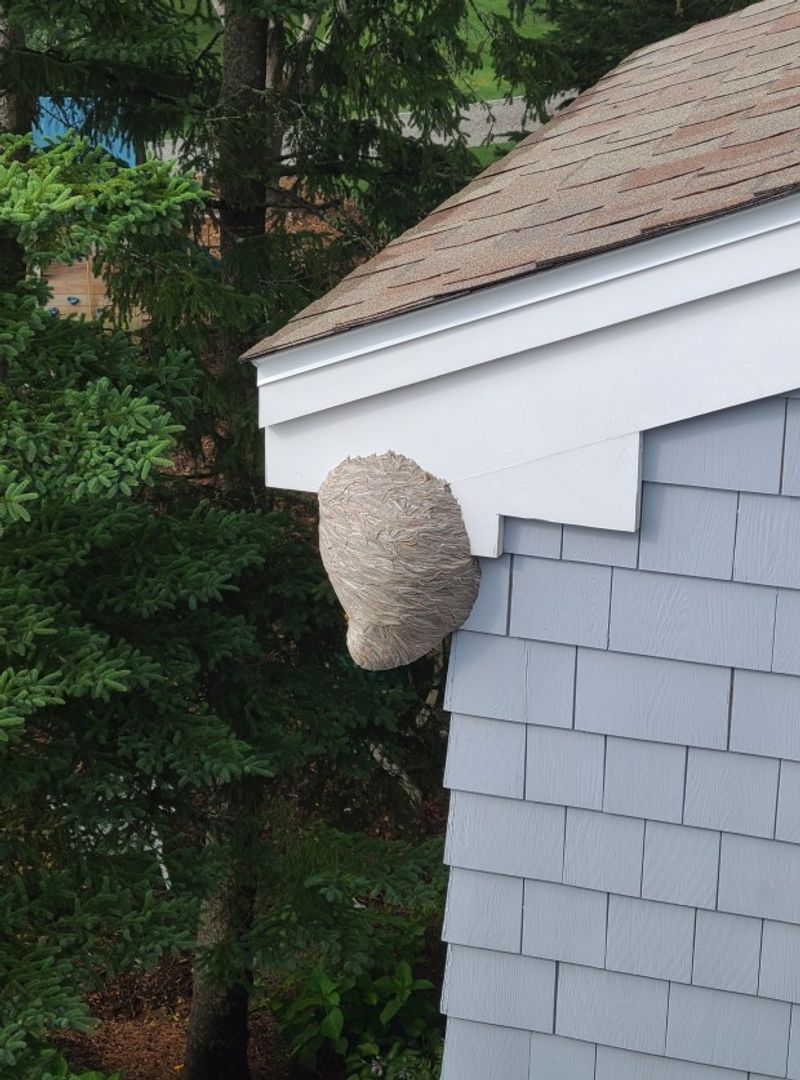
Picture two yards side by side. One has yellowjackets buzzing around the patio, and the other seems calm.
It is tempting to blame one single thing, but more than one explanation can fit.
Accessible food is one possibility. Foragers visit places where they can find sweet or protein-rich food, so a yard with more of it may see more visitors.
A nearby nest is another possibility, because it supplies the insects that go looking for that food.
That nest does not have to sit on the same property. Oregon State University Extension guidance gives a typical foraging range of up to about 1,100 feet.
Treat that as a rough range, not a firm boundary, since it will not fit every species or setting. A nest behind a neighbor’s shed, along a wooded edge, or across the street could feed visitors into several yards at once.
Seasonal colony growth and local conditions can also play a part. A colony at its largest may send out more foragers, and weather can change how many are flying on a given day.
The NC State Extension publication treats food attraction and nesting as separate questions.
The practical takeaway is that a busy yard does not prove a nest is there, and a quiet yard does not prove none is nearby. Fruit, trash, and holes may all be worth a look, but none is a complete answer alone.
Food scraps can attract foragers
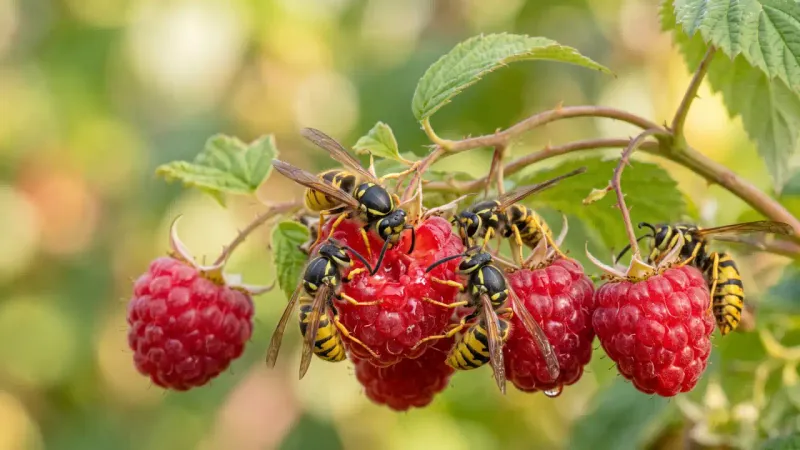
Walk under a fruit tree in October and you may notice soft, split fruit on the ground. To a yellowjacket worker, that is an easy meal.
Ripe and rotting fruit, open drinks, sticky spills, leftover picnic food, and garbage with a loose lid can all give foragers something to eat.
As the NC State Extension guide explains, workers search for this kind of food. A University of Illinois Extension article on fall yellowjackets also points to food around people as a reason the insects show up at outdoor gatherings and trash areas.
Keep the claim modest, though. Food explains why workers may stop at a particular spot.
It does not tell you where their colony is, and it does not show that a nest sits in your yard. A yard with no fallen fruit can still get visitors from a nest down the street.
Food also cannot explain every difference between two yards. If both have similar trash cans and fruit trees but different numbers of yellowjackets, the location of a nearby nest, the size of the colony, and the weather may be doing part of the work.
Think of food as the lure and the nest as the source. You can influence the lure, which is the part this article covers next.
A lawn hole alone does not identify a nest
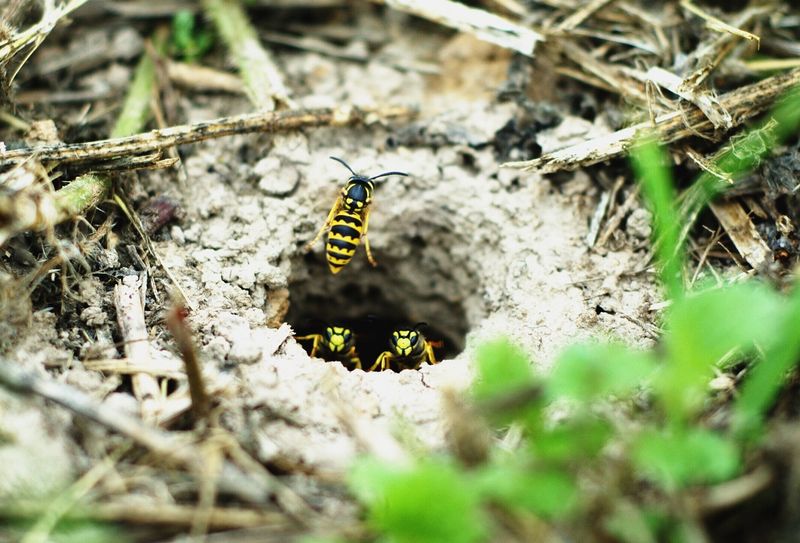
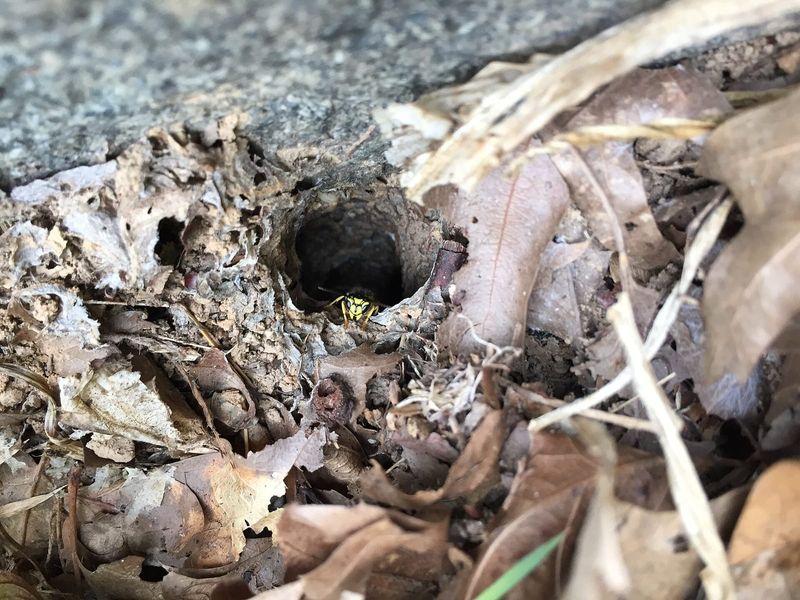
Finding a hole in the grass can make your stomach drop, especially in fall. Holes in lawns have many causes.
Other ground-nesting insects, small animals, and even natural settling can leave openings, so the hole by itself does not say yellowjackets. A University of Minnesota Extension lawn-hole guide lists several possible culprits.
What matters more is behavior. Repeated wasp traffic going in and out of the same opening is a stronger warning sign.
Even then, it is a clue and not a firm identification, since other insects can use burrows too.
If you want to check, watch from a safe distance for a few minutes in daylight. Notice whether wasps keep coming and going from one spot.
Do not walk up to the opening for a closer look.
Do not poke it, dig near it, or mow over it. The NC State Extension guide warns that disturbing a nest can trigger an immediate defensive response from the colony.
If you see steady traffic, keep kids, pets, and mowers away from the area and mark it from afar with a flag or cone placed with care. If you see no insects at all, the hole is probably something else, though you can keep an eye on it.
Reduce the food available to visiting yellowjackets

A weekend routine can cut down on the free meals in your yard. Start under fruit trees and collect ripe and rotting fruit often.
Put it in a sealed bag or container and dispose of it where yellowjackets cannot reach it, rather than leaving it in an open pile.
Next, check the trash. A tightly lidded garbage can gives foragers far less to work with, and rinsing cans and bottles before they go in the recycling helps too.
Wipe up spills and clear leftovers from the patio, grill, and pet bowls soon after use.
When you eat or drink outside, keep food covered. Pour drinks into a cup instead of drinking from a can, so you can see what is inside before you take a sip.
Both the NC State Extension guide and a University of Illinois Extension article recommend steps like these.
Be realistic about the results. Cleanup limits what is available to visitors, but it does not find or remove a nest.
Yellowjackets may still pass through if a colony sits nearby.
Also be cautious about store-bought traps. NC State notes that common pheromone traps were developed for a different species and may not work well on the eastern and southern yellowjackets found here.
Cleanup is the dependable step, and a trap is not a fix.
Keep your distance from a suspected active nest
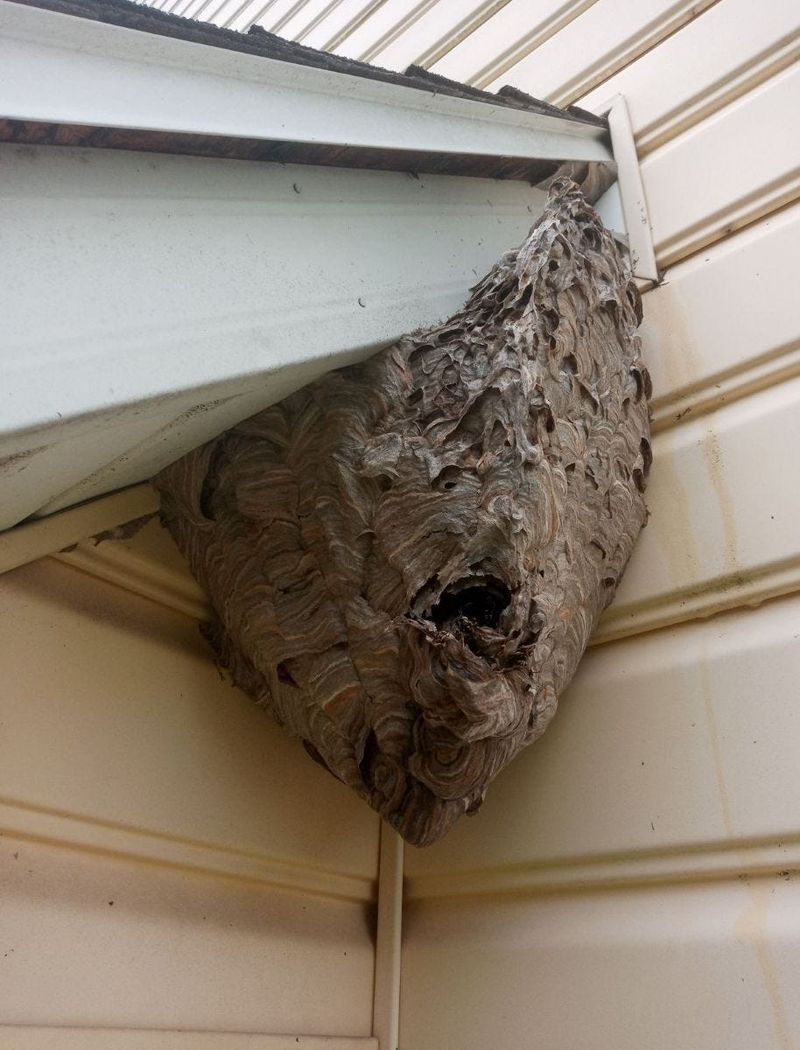
A yellowjacket sipping from a spilled soda is one thing. A colony that feels threatened is another.
Foragers are mostly after food. Workers may swarm defensively when a nest is disturbed, which is the situation that leads to multiple stings.
If a yellowjacket lands near you, do not swat at it. Stay calm, move away, and cover or remove food once the insects leave.
Keep people and pets away from any spot where wasps repeatedly come and go.
Call a pest-management professional if the nest is near a walkway, doorway, play area, or building, or in a place you cannot avoid. The same goes for any home where someone has a known sting allergy.
UMass Amherst Extension and Penn State Extension both point to professional help for hard-to-avoid nests.
Skip do-it-yourself removal. Never pour gasoline or another fuel into a nest, never use fire, and never plug an active entrance.
Sealing a nest inside a wall can push wasps into the living space, as NC State Extension cautions.
After any sting, watch for trouble breathing, swelling of the throat or tongue, or other signs of a severe reaction. The American College of Allergy, Asthma and Immunology advises using prescribed epinephrine right away and getting emergency medical care.
A nest left alone usually ends with the first hard cold. A nest poked at will not wait.