
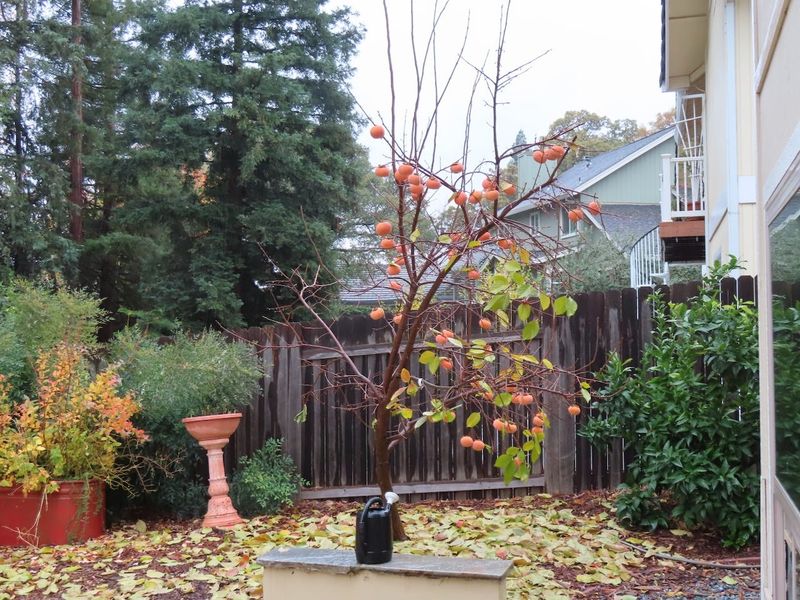
Walk past a persimmon tree in November and you may see bare branches hung with bright orange fruit. It looks odd, but it is a normal part of the season.
Many California gardeners rake, water, and prune on autopilot when leaves fall, and that is where mistakes can happen. Here is how to make smarter fall choices for a sweet harvest and a healthy tree next year.
Bare branches can still carry a normal harvest
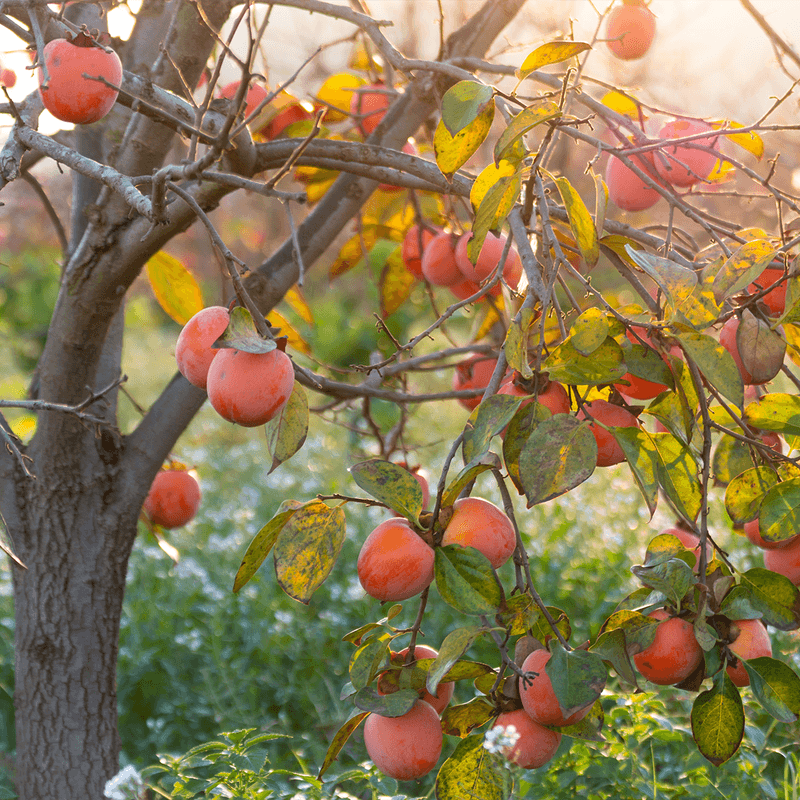
Picture a tree stripped of leaves, yet loaded with glowing orange globes. That scene surprises many first-time growers, but persimmons are deciduous, and UC Statewide IPM guidance on persimmons treats autumn leaf loss as part of the tree’s regular yearly cycle.
Fruit often stays on the branches afterward.
In many parts of California, that means the harvest season can stretch for weeks after the foliage is gone. UC Master Gardeners of Sonoma County describe persimmons as a tree that offers a fall display along with its crop.
So bare branches with fruit are not, on their own, a sign of trouble.
The key point is that dropping leaves tells you very little about the fruit. A tree can shed every leaf while the fruit is still underripe, and it can also hold fruit that is ready to pick.
Leaf drop does not mean it is time to harvest, time to shut off the water, or time to grab the loppers.
Instead of reacting to the leaves, let a few other things guide you. Think about which cultivar you grow, how mature the fruit is, how much rain has fallen, how dry the soil is, and how old the tree is.
Your coastal or inland setting matters too, since conditions differ across California yards.
The next sections walk through each of those decisions in the order you will probably face them: picking, handling, watering, and pruning. Raking up fallen leaves is ordinary yard tidying, and nothing here suggests it harms your tree.
Which persimmon you grow determines when to pick
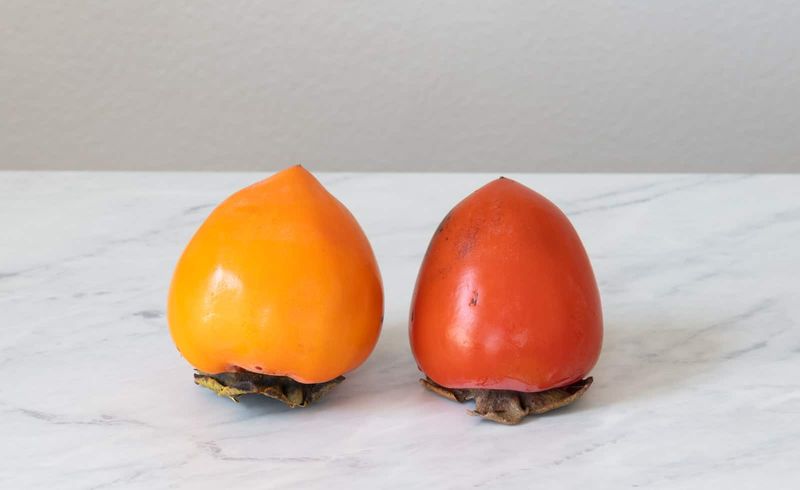
Two persimmons can hang side by side in the same yard and need completely different timing. The type you grow sets the rule, not the leaves and not the calendar.
Start by confirming whether your tree is non-astringent or astringent.
Fuyu is the common non-astringent type. According to UGA Cooperative Extension, non-astringent fruit can be eaten while still firm once it has developed full color.
Waiting for it to go soft is optional, not required.
Hachiya is the classic astringent type, and it plays by other rules. The fruit must ripen and soften before it is pleasant to eat, because unripe Hachiya leaves a dry, puckery feeling in your mouth.
Sonoma County Master Gardeners cover the main varieties grown in California yards if you are unsure which one you have.
You may have heard that persimmons need a frost to turn sweet. Texas A&M AgriLife Extension treats that as a misconception, since astringency depends on fruit type and ripeness.
Frost can even damage fruit that is not yet mature, so do not use the first cold snap as your signal.
Cultivars also differ beyond these two, so check your tag or nursery record if you have one. If the label is long gone, watch color and texture over several weeks and taste-test a single fruit before picking the rest.
Clip fruit gently to avoid bruising it
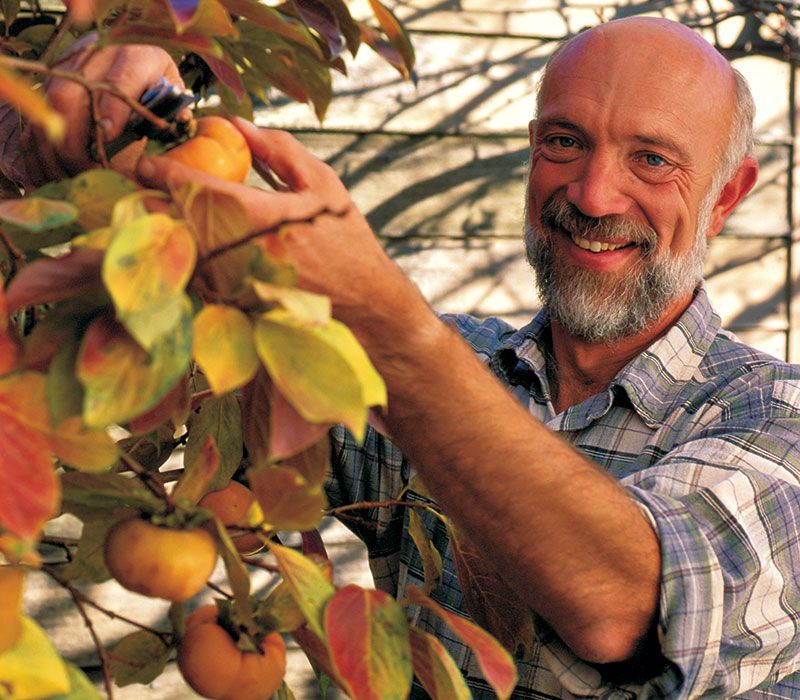
Grab a pair of sharp hand pruners or snips before you head out. Ripe persimmons should be clipped from the branch, not yanked or twisted off.
Pulling can tear the calyx, the leafy cap, and strain the twig.
Persimmons bruise easily, a point noted by both UC Master Gardeners in Sonoma County and UF/IFAS Extension. A fruit that looks perfect can show dark, mushy spots a day later if it took a hard knock.
That is especially true for soft, fully ripe fruit.
Cut the stem close to the fruit, leaving the cap in place. Set each persimmon into a shallow container rather than tossing it into a deep bucket, where the weight on the bottom layer can crush it.
A towel or a layer of soft cloth in the basket helps.
Work slowly with ripe fruit, and carry it in one layer if you can. If you are reaching high branches, a fruit picker pole with a cushioned bag can save you from drops.
Ladders on soft, damp ground deserve extra care.
Fruit with bruises or splits is best eaten first, so pick those out and use them within a day or two. Undamaged fruit will keep better, so keep it separate.
How should fall watering change?
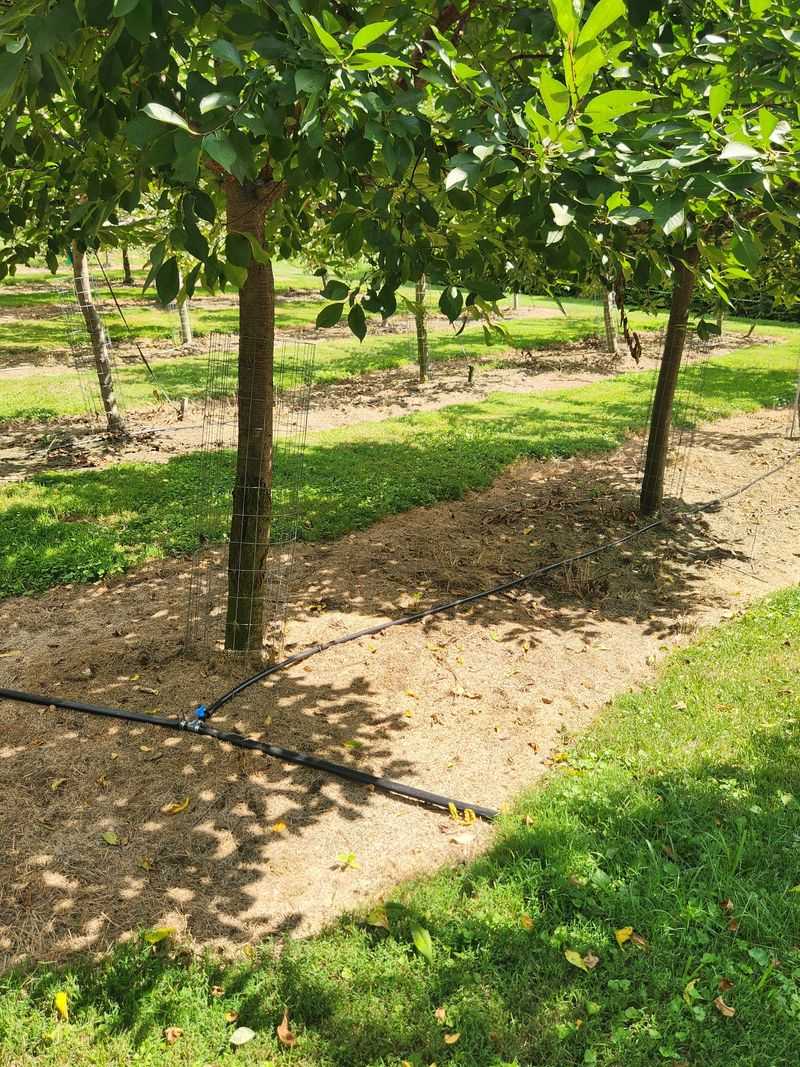
Many gardeners wonder whether falling leaves mean the hose should go away. California guidance does not say that.
UC IPM advice on watering fruit and nut trees recommends reducing irrigation in late summer and fall, not shutting it off automatically.
Your actual schedule should follow the weather. If fall rains have arrived and the soil is damp a few inches down, you may need little or no extra water.
During a warm, dry stretch, especially inland, a deep soak may still be useful.
Check the soil before you turn anything on. Push a trowel or soil probe down several inches near the drip line and see whether it feels moist or dry.
Sandy soils dry out faster than clay, so two yards on the same street can have different needs.
When you do water an established tree, water deeply rather than sprinkling often and lightly. UC IPM suggests applying water around and beyond the drip line, not right at the trunk.
Your irrigation system also matters, since drip lines, bubblers, and sprinklers deliver water differently.
Persimmons are fairly drought tolerant once established. Still, Sonoma County Master Gardeners note that regular watering supports a good crop.
Think of that as steady moisture for tree health, not a trick to make fruit sweeter.
Leaf fall is not a cue for heavy pruning
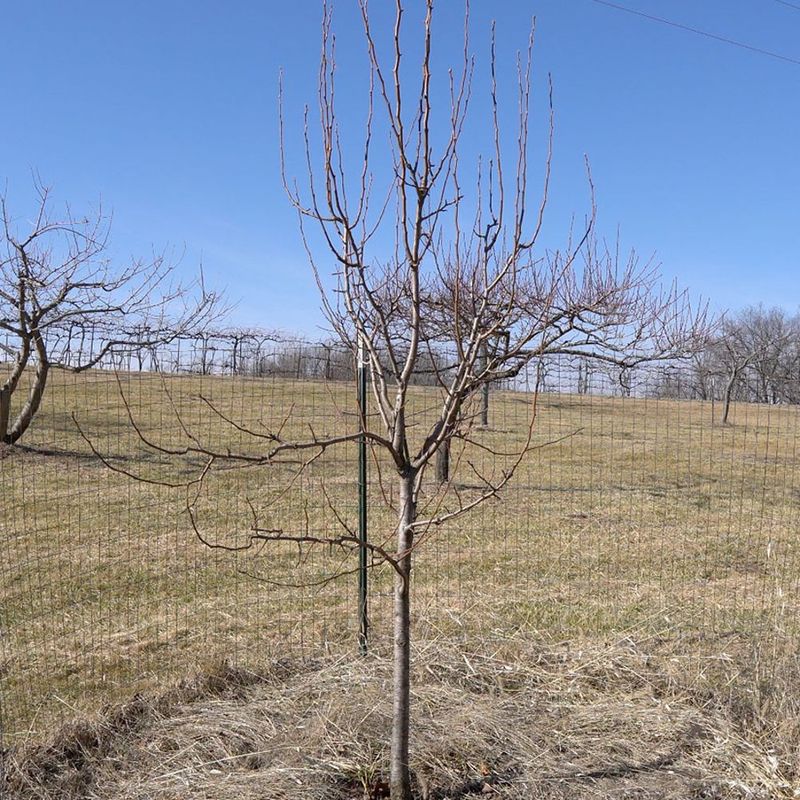
Raking leaves is simply yard tidying. Nothing in the UC sources shows that ordinary raking harms a persimmon tree, and nothing says you must leave every leaf where it lands.
Do what suits your yard, such as clearing paths or mulching beds.
Pruning is a different matter. Bare branches make the structure easy to see, which tempts people to cut hard.
The advice from UC IPM is more modest: on established trees, remove dead wood and suckers, and skip heavy routine cuts.
Young trees are the exception, because they benefit from shaping. Building a strong framework early gives the tree good structure for years.
A UC Marin Master Gardeners article places that framework training in late winter or early spring, not in autumn.
So if your tree is mature, a light pass is plenty. Look for dead, broken, or crossing wood, and cut off any suckers at the base.
If fruit is still hanging, you may want to finish the harvest first so you are not working around it.
If your tree is young, wait until the cold months are nearly over and then shape it step by step. Small cuts spread over a few seasons usually work better than one big one.
When fruit drops too, look beyond autumn leaf fall
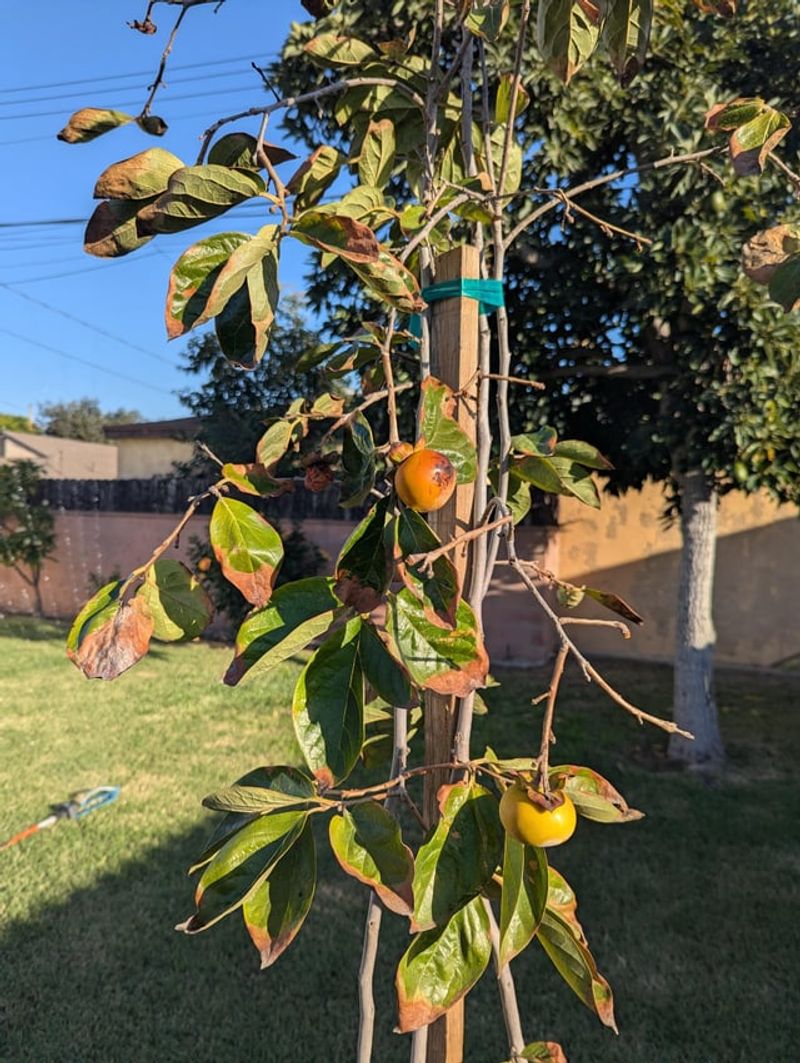
Autumn leaf loss and fruit loss are two separate events. The leaves are supposed to go.
A bit of immature fruit falling during the season is common as well, according to a UC Master Gardener Q&A.
What deserves a closer look is extensive fruit drop, where a large share of the crop hits the ground. A tree that is shedding leaves normally does not automatically lose its fruit as a result.
If you see heavy fruit loss, treat it as a clue to investigate.
Several possible causes are worth checking. Water stress, either too little or an uneven pattern, can play a part.
Too much fertilizer, especially nitrogen, is another possibility, as are temperature extremes.
A young tree may simply be carrying more fruit than it can support. Limited capacity in a first or second fruiting year can lead to a drop.
That does not mean something is wrong with the tree.
None of these is a diagnosis, so use them as a checklist. Think about recent heat waves, your watering pattern, and any recent feeding.
Note the tree’s age and how much fruit fell, and compare it to last year.
Use a simple fall decision rule
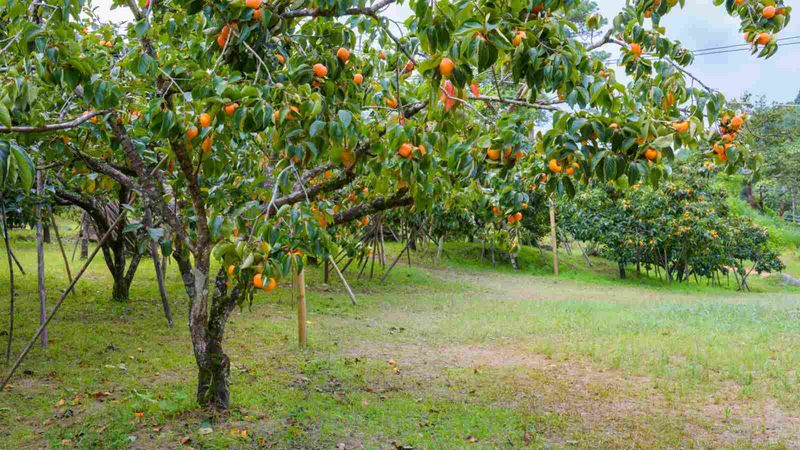
Start by naming your fruit type, then judge ripeness by color and feel instead of waiting for frost. Clip ripe fruit with care, and check rainfall and soil moisture before you water.
Hold off on big pruning cuts, and follow the late winter timing for young trees.
Your yard, cultivar, and tree age shape the details. A bare tree full of fruit is simply a persimmon doing its job.