
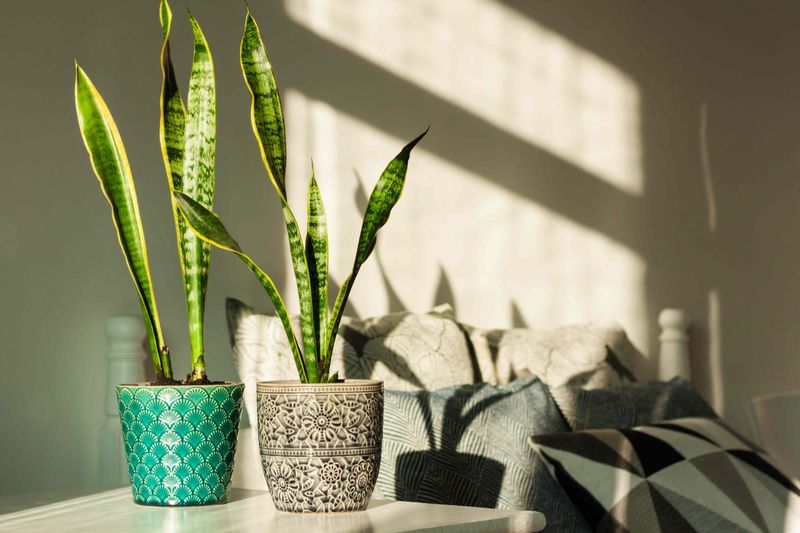
A snake plant that sits quietly all winter can leave you wondering if anything is happening in that pot. Some gardeners hear that a tight pot will force it to make baby plants, but the real story is a bit different.
Good winter care sets the plant up for spring, when any ready-made pups can be split off and potted. Here is what you can control, and what you cannot.
A snug pot is not a reliable pup-making trick
Snake plants can handle a close-fitting pot, and UGA Extension describes them as liking to be root-bound. That is a statement about tolerance.
It does not show that crowding the roots on purpose makes the plant send up new pups.
Guidance from the Royal Horticultural Society points the other way on timing. It suggests repotting when roots and leaves fill the pot or the pot starts to buckle, not squeezing the plant to get a result.
So here is a realistic goal. Keep the plant healthy through winter, when growth slows, and divide any well-rooted pups in spring.
Your plant may or may not have those pups by then, and no trick can promise them.
Keep winter care simple and conditions-based
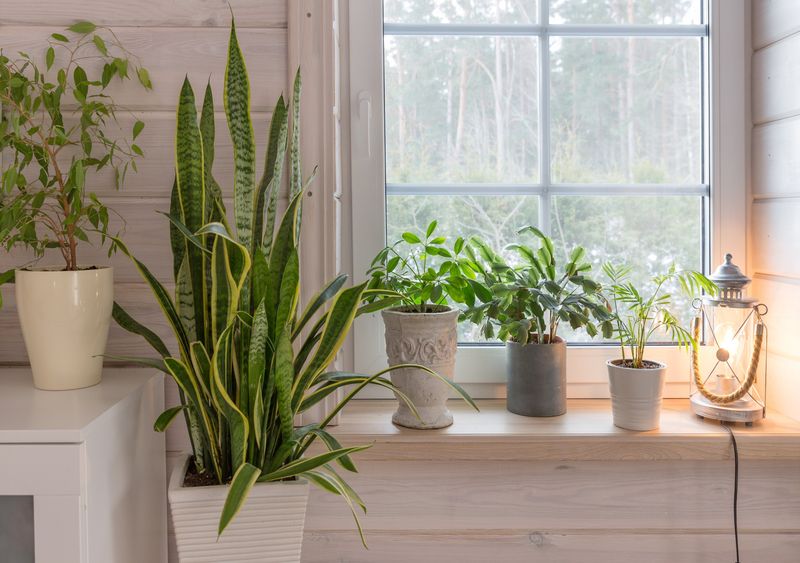
Give your plant bright light, lightly shaded if you can manage it, and keep it at normal room temperature. The RHS gives about 60 to 75 degrees Fahrenheit as a typical comfortable range.
Its growing guide also says winter water needs are very low unless the plant sits in a particularly warm spot.
Skip the calendar and check the pot instead. Water only after the mix has dried out, and never leave the pot standing in drained water.
Bring the plant indoors well before frost threatens. Outdoor suitability depends on your exact location, not your state.
UF/IFAS lists outdoor hardiness as zones 10 to 12, so a sheltered South Florida yard may differ a lot from a Texas Panhandle one. Local cold snaps call for local judgment.
Choose a well-rooted offset or a healthy clump
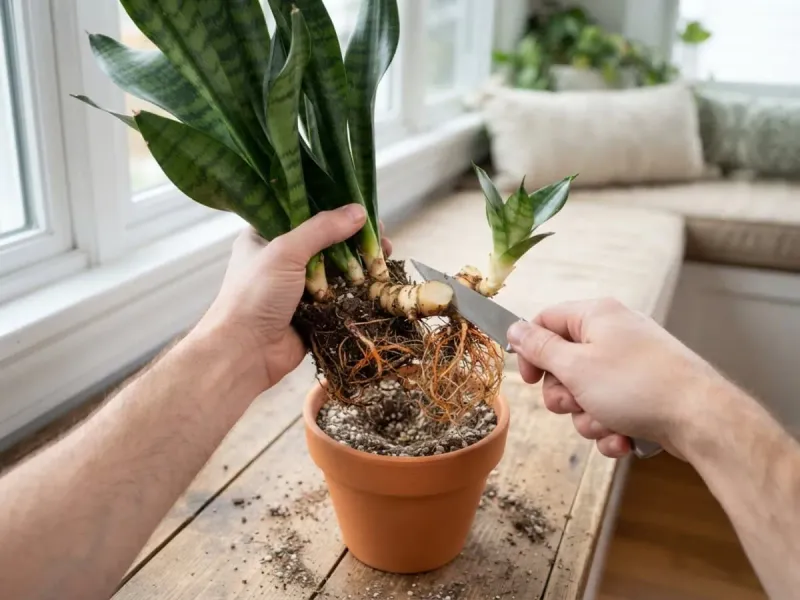
Snake plants grow as clumps. Young shoots appear around the established plant, and the RHS says offsets can be potted individually once they are well-rooted.
Look at the base of the plant. A shoot that is tiny or has barely any roots is better left alone for now, because it may need more time attached to the parent.
A large, crowded clump offers another route. You can divide it into sections, as long as each piece keeps healthy leaves and roots.
Not every shoot will be ready by spring, and that is normal.
Divide suitable plants in early spring
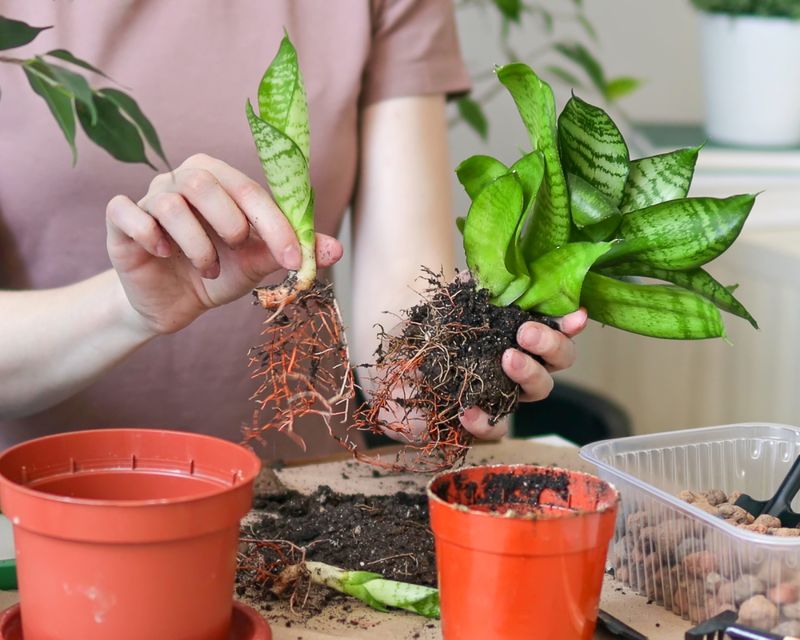
Early spring is the best window, according to Iowa State University Extension. Growth is picking up again, so divisions have a better chance to settle in.
The RHS also recommends spring for propagation.
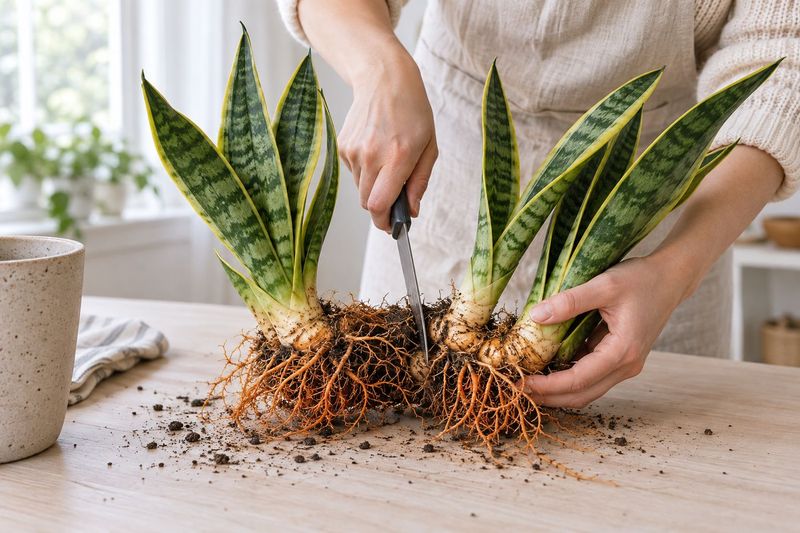
Slide the plant out of its pot and loosen the soil so you can see the roots. Gently work the rootball apart, following the natural gaps between shoots.
Check each piece. Every division needs healthy leaves and roots of its own.
Remember that dividing only separates growth that already exists. It will not push the plant to make something new.
Set divisions up in draining pots
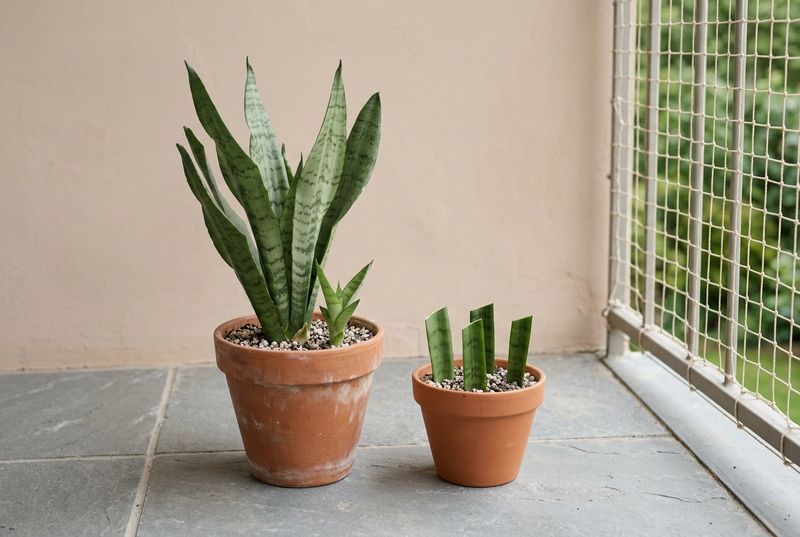
Choose pots with drainage holes and fill them with a free-draining cactus mix. Pick a container that fits the roots with only a little room to spare.
The RHS warns that a much larger volume of damp mix can raise the risk of root rot.
Set each division at about the depth it grew before, then firm the mix lightly around the roots. Place the pots in bright, indirect light.
Hold off on fertilizer. Iowa State suggests waiting a few weeks while the new plants get established.
If no pups appear, keep caring for the parent
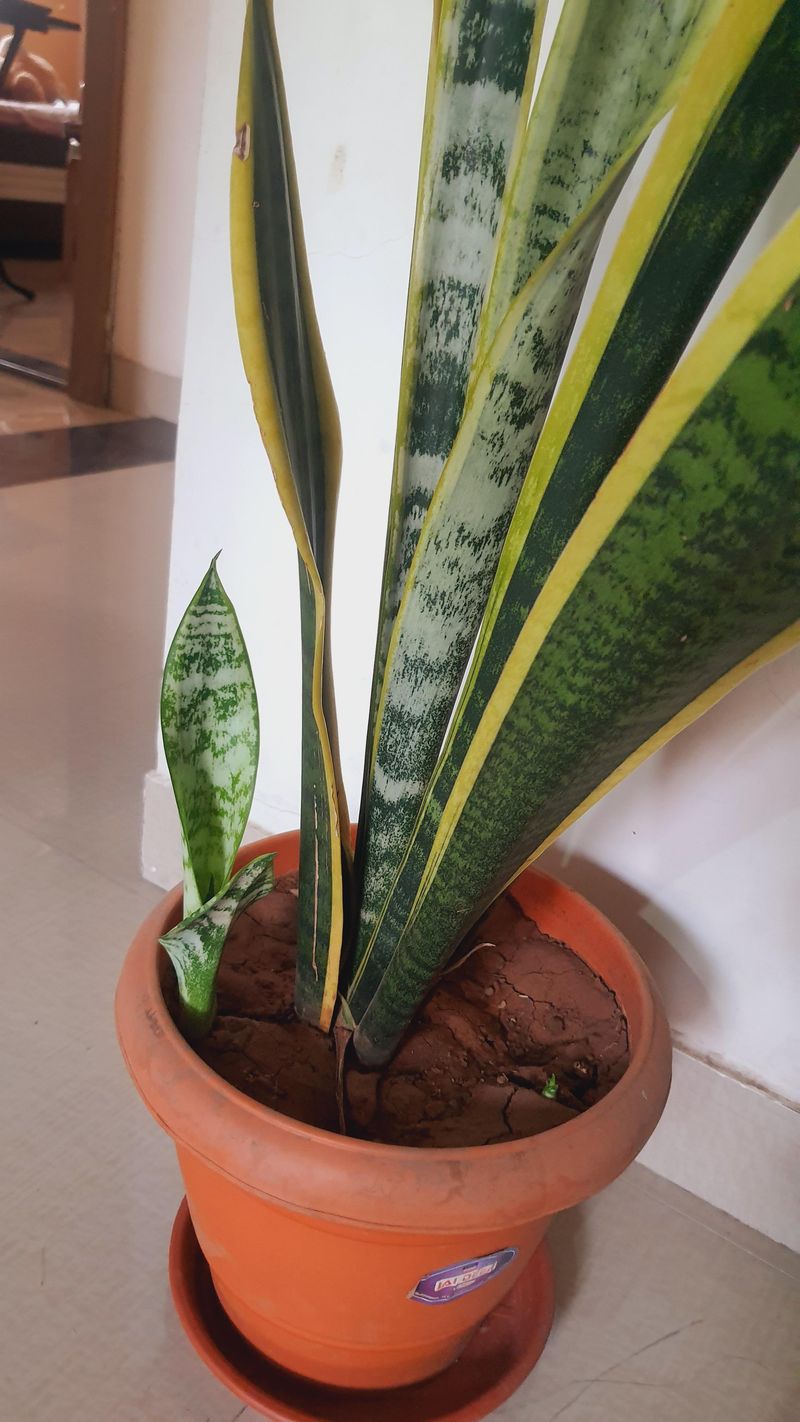
Sometimes spring arrives and there is nothing to separate. The sources do not promise that a snake plant will make pups over winter, so a quiet plant is not a failure.
Resist the urge to stress it with a too-small pot or extra water. Steady care is the better bet, and the UGA guidance notes that even indoor flowering is rare, which shows how slowly these plants can move.
Leaf cuttings are a separate option. The RHS says sansevierias can be grown from leaf cuttings, but cuttings from variegated types may grow green rather than keep the parent’s pattern.
Divide only when the plant has suitable growth to share.
Protect pets and your hands
Snake plant is toxic to cats and dogs. The ASPCA lists nausea, vomiting, and diarrhea as the symptoms, so keep pots out of reach of curious pets.
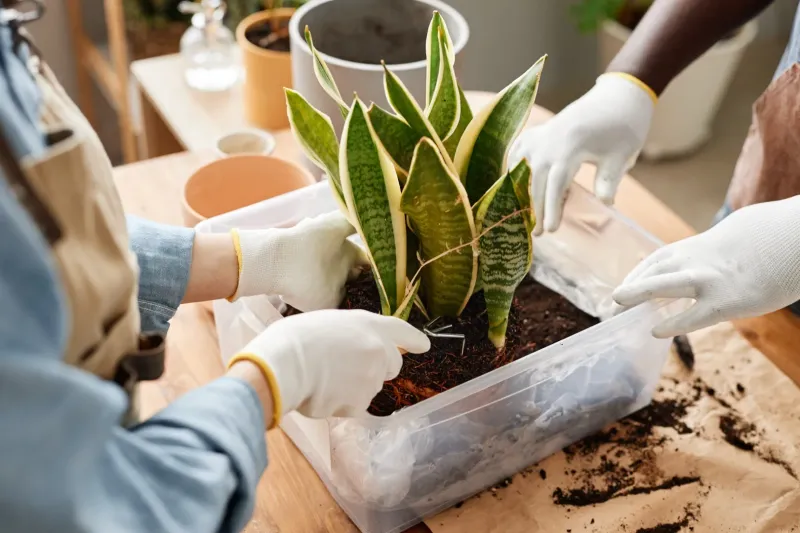
Wear gloves when you cut or divide, since the RHS says the sap can irritate skin. A little prep keeps the whole project pleasant.