
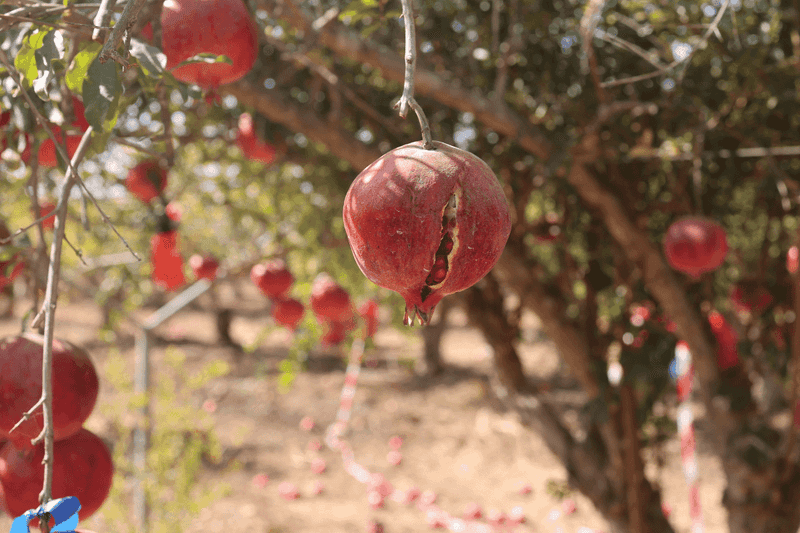
You walk out to check your pomegranate tree and spot a fruit split wide open, red seeds showing. It is a sinking feeling when harvest is so close.
Changing soil moisture is one possible contributor to this kind of cracking, and a few simple habits can help you save more of your crop. Here is how to read the clues in your own yard.
California’s pomegranate season is local, not statewide
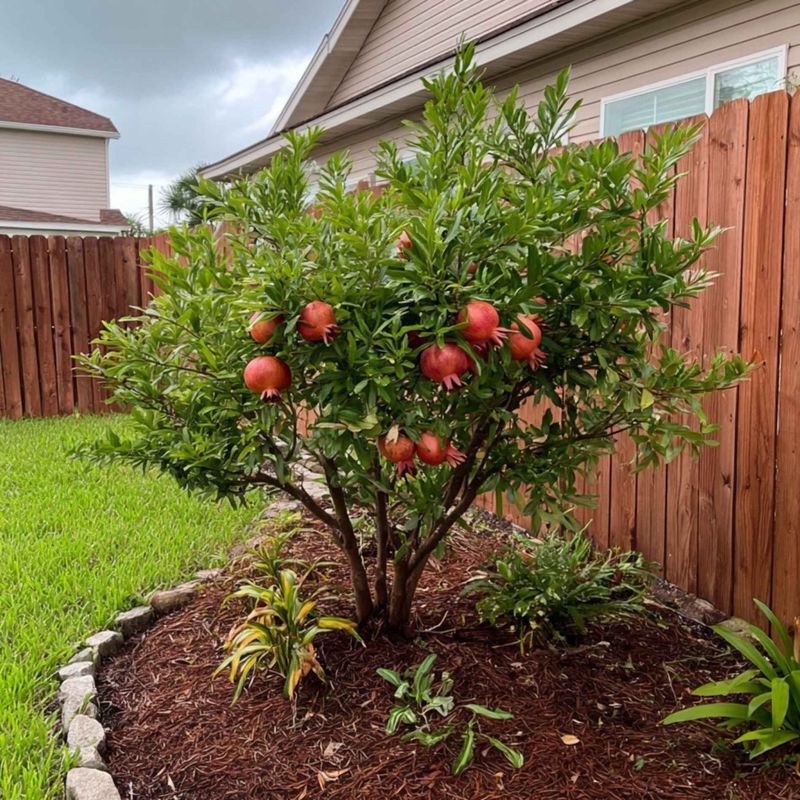
Pomegranates commonly ripen in fall in California, but the exact timing shifts with the variety, the bloom date, and where you live. According to UC Master Gardeners of Placer County, harvest timing varies from yard to yard, so a neighbor’s calendar may not match yours.
Weather is just as local. A foothill garden in the Sierra, a coastal lot in San Diego, and a backyard in the Central Valley can have very different fall conditions, and rain may arrive in one place while another stays dry.
Production notes from UC Cooperative Extension in the Central Sierra also reflect how much growing conditions differ across the state.
So instead of assuming rain is soaking everyone right now, check your own tree and your own forecast. Fruit splitting late in the season is something that can happen, and it is a good reason to walk your tree often as harvest nears.
Look at the color of the fruit, the condition of the soil under the canopy, and the next week of weather where you live.
That local view is the foundation for everything else in this article. Your tree, your soil, and your forecast tell you far more than a statewide guess.
A split is not a reliable ripeness signal
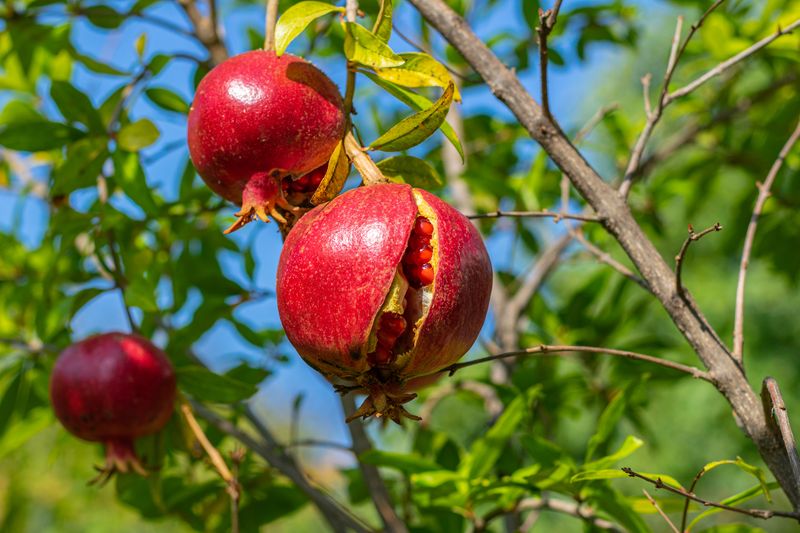
Finding one cracked pomegranate often sends a gardener to inspect the rest of the tree, and that is a sensible reaction. The split itself, though, does not prove the fruit was ready.
Fruit can crack from moisture swings or other stresses before the seeds have reached full flavor.
Some growers use the first split as a reminder to taste-test nearby fruit, but UC Master Gardeners of Placer County also points to other cues. Maturity depends on the cultivar, when the tree bloomed, and the weather during the season.
Two extra checks help. First, look for the deep color that is typical for your particular variety, since some are bright red and others are paler or pinkish.
Second, tap the fruit gently. A mature pomegranate tends to give off a metallic sound.
Use the split fruit as a prompt to look closer, not as a verdict. If the neighbors on the branch pass the color and tapping checks, they are candidates for picking.
If they do not, they likely need more time on the tree.
Rain after a dry spell can outpace the peel
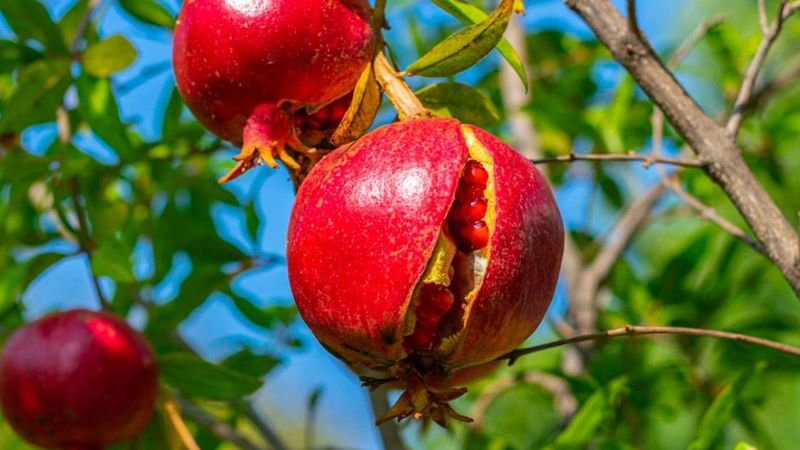
California summers are long and dry, so many trees go through weeks of low soil moisture before fall. When a good rain or a sudden heavy soaking follows, the inside of the fruit can respond faster than the outside.
The arils, which are the juicy seed sacs, may swell more quickly than the peel can stretch to hold them.
A team of researchers looked at this idea in a 2014 field study on water-stressed pomegranate trees, and found that rainfall intensified peel cracking. That fits what many backyard growers describe seeing after the first storm of the season.
It helps to know the limits of that work. The study tested one cultivar under particular irrigation treatments, so it shows a real risk pattern but does not prove that rain caused every split fruit in every garden.
Your variety, soil type, and tree health all matter.
Think of it as a pattern to watch for rather than a rule. If your tree has been dry for a long stretch and a big rain or a big irrigation is coming, that is the moment to pay closer attention to the fruit and the soil.
Water stress and overwatering can both contribute
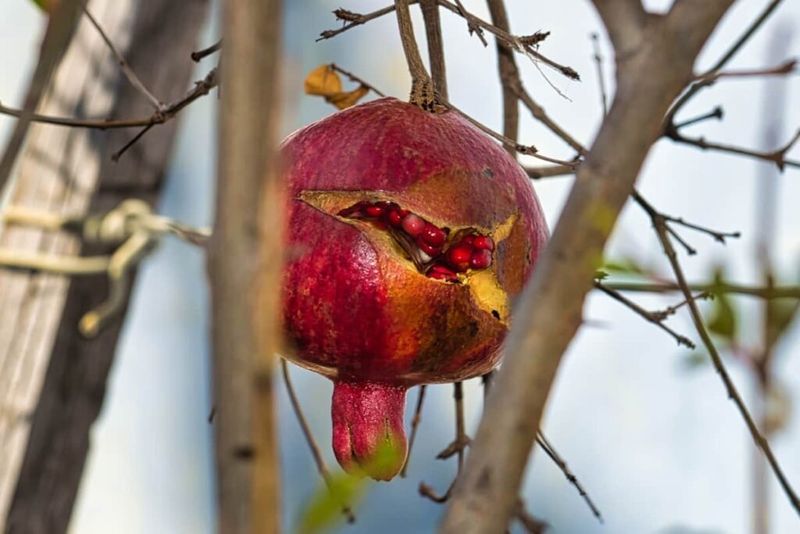
Rain after drought is one pattern, but it is not the only one. The UC Statewide IPM Program’s pomegranate guidance mentions that both water stress and overwatering can be associated with fruit cracking.
That means a tree on the dry side and a tree kept too wet could each show split fruit.
Other factors can play a role too, including the variety and other conditions during fruit development. The field research on rainfall and peel cracking focused on water-stressed trees, which is only part of the picture.
Because of this, a split fruit alone cannot tell you what happened to your particular tree. You cannot look at a crack and know whether the cause was a dry spell, a soaking, or something else.
A better approach is to gather clues. Dig a few inches into the soil under the canopy, think back over recent weeks of rain and irrigation, and note whether the cracking is on a few fruit or many.
Those details point you toward a sensible next step without guessing.
Keep soil moisture steady instead of letting the tree dry out
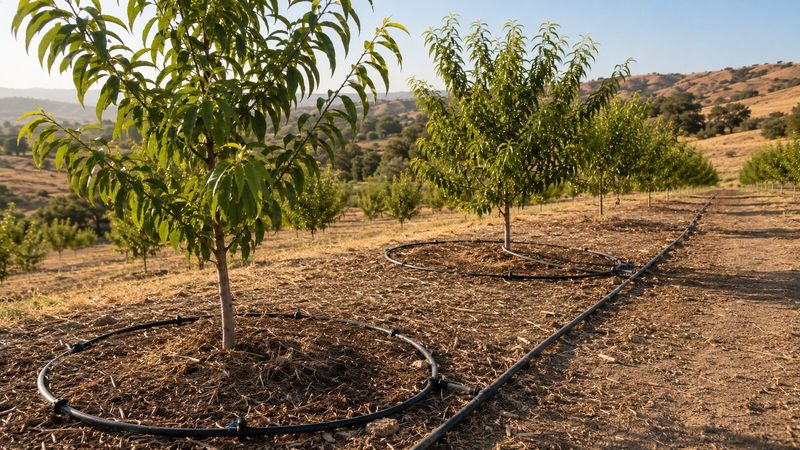
Pomegranates handle drought well, but handling drought is not the same as thriving through long stress followed by a sudden flood. UC ANR’s growing guide recommends regular watering, and the UC IPM pomegranate page cautions against both water stress and overwatering.
Do not stop watering in fall hoping to prevent splits. Instead, check the soil in the root zone before you irrigate.
Push a trowel or a soil probe several inches down near the drip line and see whether the soil feels dry, damp, or soggy.
The UC IPM page on estimating irrigation needs encourages scheduling by observation and root-zone checks. Add recent rainfall to your thinking, and skip the habit of giving one giant drink after a long dry stretch.
If the soil has been dry, return to moderate moisture in smaller steps rather than all at once. Always follow your local water rules and any restrictions in your area.
No single schedule, spray, or treatment is known to reliably prevent cracking, so the goal is simply fewer sudden swings.
Harvest mature fruit before heavy rain
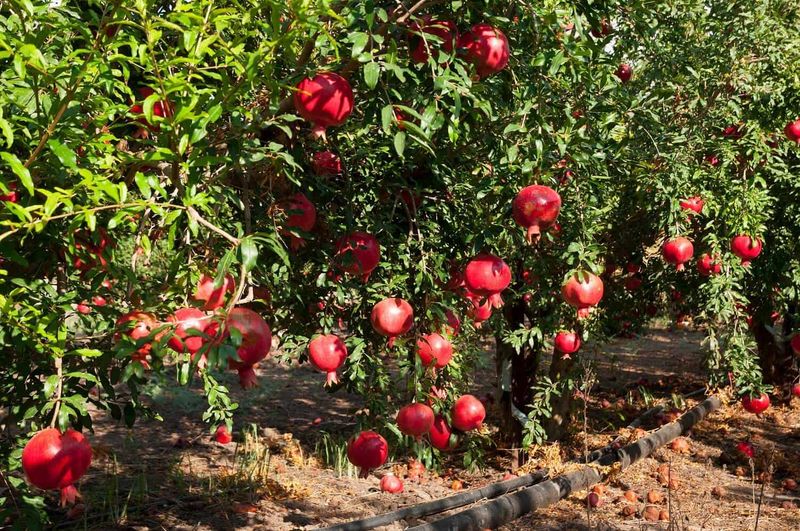
When a big storm is in the forecast, take a careful look at your fruit first. Decide by maturity, not by whether a fruit has split.
UC Master Gardeners of Placer County suggests looking for the color that is right for your cultivar and listening for a metallic sound when you tap the fruit.
If a pomegranate passes both checks, picking it ahead of the rain is reasonable. Fruit that is ready is better in your kitchen than on a branch taking its chances with a downpour.
Resist the urge to strip the whole tree, though. Pomegranates do not ripen further after harvest, so picking clearly immature fruit just to beat the weather leaves you with fruit that never improves.
Leave the unready ones for another day.
Use clippers or pruning shears and cut the fruit from the stem rather than pulling it, a tip also covered in October tips from the Santa Clara County Master Gardeners. Pulling can tear the skin and open the door to decay.
Sort cracked fruit promptly and discard mold or rot
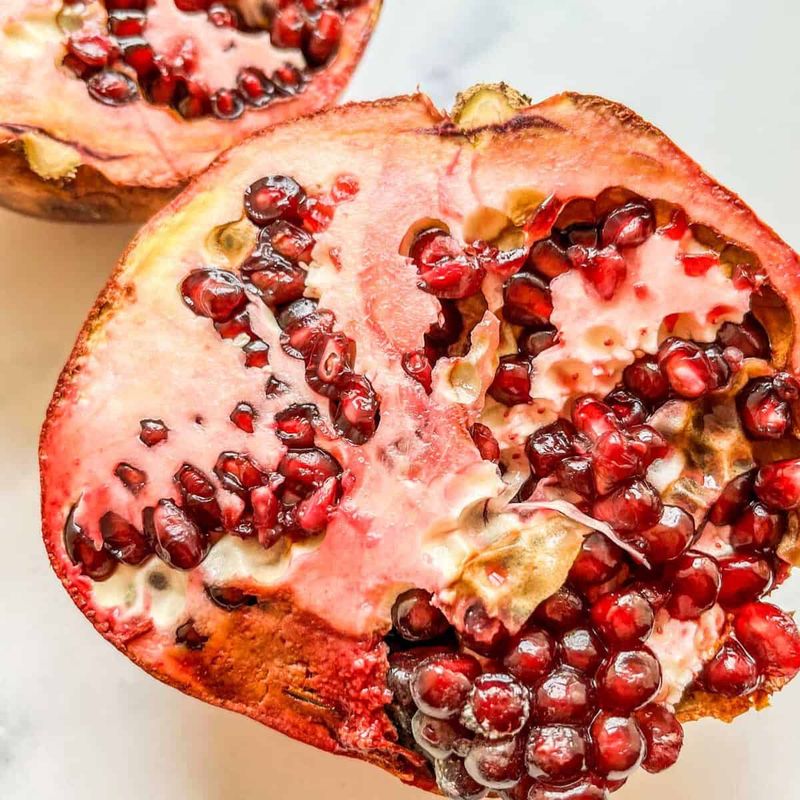
Once fruit is in the kitchen, give it a quick inspection. A crack can let in microbes, and the UC IPM guidance on fruit rot notes that damaged fruit can be exposed to decay.
Pick up each one and look at the skin, the crack edges, and any exposed seeds.
Make two or three piles. Set aside sound, uncracked fruit for storage.
Put cracked fruit that still looks clean and fresh in a separate pile to use soon. Pull out anything that is soft, moldy, or rotten.
Not every cracked pomegranate is spoiled, and a clean split can simply mean you should eat that fruit first. Storage facts from the UC Davis Postharvest Center are a useful reference for keeping sound fruit in good shape.
When you find mold or rot, throw the fruit away rather than cutting around the bad spot. The USDA’s answer on moldy fruit in a container advises discarding moldy soft fruit.
Also clear rotted or mummified fruit off the tree and the ground.
Use the soil, forecast, and fruit together
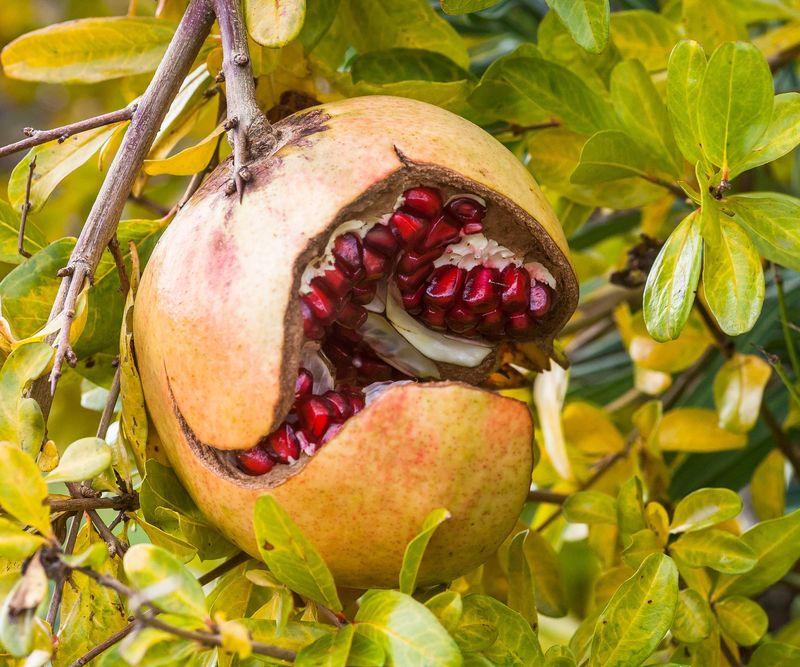
Before the next weather change, run through three quick checks. Test the soil in the root zone and count recent rain, using ideas from UC IPM irrigation guidance.
Judge maturity by color and tapping, not by a split alone. Then harvest mature fruit ahead of heavy rain, clipping it as the Santa Clara County Master Gardeners describe.
These steps can lower your odds of losing fruit, though they cannot promise a tree with zero cracks.
A pomegranate tells you plenty if you look at the soil, the sky, and the skin together.