
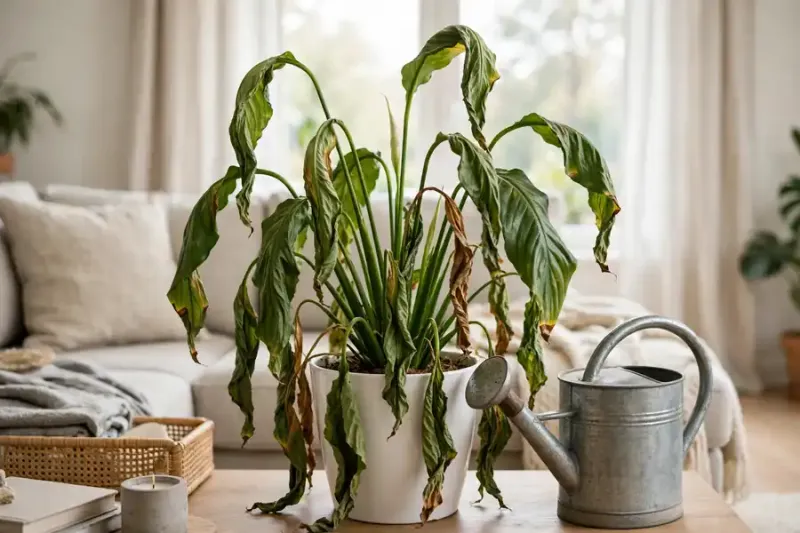
A peace lily that collapses over the rim of its pot looks like an emergency. Many gardeners grab the watering can right away, but a droopy plant is not always a thirsty one.
A few quick checks can tell you what the plant needs and keep you from making things worse. Here is how to read the signs, help a dry plant, and handle one that is already wet.
Check the mix before reaching for water
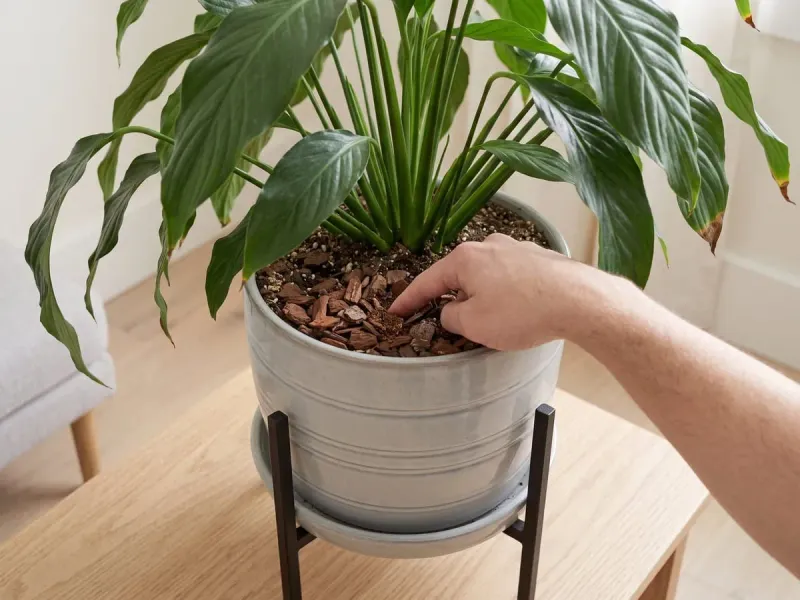
Before you water anything, push a finger into the potting mix. University of Maryland Extension suggests checking about 2 inches down, and a University of Maryland peace lily answer points to about 1 inch.
Treat that as a practical range, not a hard rule.
Mix that feels somewhat dry and crumbly at that depth is a good sign the plant may be thirsty. Mix that feels cool, damp, or soggy tells a different story.
It may stick to your finger or leave moisture behind.
The reason this check matters is simple. Iowa State Extension explains that too little and too much water can both keep roots from getting moisture up to the leaves.
A flat, floppy plant looks the same either way.
So let the mix make the call. Dry mix points you to a thorough watering.
Wet mix means you hold the water and start investigating.
Water a dry root ball thoroughly, then drain it
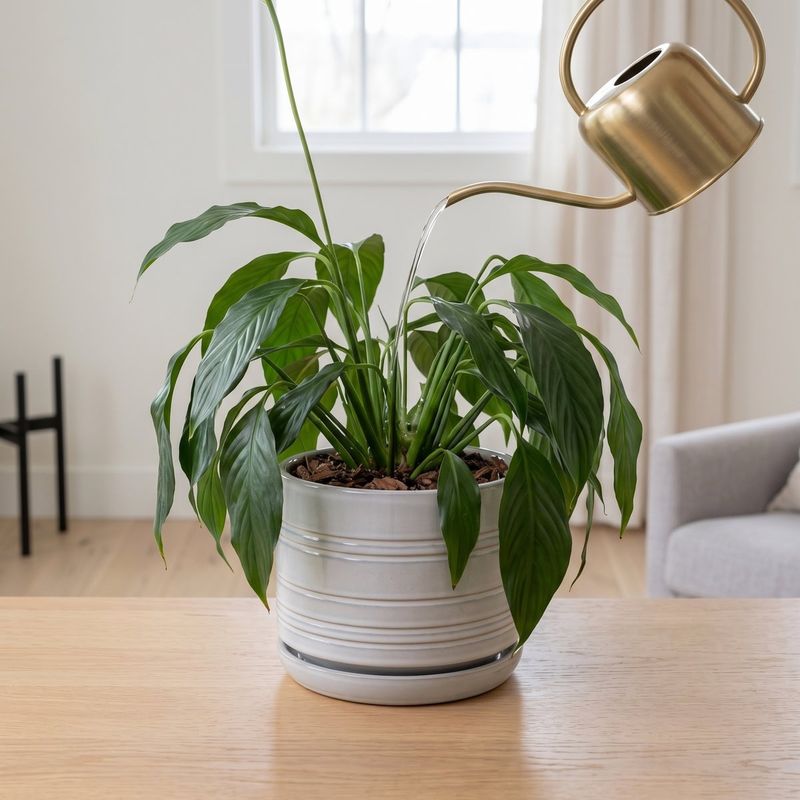
If the mix is dry, the goal is to wet the whole root ball, not just the top layer. Take the plant to a sink and pour water slowly over the mix until it runs out of the drainage holes.
Slow pouring gives dry mix time to soak up water instead of letting it race down the sides of the pot.
Let the pot drip for a few minutes, then empty the saucer or decorative cachepot. University of Maryland Extension advises against letting houseplants stand in excess water.
Bottom watering is another option, as Iowa State Extension describes. Set the pot in a basin of water so the mix can draw it up, then lift it out and let the extra water drain away.
Whichever method you choose, aim for mix that stays moist rather than soggy. UF/IFAS peace lily care guidance says to keep the plant moist without letting it sit in water.
A 15-minute recovery is not guaranteed
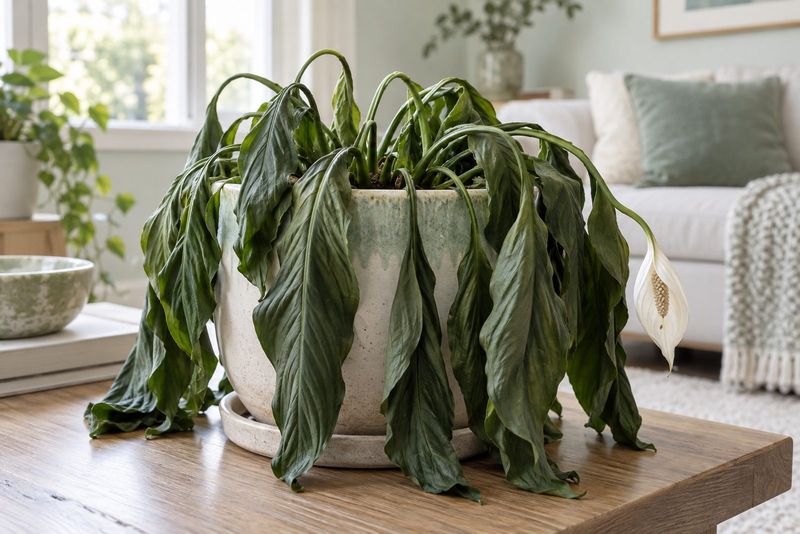
The popular promise is that a 15-minute soak will perk a collapsed peace lily right back up. That is more specific than the research allows.
A UF/IFAS commercial-production guide says severely wilted peace lilies can bounce back within hours after thorough watering when lack of water is the cause.
Notice what that does and does not say. It gives a window of hours, not minutes, and it applies only when the plant was truly short on water.
It does not set a soak time or a guaranteed response time.
Recovery speed will vary with how dry the root ball got, how stressed the plant was, and the conditions in your room. A plant that has been watered well may still look limp for a while.
If yours has not stood up after an hour, resist the urge to pour in more. Give the roots time to take up the water, then check the mix again later.
If the mix is wet, investigate instead of watering
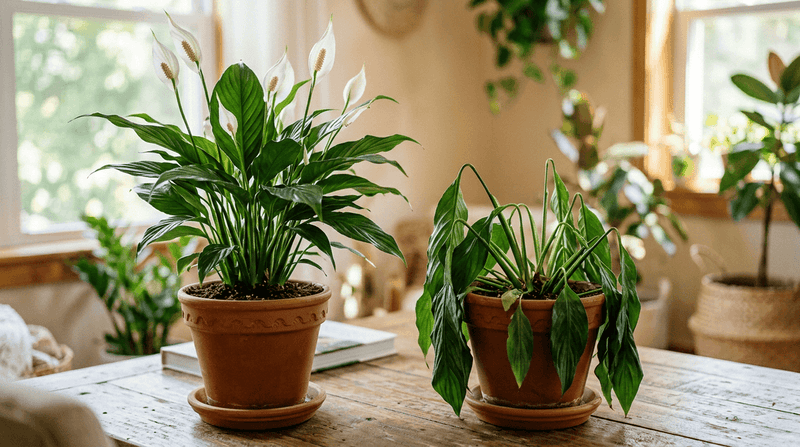
A drooping plant in wet mix needs a different kind of attention. Too much water, or roots that have been damaged, can leave the leaves wilted even though the pot is full of moisture.
Adding more water only makes that situation worse, so put the watering can down.
If the plant is still wilted after the mix has had time to dry down some, take a look at the roots. Slide the plant out of the pot and check what you see.
According to University of Maryland Extension, healthy roots are firm and light-colored, while roots affected by rot tend to be dark and soft.
Wilting alone does not prove root rot, so let what you find in the root ball guide you. Iowa State Extension notes that overwatering is one of several reasons roots stop supplying the foliage.
If you do find rotted parts, the Maryland guidance suggests removing them and replanting the healthy sections where possible. Use fresh mix in a pot with drainage holes, and recovery may take some time.
Heating-season air can change water loss
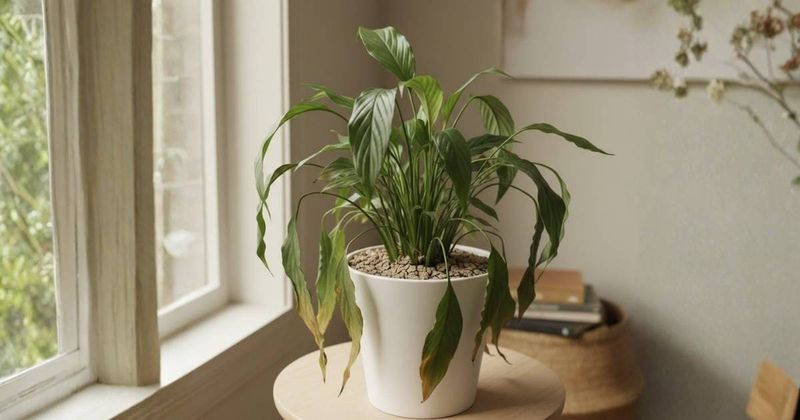
Once the heat comes on indoors, the air often gets drier, and that changes how fast leaves lose water. UGA Extension notes that lower humidity and higher temperatures increase water loss from leaves.
Pot size, light, and the type of potting mix also affect how quickly a plant uses water.
Placement matters too. A University of Maryland answer on peace lily care advises keeping the plant away from dry air blowing straight from heating or air-conditioning vents.
NC State Extension lists low humidity among the possible causes of brown leaf tips.
To raise humidity, you can group plants together or run a humidifier nearby. Both are options that may help, not cures, and neither replaces checking the mix.
Dry air does not automatically mean dry roots. You might check the mix more often when your home is warm and dry, but let the mix decide, not the calendar.
Use a check-first routine going forward
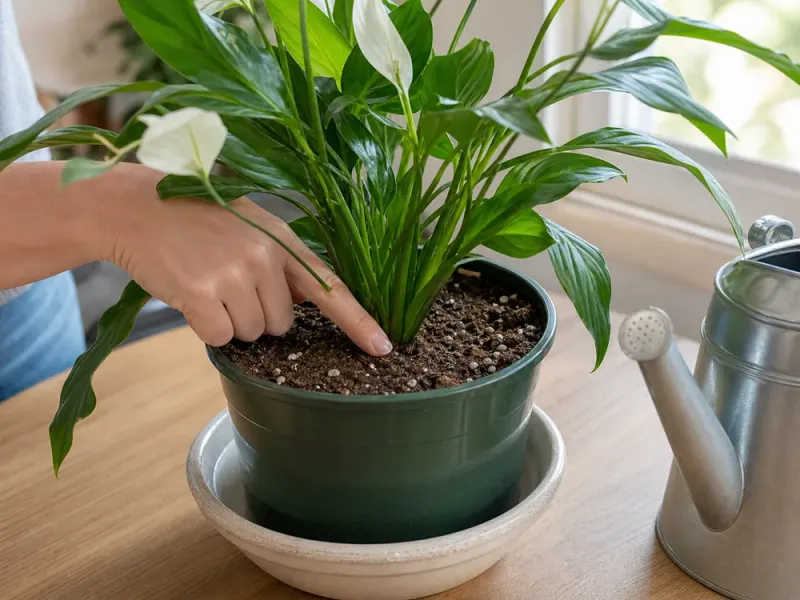
A simple routine keeps you from guessing. Start every time with your finger in the mix.
If it is dry at that 1 to 2 inch range, water thoroughly and drain the pot, following University of Maryland Extension guidance not to leave plants standing in water.
If the mix is wet, skip the watering can and look for the cause. Iowa State Extension reminds us that both extremes can cause wilting, so the plant’s posture alone will not tell you which one you face.
A dry plant may perk up after a good soak. The UF/IFAS production guide reports recovery within hours in that case, but your plant’s timing may differ, and a 15-minute turnaround is not established.
A limp leaf is a message, and the potting mix is the translator.