
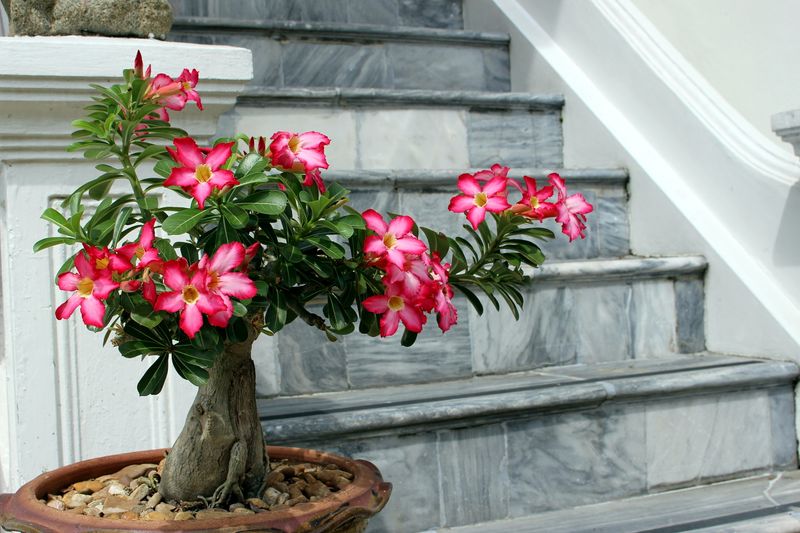
Bare branches on a potted desert rose can give any Florida gardener a jolt. Sometimes the plant is slowing down for a cool-season rest, and sometimes something else is going on.
The trick is knowing which clues to check before you change how you water. Here is how to read your plant like a pro.
Leaf drop is a clue, not a diagnosis
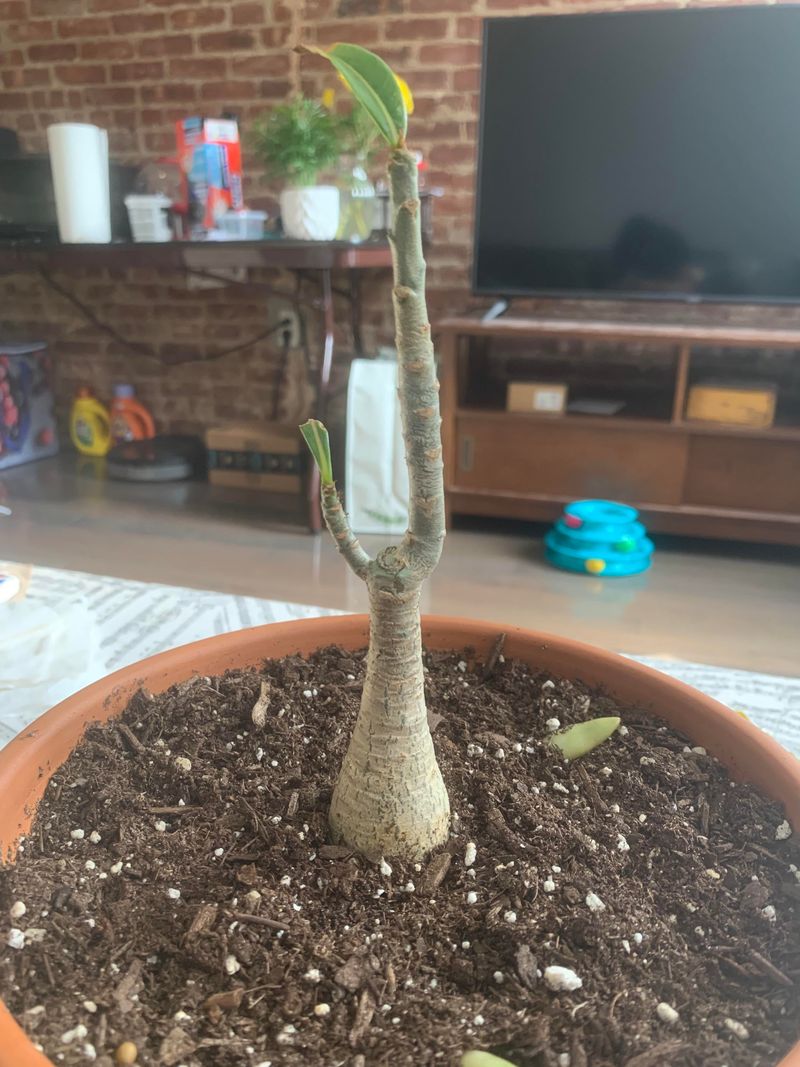
A desert rose that sheds leaves in fall can be resting for the cool season, and that is a normal thing for this plant to do. UF/IFAS houseplant guidance says the leaves and flowers may all drop during its winter rest.
North Carolina State Extension also notes that plants may drop leaves and go dormant as nights cool.
Still, falling leaves by themselves do not tell you much. No data shows how often fall leaf loss is natural and how often it comes from stress, so it would be a mistake to assume the plant is fine.
Bare branches are a clue that sends you looking, not an answer.
Some plants never go bare at all. University of Arizona Extension notes that some Adenium obesum stay leafy when kept warm and watered.
Drought stress can also make a desert rose drop leaves, so a dry pot can look a lot like a resting plant.
Four checks will sort most cases out. Look for new growth at the branch tips.
Think about recent nighttime temperatures. Feel how moist the soil is below the surface.
Then confirm that water actually drains freely from the pot. The next sections walk through each one, so you can act on what the plant is showing you instead of guessing.
Cool conditions can bring a seasonal rest
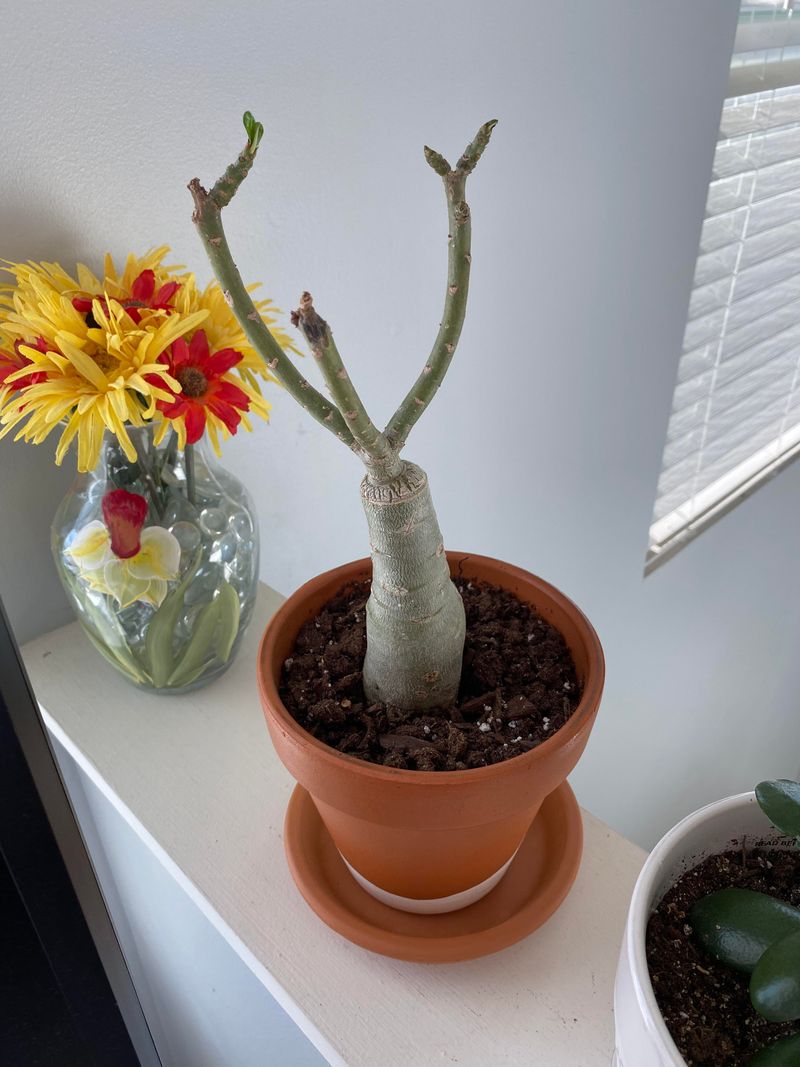
Florida’s cooler months are when a seasonal slowdown makes the most sense. UF/IFAS describes the rest period as happening during cold winter months, when the plant may lose leaves and flowers and needs less care.
As temperatures drop, yellowing and leaf loss can show up first, and many adeniums go on to drop most of their foliage.
Not every plant follows that script. Some keep a few leaves through the rest period, and others stay leafy for as long as they get warmth and water.
The Arizona-Sonora Desert Museum care sheet notes that cold or dry conditions can prolong dormancy in Adenium obesum. A warm south Florida porch and a cool north Florida yard can produce very different plants.
Temperature numbers you see in care guides are best read as protection advice. University of Arizona Extension says Adenium obesum may show cold damage below 50°F.
That is a warning about chilly nights, not a switch that makes every leaf fall at a set degree.
So do not mark a date on the calendar for dormancy. Watch the weather, watch the tips of the branches, and let the plant show how long its rest will last.
Cold snaps are the moment to move pots to shelter, since a protected plant is easier to read than a damaged one.
Look for new growth before calling it dormancy
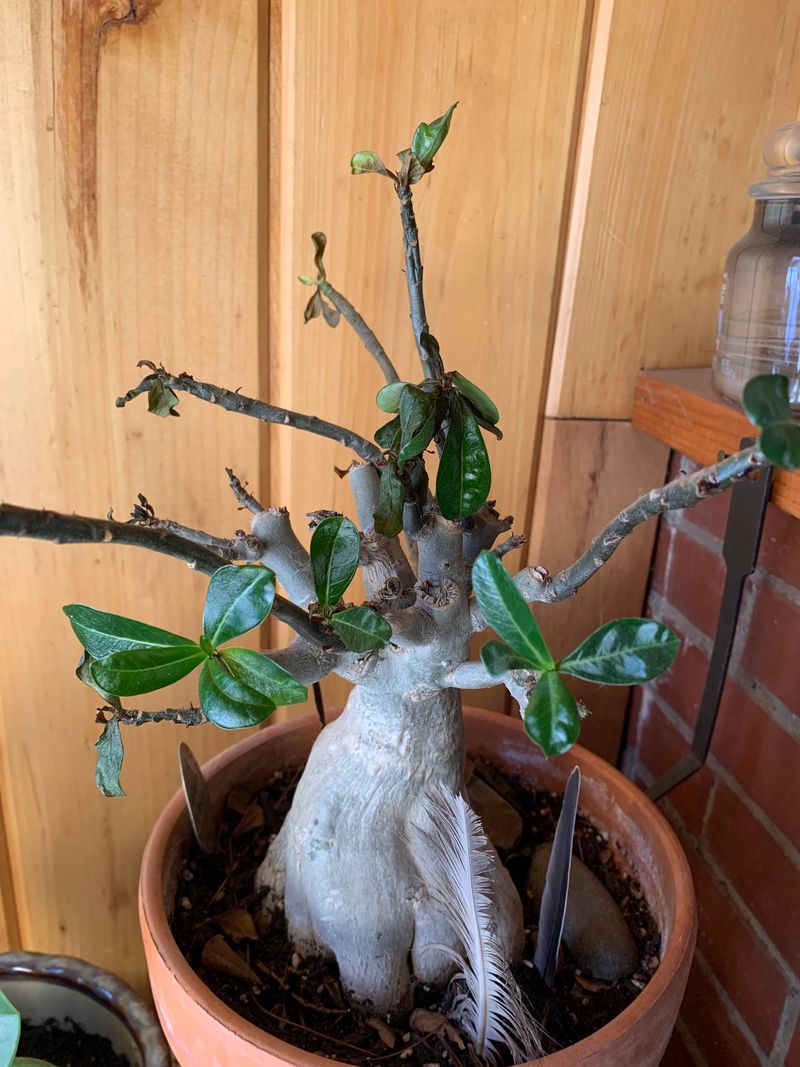
Take a close look at the very tips of the branches. Fresh leaf buds or small bright leaves mean the plant is still growing, even if older leaves lower down are yellowing and dropping.
That is a very different picture from a plant with bare, still tips.
The Tucson Cactus and Succulent Society notes that some Adenium obesum shed older leaves around the autumnal equinox while they keep growing. In other words, the shedding can be a tidy-up of old foliage and not a sign of sleep.
Plants like this still use water and still want light.
Here is a quick way to sort it out. If new leaves are still forming, treat the plant as active and do not cut back watering just because a few old leaves fell.
If nothing new has appeared for weeks and nights are turning cool, a rest becomes more likely.
Photos help. Snap a picture of a branch tip every week or two, and compare them.
Slow changes are easy to miss when you see the plant daily, but a photo trail shows whether the tips are moving or holding still.
Let growth and temperature guide watering
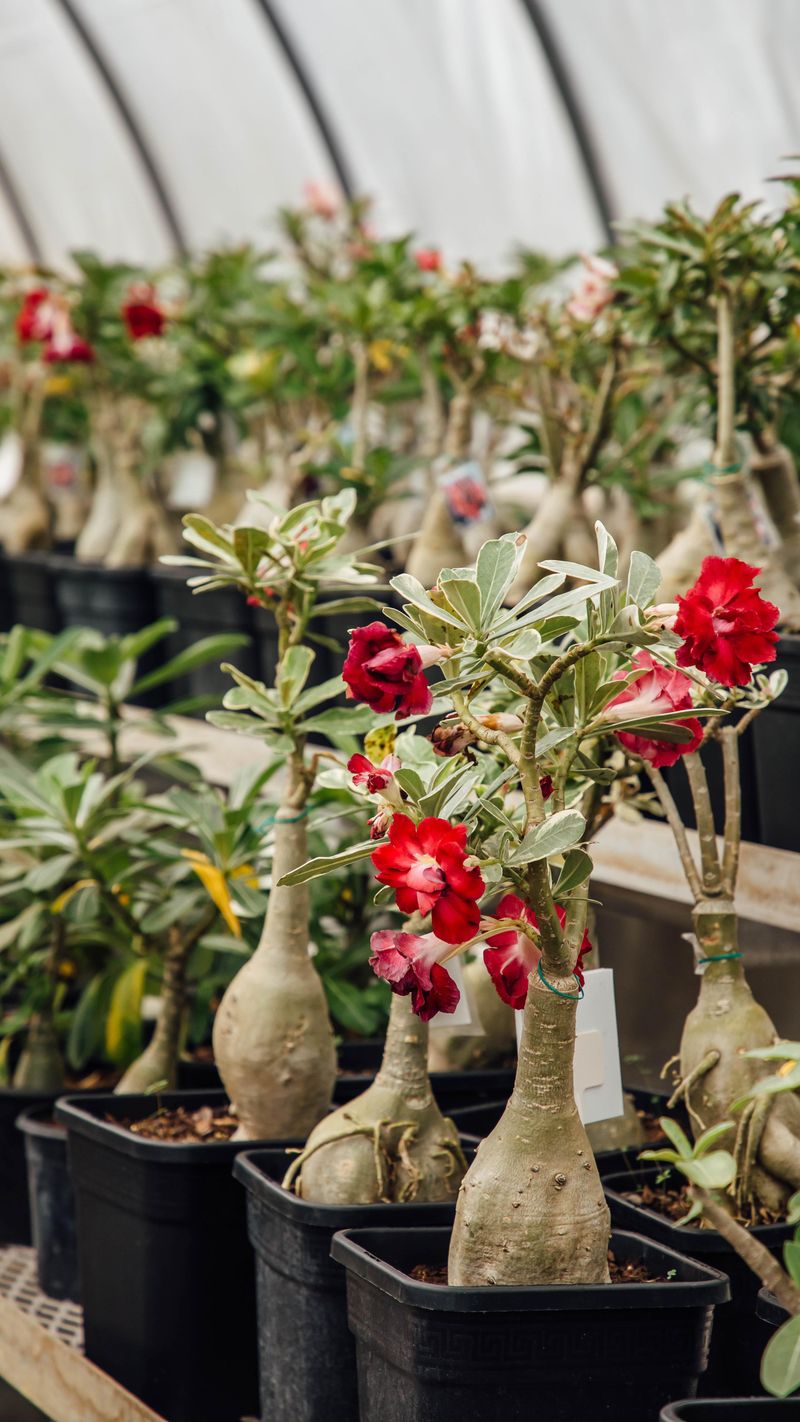
A fixed watering schedule is the easiest way to go wrong with a desert rose. During warm, active growth, UF/IFAS and University of Arizona guidance both allow regular watering as long as water drains freely.
During rest, the plant needs far less.
Free drainage matters in every season. Use a well-drained mix in a pot with open drainage holes, and never leave the pot standing in a saucer of water.
Florida’s summer rains can fill saucers fast, so empty them after storms.
Cool, wet soil is the real risk. University of Arizona Extension advises withholding water when nighttime temperatures fall below 50°F and warns that watering during dormancy, or too early in spring, can lead to root rot.
For Florida, UF/IFAS suggests letting the plant rest through cold winter months and resuming watering when spring warms up.
North Carolina State Extension recommends bringing plants inside when nights drop to 55°F. Treat that number as protection, not as a leaf-drop trigger.
Do not cut water only because leaves fell. If new growth continues and the soil dries out, the plant may still need a drink, since drought stress also drops leaves.
In spring, restart gradually with small amounts, and increase as nights warm and new leaves appear.
Check for other stresses and drainage problems
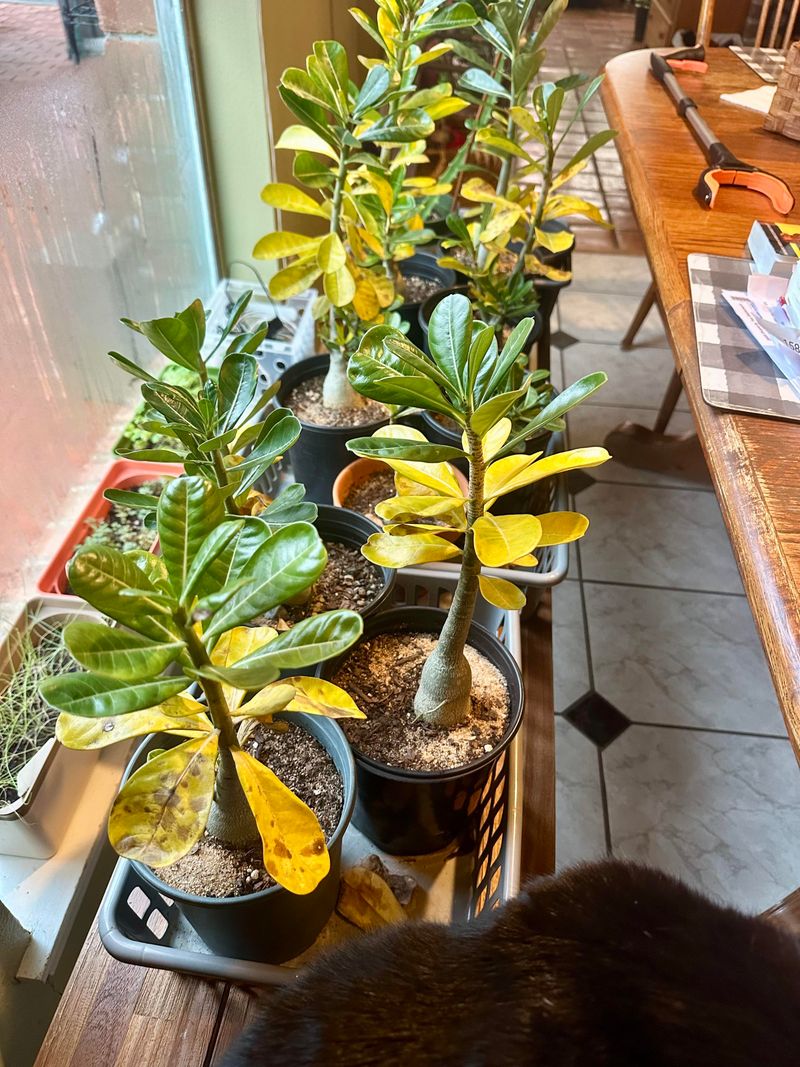
When the season does not fit, look wider. Drought stress is one cause of leaf drop, so a pot that has dried out completely can mimic a plant in rest.
Check the soil a few inches down before deciding.
Also think about light, sudden temperature swings, and pests. UC IPM’s houseplant guide lists several possible causes of yellowing and suggests examining the plant, roots included.
Similar symptoms can have different causes, so yellow or falling leaves are not proof of root rot.
Root rot is linked with poor drainage and overwatering. A heavy mix, a clogged drainage hole, or a pot that stays wet in cool weather can all set it up.
Leaf symptoms alone cannot confirm it, though, so look at the whole picture: how wet the mix stays, how well it drains, and how firm the base feels.
If you inspect roots or prune, wear gloves and eye protection. The milky latex can cause rashes and should be kept out of eyes.
North Carolina State Extension raises this caution, and the plant is toxic to dogs, cats, and horses if eaten, so keep pets away from trimmings.
Check the drainage holes too, and for repotting in spring, UF/IFAS points to a fast-draining mix.
Choose your next step from the whole plant
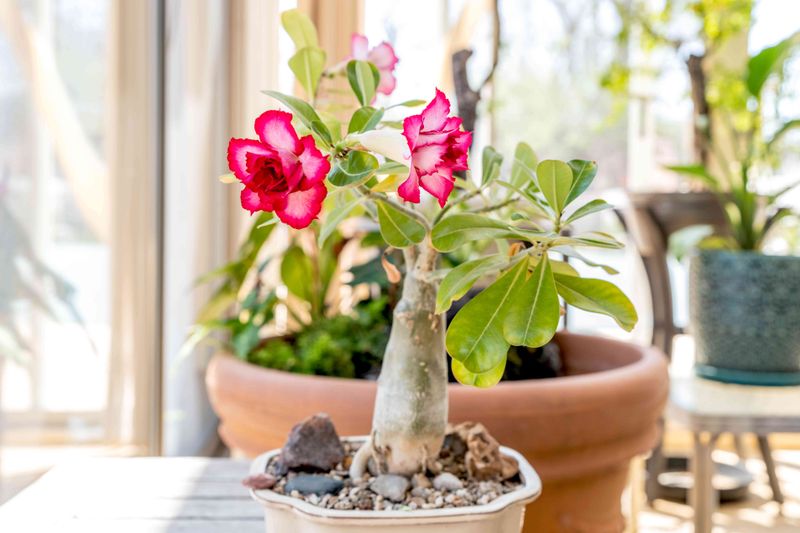
Start with the branch tips, then add the weather, the soil, and the drainage. New growth with warm nights calls for regular watering that drains well.
Still tips with cool nights point toward a rest and much lighter watering, as UF/IFAS and University of Arizona guidance describe.
If none of that fits, look for drought stress, pests, or a drainage problem before blaming one cause. Match care to what the plant is doing right now.
A bare desert rose can be resting, but it never has to prove it, so let the tips do the talking.