
You may have seen headlines claiming one plant should never touch your fence or eaves. The official guidance is more useful than that.
California fire agencies focus on where plants and dry debris sit, and whether they can carry fire to your house. A short walk around your home edge can tell you most of what you need to know.
What the cited statewide guidance says about forbidden vines
Here is the correction up front: the cited statewide guidance does not name one plant that must never climb a California fence or eave. No single vine is singled out in the CAL FIRE material, and no statewide plant blacklist shows up in it.
What CAL FIRE’s home hardening guidance does discuss is vegetation and dry debris as possible fuel pathways. It points to climbing plants and debris at fences, and it separately advises keeping vegetation clear directly beneath eaves.
The concern is how fuel can carry embers or flames toward the house.
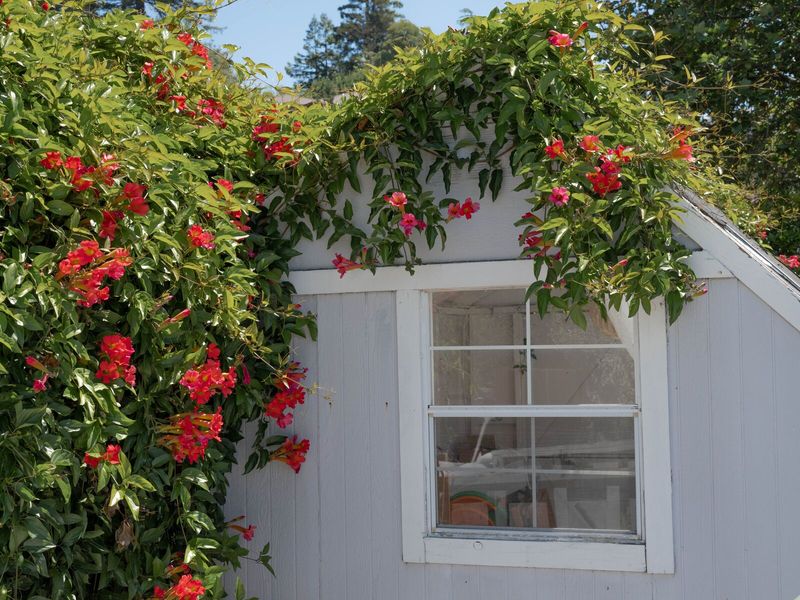
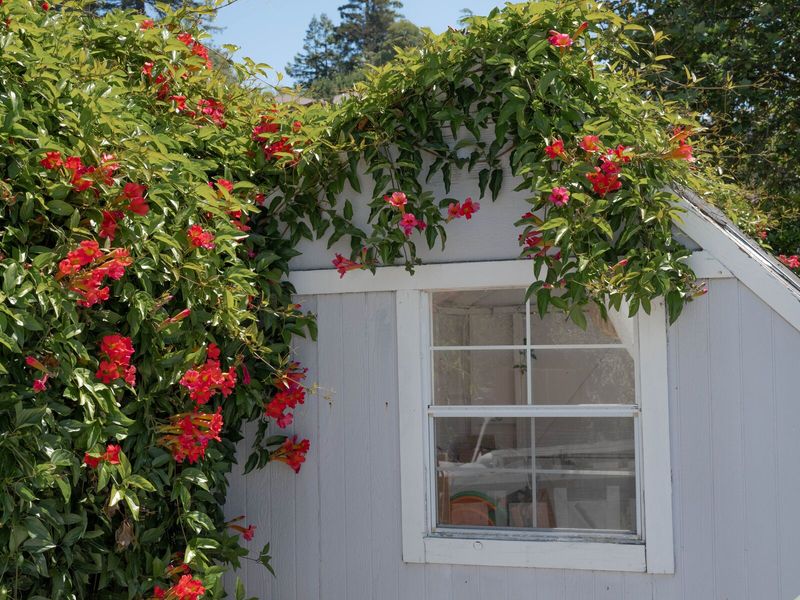
Some local guidance is more specific. The Los Angeles County Fire Department’s Defensible Space booklet names bougainvillea, trumpet vine, creeping fig, and wisteria in its advice about combustible structures.
That is a local example, limited to that setting. It does not make those vines illegal or dangerous everywhere in California.
So the useful question is not which plant name is on a list. It is where the plant sits, what it touches, and how much dry material is attached to it.
The next sections walk through how to check that around your own home.
How vegetation can become a fire pathway
Fire in a neighborhood often spreads by small steps. Embers land, dry material catches, and flames move along whatever is connected.
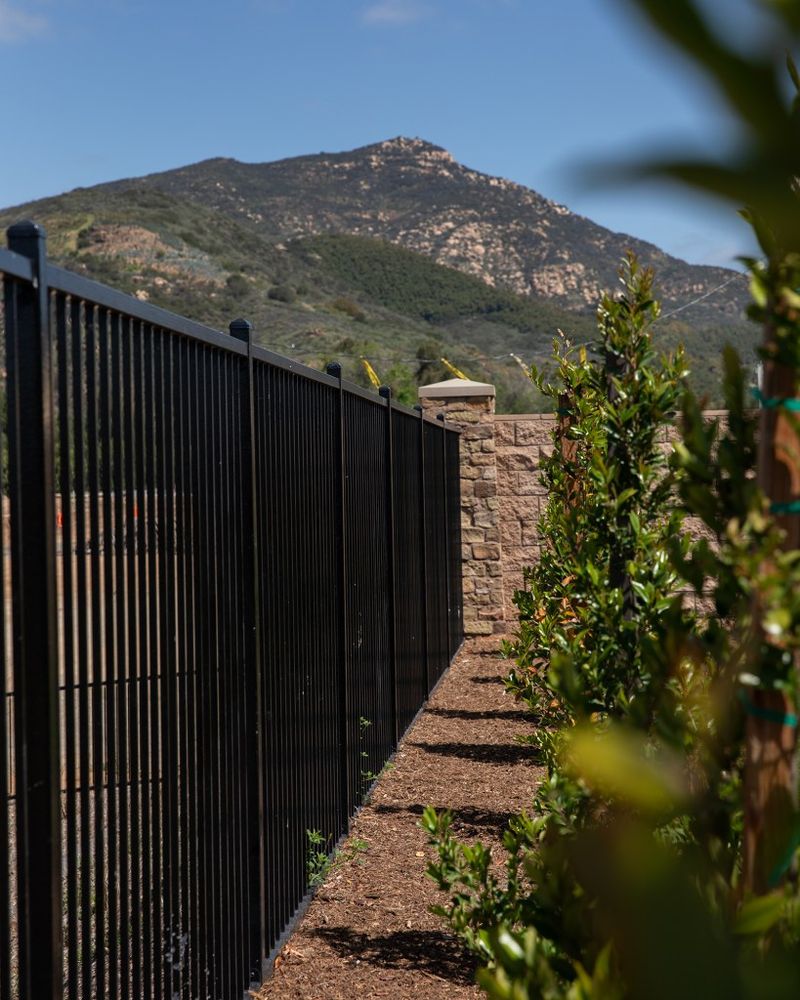
CAL FIRE explains that vegetation and debris near fences and under eaves can give fire a path to reach parts of a home.
That is why the edge of the house deserves your attention. A vine growing on a freestanding fence far from the home is a different situation from a vine running along a fence that connects to the wall.
The same plant can matter very differently depending on where it grows.
Plant size and distance also play a role. UC IPM notes that any plant can burn under the right conditions, and that larger plants and plants closer to structures create greater hazards.
A handy clue is continuity. If you can trace dry leaves, woody stems, or stacked debris in an unbroken line from the yard to your siding, vents, or eaves, that line is a pathway.
Breaking it up is often simpler than replacing a whole planting.
Keep vegetation and combustible material beneath eaves clear
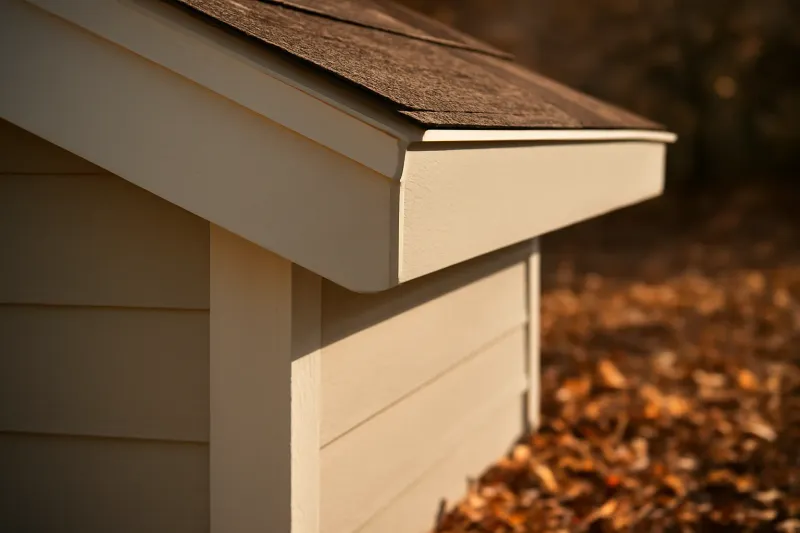
Stand outside and look straight up at your eaves. The area directly beneath them is one of the spots CAL FIRE says to keep clear of vegetation and combustible material, because nearby fuel can help embers or flames reach the eave.
The details are in its home hardening page.
Check for climbing stems that have reached the roofline, shrubs pressed against the wall below, and stored items such as firewood, cardboard, or lawn furniture. Dry leaves that collect in corners count too.
Pay extra attention to plants touching the structure or hanging over the roof. The UC ANR Fire Network eave guidance covers this part of the house as well.
The guidance describes keeping this zone clear, not a set number of feet, so there is no universal distance to measure. It also does not say every plant near the house must go.
Start with what sits directly under the eave, then decide what else needs trimming, thinning, or moving.
Inspect attached fences for debris and combustible connections
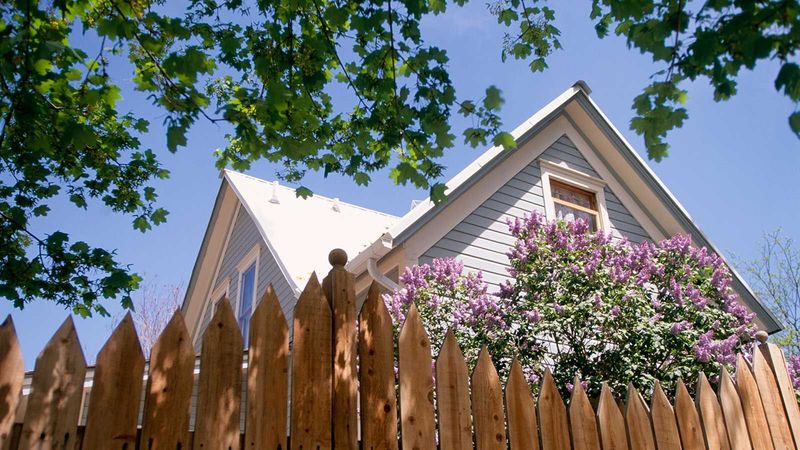
Walk to each spot where a fence or gate meets your home. Look for vines, dry plant debris, and other combustible material on the fence or piled beside it.
A fence that touches the house can act as a wick that brings fire right to the wall.
CAL FIRE recommends clearing debris next to or on fences. It also recommends replacing the first 8 feet of attached combustible fencing or gates with a noncombustible option.
That 8-foot advice is about attached combustible fencing. It does not apply to every fence in your yard, and it does not mean a metal or masonry fence needs the same change.
Material, location, and connection to the house all shape the advice.
The UC ANR Fire Network gives related advice: remove vegetation in contact with fences and consider a noncombustible section where the fence meets the house.
If a full swap is not in your budget this year, cleaning debris and trimming vines off the fence near the house is a reasonable first step. Check local rules before rebuilding anything.
Placement and upkeep matter more than a supposedly safe species

No plant gets a free pass. UC IPM says any plant can burn under suitable conditions, so a label like fireproof is not something to trust.
Size, closeness to the house, care, and the fuels around it all count.
That is also the right way to read the Los Angeles County booklet. Its mention of bougainvillea, trumpet vine, creeping fig, and wisteria applies to combustible structures within that county’s guidance.
It is a useful example of the concern, not a ruling on those species for every yard.
So focus on habits you can control. Remove dead or dry growth, especially near the house and attached decks.
Keep plants from touching walls, and trim anything hanging over the roof.
A well-watered, regularly pruned vine on a stand-alone trellis away from the house is a different case from a neglected tangle on a wooden fence against the wall. Judge by placement and upkeep, then decide whether to prune, relocate, or replace.
Check local rules before making broad changes
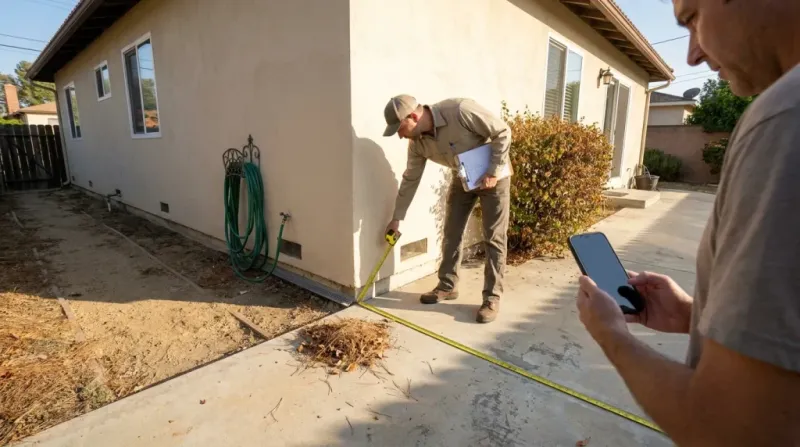
Before you rip out plants or rebuild a fence, call or visit your local fire agency or city or county. Local rules can be stricter than state guidance, and they differ from one jurisdiction to the next.
A quick question can save you money and keep you from removing plants you did not need to remove.
Zone 0, the area right next to the home, deserves the same care. The Board of Forestry’s defensible space page says the regulation package is still in final review.
Treat the Zone 0 rules as pending until an official update says otherwise.
The Board’s guidance document has an effective-date field that is still blank. It also describes a more nuanced approach than removing every plant, allowing certain well-maintained, nonwoody plants outside specified buffers.
It says requirements apply in designated areas and that local agencies may set higher standards.
Ask which rules cover your address, then plan your changes around the answer.
Make the house edge your first inspection priority

Start under the eaves and clear out plants and anything combustible. Then check each place a fence meets the house for vines and dry debris, and consider the CAL FIRE suggestion for attached combustible fencing.
Finally, confirm local requirements with your fire agency before removing plants or altering a fence.
The goal is to manage fuel and the pathways it forms, not to hunt for one forbidden vine. A fire does not read plant labels, but it does follow whatever connects to your home.