
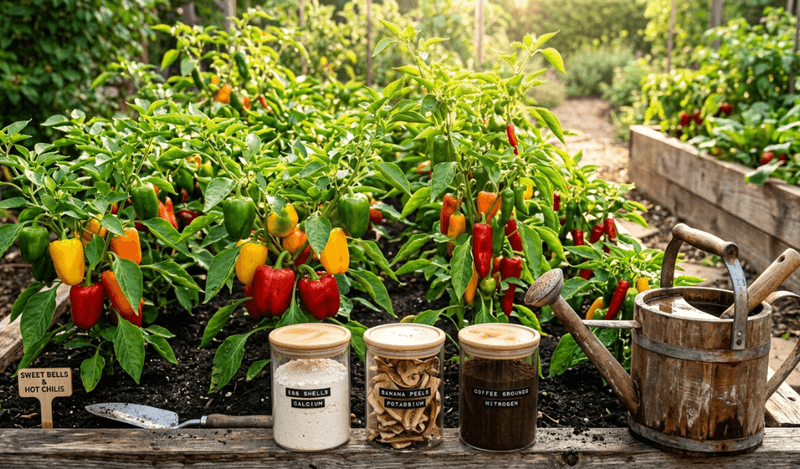
Few garden tips sound as easy as tossing a banana peel into a pepper pot and waiting for more peppers. If your container plants are green but stingy with flowers, it is tempting to try.
The truth is a bit less simple, and knowing it can save you time and a few frustrating weeks. Here is what to check on your plant instead, whether it is growing on a Texas patio or coming back after a Florida winter.
Does a banana peel help potted peppers flower and fruit?
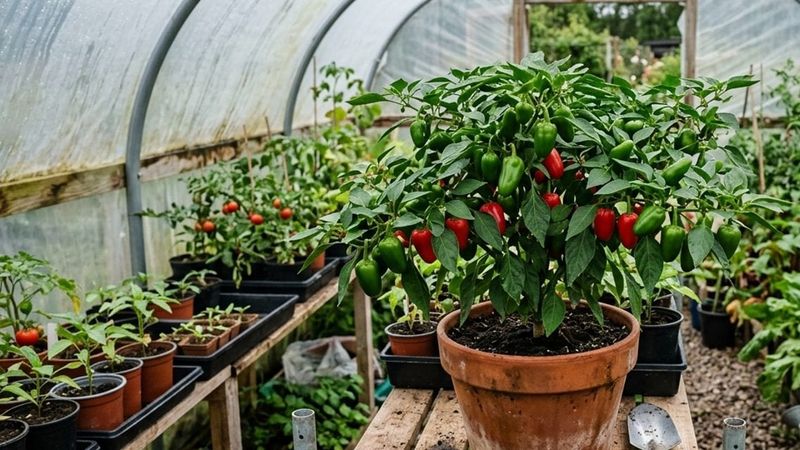
The kitchen scrap behind the original headline is the banana peel. It is a popular idea, and it is easy to see why: the peel is free, it is already in your kitchen, and it feels like a smart way to waste less.
The trouble is that no solid proof shows a raw peel, or a quick soak in peel water, reliably gives potted peppers more flowers or fruit. University of Maryland Extension says it knows of no research backing fertilizer-strength banana water, and it will not make plants drought-tolerant.
N.C. Cooperative Extension also lists the peel trick among gardening hacks that do not hold up well.
So the practical move is simple. Put the peel in the compost bin, then look at the things that really shape pepper production, such as feeding, pot setup, heat, and light.
The next sections walk through each one so you can check your own plant.
A peel is not a quick fertilizer
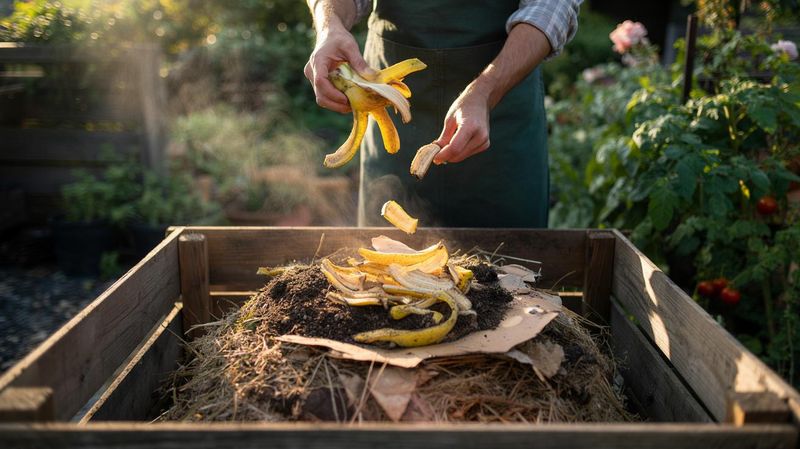
Food scraps cannot feed a plant until they break down. A fresh peel buried in a pot may take weeks to release anything, and a pepper in a pot cannot use nutrients that are still locked inside the peel.
Burying it can also invite fruit flies and other pests or grow mold, as the N.C. Cooperative Extension piece points out.
Peel water is no shortcut either. Soaking a peel for a day or two has not been established as a fertilizer, and the nutrients it gives off are unmeasured.
Composting is a better home for the peel, because the finished compost can be mixed into beds later.
You may have seen talk of a 2019 study. It tested a prepared banana-peel fertilizer on Capsicum chinense in pots, which is a very different thing from a raw peel or a short soak.
That small study is limited evidence, and it does not show that a peel boosts flowering or fruiting in ordinary home pots.
Feed container peppers according to the fertilizer label
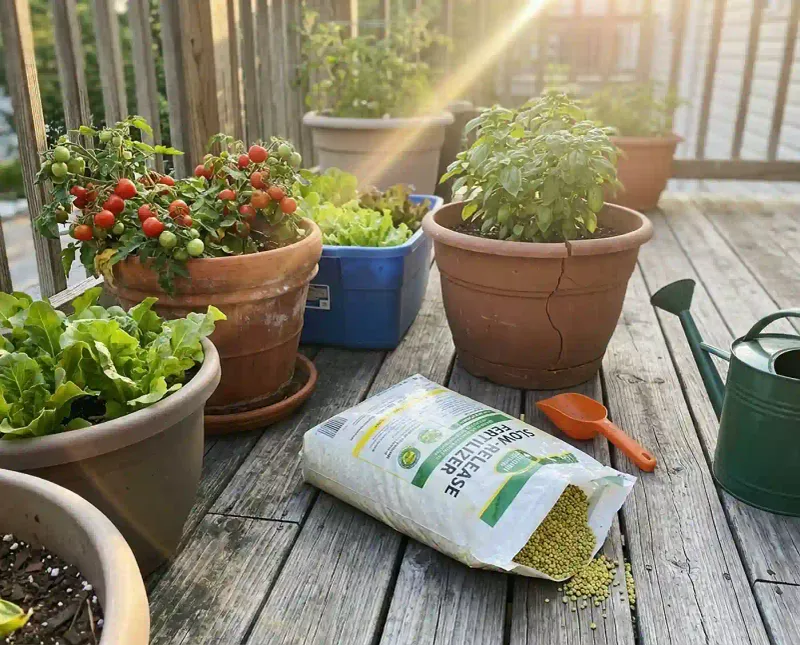
Fertilizer made for vegetables is the sensible choice for a potted pepper, and the label is your best guide. Every product has its own strength and directions, so follow them instead of guessing.
Container plants usually need more regular feeding than garden beds, because frequent watering can wash nutrients out of the pot. University of Maryland Extension notes this for container vegetables.
How often you feed depends on your mix, pot size, watering habits, and the product itself.
Advice on formulas varies. Some Extension sources, like Alabama Cooperative Extension, lean toward a balanced fertilizer, while others suggest more potassium once fruiting starts.
Because of that, stick with the label and local or soil-test advice rather than one magic ratio.
More is not better. Too much fertilizer can build up salts in the pot, and University of Minnesota Extension warns that excess nitrogen can give you lush leaves at the cost of flowers and fruit.
A big, dark green plant with few blooms is a clue to ease off.
Check pot size, drainage, and moisture
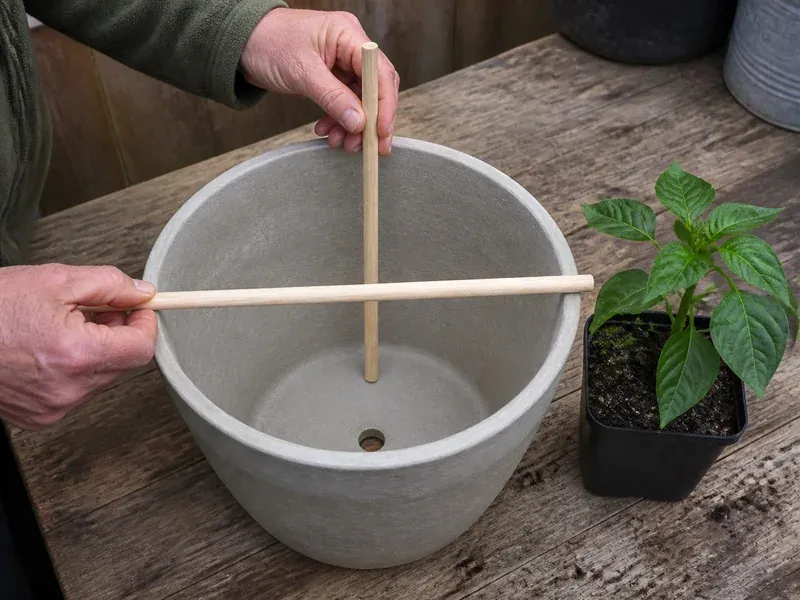
Start at the bottom of the pot. Peppers need drainage holes, and a pot with none can leave roots sitting in water.
Lift the pot after watering; if water pools in the saucer for long, empty it.
Next, push a finger into the mix. You want it steadily moist but never soggy, and University of Maryland Extension stresses even moisture for container vegetables.
Swings from bone dry to drenched can stress a plant.
Size matters too, because cramped roots dry out fast. NC State Extension lists 2 gallons as a minimum for one pepper, while Oregon State Extension says a 5-gallon container works well for one plant.
Treat those as source-specific guidance, not promises of fruit. If your pepper sits in a small pot on a hot Texas porch, a roomier container may simply make watering easier to manage.
Check for heat and other causes when flowers drop
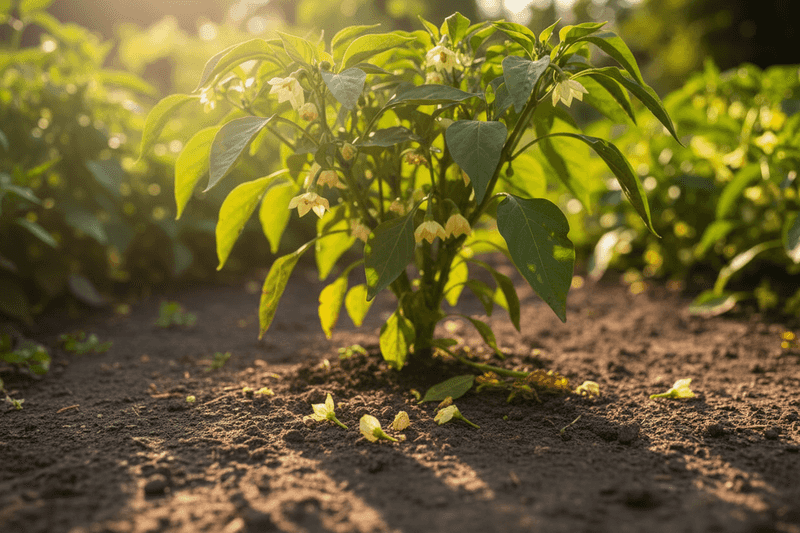
Dropped flowers are a symptom, not proof your plant is hungry. Heat is one common suspect, especially in the South.
Texas A&M AgriLife reports that many peppers drop blooms when daytime temperatures climb much above 90°F and nights stay above 75°F. It also notes that hot peppers can handle heat better than bell peppers.
Treat those numbers as guidance, since varieties and regions differ.
If your plant is dropping blooms in a Florida or Texas summer, ask a few questions. Has the pot been drying out between waterings?
Has it been soaked and then left dry? Water stress is another common reason flowers fail to set.
Also think about feeding. As noted by University of Minnesota Extension, too much nitrogen can favor leaves over blooms.
Afternoon shade, steady moisture, and patience until cooler weather arrives are better bets than adding a peel or extra fertilizer.
Overwintering does not guarantee indoor fruit
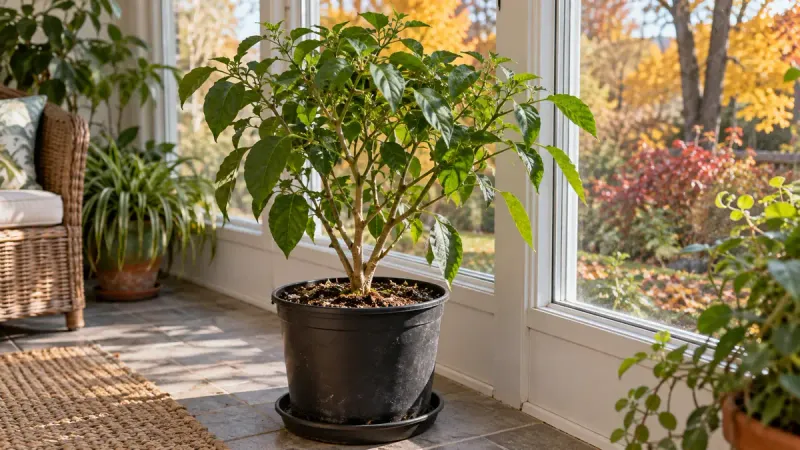
Keeping a pepper alive through winter is one job. Getting it to bloom and fruit indoors is another, and the second is harder.
An Extension response says indoor fruiting needs adequate light and warm conditions, and pollination may need help too. A dim windowsill and cool room can leave a healthy-looking plant with plenty of leaves and no fruit.
Look at what your plant actually gets. Is it near a bright window or under a grow light?
Do nights in that room stay chilly? Without wind or insects indoors, you may need to gently shake the flowers or brush them with a soft paintbrush to move pollen.
Overwintering can give a plant a head start for spring, but it does not promise abundant blooms or fruit. If production is slow, light, warmth, and pollination are more likely limits than a missing kitchen ingredient.
Compost the peel and troubleshoot the plant
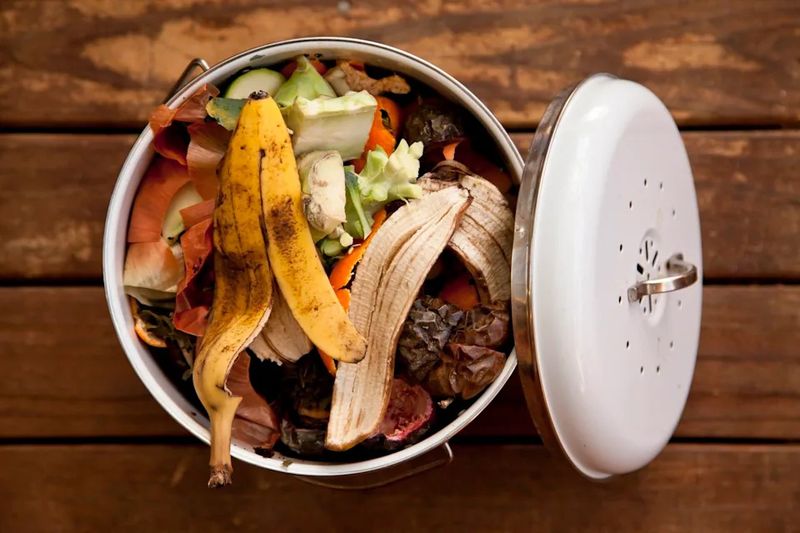
Send the banana peel to the compost bin, where it can break down without pests or mold in your pots. Then check your feeding against the fertilizer label, and look at pot size, drainage, and even moisture.
Finally, think about summer heat or, for an overwintered plant, indoor light and warmth. None of these steps guarantees a bigger crop, but they point at real causes.
A pepper rewards good conditions far more than a clever scrap.