
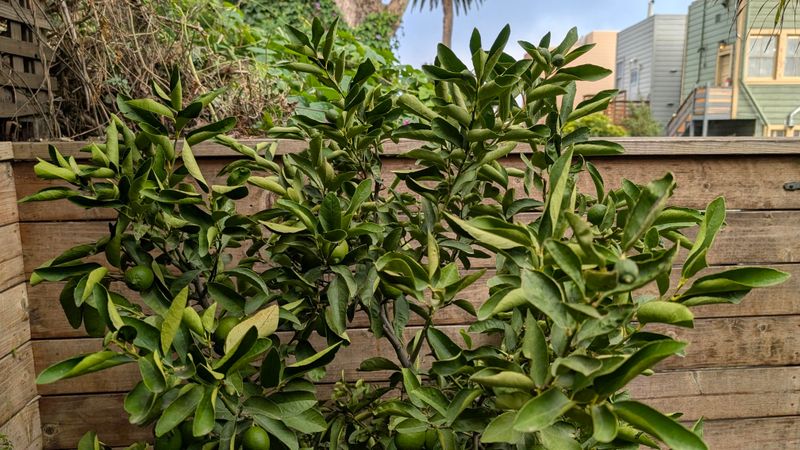
Curled citrus leaves make a lot of gardeners reach for the hose. But curl can come from thirst, a freeze, soggy roots, or even tiny insects, and each one needs a different response.
A few quick checks in your own yard can keep you from wasting water or stressing your tree. Here is how to sort out what your tree is really telling you.
Leaf curl is a clue, not a diagnosis
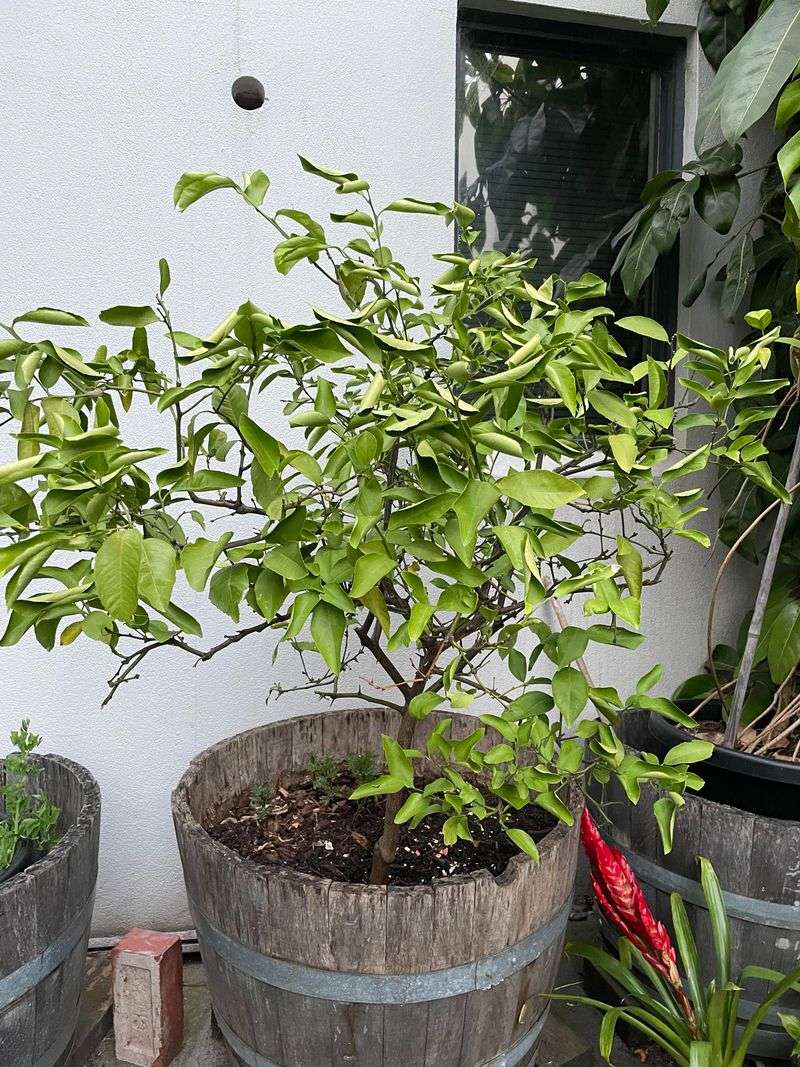
A curled leaf looks like a cry for water, and plenty of us have grabbed the hose within seconds. That reflex can backfire, because several different problems produce the same shape.
Cold nights are not a safe guess either.
UC sources describe frozen citrus leaves that curl, and drought can also make leaves curl upward. Meanwhile, continually wet soil can impair roots, which sets up a different set of problems.
Curl by itself cannot tell you which one you have.
So treat the curl as a symptom to investigate. Before you change anything, gather three pieces of information.
First, push a finger into the soil and note how moist it is. Second, think back over the last week or two of weather, including rain and any nights that got near freezing.
Third, look at where the damage sits.
Is it on the whole tree or only one side? Is it on old leaves, or only the newest growth?
Is it on exposed branches at the top, or low in a sheltered spot? UC IPM notes that freezing is defined as air temperatures at or below 32°F, so an ordinary cool night does not count as proof of cold injury.
The next sections walk through each check in order.
Freeze injury leaves more than a curl
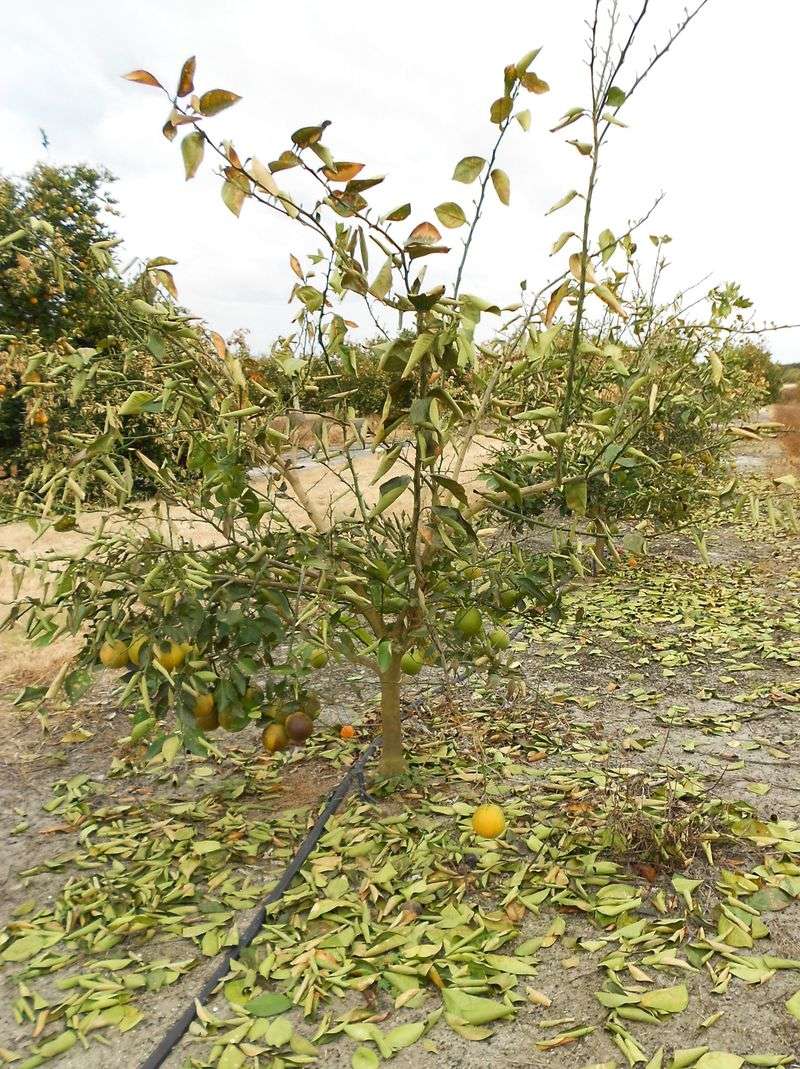
Freeze damage tends to show up as more than a simple curl. Frozen leaves may feel firm and brittle while curled, then turn limp, or flaccid, once they thaw.
Check the tissue itself, not only the shape.
In more serious cases, UC IPM describes cold-damaged leaves and twigs as water-soaked, withered, and dark brown to black. Foliage that has collapsed, dried out, or turned dark points much more strongly toward cold than a plain curl does.
If your leaves are still green, pliable, and only curled, freeze injury is a weaker suspect.
The phrase cold nights is too vague to settle the question. Freezing means air at or below 32°F, but frost can form on plant tissue that reaches 32°F even when the air reads a little warmer.
A chilly 45°F evening is simply not the same event.
Damage also depends on how long the cold lasted, where the tree stands, its age, its variety, and how well it had adjusted to cooling weather. Young trees and exposed spots generally take more of a hit, and Eureka lemon and grapefruit are among the more cold-sensitive types.
Because of all that, no single temperature works as a universal injury line. Look at your own tree, your own microclimate, and what the overnight low actually was.
Check the soil before changing the watering
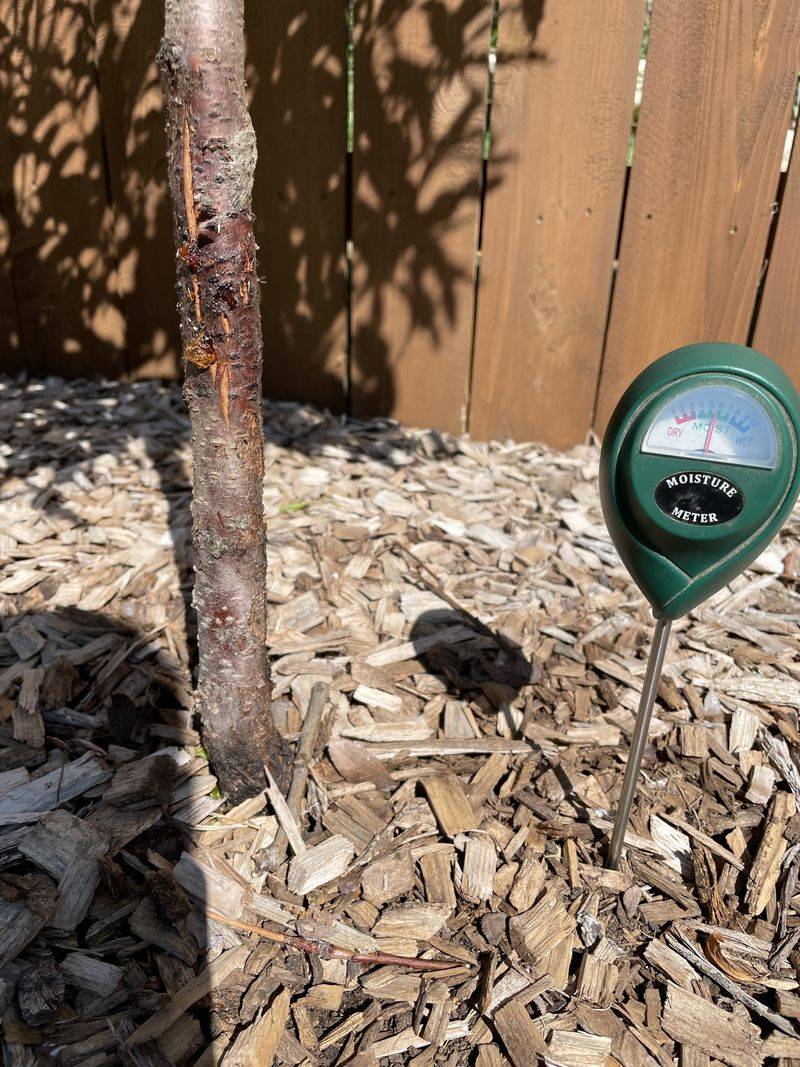
The most useful check takes ten seconds. Push a finger or a trowel into the soil under the tree’s canopy and feel what is down there.
This tells you far more than the leaves do.
A UC Master Gardener guide advises letting the top 3 inches of soil dry before watering. Treat that as a moisture check, not a calendar.
Some weeks the soil will be ready in four days, and other weeks it may stay damp for ten.
The same guide notes that drought can cause leaves to curl upward and become leathery and dry. If the soil is dry deep down and the leaves feel stiff and papery, thirst is a real possibility.
A good soak at the base of the tree may be the right move.
If the soil is soggy, the picture changes. Continually wet soil can impair roots, yellow the leaves, and promote root or crown rot.
UC IPM’s watering guidance for citrus backs the idea of matching water to the tree rather than the other way around.
Both extremes cause trouble, so avoid reflexively adding water and avoid shutting off irrigation altogether. Soil type and drainage matter, since heavy clay holds water far longer than sandy ground.
Trees in containers also dry out faster than trees planted in the ground, so check pots more often. Let the soil, not the leaf, make the call.
California irrigation should follow conditions, not a calendar
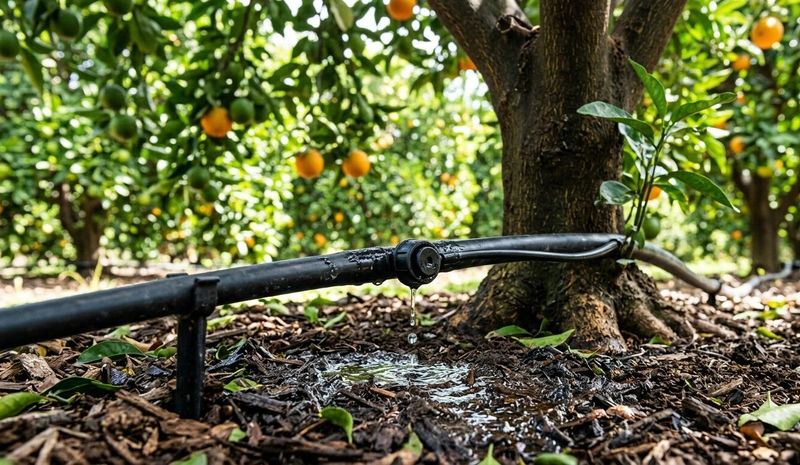
Water needs in a California landscape swing a lot from season to season. UC Cooperative Extension notes that landscape water needs vary substantially between winter and summer, and it recommends checking soil moisture between irrigations.
A summer timer setting can drown a tree in November.
Local conditions shape the answer too. A foggy coastal yard, a hot inland valley, and a hillside lot with fast-draining soil all dry out at different speeds.
Recent rain can reset the clock entirely, and one good storm may mean skipping a cycle or two.
That is why a fixed schedule rarely works, and certainly no single schedule fits the whole state. Use the soil check from the last section between irrigations, and adjust the timer when the weather changes.
The UC IPM cultural tips for growing citrus reinforce the idea of tailoring care to the tree and site.
Following conditions also saves water, which matters in a state that lives with drought and restrictions. Watering only when the tree and soil need it protects your roots and your water bill.
Curled leaves are one input, but they should never be the only trigger for turning on the system.
New-leaf distortion can point to pests
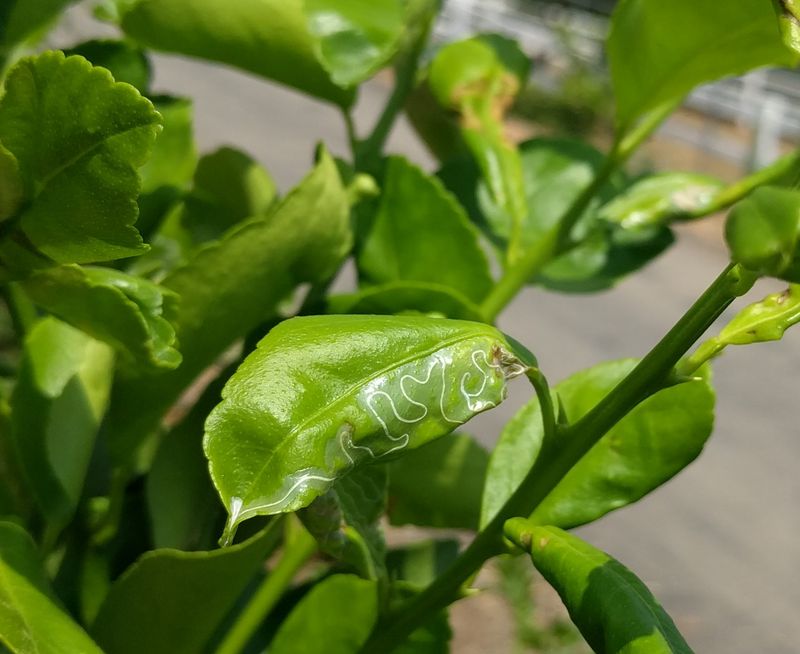
Turn your attention to the newest growth for a moment. If only the fresh, tender leaves look twisted or curled while older leaves look normal, pests belong on the list of suspects.
Weather and watering are less likely to be the whole story in that case.
Citrus leafminer larvae leave winding, silvery trails inside young leaves and can make those leaves curl or distort. Hold a leaf up to the light and look for squiggly lines running just under the surface.
Leafminer is not the only possibility. UC IPM’s guide to invertebrate damage on citrus leaves explains that aphids and other pests can also deform leaves and shoots.
Check the undersides of curled leaves and the tips of shoots for small insects, sticky residue, or clusters of bugs.
A curl alone is not enough to name the culprit. Look for the actual clues, such as trails or visible insects, before deciding on any action.
Finding nothing is useful too, since it points you back to the soil and weather checks.
Frost preparation is a separate decision
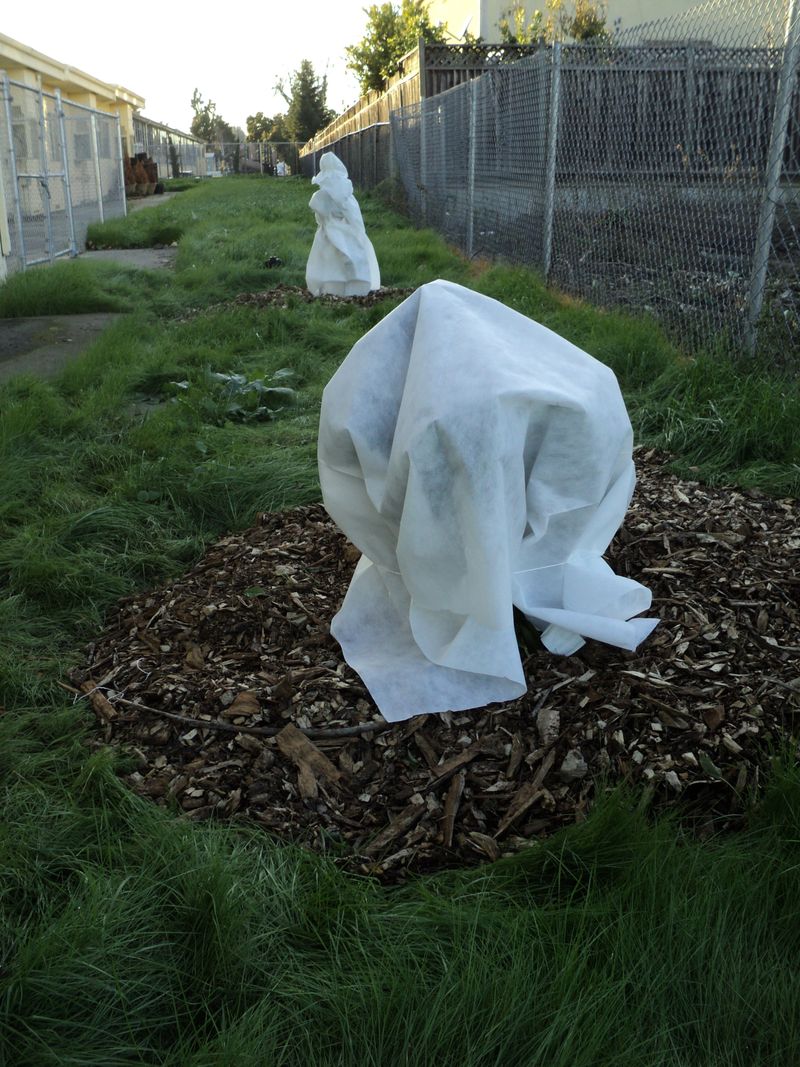
Protecting a tree from a forecast freeze is its own job, and it should not get mixed up with treating curled leaves. The steps apply when cold is actually coming.
A curled leaf on a mild night is not a reason to start them.
UC IPM recommends irrigating dry topsoil at least three days before a forecast frost or freezing, and covering trees overnight with cloth rather than plastic. Plastic can trap moisture against leaves and transmit cold, so cloth is the better choice.
Notice the conditions built into that advice. Frost or freezing must be in the forecast, and the topsoil must be dry.
If the soil is already moist, there is nothing to add. This is a preparation step, not a cure for a tree whose leaves have curled.
These measures can reduce the risk but they do not guarantee protection, especially during a hard or prolonged freeze. Watch your local forecast and note the expected low.
After a freeze has hit and a tree has lost foliage, its water use drops, so extra irrigation to speed recovery can harm roots.
Use the pattern, then make one careful adjustment
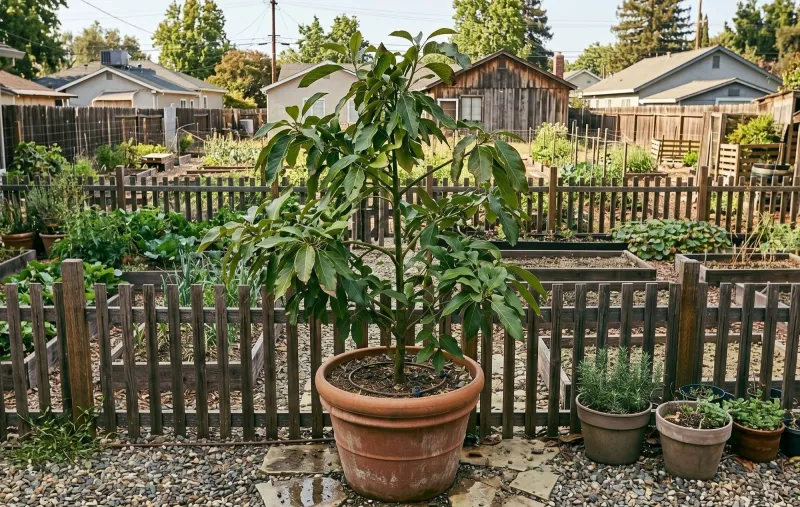
Start with the soil, using the 3-inch dryness check, and let UC IPM watering guidance shape any change. Next, compare the leaves with recent weather and look for the signs that UC IPM links to freezing.
Then inspect new growth for trails or insects.
Make one adjustment and watch what happens. A curl is a question, and the tree answers slowly.