
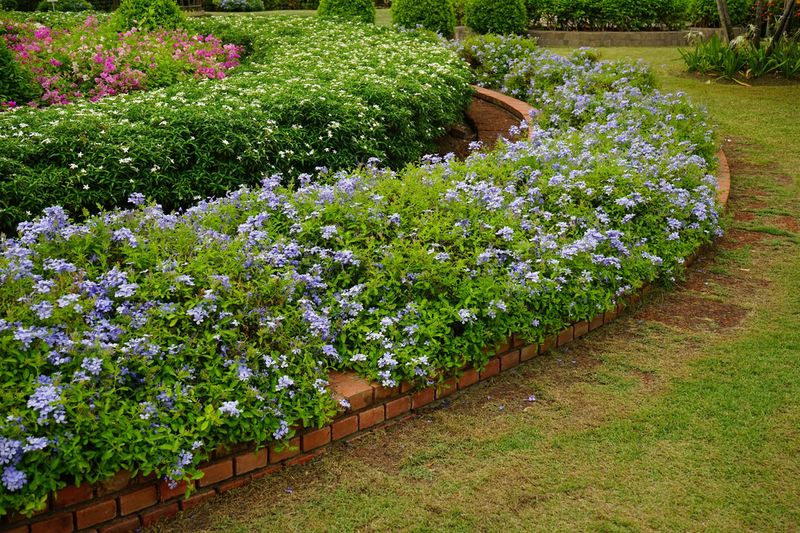
Many Florida gardeners dream of soft blue flowers that keep coming back. Hydrangeas get most of the attention, but they are not the only way to get that cool, romantic color.
Blue plumbago can fill a sunny yard with sky-blue clusters for months. Here is what it does well, what it does not do, and whether your yard is a match.
Blue plumbago offers recurring color, not hydrangea blooms
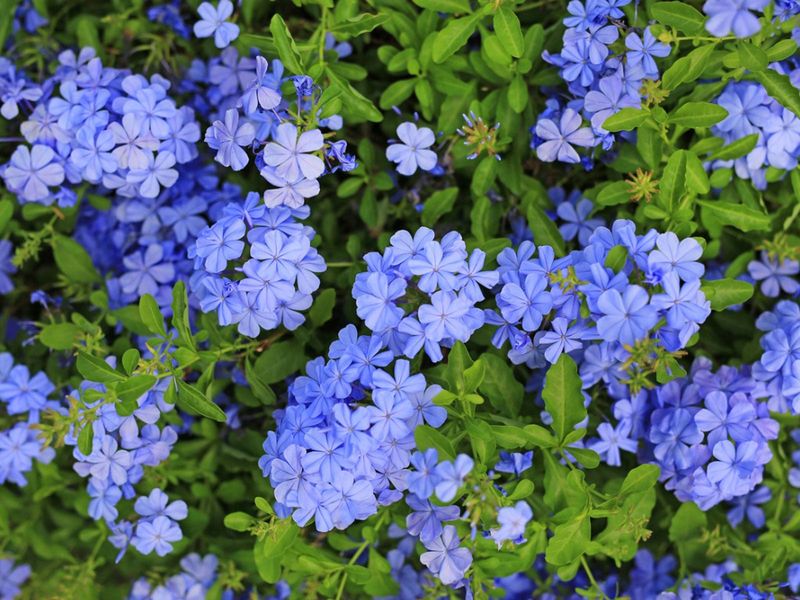
Blue plumbago, Plumbago auriculata, is a sprawling shrub that is covered in pale blue flowers for much of the year in warm parts of Florida. It is also called Cape plumbago or sky flower.
The color is cool and soft, and the plant has a loose, tumbling shape that feels relaxed rather than formal.
It helps to be clear about the flowers. UF/IFAS Gardening Solutions describes the blooms as phlox-like clusters.
Each cluster is made of small, five-petaled flowers on a slender tube, and they sit at the ends of the branches.
Hydrangeas are a different story. As University of Massachusetts Extension explains, bigleaf types carry large, rounded, globe-shaped flower heads.
Plumbago does not make those big mopheads. What you get is a haze of smaller blue clusters scattered over the whole shrub.
So think of plumbago as a different route to a similar mood, not a copy. If you love blue and want a loose, cottage-style look in a sunny spot, it is worth a look.
As UF/IFAS Extension notes, it also needs plenty of room, and the sections ahead cover that and its other needs. Nothing here claims it is easier to care for overall than a hydrangea.
It simply has its own set of conditions, and some Florida yards fit them well.
The right hydrangea can still grow in Florida
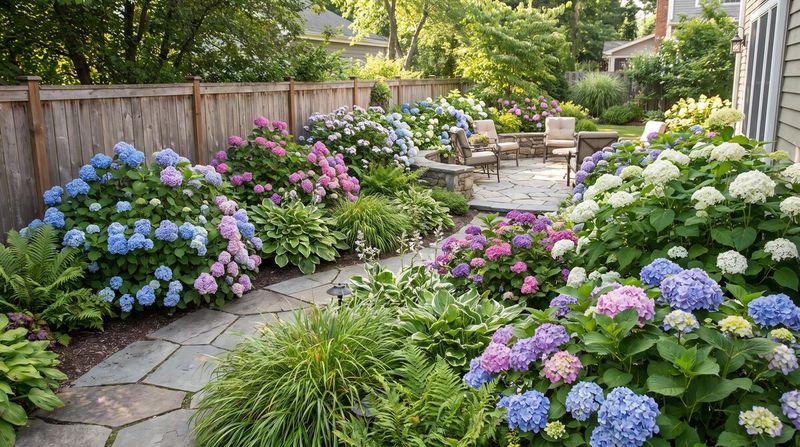
Florida gardeners do not have to give up on hydrangeas. The answer depends on the type and the spot.
UF/IFAS Gardening Solutions points to oakleaf hydrangea, which is native, and panicle hydrangea, which handles full sun and less frequent watering better than other types. Both are options in parts of North and Central Florida.
Bigleaf hydrangeas are the ones that earn the sulking reputation. They prefer shade and can droop in afternoon heat.
University of Maryland Extension notes that bigleaf plants can wilt from heat even when the soil is moist, so adding more water does not always fix the problem.
Planting location matters just as much as the species. A bigleaf in hot, all-day sun will struggle, while a sheltered, shadier bed gives it a better chance.
Sandy soil can also dry out fast, so the site needs thought either way.
Where does plumbago fit? It is an alternative for gardeners who want recurring blue flowers and have a sunny, well-drained spot.
It is not a universal replacement, and no source shows that it takes less work than a well-placed hydrangea. If your yard has the shade and moisture a bigleaf likes, or the right conditions for an oakleaf or panicle type, a hydrangea may still be your best choice.
Choose a sunny spot with well-drained soil
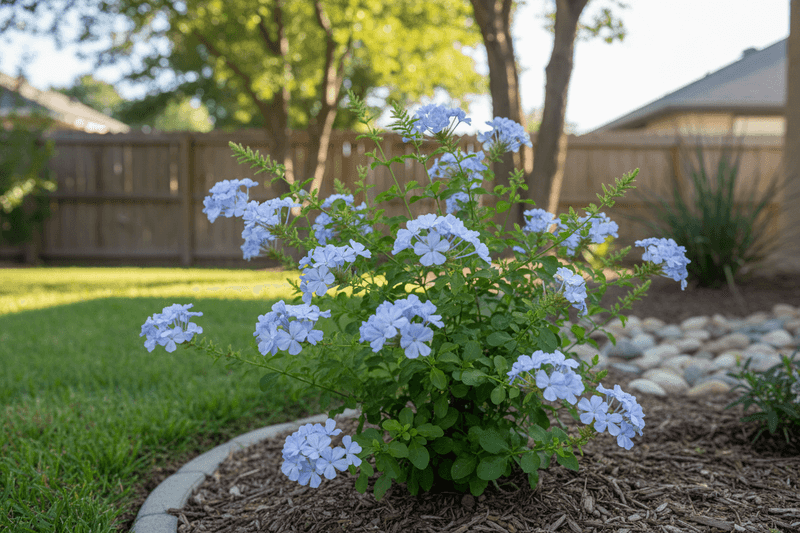
Full sun and well-drained soil are the two things to get right. UF/IFAS Extension recommends sun for plumbago, and in a bright spot it tends to stay fuller and flower better.
A bed that sits in shade most of the day is a poor match.
Plumbago can grow in sand, which is good news for many Florida yards. That does not mean it suits every soil.
It is also not a plant for spots where water stands or the ground stays soggy for days after rain.
A simple test helps. Dig a hole about a foot deep, fill it with water, and let it drain.
Fill it again and watch. If water is still sitting there after several hours, the site holds too much moisture for this shrub.
Low corners, areas near downspouts, and places that stay boggy through the summer rains are the usual trouble spots. Consider a raised bed or a different location instead.
UF/IFAS lists plumbago among low-maintenance landscape plants for South Florida, but that still assumes a suitable site.
Also watch for yellowing leaves in alkaline soil, which comes up again later. Picking a sunny, free-draining spot at the start saves a lot of fixing down the road.
Water regularly while the shrub establishes
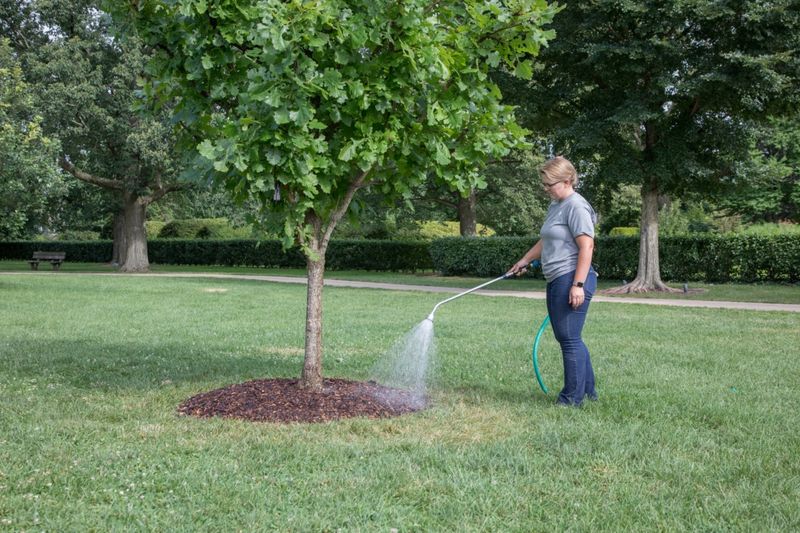
A new plumbago is not a plant to plant and walk away from. During the first weeks and months, it needs regular watering while the roots spread into the surrounding soil.
UF/IFAS Gardening Solutions describes it as moderately drought-tolerant only once it is established.
Aim the water where it counts. UF/IFAS guidance on establishing shrubs says to direct water to the rootball and the soil right around it.
Early on, the roots have not grown far, so spraying the whole bed is wasteful.
Adjust to the weather. A hot, dry week calls for more frequent watering, while a run of rainy days means you can skip it.
Check the soil with a finger a couple of inches down before you turn on the hose.
Sandy soil makes this more important, not less. UF/IFAS irrigation guidance explains that Florida soils hold little water and that nutrients can wash through, so watering should be matched to need rather than done on autopilot.
Once the plant is established, you can ease off, but moderate drought tolerance is not the same as drought-proof. In a long dry spell, a deep drink will keep the shrub blooming and healthy.
Give this spreading shrub room to grow
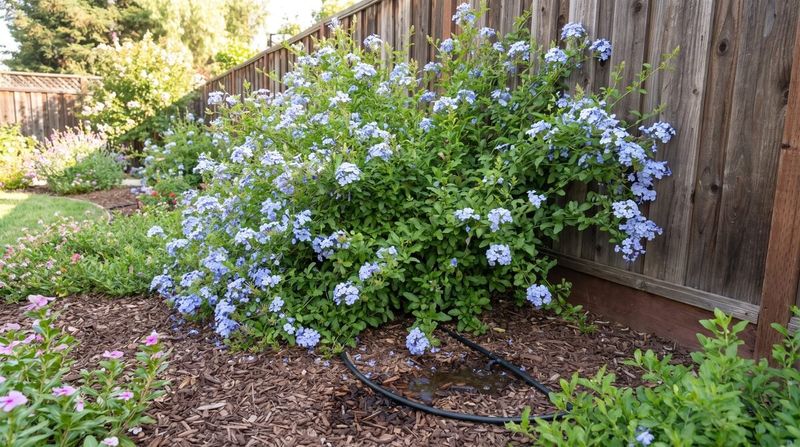
Plumbago gets big. UF/IFAS Extension lists a mature size of roughly 6 to 10 feet tall and 8 to 10 feet wide.
A cute one-gallon plant from the nursery can turn into a sprawling mound that crowds walkways and neighbors.
For mass plantings, the same source suggests spacing plants about 4 to 6 feet apart. That looks like a lot of bare ground at first.
Mulch the gaps, and fill in with short-term annuals while the shrubs grow.
Pruning can keep the size in check. Trim back long, wandering stems, and remove dead or frost-damaged growth.
Cut just above a leaf or branch so the shape stays natural.
Shearing is a different matter. Clipping plumbago into a tight, formal hedge removes many of the flowers, because blooms form on the branch tips.
You end up with a neat green wall and far less blue.
If you need a smaller, tidier plant, think about the site before you buy. A spot where it can spread, such as a fence line, a big border, or an open corner, suits it better than a narrow bed beside the front walk.
Bloom timing varies across Florida
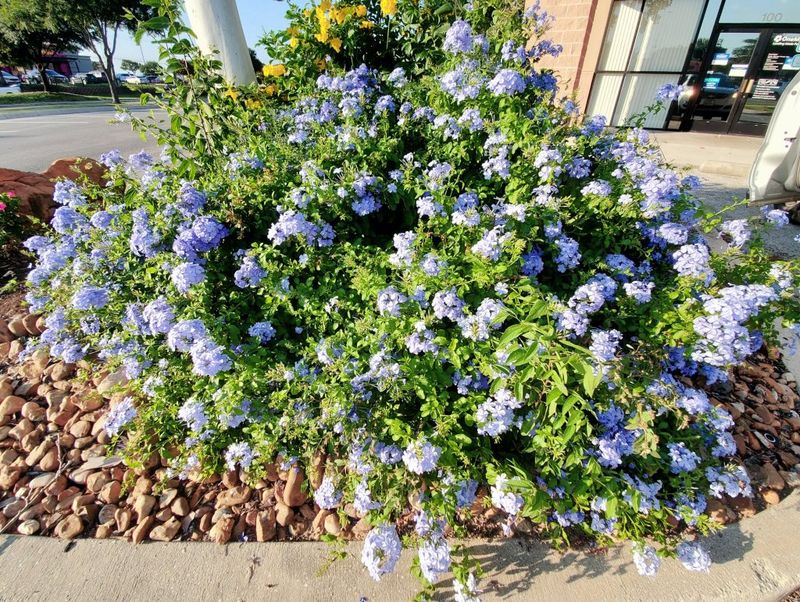
Where you live in Florida changes how long the blue lasts. According to UF/IFAS Gardening Solutions, plants in Central and South Florida can flower year-round, except after frost.
In North Florida, flowering runs mainly from spring through fall.
Cold snaps matter. Frost can burn the leaves and cause dieback, leaving the shrub looking rough.
Plants generally recover as the weather warms, so hold off on heavy cutting until you can see where new growth starts.
There is a wildlife bonus too. Plumbago flowers attract butterflies, which adds movement to a sunny bed.
If pollinators are a priority, pair it with other nectar plants for a fuller show.
Be careful with names. Blue plumbago, P. auriculata, is not the same plant as Florida’s native white-flowered plumbago, P. zeylanica, also called P. scandens.
The native species is a host plant for the Cassius blue butterfly, but it looks quite different and is not what most garden centers sell as blue plumbago.
If you want the native, check the botanical name on the plant tag. A tag that says auriculata means blue flowers and a plant that originated in South Africa.
Treat plumbago as low-maintenance, not carefree
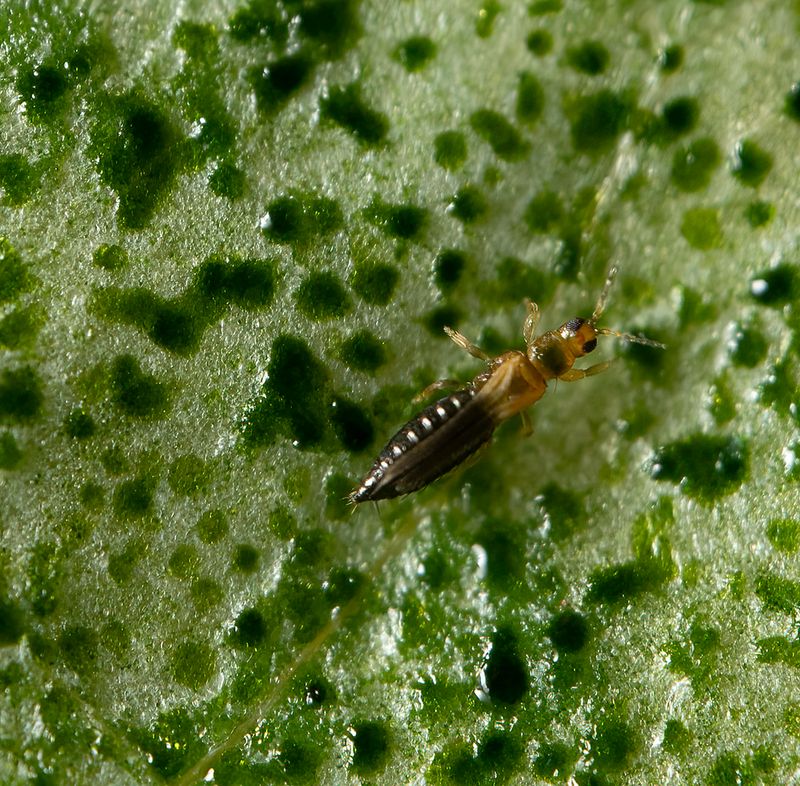
Plumbago asks for less than some plants, but it is not carefree. UF/IFAS Gardening Solutions notes it grows quickly, may need pruning, and can be bothered by chilli thrips, scale, or mites.
UF/IFAS Extension adds that high-pH soil can cause yellowing.
It is also nonnative, coming from South Africa. UF/IFAS currently assesses it as not a problem species with low invasion risk, though that is a current assessment, not a lifetime guarantee.
Know the unknowns. UF/IFAS lists its salt tolerance as low to none, its wind resistance as unknown, and its toxicity as unknown.
That makes it a questionable pick for beachfront beds, and a cautious one around curious pets.
Choose it if you have a big, sunny, well-drained space and want blue flowers. Skip it if your yard is wet, shady, or tight.