
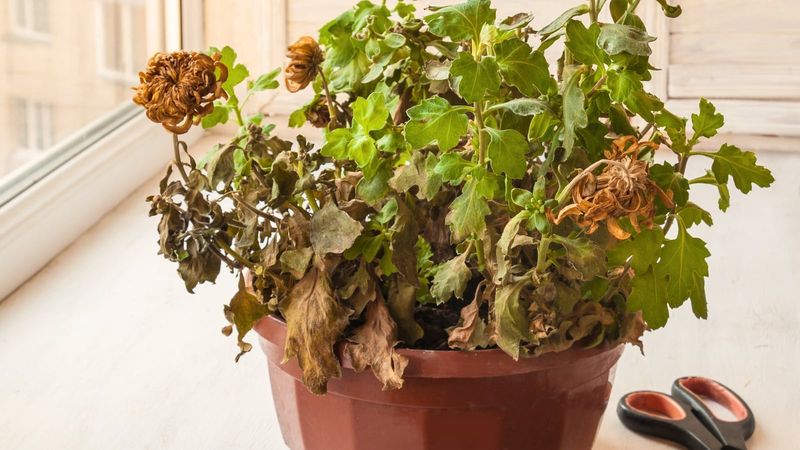
That pot of mums looked perfect on the porch a few weeks ago, and now it is brown and crunchy. It is easy to blame thirst and reach for the hose, but water is only one possible cause.
A few quick checks can tell you what is really going on and what to do next. They can also help you decide whether saving the plant for next year is worth a try.
Brown blooms and crispy leaves tell different stories
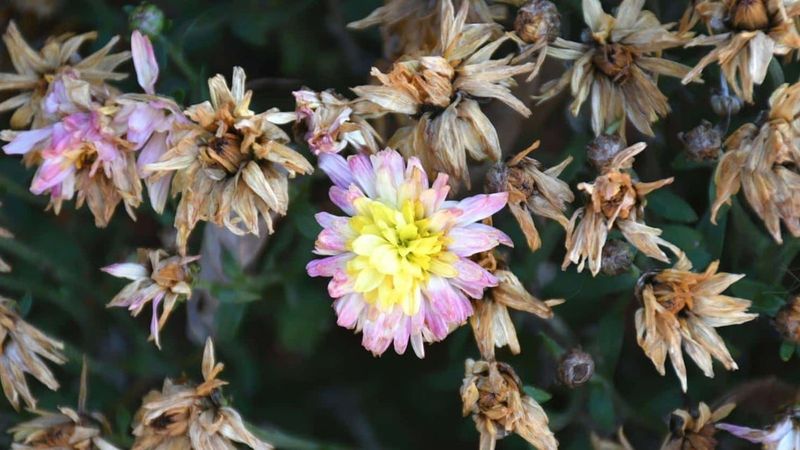
Start by looking closely at what has turned brown. A few faded flower heads on an otherwise green plant usually point to blooms that are simply finished, and Chicago Botanic Garden plant evaluations note that individual flowers age and fade while the plant itself carries on.
Widespread trouble looks different. If leaves across the whole plant are crispy, curled, or drooping, the plant is under stress, and the cause needs to be tracked down.
Dry soil is one suspect. Waterlogged roots, poor drainage, and recent cold are others, and UC integrated pest management guidance on chrysanthemum disorders explains that these problems can look alike.
So appearance alone cannot confirm drought. Sort out which parts are brown first, then move on to the soil, the roots, and the weather of the past week.
Check the soil before you water
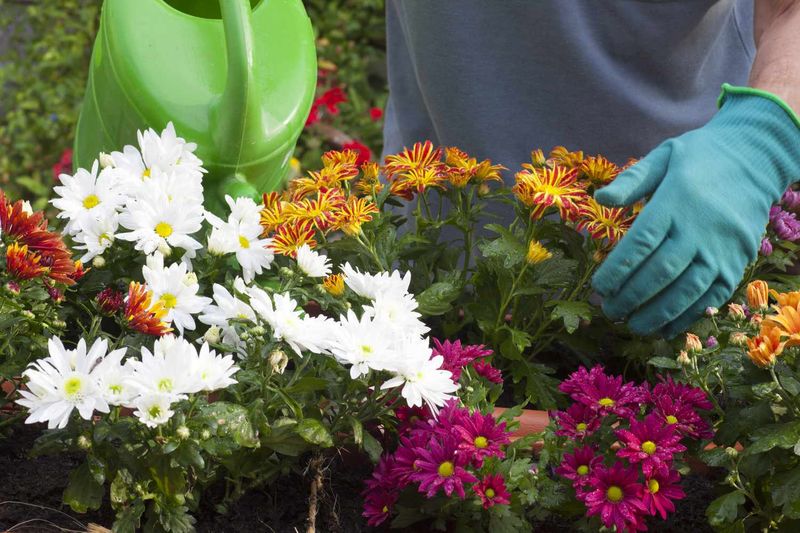
Your finger is the best tool here. Push it an inch or two into the potting mix near the plant.
If it feels dry, the pot needs water, and if it feels damp or wet, hold off.
Container needs shift with weather, pot size, and exposure, and Illinois Extension container watering advice says there are no hard-and-fast rules. It recommends checking the soil and watering before plants wilt badly.
A small pot in full afternoon sun during a dry, warm spell in Texas or north Florida may need a check every day. The same pot in mild, cloudy fall weather may stay damp for several days.
Lift the pot too. A light pot usually means dry mix, while a heavy one holds moisture.
Checking by feel beats following a calendar.
Water a dry root ball thoroughly, then let it drain
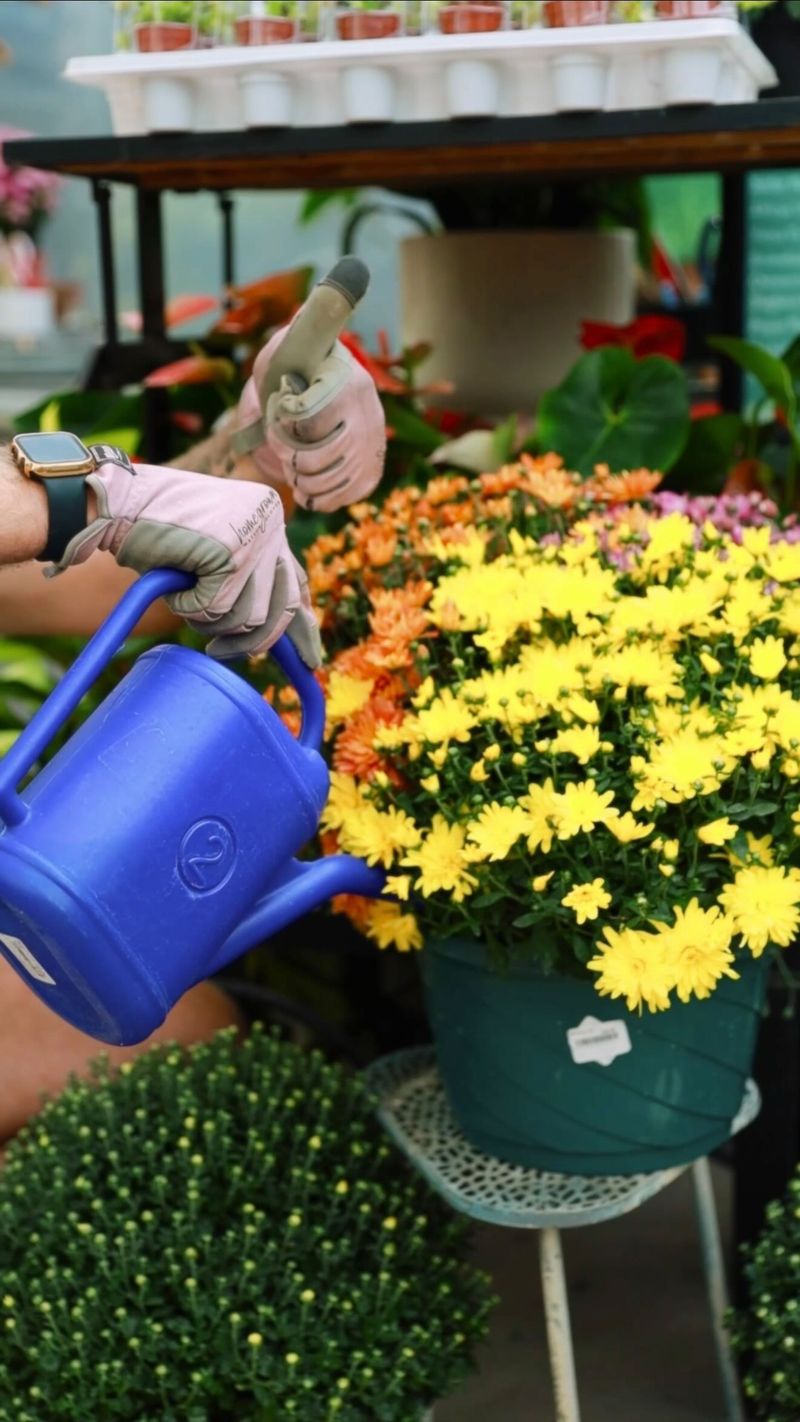
Once the mix feels dry, give the pot a real drink. Pour water slowly at the soil line, not over the flowers, until the whole root ball is moist and extra water runs out of the drainage holes.
A quick sprinkle on top often wets only the surface and leaves the roots dry. Pausing partway and pouring again can help dry mix soak up water instead of letting it race down the sides.
Then empty the saucer or decorative outer pot so the roots are not sitting in a puddle. Keeping foliage and blooms dry where practical also helps.
This step follows a moisture check, not a calendar. If the mix is still damp when you test it, skip the watering and test again tomorrow.
Wilting can also mean the roots are too wet
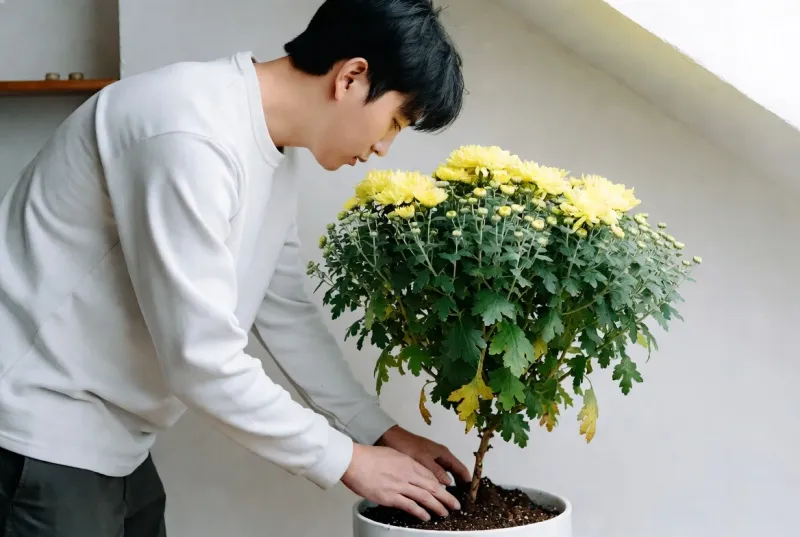
A drooping mum looks thirsty, but sometimes the roots are the ones struggling. Waterlogged roots cannot take up water well, so the plant can wilt even when the mix is soaked.
Check the pot before adding anything. Is the mix soggy or does it smell sour?
Are the drainage holes clear, or are they blocked by a saucer, a decorative sleeve, or compacted soil?
If the pot is holding water, let it drain and let the surface dry out. Tip out any standing water, and consider moving the plant to a spot with better airflow.
Looking at the roots can also help, since healthy ones are usually firm and light, while rotted ones are soft and dark.
Cold can add to the picture. A recent frost may crisp the foliage and blooms, and UC integrated pest management notes that both too little and too much water, along with other environmental stress, can cause similar symptoms.
Symptoms alone may not tell you which one you have, so check the soil and recent weather first.
A finished display may simply be finished

Mums do not bloom forever. One University of Arkansas Extension profile says flowers may last about three to four weeks, or until a hard frost, and variety and weather change that timing.
If the flowers browned while the leaves stayed green and firm, the show may just be over. Water will not bring back blooms that have finished naturally or been burned by frost.
Pinching off faded heads, called deadheading, can tidy the look and may encourage a few more flowers, as Chicago Botanic Garden notes. Snip just below the faded cluster.
Foliage-wide decline is another matter. When most leaves are dry or limp, go back to the soil and drainage checks rather than blaming the end of the season.
Keeping a mum for next year depends on its type and winter

Start with the tag. Garden mums are bred to be hardier, and UF/IFAS Gardening Solutions recommends them for Florida, while florist mums are grown as short-term gift plants.
Virginia Cooperative Extension cautions that florist types are not bred for freezing conditions.
A mum left in its pot is a gamble. Container roots lack the insulation of soil, so Texas A&M AgriLife advises moving valuable container plants to a protected spot during a killing freeze.
Planting a garden mum in the ground and covering the soil with mulch may improve its odds. Planting late in fall can leave too little time for roots to settle in, though.
Results depend on variety, planting date, pot exposure, and local winter. South Texas, the Panhandle, and Florida differ a lot, so judge by your own freezes, not another state’s calendar.
Treat it as a worthwhile try, not a promise.
Some mums return and some do not, and the ones that do are often the ones you gave a fair chance.