
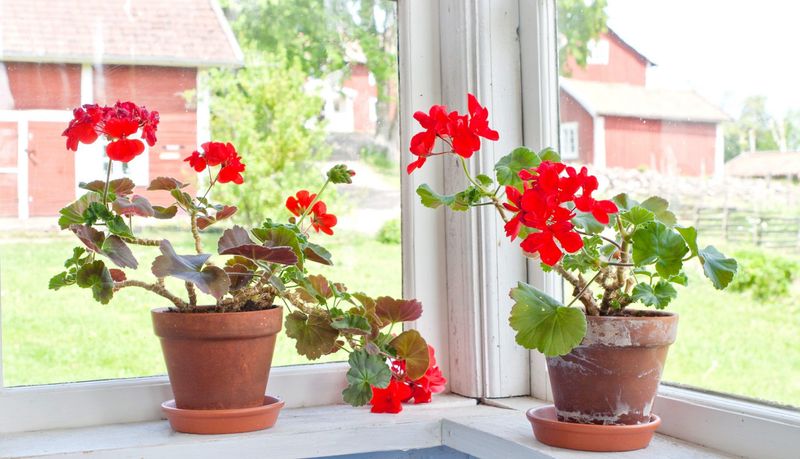
You hauled your beautiful potted geraniums inside before the first frost, and now they look tall, thin, and sparse. Many gardeners see this happen every winter, and it can feel like the plants are giving up.
The good news is that the cause is often easier to spot than you might think. A few changes to light, feeding, and pruning can help your plants grow back into better shape.
Why geraniums may stretch after they come indoors
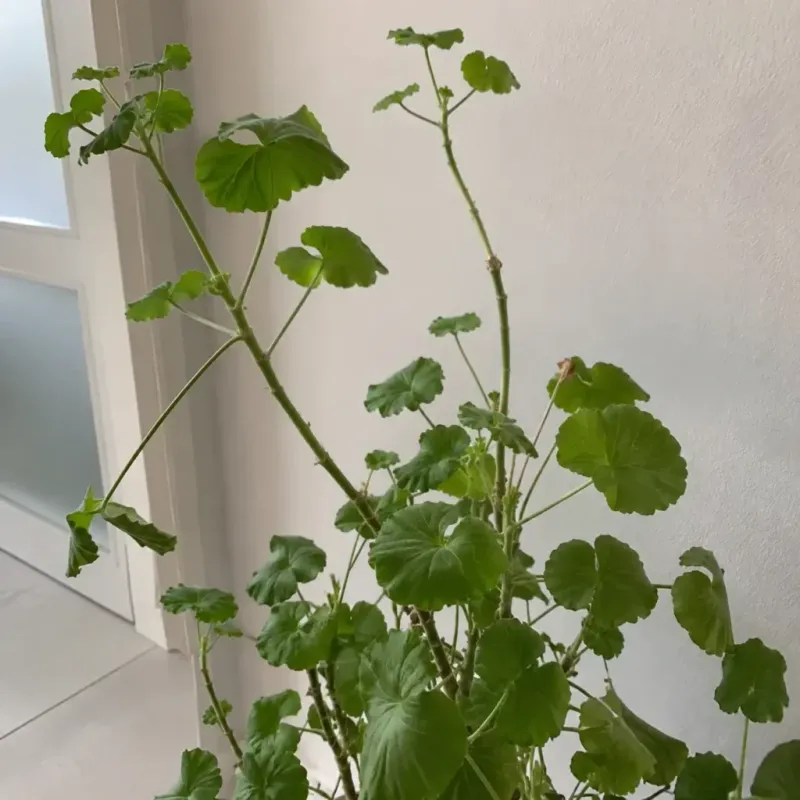
Winter indoor light is much weaker than sunshine on a patio. When a plant does not get enough of it, the stems reach and stretch toward the window, leaving wide gaps between leaves.
University of Minnesota Extension guidance links low light to spindly growth and reduced flowering, so light is the first thing to check.
Flowering does not always stop indoors. Many plants simply bloom less or produce sparse flowers when the light is poor.
Watch for two separate clues: leggy stems with long spaces between leaves, and pale foliage, which low light can also cause.
Leaf drop after the move is another common sight, and it does not point to one cause. Plants often shed a few leaves while adjusting to new conditions, so do not assume they need fertilizer.
Also, the plants discussed here are Pelargoniums, the common garden geraniums, not the hardy perennial plants in the genus Geranium, which behave differently.
Give the plant more light before reaching for fertilizer
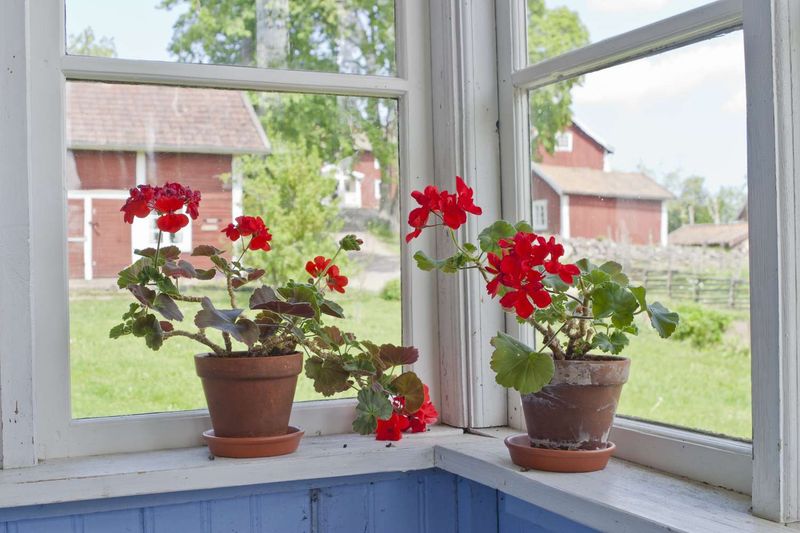
Moving the pot is the simplest first fix. Choose the brightest window you have, usually one facing south or west, and keep the leaves from pressing against cold glass.
If natural light is still weak, a grow light placed above the plant can fill the gap, as University of Minnesota lighting advice describes for indoor plants.
Aim high. Texas A&M AgriLife Extension says geraniums need at least four hours of direct sun daily to flower well.
Many winter windows fall short of that, which helps explain why plants sulk indoors.
Better light improves the odds of compact new growth and later blooms. It will not bring flowers back overnight, and cultivar and plant condition play a part.
Give the plant several weeks in its new spot before judging the results, and turn the pot now and then so it grows evenly.
Reduce feeding when winter growth and light are low
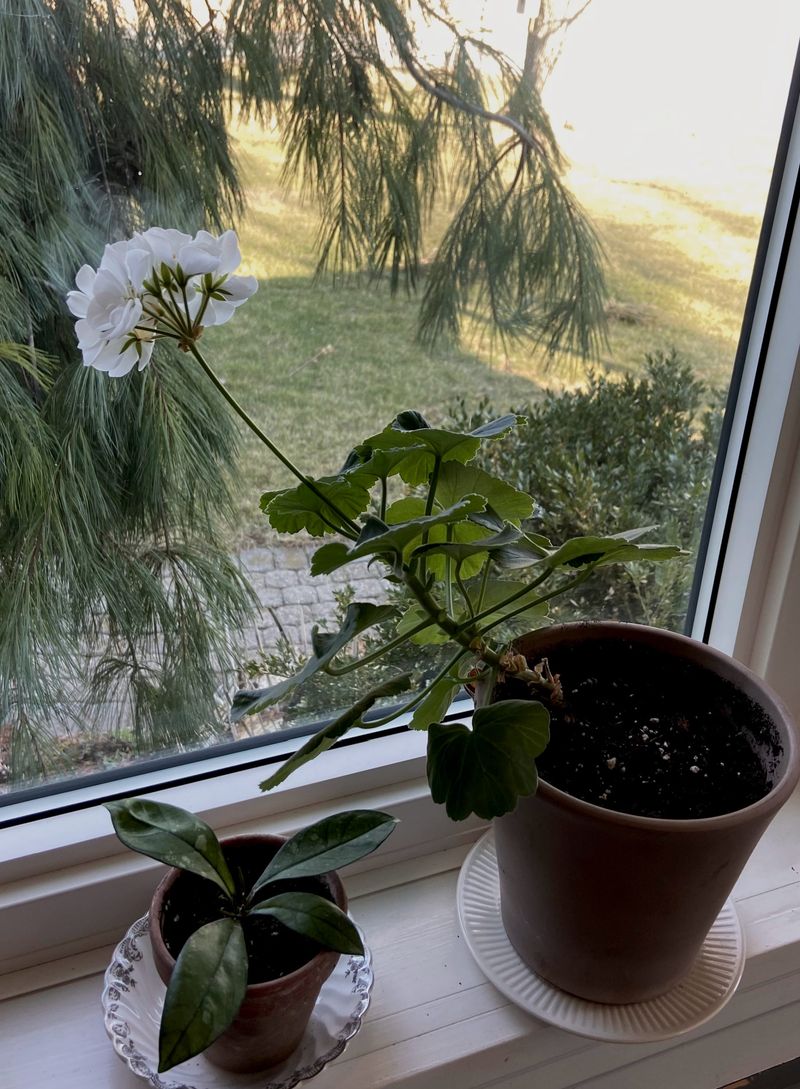
Light is the main culprit behind stretched stems, but other habits can make flowering worse. Heavy feeding is one of them.
Extra fertilizer will not fix legginess, and it will not force blooms when the plant is barely growing.
Fertilize only when growth is active. University of Minnesota Extension suggests half-strength feed about every three weeks during active growth, and Clemson Cooperative Extension advises cutting back when light is low or plants are indoors in winter.
If your plant is just sitting there, skipping feed is a sound choice.
Temperature matters too, and advice varies. Minnesota suggests 60 to 65 degrees F, Iowa State gives 65 to 70 degrees F days with slightly cooler nights, and Texas A&M mentions a winter rest near 50 degrees F.
Treat these as ranges, and keep pots away from heat vents, since warm air can add to lanky growth.
Prune stretched stems to encourage branching
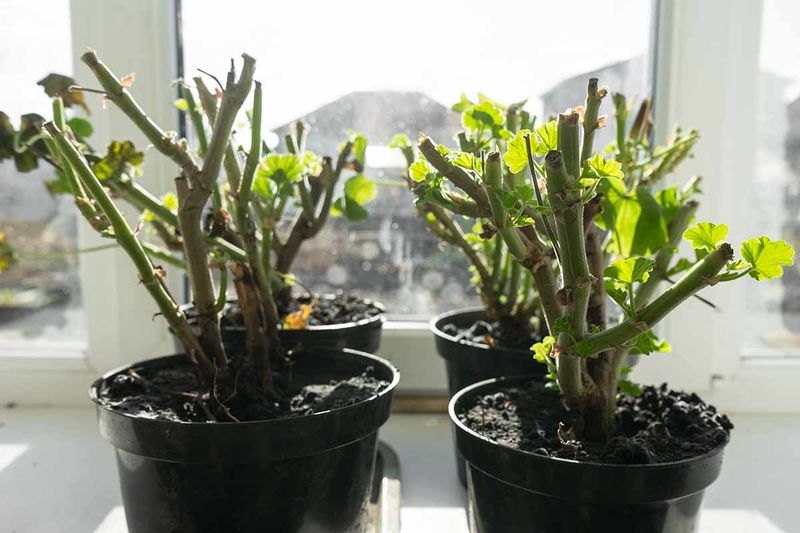
Pruning gives a stretched plant a new shape. Find a leaf node, the bump where a leaf joins the stem, and pinch or snip just above it.
Buds there can grow into side branches, which makes the plant bushier.
Pruning cannot stand in for light, though. Without a bright window, new shoots may stretch just like the old ones, and flowering may stay light.
Pair every trim with a sunnier spot.
A tip pinch is different from a major cutback. Iowa State University Extension notes that overwintered plants can turn lanky by late winter and recommends pruning in March, removing about one-half to two-thirds of the plant when appropriate.
That is a big cut for a mature, overgrown plant.
One severe hard pinch does not suit every plant. A young or only slightly leggy geranium may just need its tips pinched, while a tall, woody one may need the larger March cut.
Describe the plant you have, then choose the cut, as University of Minnesota Extension also covers.
Keep the indoor routine steady
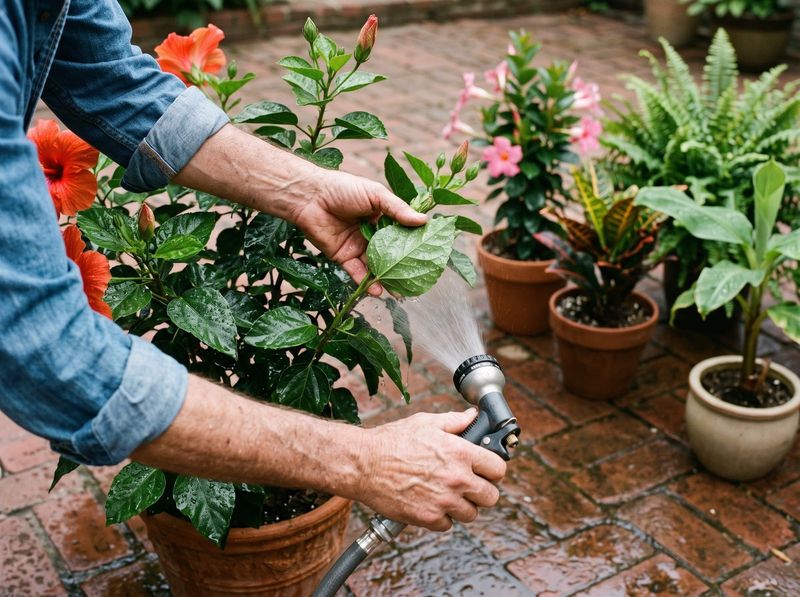
Before pots cross the threshold, look under the leaves and along the stems for pests. Iowa State University Extension recommends rinsing foliage and keeping returning plants apart from other houseplants for three to four weeks.
That quiet period lets you catch hitchhikers before they spread.
Watering is where many indoor geraniums go wrong. Skip the calendar and test the soil instead.
University of Minnesota Extension advises waiting until the soil is dry to the touch indoors, then watering well.
Drainage matters just as much. Use a pot with holes and empty the saucer so roots never sit in water.
If a few leaves yellow or drop during the first weeks, stay calm. Plants often react to the change in light and air, and that is not a sign they need more fertilizer.
Expect steadier growth, not an instant bloom comeback
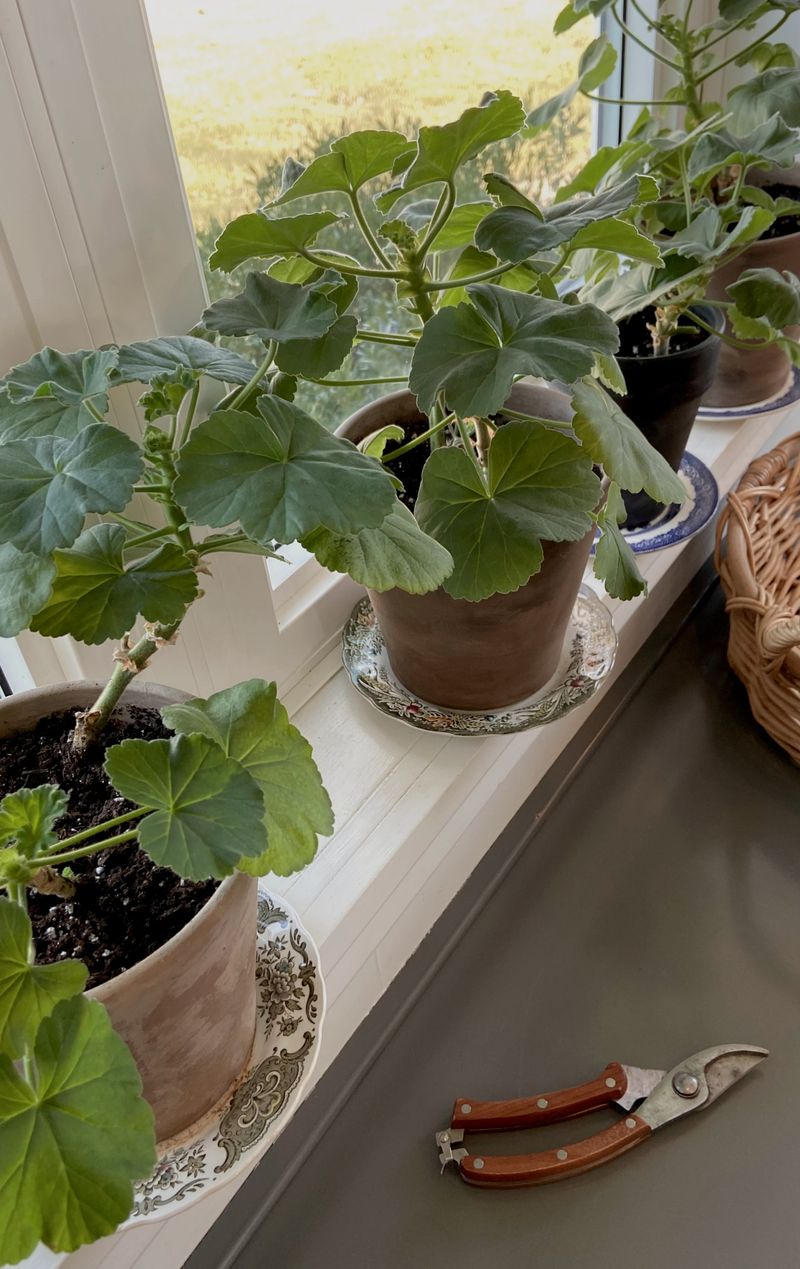
Better light, suitable pruning, and restrained winter care can improve conditions for compact growth and later flowers. Timing varies with your window, your cultivar, and the plant’s condition.
As Iowa State notes, overwintered plants may get lanky by late winter, so some stretching is normal.
Your region matters too. In South and Central Florida, UF/IFAS treats geraniums as winter annuals, generally planted October to March, so many gardeners there can enjoy them outdoors instead of hauling pots inside.
Whenever a geranium looks pale and spindly, brighten its spot before you reach for the fertilizer.