
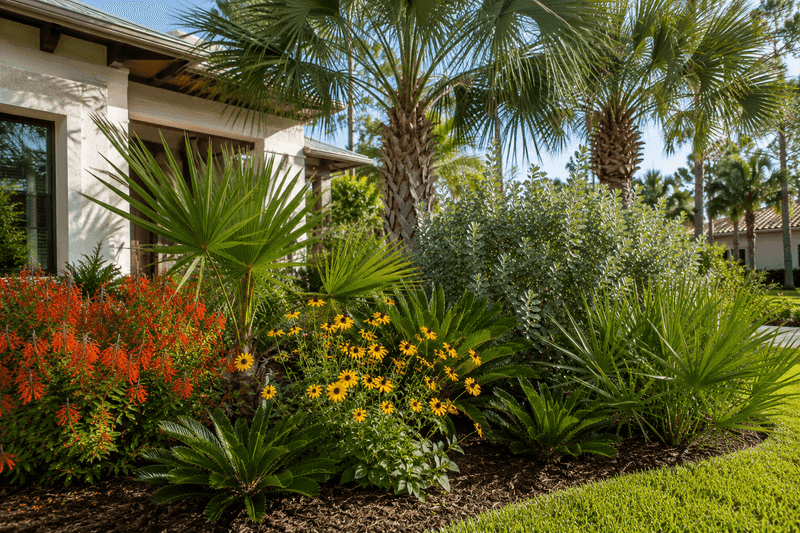
A beautiful Florida flower bed can look like a tiny construction site after one night of armadillo digging. These seven native plants bring rich texture, polished edges, and lasting color without needing a yard full of fussy flowers.
But no native plant is proven to repel armadillos, which dig for insects and other food in the soil. Pair these smart plant choices with proper watering and physical barriers to protect your garden investment.
1. Coontie
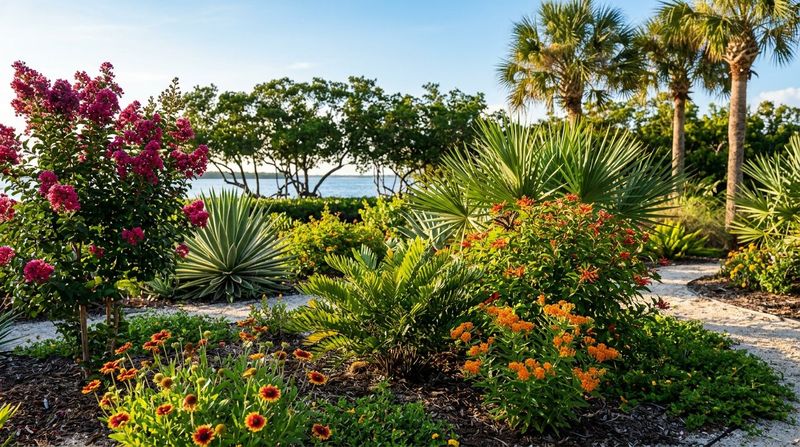
A few glossy, palm-like clumps can make a plain front walk feel like the entrance to a resort. Coontie, Zamia integrifolia, delivers that look while staying much smaller than most palms.
This Florida native cycad generally grows about 2 to 3 feet tall, with a broader spread over time. Use repeated groups beside an entry or beneath taller, open-canopy trees for a tidy, year-round planting.
Give coontie well-drained soil and sun to partial shade. Once established, it handles dry conditions well, making it useful in sandy beds where thirsty annuals demand frequent watering.
The armadillo connection needs a clear boundary: its stiff leaves and established roots do not make it a proven digging deterrent. Protect new plants with securely anchored wire guards where animals are actively feeding, leaving room for growth and avoiding exposed sharp edges.
Keep mulch away from the crown, and remember that all parts are poisonous if eaten. Coontie also supports the rare atala butterfly in parts of Florida, giving this formal-looking plant a valuable wildlife role.
2. Muhly Grass
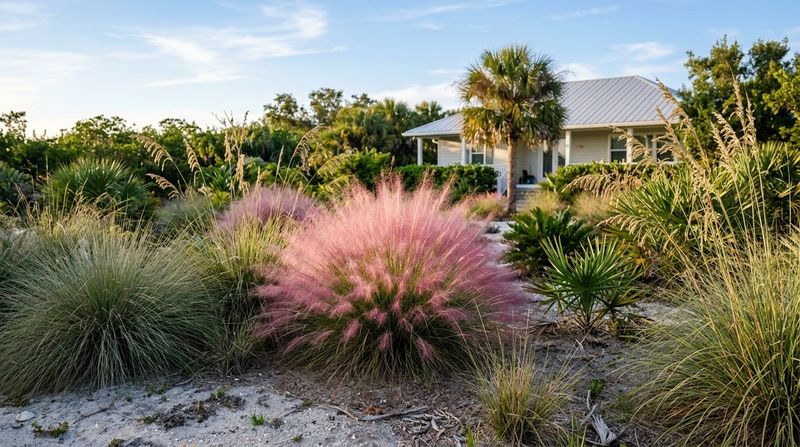
Come fall, a cloud of pink flowers can make an ordinary driveway border look professionally designed. Muhly grass, Muhlenbergia capillaris, earns its place through seasonal drama rather than bulky foliage or constant blooms.
Plant it in full sun and well-drained soil, allowing roughly 3 feet between plants for most landscape selections. Crowding young pots together may look full immediately, but it leaves mature clumps fighting for space and air.
Its fine leaves soften hard edges along walks, fences, and raised planting areas. Repeating several clumps usually creates a stronger effect than scattering single plants around the yard.
Muhly is not an armadillo repellent, and animals can still dig between or beside its roots. Its practical advantage is that an established planting needs less frequent soil disturbance than a bed replanted with seasonal flowers.
Water during establishment, then adjust irrigation to rainfall and soil moisture rather than running sprinklers automatically. In late winter, tidy the foliage before fresh growth begins, and keep temporary protective barriers around vulnerable new transplants until they are firmly rooted.
3. Saw Palmetto
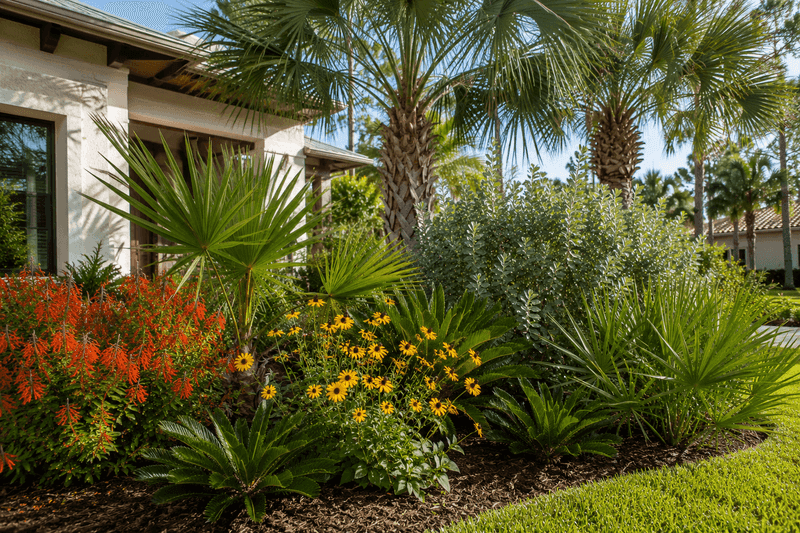
For a bold, architectural look, few Florida natives match a well-placed fan of saw palmetto leaves. Serenoa repens brings the feel of a coastal landscape into an ordinary yard, especially when given enough room to show its natural shape.
Space is the deciding factor here. Many plants reach 5 to 10 feet tall and spread widely, so this is a background anchor, not a narrow strip beside the mailbox.
Choose a sunny or partly shaded location with drainage suited to the plant. Established saw palmetto tolerates drought, and silvery forms can make a striking contrast against dark foliage or a light-colored wall.
Do not mistake its saw-toothed leaf stalks for reliable armadillo protection. Animals may travel under the canopy or dig nearby, and the sharp stalks are more of a concern for gardeners working around the plant.
Keep it away from children’s play areas and tight paths. Buy nursery-grown stock, protect the root area during establishment, and place any needed exclusion fencing around the bed rather than relying on the foliage to stop nighttime visitors.
4. Dwarf Yaupon Holly
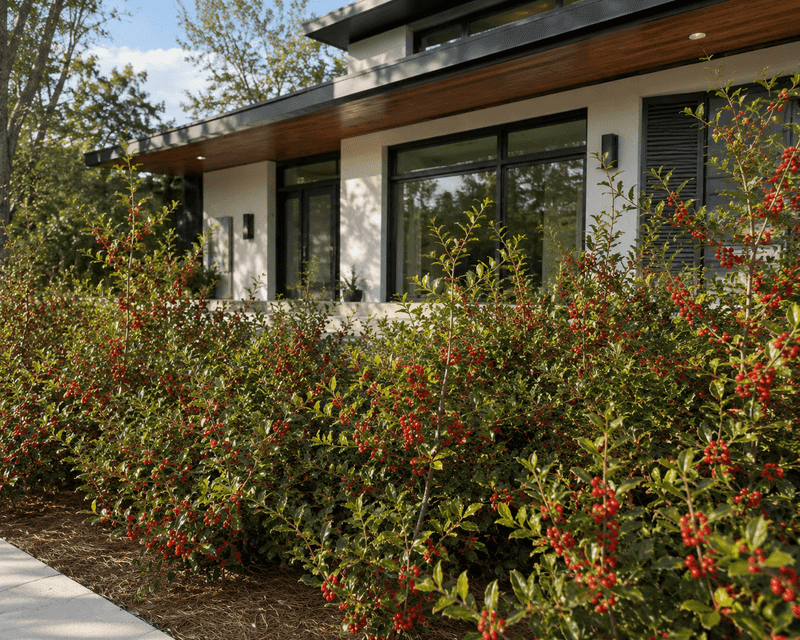
Neat green mounds give a garden the tailored look people often associate with expensive boxwood hedges. Dwarf yaupon holly offers a Florida-friendly way to get that structure using compact selections of the native Ilex vomitoria.
Check the cultivar label before buying, because mature size varies. Many dwarf forms stay around 3 to 5 feet tall, while the species itself can become a small tree.
Use matching plants to frame a front walk, outline a patio, or give a mixed native bed a clear border. Sun to partial shade works, and established plants tolerate a range of soils when their site and watering are appropriate.
A clipped hedge will not stop an armadillo from digging underneath it. For a repeatedly damaged bed, a properly installed fence is the protective feature; the yaupon can help that barrier blend into the landscape.
Allow room to inspect and maintain fencing rather than pressing shrubs directly against it. Prune lightly instead of constantly shearing, and do not expect berries from every dwarf cultivar, since yaupons have separate male and female plants.
5. Sand Cordgrass
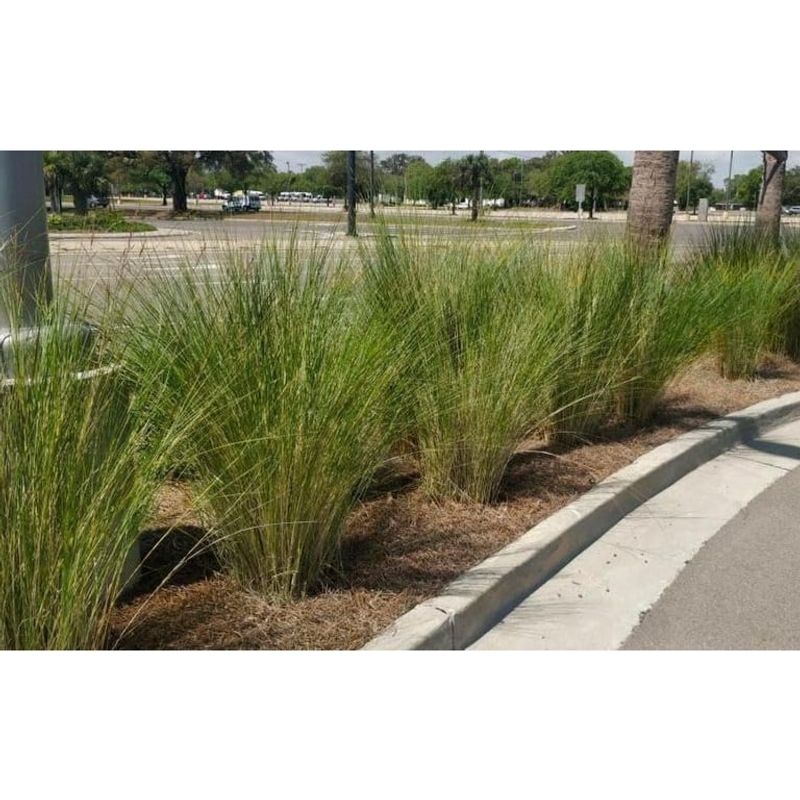
A sweeping fountain of green blades can fill a big space without a big collection of plants. Sand cordgrass, Spartina bakeri, is especially useful where a small ornamental grass would disappear into the background.
Expect substantial clumps, often about 4 to 6 feet tall and wide. Set them along a broad property edge or near a rain garden, not beside a narrow walkway where arching foliage will crowd passing feet.
Despite its common name, this Florida native handles more than dry sand. It suits sunny sites with fluctuating moisture, including locations that are periodically wet but are not permanently submerged.
That flexibility makes it a better choice than drought-only plants for a low spot where armadillo damage and poor plant performance happen together. Still, it does not repel the animals or prevent them from searching the surrounding soil.
Fix leaking irrigation and avoid adding water to already damp ground. Where digging continues, protect the planting perimeter with an appropriate barrier, and avoid blanket insecticide treatments that harm soil life without reliably solving the armadillo problem.
6. Sunshine Mimosa
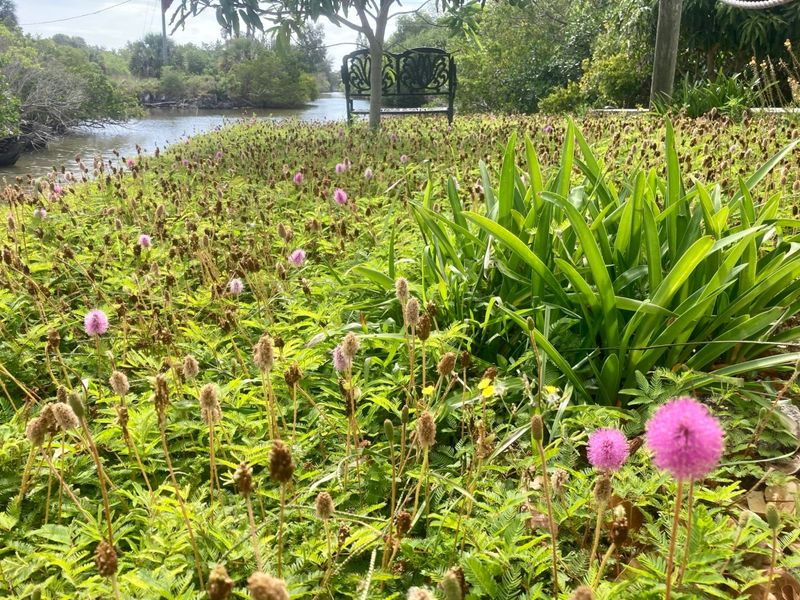
Bare soil between shrubs rarely looks finished, and it leaves every new digging hole on display. Sunshine mimosa, Mimosa strigillosa, fills that visual gap with fernlike leaves and cheerful pink powderpuff flowers.
This low-growing Florida native spreads by runners and works best where it has permission to roam. Give it sun, reasonably drained soil, and a defined edge so it does not wander into neighboring plants you want to keep separate.
Its leaves fold when touched, a small detail that makes the planting fun to watch. Flowers attract pollinators, while the spreading foliage can reduce exposed soil and some weed pressure after it fills in.
A living carpet is not an armadillo-proof cover, however. The animals can dig through it, and there is no sound basis for claiming that its flowers, scent, or roots drive them away.
Use temporary guards to protect small starter plants, and watch for runners crossing paths or bed edges. Choose sunshine mimosa for a softer, greener finish rather than guaranteed pest control, and pair it with exclusion wherever nighttime digging is persistent.
7. Fakahatchee Grass
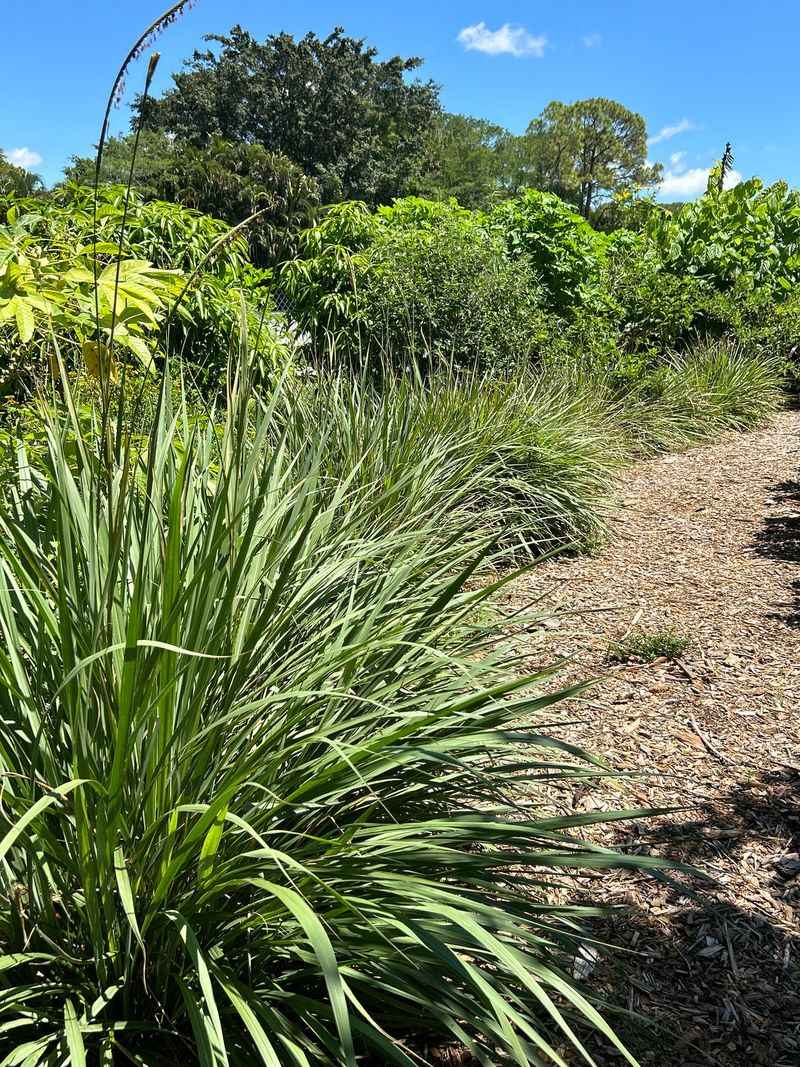
When a bed needs height without a hedge, broad green grass blades can do the heavy lifting. Fakahatchee grass, Tripsacum dactyloides, creates a lush backdrop that looks especially good beside pale paving or a simple fence.
Unlike the fine texture of muhly, its wider leaves give the planting a bold, almost tropical character. Standard plants commonly reach about 4 to 6 feet tall, so leave generous space and verify the nursery label rather than assuming every Fakahatchee selection stays small.
Plant in sun to partial shade, with enough moisture to establish a strong root system. It is particularly useful in moist beds and around drainage features where water-loving plants make more sense than dry-site choices.
Even a large clump cannot promise protection from armadillos. For lasting results, combine suitable plants with a sturdy fence roughly 2 feet high and buried at least 12 inches, checking local extension guidance for site-specific installation.
Inspect gates and corners, since gaps defeat a good barrier. The real winning combination is attractive native planting inside a protected bed, not a supposed miracle plant that wildlife somehow refuses to cross.