
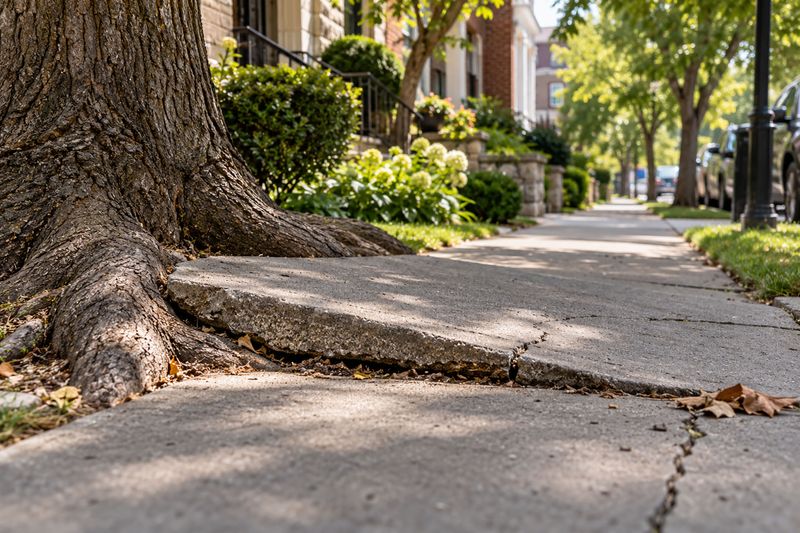
A pink notice on your door says the sidewalk out front needs fixing, and the culprit is the shady tree you have loved for years. It is easy to jump to the worst case and picture a chainsaw crew showing up.
The truth is more nuanced, because repairing concrete and removing a tree are two different questions. Here is how to read your notice, find out who is responsible for what, and protect the tree while you sort it out.
Sidewalk damage alone does not establish a removal order

Few things sting like a repair notice that points at a tree you planted or have enjoyed for decades. Before panic sets in, it helps to know that the sources reviewed here do not show that a California city can make a homeowner remove a healthy tree solely because its roots cracked a sidewalk.
Repairing a sidewalk and removing a tree are separate questions.
State law speaks to the first question. California Streets and Highways Code section 5610 sets out a sidewalk-maintenance duty for owners of certain abutting lots.
It deals with keeping the sidewalk in repair. It does not, on its face, tell anyone to take out a tree.
Tree removal rules mostly come from local ordinances, and they vary by city and by the circumstances. San Francisco is a useful example.
Its street-tree removal guidance says tree-related sidewalk damage does not necessarily require the tree to come out.
So the first job is reading your notice closely. Does it order a sidewalk repair, or does it actually demand tree removal?
Look for the code section it cites, the deadline, and the department that sent it.
If the wording is unclear, call the contact on the notice and ask directly what work is required. Keep a note of who you spoke with and when.
A calm, specific question at this stage can keep a repair problem from turning into a removal assumption.
Who controls a tree in the parkway?
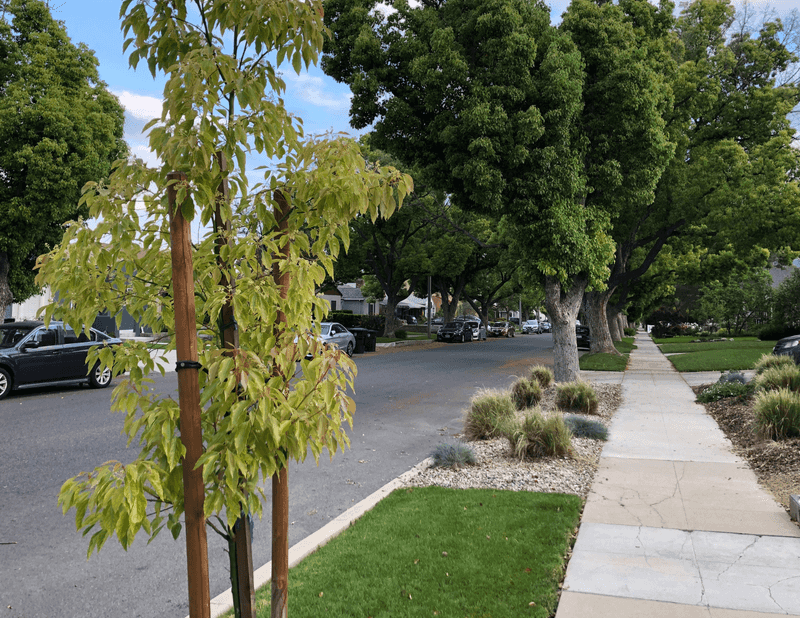
Picture the narrow strip between your curb and your sidewalk. Many people call it the parkway, and a tree growing there often gets treated as a street or parkway tree because it sits in the public right-of-way.
That label, though, does not settle everything.
Burbank offers a good illustration. In its parkway tree guidance, the city describes controlling the right-of-way without owning the land.
Control and ownership are not the same thing.
San Francisco takes a clear definitional approach. Its street-tree rules define trees in the public right-of-way as street trees.
That tells you how the tree is classified there, which is a different matter from who owns the dirt beneath it.
Where the tree sits therefore cannot answer who maintains it or who pays for anything. Those answers live in your city’s tree rules and in the exact boundaries of the right-of-way at your address.
A practical way to start is to search your city’s municipal code for parkway or street trees. Then ask the public works or urban forestry office how it treats the tree in front of your home and where the right-of-way line falls.
Get the answer in writing if you can, since it affects every later step.
Sidewalk repair responsibility can differ from tree responsibility
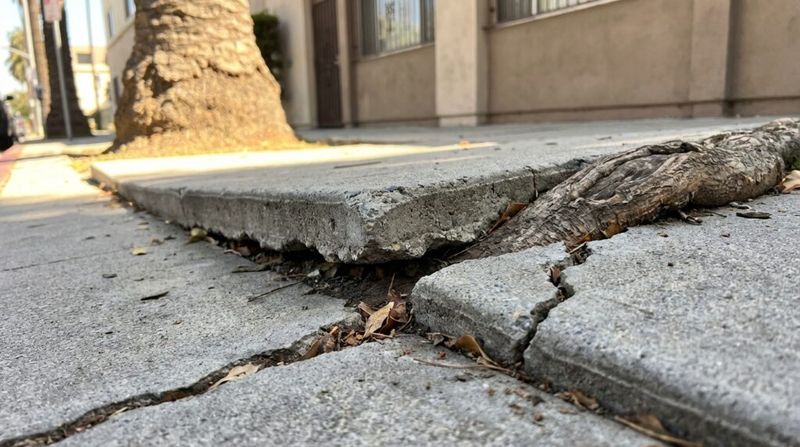
Paying for a sidewalk and controlling a tree can land on different shoulders. Section 5610 sets a sidewalk-maintenance duty for owners of certain abutting lots.
That repair duty does not, by itself, answer who controls the tree or who must remove it.
City programs fill in the details, and they differ. Sacramento says on its sidewalk guidance page that the abutting owner is responsible for sidewalk repairs even when tree roots caused the damage.
In that city, a tree being the cause does not move the repair bill elsewhere.
San Diego handles things through reporting. Its tree maintenance page directs residents to report damage caused by a city-maintained tree to the city.
That describes a process for reporting, and it should not be read as a promise about who pays for repairs.
You may also wonder whether a repair duty makes you personally liable if someone trips. A 2025 appeals court decision, Bean v.
City of Thousand Oaks, explains that section 5610 imposes a repair duty but does not, by itself, create tort liability to injured pedestrians or a duty to indemnify a city. Exceptions may apply, such as when an owner created the defect or controlled the sidewalk.
That is a narrow point, not a blanket answer about every cracked sidewalk. If a claim or injury is involved, a local attorney can tell you how it applies to your facts.
Local rules determine when removal is considered
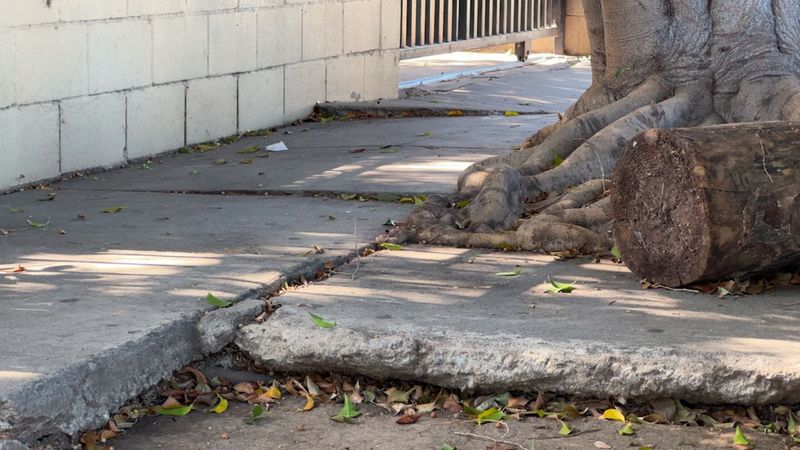
Cities take noticeably different approaches, and none of the examples below stands for a statewide test. Think of them as snapshots of how local rules can read.
Los Angeles has a street tree policy for its sidewalk repair program. The April 2021 policy limits removals under that program to listed criteria, including certain health, condition, and safety factors.
It also describes preservation measures meant to keep trees where that is workable.
San Francisco’s removal guidance says tree-related sidewalk damage may not require removal. Removal there is a separate decision under its own rules.
Anaheim reads differently. Anaheim Municipal Code section 12.29.010 assigns the tree-owning property owner responsibility for sidewalk repair and, if necessary, tree removal.
That language shows a local code can contemplate removal in some circumstances.
What these sources do not show is a general power for a city to order a homeowner to remove any healthy tree whose roots damaged a sidewalk. A rule that considers removal, or assigns who handles it, is not the same as proof of that kind of order.
Tree status and the facts of the case matter.
Your best move is to find the ordinance your notice cites and read what it requires. If the notice does not cite one, ask the city to identify the rule and explain how it applies to your tree.
Preservation options must still provide accessible passage
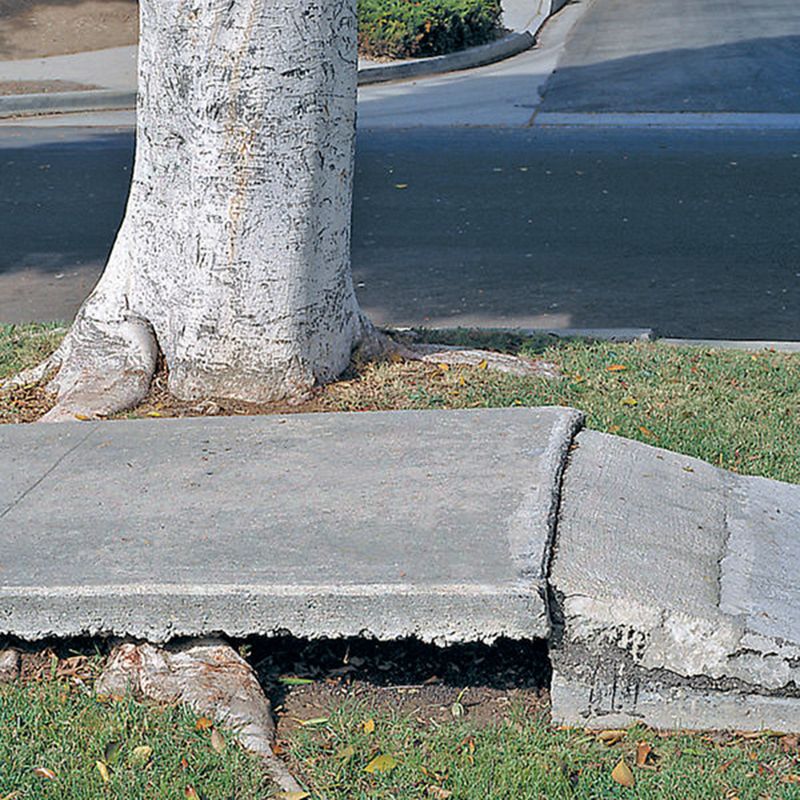
Saving a tree and keeping the sidewalk safe are not always at odds. San Diego’s tree maintenance page lists root pruning, root barriers, sidewalk cutouts, ramping, bridge plates, and realignment as possible fixes.
Los Angeles’ sidewalk repair tree policy also describes ramping, narrowing sidewalk sections where accessible, and meandering the walk around a tree.
None of these is a guaranteed fix. Whether one works depends on the site, including how much room there is, how the tree is doing, and where the roots run.
Root pruning, for example, can affect a tree’s stability, so it calls for expert input.
Some options may only buy time. A U.S.
Forest Service urban forestry publication describes meandering, ramping, cutouts, and flexible paving as options, but notes that ramping and flexible paving may delay rather than prevent future damage. Ask what the long-term plan is, not just the first repair.
Any fix still has to leave a path people can use. The 2010 ADA Standards address changes in level on accessible routes.
They allow up to a quarter inch, call for beveling between a quarter and a half inch, and require ramp rules for larger changes.
Those provisions shape what a repair can look like. They are not a universal trip-hazard threshold, and they do not order a tree removed.
Raised panels can often be addressed through the options above, depending on the site.
Check the notice and get approval before tree work
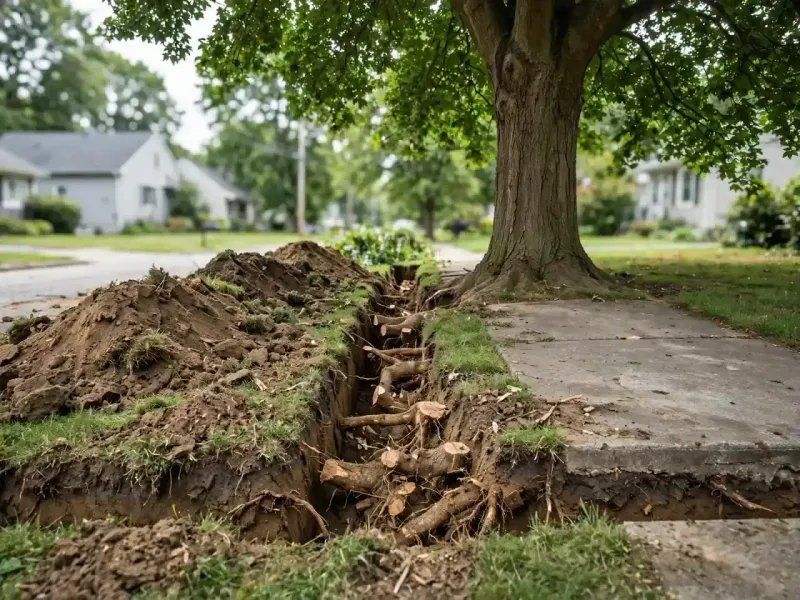
Start with the notice itself. Call the department named on it and ask what work is actually required, by what date, and under which code section.
Ask who controls and maintains the tree, since that answer may not match who handles the sidewalk.
Next, ask for an arborist review. Request a written assessment of preservation options, such as the ones in the previous section, before anyone authorizes cutting.
A written record also helps if the city and your contractor later disagree about scope.
Approval steps are real in many places. San Diego’s tree maintenance guidance calls for an inspection before a no-fee permit for root pruning or removal.
Los Angeles’ street tree permit guidance says street tree work may require permits.
That is why a quick trim of the offending root, or hiring a crew to take the tree down, can backfire. Without the right inspection or permit you could face problems with the city, and the tree could be harmed.
Make sure any contractor confirms in writing that the needed approvals are in place.
If your city does allow you to hire your own contractor, ask that the plan address both the concrete and the tree. Keep photos of the damage and the roots before work starts.
A lifted slab is usually a problem you can solve without losing the tree, and the questions you ask first often decide which way it goes.