
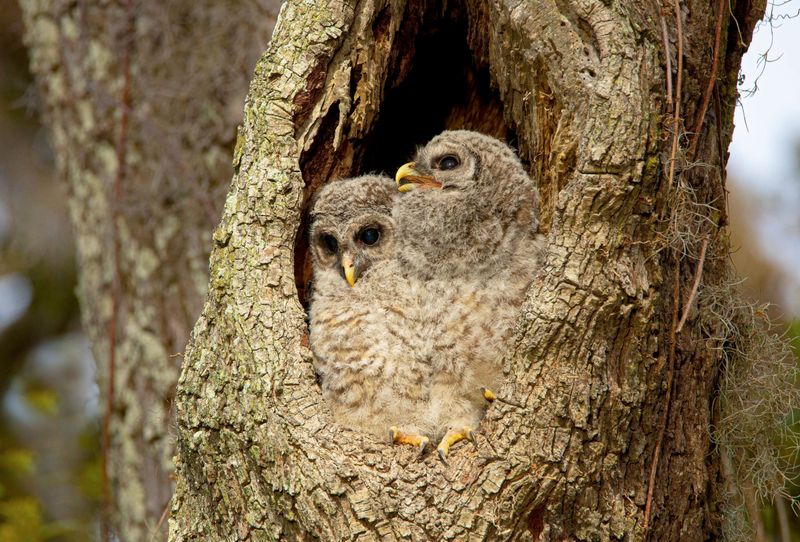
An empty patch of sky does not mean your yard has lost its hunters. Most swallow-tailed kites leave Florida by late summer, heading toward South America before fall gets going.
Winter brings other raptors into view, including year-round neighbors and visitors from farther north. Learn these seven birds, and you can spot who is watching your garden while making your yard safer for wildlife.
1. Red-shouldered Hawk

A loud, repeated kee-ah can announce a backyard hunter before you ever find it in the branches. Around Florida neighborhoods, red-shouldered hawks are familiar year-round residents, especially near ponds, wooded lots, and wet ground.
Adults have rusty barring across the chest, checkered wings, and a dark tail crossed by narrow white bands. Watch for one sitting quietly on an oak limb or fence, scanning the ground rather than circling high overhead.
Its menu includes small mammals, frogs, snakes, and other small animals. That makes it part of your yard’s food web, not a guaranteed solution for a particular pest problem.
Keep mature native trees when they are healthy and safely located, and protect planted edges near water. A yard with tree cover beside open hunting space offers more useful habitat than a bare lawn alone.
Skip rodent poisons, which can harm predators that eat poisoned prey. If a hawk returns to the same perch, enjoy the view from a window rather than walking over for a closer photograph.
2. Red-tailed Hawk
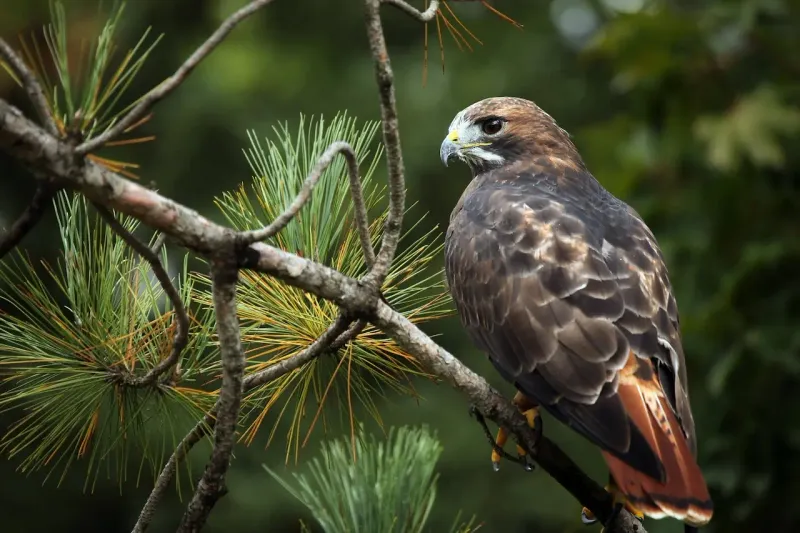
That bulky bird on the highest roadside perch may be watching the same grassy strip that borders your property. Red-tailed hawks favor open hunting areas, making them a better fit for spacious yards, pasture edges, and developments beside fields than tightly wooded gardens.
Florida has resident birds, and winter also brings migrants from farther north. Adults often show the familiar brick-red tail, but young birds have brown, banded tails, so tail color alone can fool you.
Look instead for a broad chest, wide wings, and, on many birds, a dark band across a pale belly. A perched red-tail usually looks heavier and more solid than the smaller hawks that dash between backyard trees.
Small mammals are a major part of its diet. Protecting this hunter starts with avoiding poisoned rodent bait and using exclusion to keep rats out of sheds and garages.
Keep feed and pet food in sealed containers rather than leaving food outside to attract prey. Existing tall trees can provide lookout points, but never install a perch near traffic or electrical lines.
3. Cooper’s Hawk
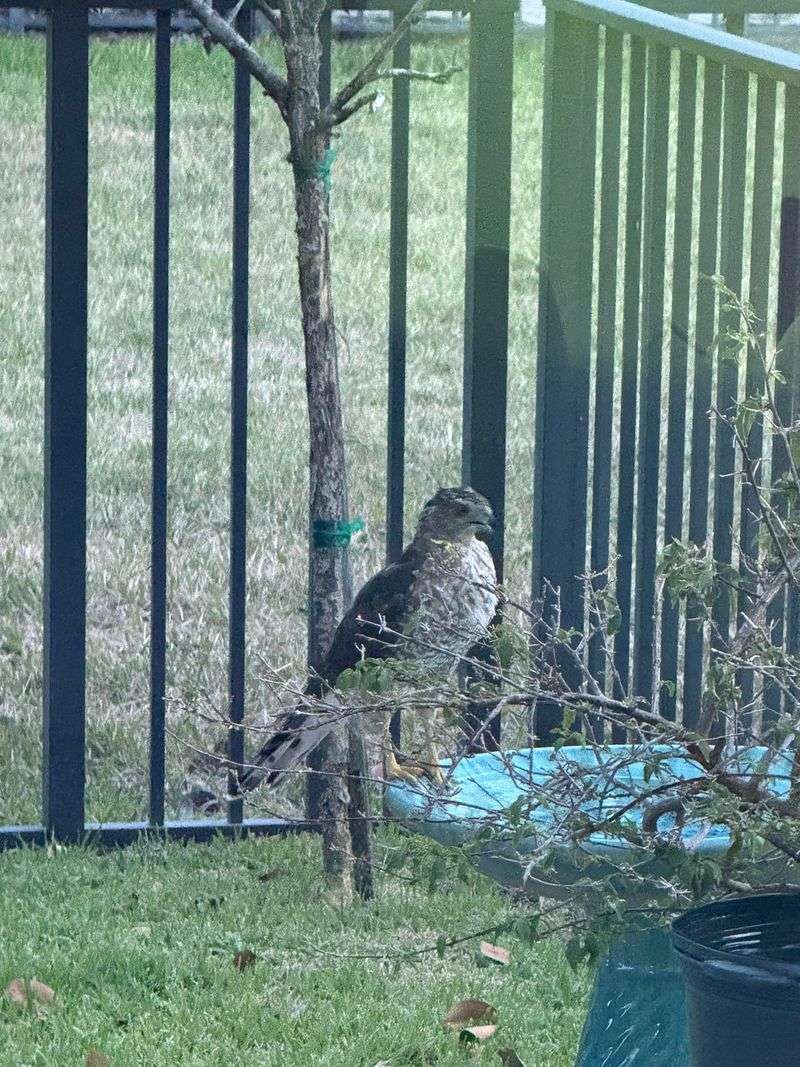
One second the feeder is busy; the next, every songbird has vanished into the shrubs. A Cooper’s hawk may have slipped through the yard, using its long tail to steer between branches.
Unlike the open-country red-tail, this hawk is built for hunting around trees. Birds make up much of its diet, so a backyard visit does not necessarily mean it is looking for rats.
Adults have blue-gray upperparts, rusty bars below, and a darker cap. Their fairly large head and rounded tail can help separate them from sharp-shinned hawks, though a quick glimpse is often not enough for a sure identification.
Cooper’s hawks occur year-round in Florida, with additional birds arriving during migration and winter. Wooded neighborhoods can offer both cover and hunting opportunities.
Give feeder birds nearby escape cover by keeping dense native shrubs in the landscape, and make windows safer with exterior bird-collision treatments. If hunting becomes frequent at a feeder, temporarily remove the feeder rather than confronting the hawk.
Never try to trap or harm it. Predation is a normal part of a functioning backyard habitat.
4. Sharp-shinned Hawk
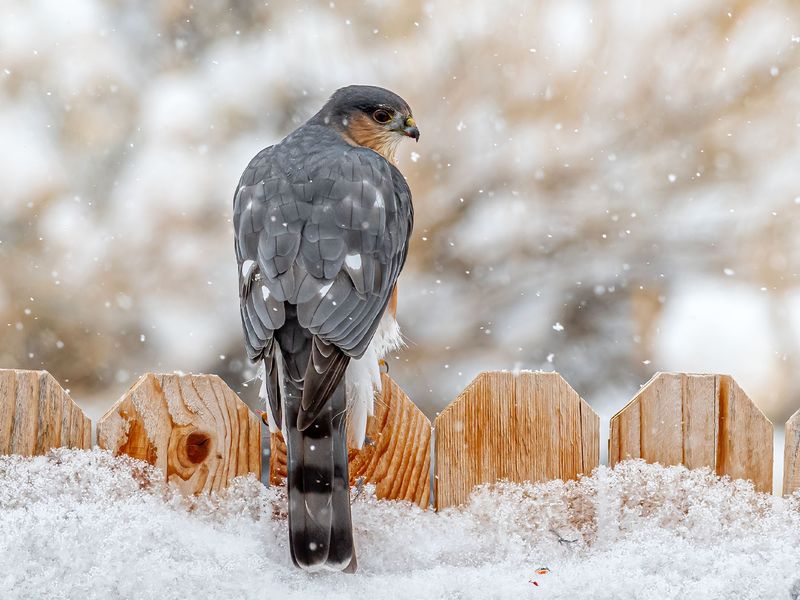
Think of a small woodland hunter that can turn a quiet hedge into a sudden burst of wings. Sharp-shinned hawks visit Florida during the cooler months, bringing fast, low flights to wooded yards and garden edges.
They resemble Cooper’s hawks closely enough to challenge experienced birders. A smaller head, thin legs, and a tail that often looks more square at the tip are useful clues, but posture and viewing angle can change their appearance.
Size is not a perfect shortcut either, because females are larger than males and the two species overlap. Take a photograph from indoors if you can, and feel comfortable leaving an uncertain bird unidentified.
Small birds supply most of this hawk’s meals. Its presence reflects the wider food web supported by your plantings, rather than a promise of rodent control.
For a wildlife-aware garden, grow layered native cover instead of leaving feeders exposed in a broad stretch of lawn. Keep cats indoors, where they cannot add another hunting threat.
A brief visit usually ends quickly. Watch quietly and give both predator and prey room to move.
5. American Kestrel
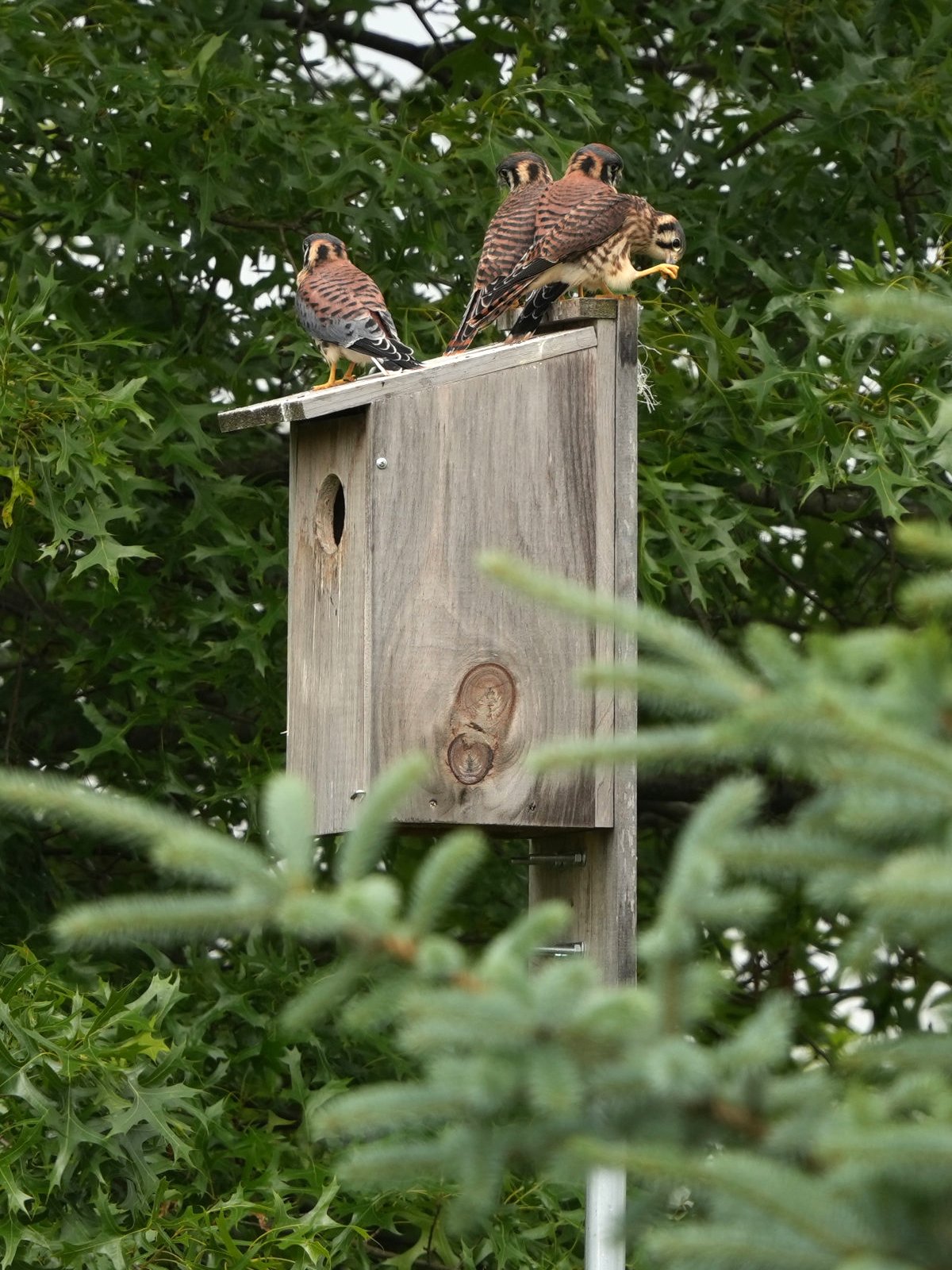
A falcon barely bigger than a mourning dove can still command an entire open yard. American kestrels watch from exposed perches, sometimes bobbing their tails before dropping toward prey.
Look for a rusty back, bold dark facial marks, and pointed wings. Males have blue-gray wings, while females show more rusty brown, making this one of the easier raptors to recognize once you get a clear view.
Florida supports resident kestrels, including the southeastern American kestrel, and receives winter visitors. Open neighborhoods, rural properties, and yards beside short grass or fields offer better viewing chances than heavily shaded lots.
Large insects are important prey, along with small vertebrates such as lizards and mice. Leaving a modest patch of native grasses and limiting unnecessary insecticide use can help support the prey base.
Kestrels nest in cavities, but a nest box is not a universal backyard upgrade. Consider one only where suitable open habitat exists, using species-specific guidance and a plan for monitoring and maintenance.
For winter watching, start simply: scan existing bare branches and distant wires with binoculars.
6. Merlin
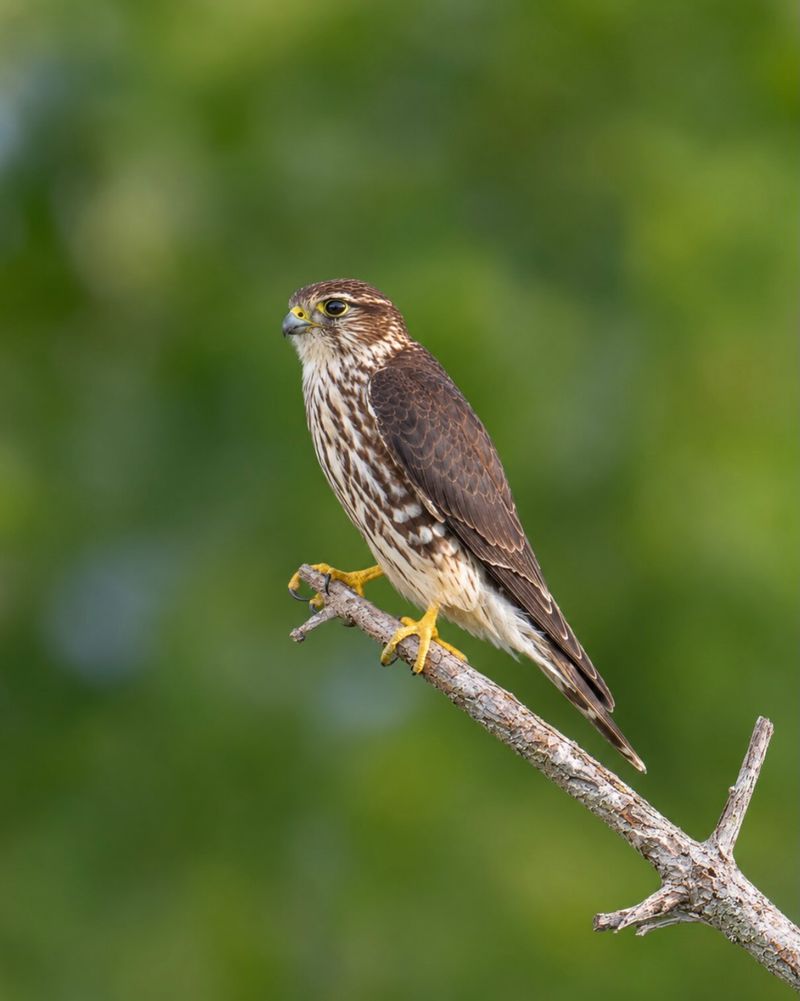
Speed is the giveaway when a compact falcon rockets across the neighborhood without stopping. Merlins spend winter in Florida, but they are less predictable backyard guests than the hawks that settle onto a favorite fence.
Watch near open spaces, coastal neighborhoods, parks, or yards overlooking water. A high, exposed perch can give one a place to scan for small birds before a rapid chase.
Compared with an American kestrel, a merlin looks stockier and usually lacks the kestrel’s crisp pair of dark facial marks. Its streaked breast, pointed wings, and forceful flight are helpful clues, though plumage varies.
Small birds are its main prey, so there is no reason to lure one in with food or expect it to manage lawn pests. For most homeowners, its value is the chance to see a skilled seasonal hunter passing through.
Keep binoculars near a window with a wide view, especially during the morning. Photograph any unfamiliar falcon before trying to name it.
If one rests nearby, avoid crowding its perch. Winter visitors need opportunities to feed and conserve energy.
7. Barred Owl
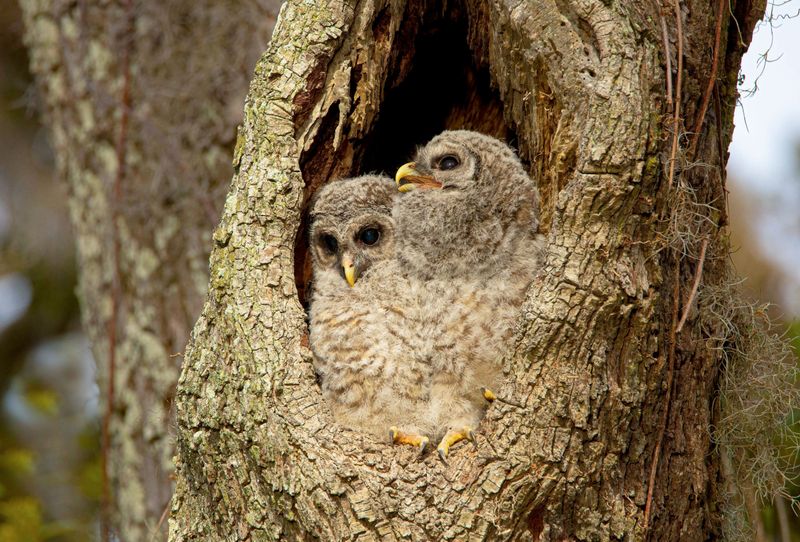
After sunset, the patrol can continue without a single wingbeat you can hear. Barred owls are year-round Florida residents, and their familiar who-cooks-for-you call may reveal a neighbor hidden among mature trees.
Wooded yards near wetlands, rivers, or swampy areas are especially promising places to listen. The rounded head, dark eyes, and lack of ear tufts help distinguish a barred owl from a great horned owl.
Its varied diet can include small mammals, frogs, crayfish, and other animals. That flexibility suits Florida’s mix of damp ground, tree cover, and backyard edges, though an owl’s presence never guarantees pest control.
Preserve large trees and natural cavities where an arborist considers them safe. Avoid removing a hollow tree or trimming near an occupied nest without appropriate professional guidance.
Keep unnecessary outdoor lighting low, bring pets inside at night, and do not use rodent poisons. Never offer food or play recorded calls to draw an owl closer.
Listening from the porch is enough. A quiet, dark garden lets you enjoy the nighttime shift without interrupting it.