
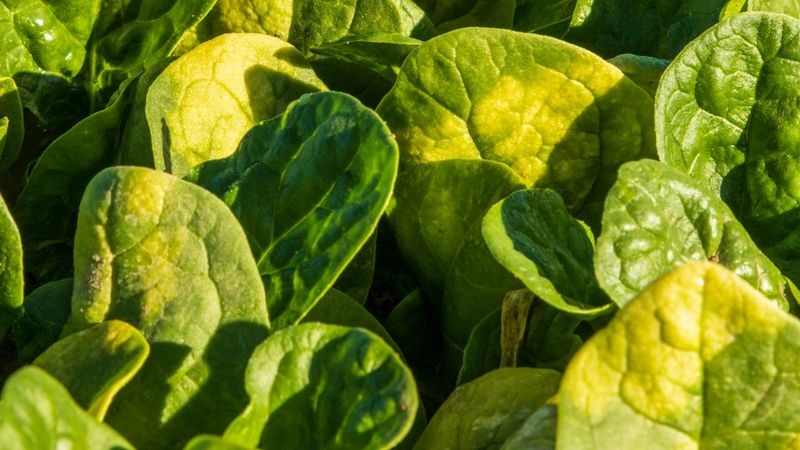
Pale yellow blotches on your fall spinach can be alarming, especially when the bed looked fine last week. Flip a leaf over and a gray or purplish fuzz underneath may tell you more than the top side ever could.
Several diseases cause yellow spots, so a careful look matters before you decide what to do. Here is how to check, what you can change in the bed, and how to plan better for the next sowing.
Inspect the undersides before naming the disease
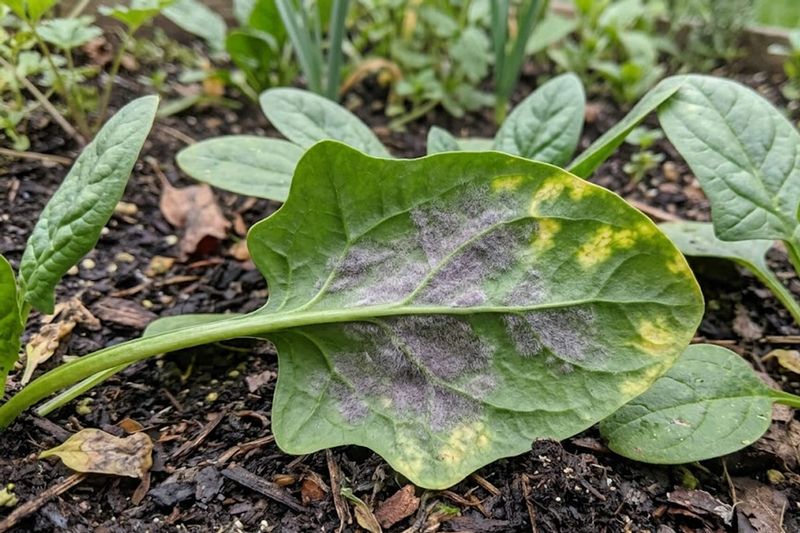
Early morning is the best time to play detective. Pick a few leaves with yellow or pale blotches and turn them over while the dew is still on the plants.
Gray or purplish-gray fuzz under the yellow patches is strongly consistent with downy mildew. Older spots may turn tan or brown.
The fuzz can fade once leaves dry out, so a midday check may miss it.
Not every yellow leaf is downy mildew. Texas A&M describes white rust with white, blister-like pustules underneath leaves, which looks different from soft gray-to-violet fuzz.
Yellowing with no visible fuzz is less conclusive.
If you need a firm answer, contact your local Extension office or a plant diagnostic service, as UC IPM guidance suggests. Take a few affected leaves with you, ideally freshly picked.
Cool, damp conditions favor disease but do not date infection
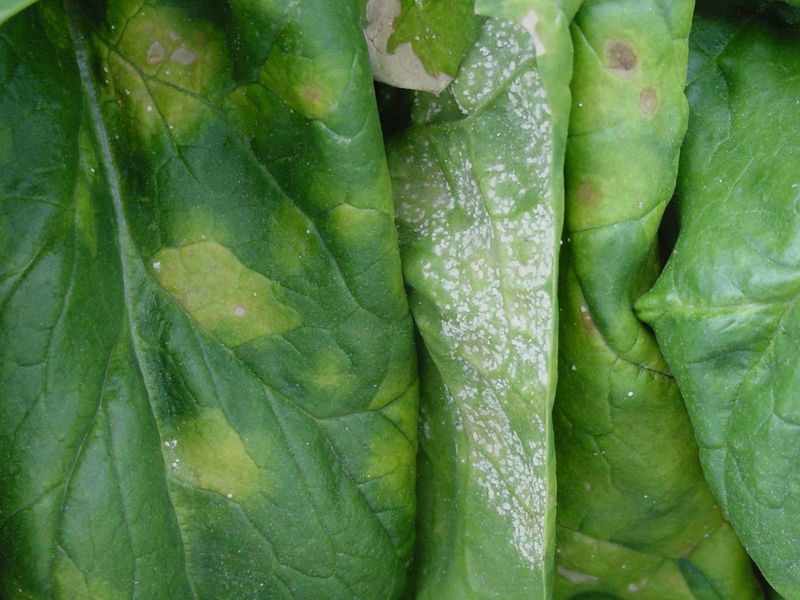
Downy mildew likes cool weather and wet leaf surfaces. Long stretches of dew, drizzle, or high humidity give it the moisture it needs to take hold, according to UC IPM.
That does not mean last week’s chilly nights caused the problem. Spores can travel on the air, so the disease may have arrived from somewhere else entirely.
There is also a delay. A plant can be infected before any spots show, which means the damage you see today may reflect conditions from days earlier.
Newly visible spots cannot tell you exactly when or where the infection started, as Cornell’s fact sheet explains.
The practical takeaway is simple. You cannot control the weather or the wind, but you can control how long leaves stay wet and how tightly plants are packed.
Water at the soil level and let leaves dry
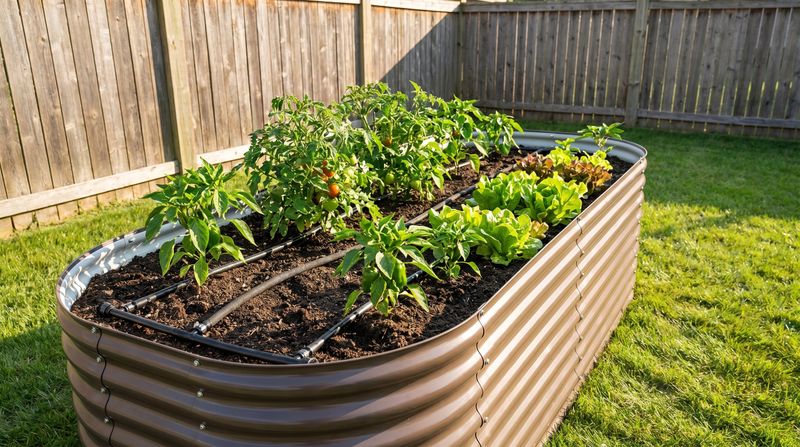
A soaker hose or drip line delivers water straight to the roots and keeps leaves drier. That shortens the time foliage stays wet, which is the condition this disease favors, as UC IPM notes.
Sometimes a sprinkler or hose wand is all you have. In that case, water in the morning so sun and breeze have hours to dry the leaves before evening.
Spinach still needs steady moisture, so do not cut back on water to fight the disease. Thirsty plants struggle too.
The goal is to change where and when water lands, not how much the plants receive.
Texas gardeners can find more disease background in the Texas Plant Disease Handbook. Keep expectations realistic: these habits make conditions less friendly to the disease, but they will not heal leaves that are already infected.
Thin crowded plants to improve airflow
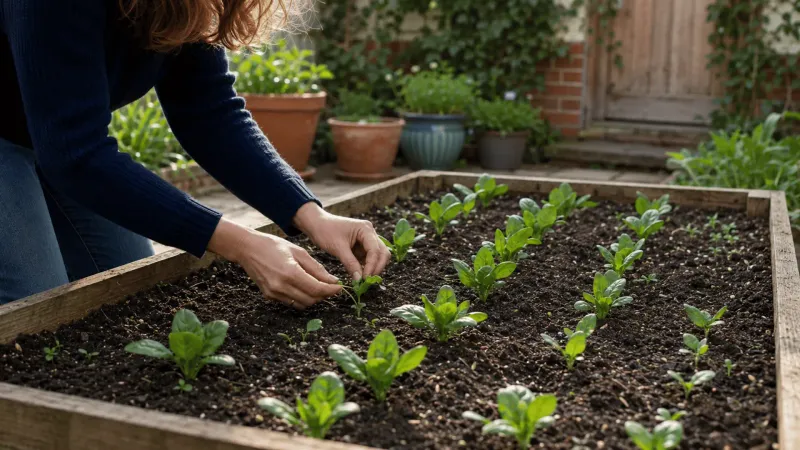
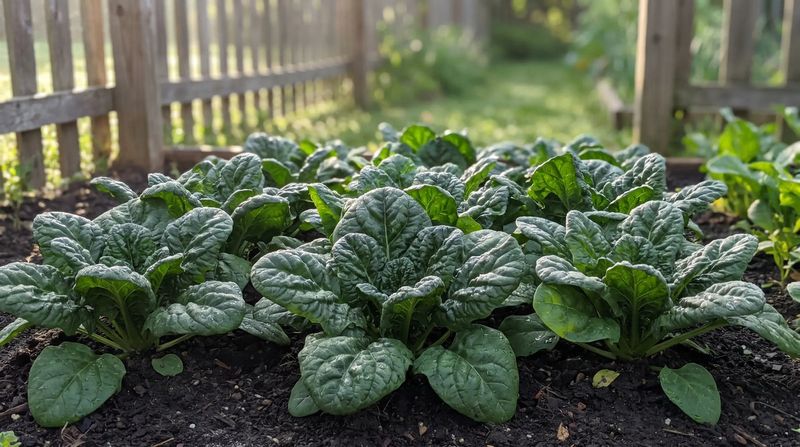
Spinach sown thickly forms a dense green carpet, and that carpet traps humidity. Leaves in the middle can stay damp long after the edges have dried.
Thinning gives each plant breathing room. When air can move between leaves, moisture evaporates sooner, and UC IPM recommends spacing as part of managing this disease.
Pull out the weakest seedlings or harvest baby leaves from the crowded patches. Check your seed packet for spacing, and give larger plants a bit more room than seedlings need.
Weeds that crowd the bed can hold moisture too, so clear them out.
Spacing is one of several steps listed in the Texas A&M spinach disease guide. It makes conditions less favorable, but it will not cure infected leaves, and healthy plants nearby can still become affected.
Remove infected leaves and reassess the plant
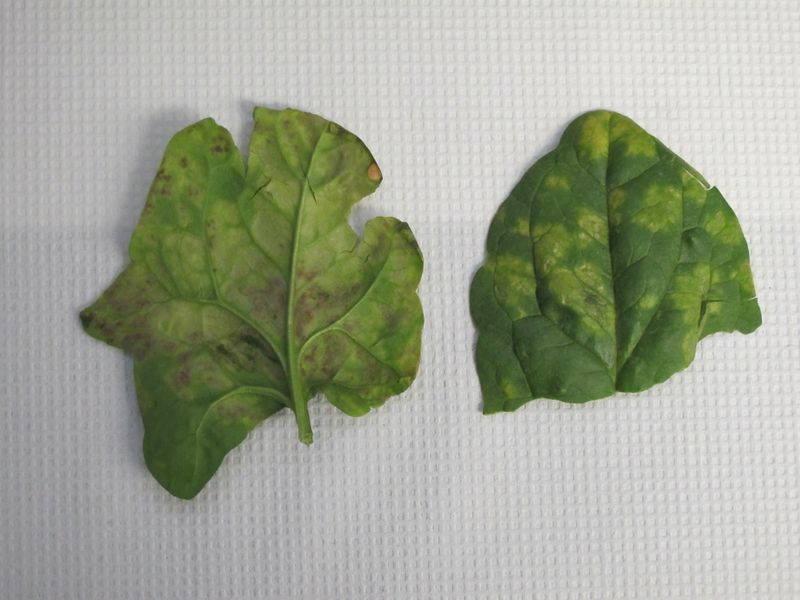
When only a few leaves show spots, pick them off and remove them from the bed. Fallen leaves and plant debris should go too, since UC IPM advises prompt cleanup of infected material.
Bag them up rather than leaving them on the soil.
Look over the plant again a few days later. If new spots keep appearing, or most leaves are affected, pulling the whole plant may make more sense than trimming it repeatedly.
Fungicides are not a cure either. UMass Extension describes them as protective rather than curative.
If you ever consider one, use only a product whose current label permits use on spinach, and follow its directions and harvest intervals.
Cleanup is worth doing, but keep your expectations steady. It will not heal the leaves that are already infected, and it cannot promise that the rest of the bed stays clear.
Choose resistant seed for future sowings
Next season, read seed descriptions closely. Some varieties are listed as resistant to certain downy mildew races, which can offer partial protection.
Resistance is not immunity. As Cornell explains, the pathogen has developed new races that can overcome resistance in a cultivar.
Utah State Extension makes the same point, so resistant seed still needs good watering and spacing habits.
Florida readers can use planting dates for timing only. UF/IFAS guidance lists spinach planting windows of September to March in north and central Florida and October to February in south Florida.
Those windows are regional planting guidance, not a disease forecast, and they do not apply to Texas.
Spinach disease rarely follows a script, but a resistant variety, a bit of space, and dry leaves stack the odds a little in your favor.