
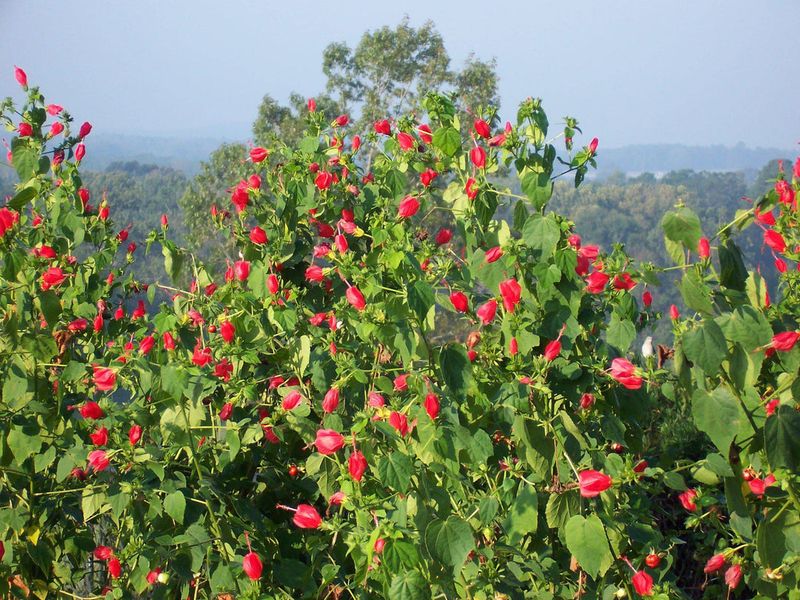
A fence line in Central Texas takes a beating from sun, heat, and dry spells. Turk’s cap is a native shrub with bright red flowers that can keep blooming when many other plants have quit.
Hummingbirds are drawn to those blooms, and fall migration is a good time to have nectar plants ready. Here is how to decide if it fits your fence, and how to plant and care for it.
Turk’s cap can add a long bloom season to a fence border
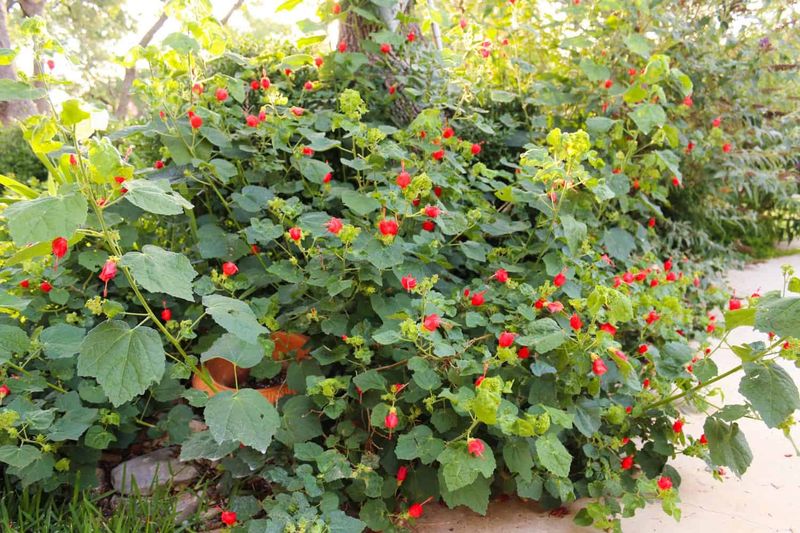
Few shrubs earn a spot on a Texas fence line the way Turk’s cap (Malvaviscus arboreus var. drummondii) does. It is a Central Texas native, so it is already suited to local soils and weather.
Its small, red, twisted flowers look a bit like closed hibiscus blooms.
Bloom time is a big part of the appeal. A Hood County AgriLife Extension sheet describes blooming in warm weather from May until frost, and Central Texas Gardener likewise says it flowers from late spring to the first frost.
Exact timing and how long the show lasts can shift with your site and the weather that year.
The same sources list it as attractive to hummingbirds. That makes it a sensible pick if you want a wildlife-friendly border, though it does not mean birds will show up in any particular yard.
Water use matters too, especially with Texas summers and watering limits. Austin’s plant guide treats Turk’s cap as a low-water plant once it is established.
That phrase is important, because a new transplant still needs care, which we will cover below.
Think of it as a tough, colorful candidate for a sunny or partly shaded fence, with real upsides and a few limits worth knowing before you buy.
Fall flowers may overlap hummingbird migration
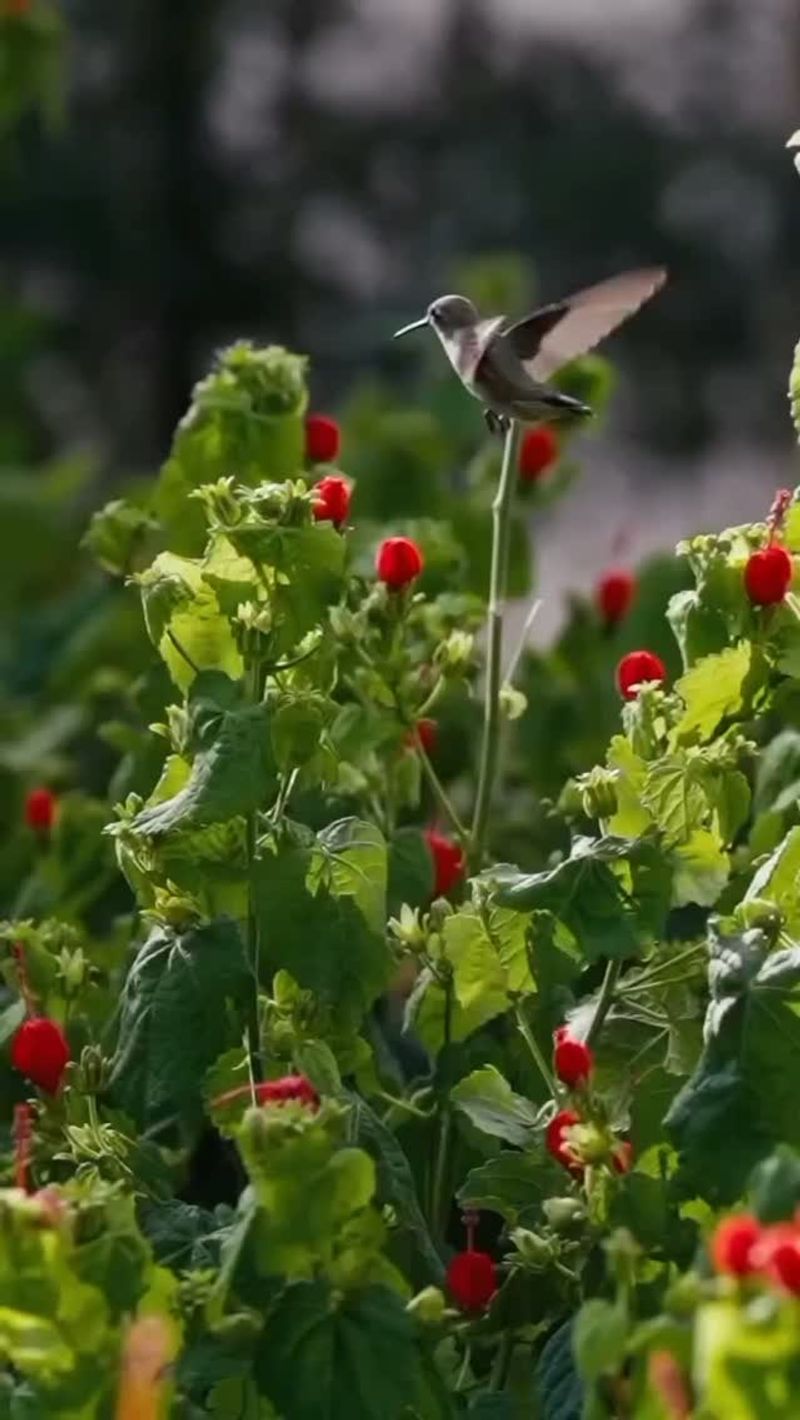
Fall is when Ruby-throated Hummingbirds move through Texas. Texas Parks and Wildlife says they migrate through the state in large numbers in fall, and that big groups gather along the coast before crossing the Gulf.
Central Texas is not the coast, so numbers and timing in your neighborhood may look different.
Turk’s cap enters the picture because its flowers can still be open when migrants pass through. A TPWD hummingbird publication lists it among plants that attract hummingbirds.
So the flowers are a potential nectar source during that window.
Potential is the key word. The sources describe migration and feeding on a broad scale, and they do not document regular stops at individual Central Texas gardens.
A healthy shrub in bloom improves your odds, but no plant can promise a visit.
Nectar is also only part of the diet. The Cornell Lab notes that hummingbirds eat small insects and spiders too, so a yard with a bit of natural messiness and no heavy pesticide use gives them more to work with.
If you want to improve your chances, pair Turk’s cap with other blooms and keep watching the fence in September and October.
Check the light and leave room along the fence
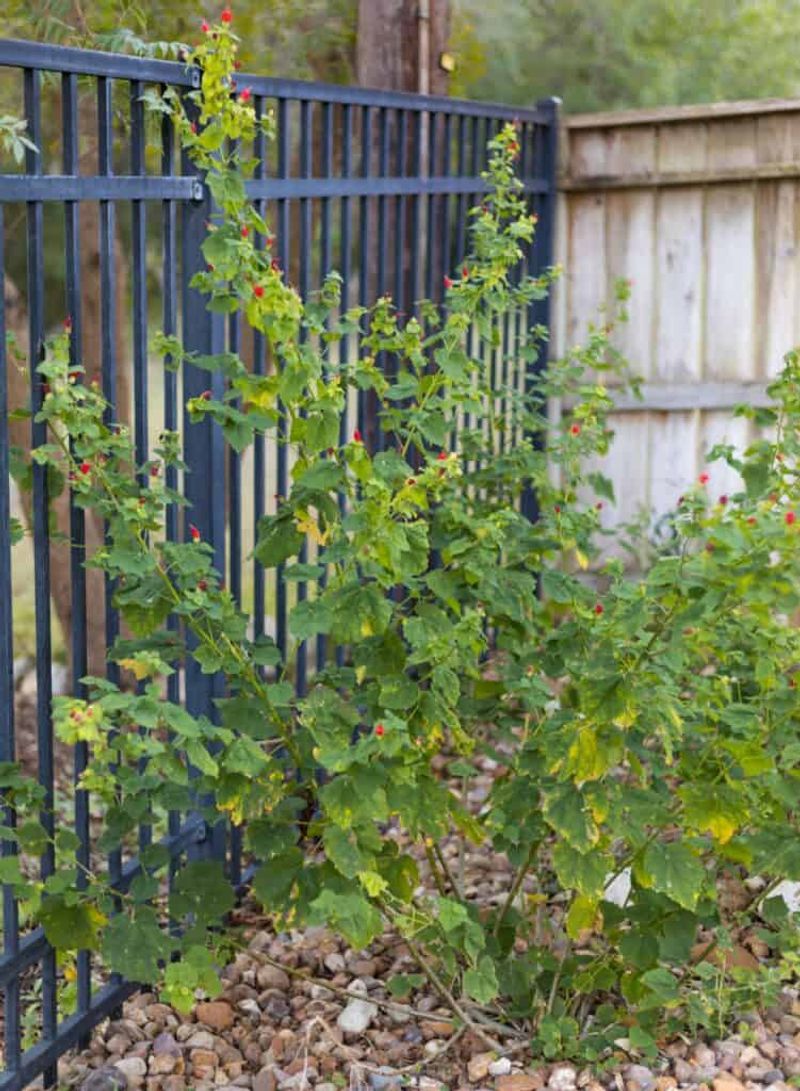
Before digging, walk your fence and note where the sun lands. Austin’s plant guide lists Turk’s cap for sun or part shade, which makes it flexible for fences that get morning light, dappled shade from a tree, or full sun.
Size is the next check. Austin gives a mature height of 2 to 6 feet and a spread of 3 to 5 feet.
The Hood County sheet gives a typical 3 to 5 feet in both height and spread, and suggests spacing plants 3 to 5 feet apart.
That spacing can look sparse on planting day, when a small pot sits far from its neighbor. Resist filling the gaps with other shrubs, because Turk’s cap will grow into them.
It can also spread. Austin notes that plants can form expanding colonies, though they are described as easy to contain.
Plan some elbow room between the shrub and the fence, and keep a clear edge so it does not crowd walkways or smaller perennials.
A quick test: stake out the mature width with a hose or string. If the footprint still works with your gate, utility access, and nearby beds, the spot is a good candidate.
Use fall as a locally recommended planting window
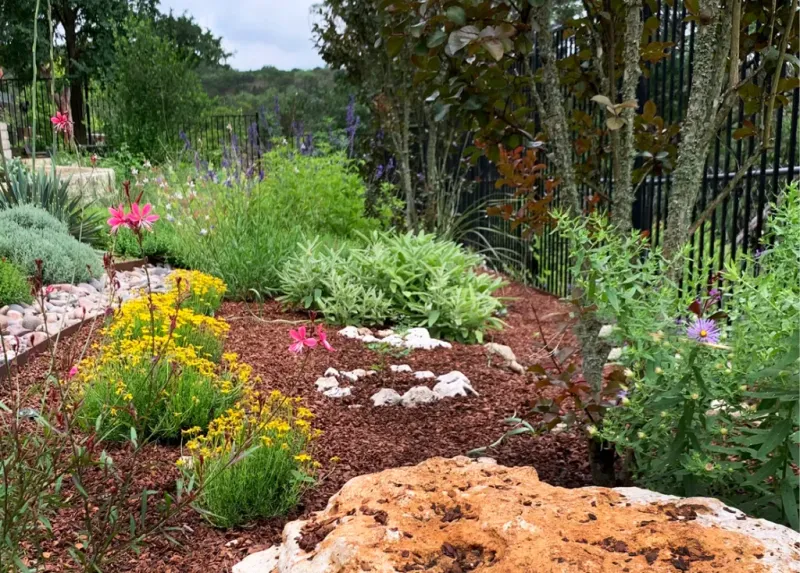
Central Texas gardeners often plant in autumn rather than spring. Travis County’s October gardening checklist calls that month a good time to plant new trees and shrubs, and it advises planting perennials before frost.
The reasoning is simple. Cooler air and softer sun let roots settle in before the long Texas summer arrives.
A shrub that has had months to establish is usually better prepared for triple-digit afternoons than one planted in May.
Still, this is local guidance, not a single date for every yard. Your own conditions, the size of the plant you buy, and the weather that fall all matter.
A small pot and a large one will not settle in on the same timeline.
It also helps to be realistic about results. Planting in fall is preparation.
It does not guarantee a particular bloom date, a heavy flower display, or hummingbird visits next year.
What it does give you is a head start. If you plant while the weather is mild, you can watch how the shrub handles your fence line and adjust before the next hot season.
Keep watch on watering while the plant establishes
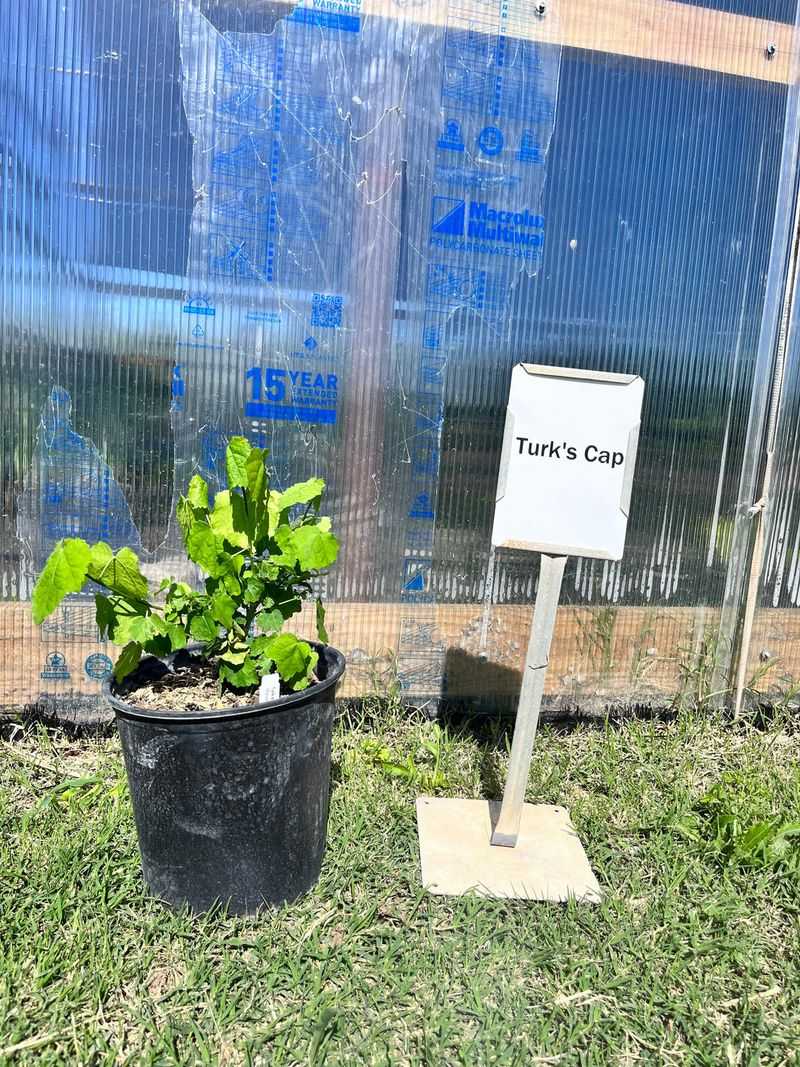
You will see Turk’s cap described as drought tolerant or low-water, and that is fair for a plant that has settled in. Austin’s guide uses that language.
It describes established plants, not a fresh transplant with a small root system.
A new shrub needs monitoring and irrigation while it establishes. There is no fixed schedule that fits every yard, so check the soil near the roots and watch the plant itself.
Texas A&M’s watering guidance for landscapes is a good starting point for learning how to water deeply and sensibly.
Rainfall changes the picture. A wet October may do much of the work, while a dry stretch means you will need to step in more often.
Soil type and exposure matter as well.
Hot sun is another factor. The Hood County sheet notes that hot afternoon sun can cause wilting.
A drooping leaf on a scorching day is a clue to check the soil, not proof something is wrong.
Treat the first season as a trial period. Once the plant is established, you can expect it to need far less help, which is the payoff for the early attention.
Plan for winter dieback, not evergreen screening
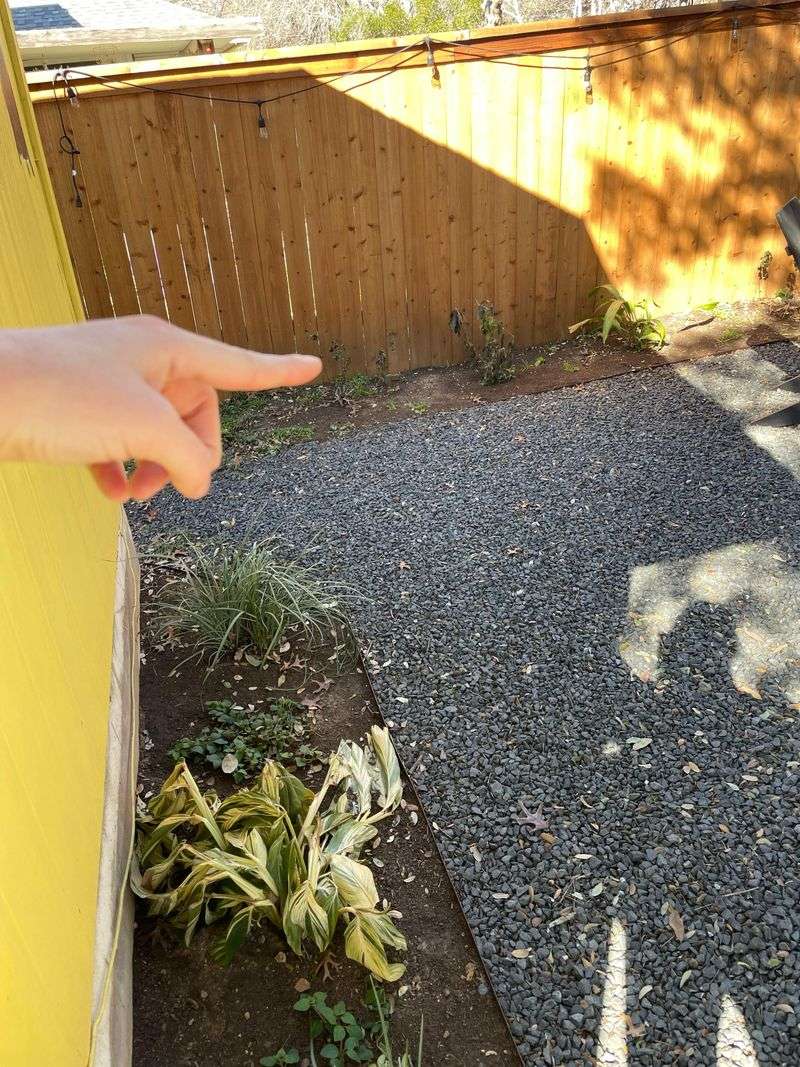
Winter changes the look of this shrub. Austin’s plant guide describes Turk’s cap as deciduous, and it may freeze back when cold hits.
Central Texas Gardener notes that it typically regrows.
That means you should not count on year-round cover. If you want a fence hidden in January, pair it with an evergreen or add a trellis, and let Turk’s cap handle the warm-season show.
A reduced or bare top in winter does not by itself mean the plant has failed.
Give it time before you judge. Look for fresh growth at the base as the weather warms.
The sources do not offer specific pruning or freeze-protection steps, so there is no need to follow unverified tricks.
So does it suit your border? If your yard has room for its size, gets sun or part shade, and you can live with a seasonal pause, it can be a strong fit.
Blooms and bird visits are still not guaranteed, though TPWD’s migration information shows why a nectar plant is worth offering.
A fence border is a long game, and a bare stem in winter is often just the plant resting.