
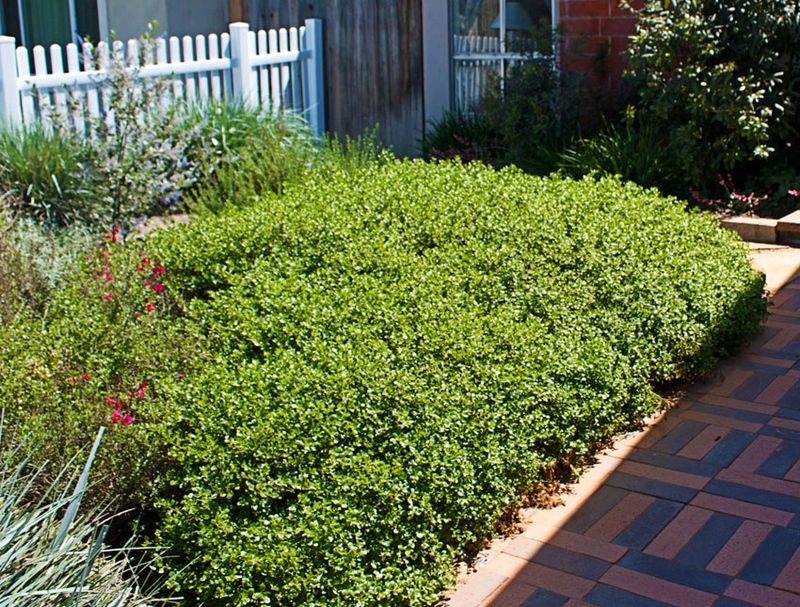
That thin strip of grass along your sidewalk and driveway drinks more water than almost any other part of your yard. It is hard to soak evenly, it browns fast in summer, and it gives bees and birds almost nothing in return.
Swapping those edges for California native plants can cut water use, cut mowing, and bring real wildlife back to your front yard. Plant them in fall, and the winter rains do most of the work of getting their roots settled.
1. California Fuchsia (Epilobium canum)
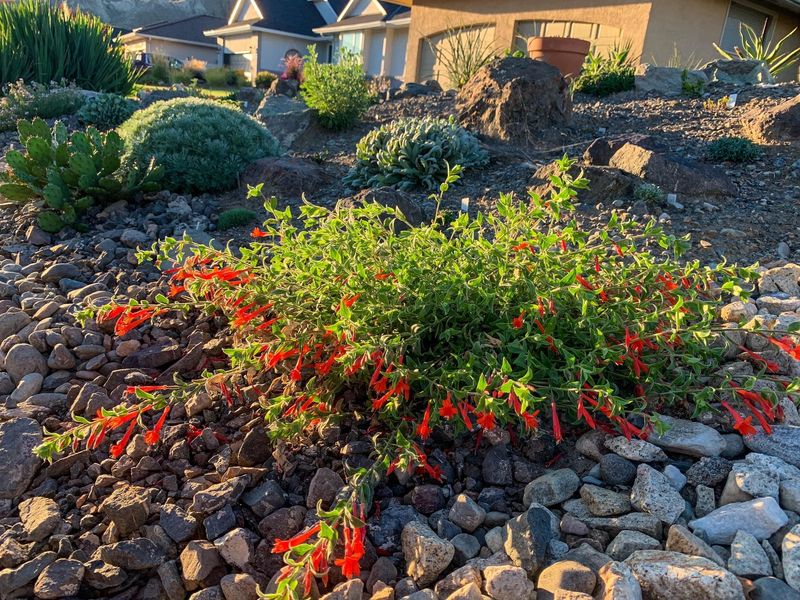
Late summer is when most front yards look tired, and that is exactly when California fuchsia lights up. Its scarlet trumpets open from August into fall, right when hummingbirds are hunting for fuel before migration.
Along a sidewalk strip, it forms a low, sprawling mat about a foot tall that handles reflected heat from concrete without complaint. Once established, it can get by on a deep soak every few weeks in summer, or less near the coast.
Cut it back hard in late fall or winter after blooming ends. That trim keeps it tidy and pushes fresh growth when the rains arrive, so your edge never looks scraggly for long.
2. Creeping Sage (Salvia sonomensis)
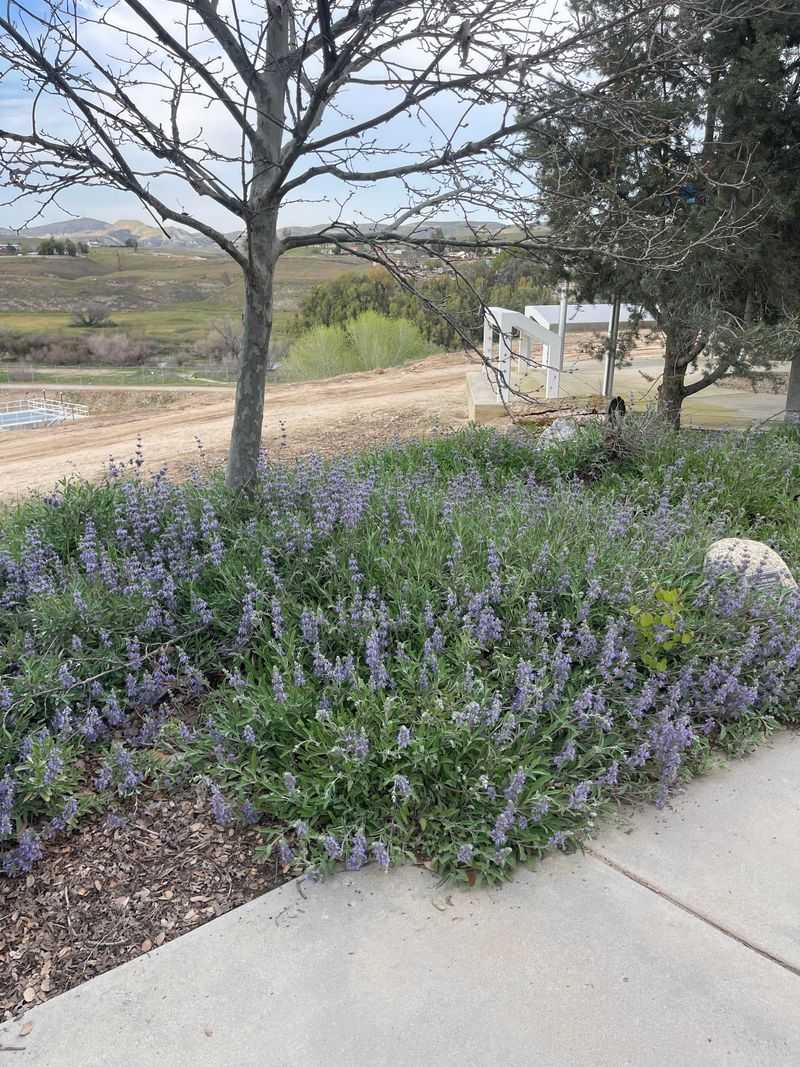
Think of creeping sage as a lawn that smells good when you brush past it. It spreads into a tight, low carpet only a few inches high, with fragrant gray-green leaves and violet flower spikes in spring.
Native bees mob those blooms. If you have been worried that your grass edge offers pollinators nothing, this plant fixes that problem in a single season.
Give it full sun and good drainage, and go easy on summer water once it is rooted. Overwatering is the most common way homeowners lose it, so let the soil dry between drinks.
3. California Gray Rush (Juncus patens)
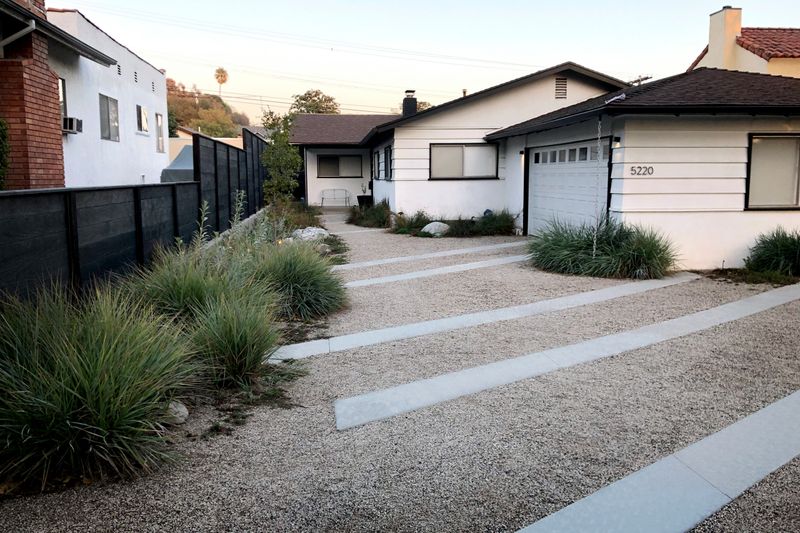
Clean lines, zero fuss. Gray rush grows in upright blue-gray tufts about two feet tall, giving a crisp, modern edge that looks intentional next to a walkway or driveway.
It handles a surprising range of conditions, from soggy winter soil to dry summer spells, which makes it handy in spots where sprinkler overspray or runoff collects. Many gardeners use it in rain gardens and swales for that reason.
Plant it in a row for a living border, or scatter it among flowering natives for contrast. About the only care it needs is pulling out old brown stems once a year.
4. Seaside Daisy (Erigeron glaucus)
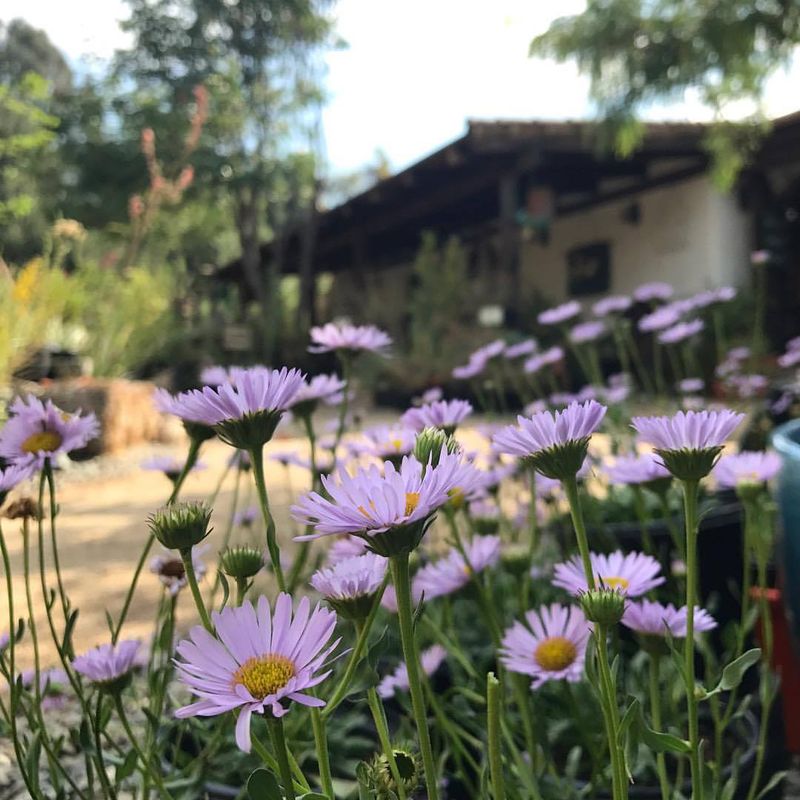
Picture a cheerful pocket of lavender daisies with sunny yellow centers right where your grass used to thin out. Seaside daisy brings that cottage-garden feel without cottage-garden water bills.
Native to coastal bluffs, it loves foggy, mild areas and stays compact, around a foot tall and wider than it is high. Inland, it may need afternoon shade and a little more water to stay happy.
Deadhead spent flowers and it may keep blooming from spring well into summer. Butterflies and small native bees visit regularly, so your edge becomes a busy little landing strip.
5. Blue-Eyed Grass (Sisyrinchium bellum)
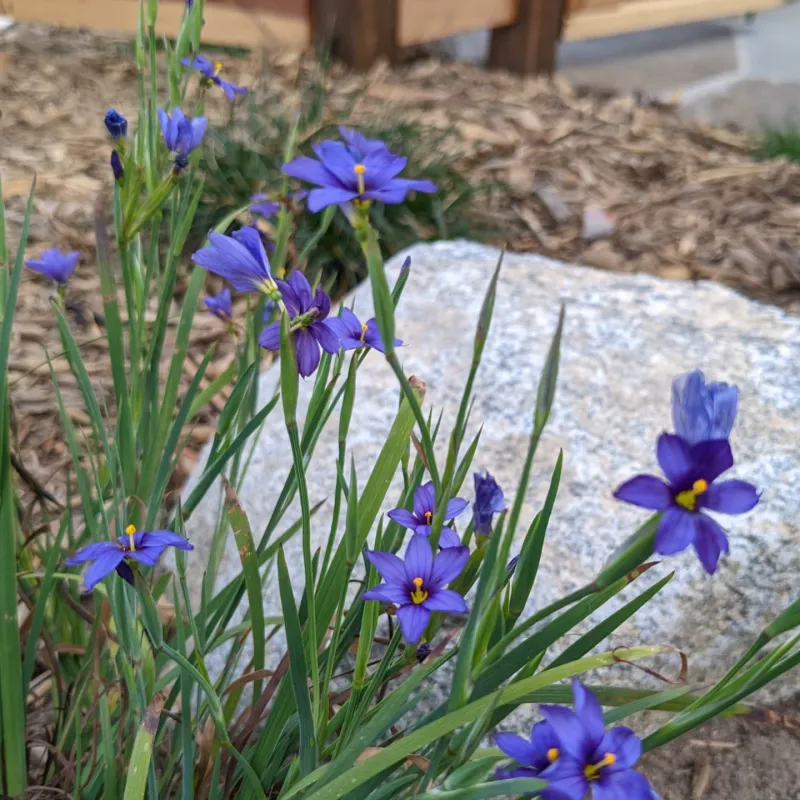
Despite the name, blue-eyed grass is not a grass at all. It is actually a tiny member of the iris family, and its little violet stars pop open on sunny spring days.
It fits beautifully in the narrow gaps where you want lawn-like texture without the mowing. Plants stay under a foot tall and go dormant in summer heat, which is their natural way of saving water.
Let that summer rest happen instead of watering to keep it green. When fall rains return, fresh leaves pop back up, and it often reseeds gently to fill bare spots.
6. Carmel Creeper Ceanothus (Ceanothus griseus horizontalis)
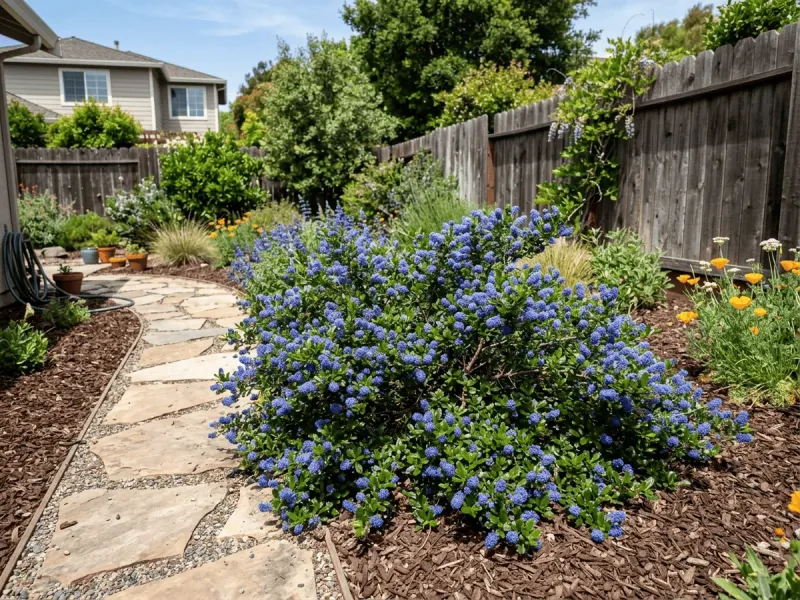
Few things stop neighbors on an evening walk like a ceanothus in full spring bloom. Low-growing Carmel creeper types spread several feet wide and cover themselves in clouds of blue flowers buzzing with bees.
Use one where a big chunk of lawn edge meets the curb, since a single plant can cover a lot of ground. Choose low forms like Yankee Point or Diamond Heights for edging work.
Here is the catch: ceanothus can sulk with summer watering once established, especially in heavy soil. Water it through its first summer, then mostly leave it to the weather.
7. Deer Grass (Muhlenbergia rigens)
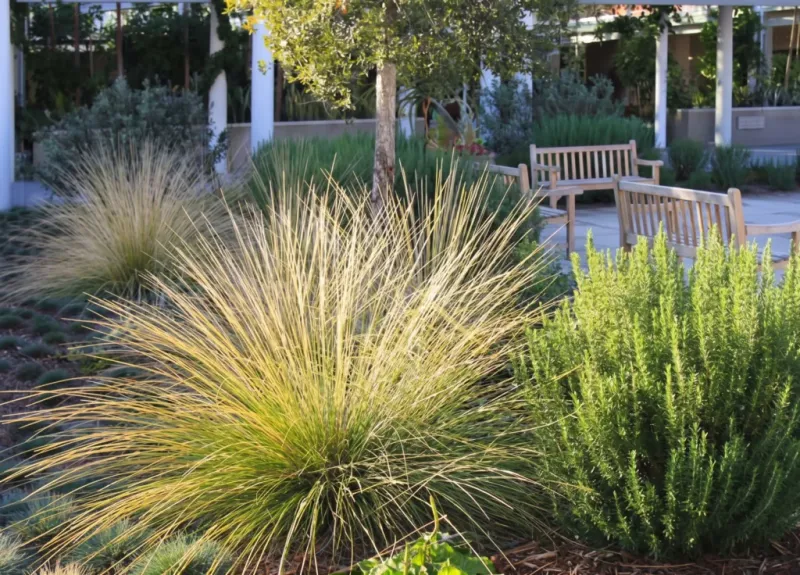
California basket weavers once gathered deer grass flower stalks for their coiled baskets, and the plant still carries that sturdy, useful character. It forms big fountain-shaped clumps three to four feet wide with tall, wheat-colored plumes.
Along a long driveway, a row of deer grass gives structure that lawn never could. It takes blazing inland heat and needs only occasional deep water in summer.
Give each clump space, since crowding them defeats the graceful look. Birds may pick at the seeds, and the dense base can offer cover for ground-dwelling insects.
8. Coyote Brush ‘Pigeon Point’ (Baccharis pilularis)
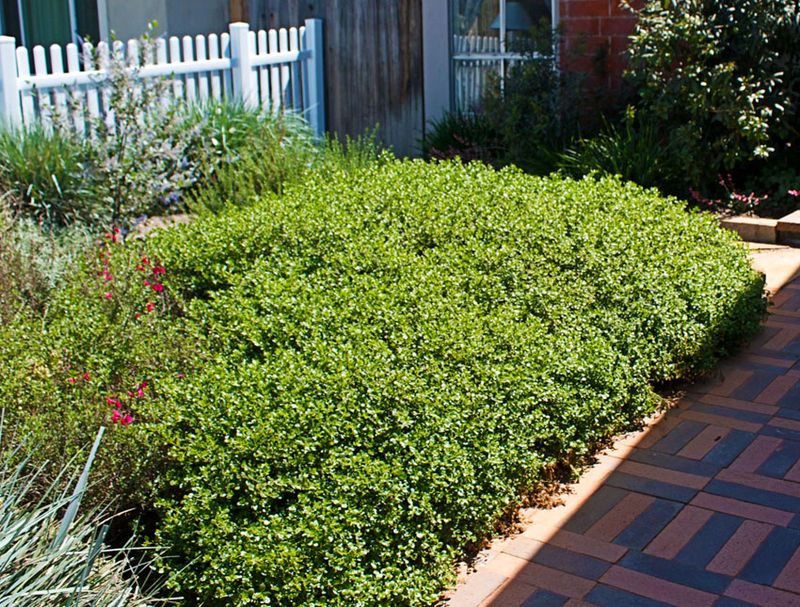
Tough as old boots. Dwarf coyote brush is the workhorse groundcover that California landscapers lean on when a spot is hot, dry, sloped, or just plain neglected.
Pigeon Point stays low, around one to two feet tall, and spreads into a bright green mat that shades out many weeds. It is a smart pick for slopes where mowing grass is awkward or risky.
For hillside homes, keep it well watered and trimmed of dead wood within defensible space zones, and check your local fire guidance on spacing. A light shear in winter keeps it dense and fresh.
9. Catalina Island Yarrow (Achillea millefolium)
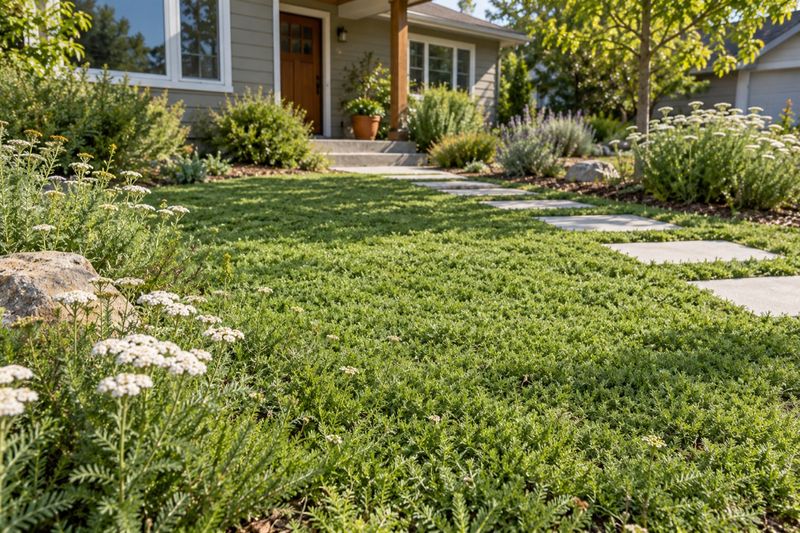
Want something that still feels like walkable lawn? Native yarrow is one of the few options that can take light foot traffic and occasional mowing while staying soft and ferny.
Flat clusters of white flowers pull in hoverflies, tiny wasps, and other beneficial insects that help keep garden pests in check. That makes your lawn edge part of your pest control team.
It spreads by underground runners, so it fills gaps quickly. With some summer water it stays green, and with less it simply takes a breather and rebounds after the rains.
10. Douglas Iris (Iris douglasiana)
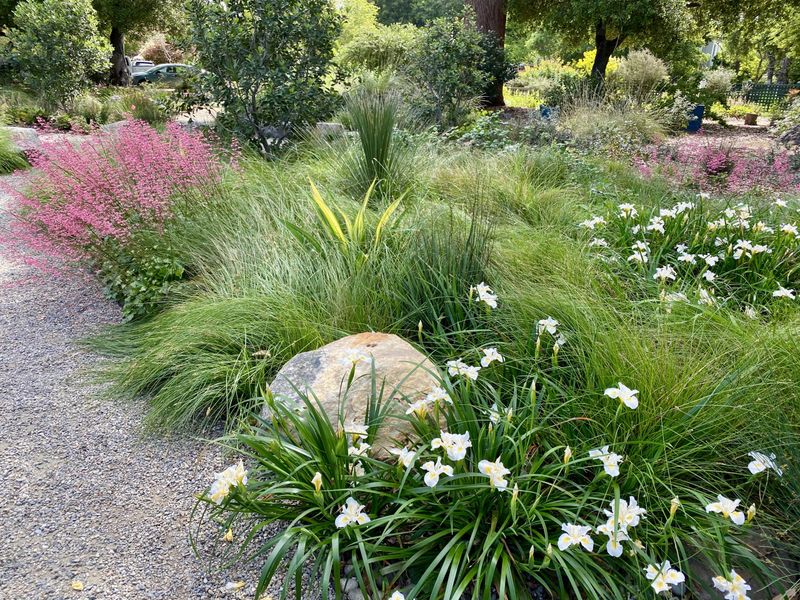
Not every lawn edge bakes in full sun. If yours sits under a street tree or along the north side of the house, Douglas iris is the native that shines in dappled shade.
Its spring flowers come in purple, lavender, cream, and soft yellow, rising above strappy evergreen leaves. Clumps slowly widen into a tidy border about a foot or so tall.
Coastal and Northern California gardens suit it best, and it appreciates afternoon shade inland. Plant it in fall so winter rains help it root, then water sparingly once summer comes.
Quick tip for every plant on this list: remove the grass first, add mulch, and get plants in the ground from October through December. Your edges will be rooted and ready before the dry season returns.