
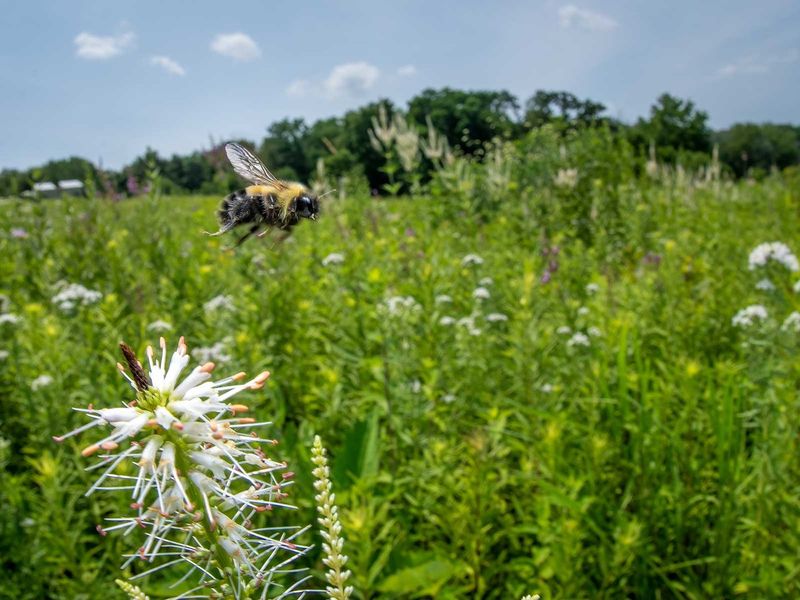
That shaggy clump of native grass in your yard might look tired by winter, but it can be more useful than it seems. Some bumble bees build their nests in grass tussocks, and the soil nearby matters too.
Knowing how bumble bees use grass and ground can help you decide what to keep and what to clear. Here is how to protect potential habitat while still keeping your home safe from fire.
Some bumble bees nest in grass tussocks
Most bumble bee nests are underground, often in abandoned rodent burrows. Others sit right at the ground surface or tucked into protected spots.
According to California’s bumble bee review, some species nest in grass tufts, which means a thick clump of grass can double as a small home site.
That is the habitat value of a bunchgrass clump. Its dense base of old stems and blades creates a sheltered pocket that a nest-seeking queen might find appealing in spring.
Pacific Northwest guidance from the Forest Service and Xerces Society also points to undisturbed ground and grassy cover as part of good bumble bee habitat.
Of course, not every clump holds a nest. Most will be empty in any given year, and you cannot tell from the outside which ones are in use.
The point is simpler: when you keep suitable bunchgrass in place, you keep potential nesting spots available for the bees that come looking.
Think of it like leaving a few apartments vacant in a neighborhood. You are not promising anyone will move in, but you are making it possible.
Native bunchgrasses also tend to suit California’s dry summers, so keeping them often fits a water-wise yard as well.
The next step is understanding what bunchgrass does not do, because nesting and winter sleeping are two different jobs.
Where queens actually overwinter
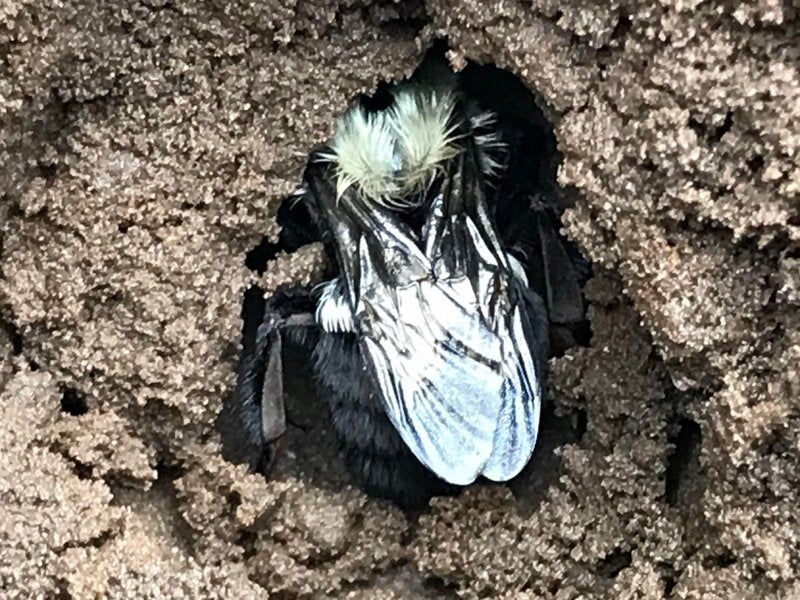
Here is the part that surprises many gardeners. A colony’s old nest is not where its new queens spend the winter.
Young, mated queens generally leave the natal colony and find a separate spot to hibernate, as described by the Xerces Society.
Usually that spot is just below the soil surface. California’s review says some queens dig a few centimeters into soft soil, while others may use cavities near the ground.
A Pacific Northwest habitat guide reports documented depths of roughly 2 to 15 centimeters, with sites often near moss or leaf litter.
Scientists still have a lot to learn here. Exactly which places queens prefer, and what helps them survive the winter, remain poorly understood.
So a grass clump with a queen beneath it is possible, but it is not something anyone can promise or expect.
A useful way to picture it: a tussock can be a summer nursery for some species, while a queen’s winter bed is usually a small tunnel in loose soil somewhere else. Seeing grass nearby does not prove a queen is under it, and bare-looking ground can hold one too.
This is why careful treatment of soil, not just grass, makes sense. Where you walk, dig, and plant in winter can matter as much as which clumps you keep.
Ground disturbance can threaten nests and queens
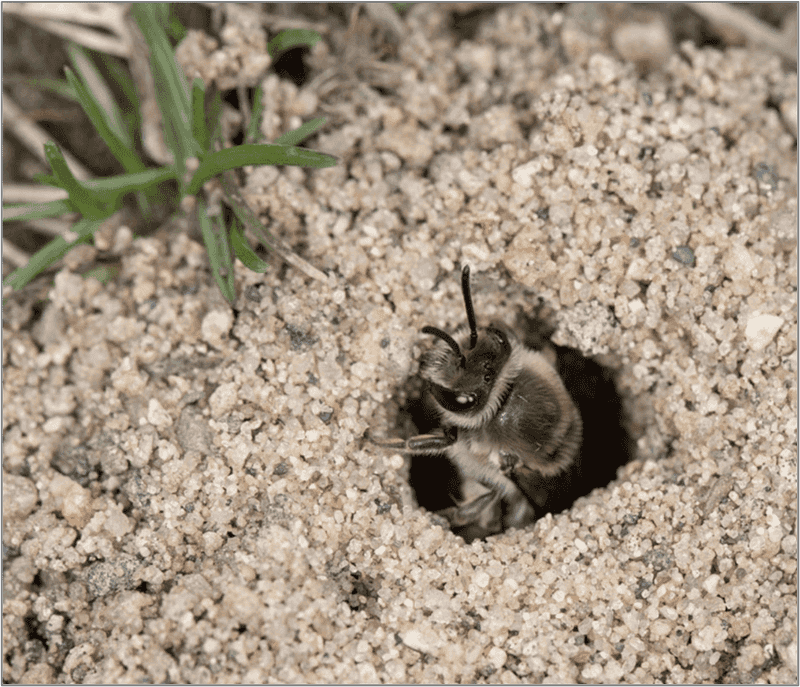
Mowing, tilling, planting, grazing, and fire all show up in California’s review as possible risks. Near-surface disturbance can harm colonies in spring and summer and overwintering queens in the cooler months.
The details are in the state’s bumble bee review.
For a home gardener, that translates into a few everyday habits. A quick pass with a tiller to prep a bed, a new row of plantings, or heavy foot traffic across loose soil are all forms of disturbance.
None of them is wrong in itself, and many are part of normal yard work.
What helps is avoiding the needless version. If a corner of the yard does not need to be dug up this season, you can leave it be.
If you are planning a new bed, you might choose a spot away from your healthiest bunchgrass clumps and the bare, loose soil beside them.
It also helps to be realistic. Leaving a patch alone does not guarantee a queen survives, and no single practice can promise that.
The goal is to lower the odds of accidental harm, not to turn your yard into a sealed preserve.
Small choices add up across a neighborhood. A few undisturbed patches on many properties can give bumble bees more places to try.
Can bumble bees help pollinate tomatoes and squash?
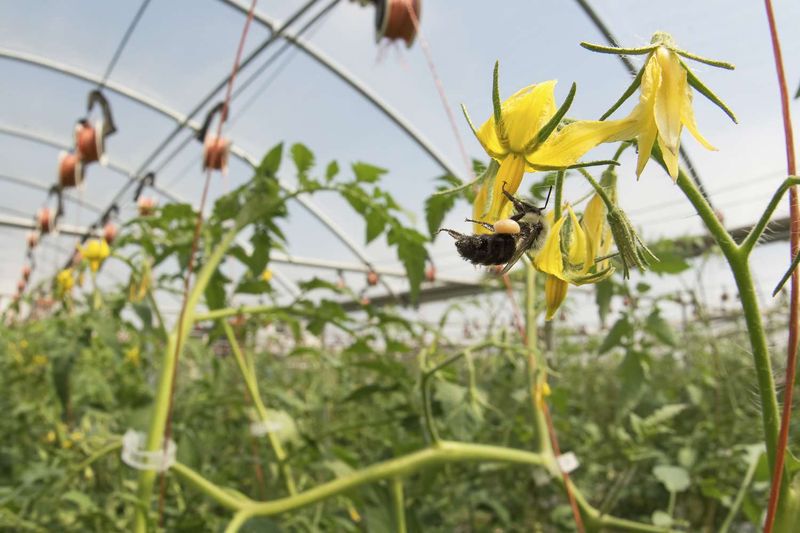
Yes, they can, though they are rarely the whole story. Tomatoes respond well to buzz pollination, where a bee grips the flower and vibrates it to shake loose pollen.
Bumble bees are good at this, and University of Minnesota Extension notes that tomatoes can also set fruit through wind movement, so the plants do not depend on bees alone.
Squash is different. Its flowers need insects to move pollen between male and female blossoms.
Bumble bees visit them, but extension guidance on cucurbits also points to other pollinators, and squash bees are especially important for these crops.
So think of bumble bees as welcome helpers rather than a guarantee. A queen that nests near a bunchgrass clump in spring may or may not visit your garden, and nobody can say that a particular clump leads to a particular harvest.
A practical way to support the whole crew is to plant a mix of flowers that bloom across the seasons and keep some bare, undisturbed soil for ground-nesting bees. Squash bees, for example, often nest in the soil near the plants they visit.
Habitat for one kind of bee often helps others too.
Make fall cleanup selective, with defensible space first
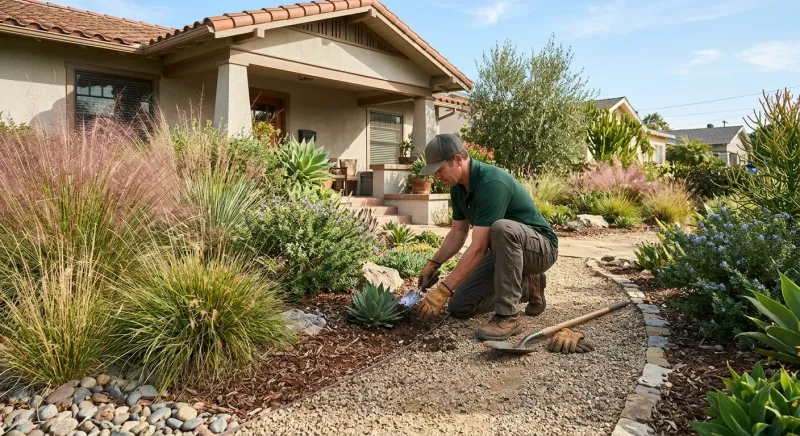
Fire safety comes first, and it can change what you are able to keep. CAL FIRE’s defensible space guidance calls for removing dead or dry vegetation in specified zones, including grass in Zone 1 (closest to the house) and annual grass in Zone 2.
Your county or city may have its own rules too, so check current local requirements and ask your fire authority if you are unsure.
Within those rules, there is room to be choosy. State guidance from the Board of Forestry and Fire Protection describes fuel reduction as reducing and separating fuels, not creating a bare ring across the whole property.
That leaves space for thoughtful decisions farther from the house.
Here is a simple approach. First, do the required clearing near your home and along driveways.
Second, in areas where rules allow, skip the habit of uprooting every bunchgrass clump by default. Third, avoid digging or raking up bare soil patches you do not need to disturb, since California’s review flags near-ground disturbance as a risk to bees.
Notice that there is no single cleanup date or grass height here. Nobody has shown that one timing or cutting method is safe for overwintering queens, so be wary of anyone offering a magic number.
Your location, plant condition, and zone should guide you.
If a clump sits where it adds fire risk, remove it without guilt. If it sits in a spot your fire authority is comfortable with, keeping it is a low-effort way to leave nesting options open.
Keep the habitat, not the misconception

Some grass tussocks can serve as bumble bee nests, but queens generally overwinter somewhere separate, so no clump should be treated as a confirmed winter shelter. Keeping suitable patches and skipping needless digging gives bees more chances, as California’s bumble bee review suggests, as long as you follow your local defensible space requirements.
You do not need a perfect yard to help. A single undisturbed corner, kept well away from your home’s fire zones, is a quiet gift to the bees that find it.