
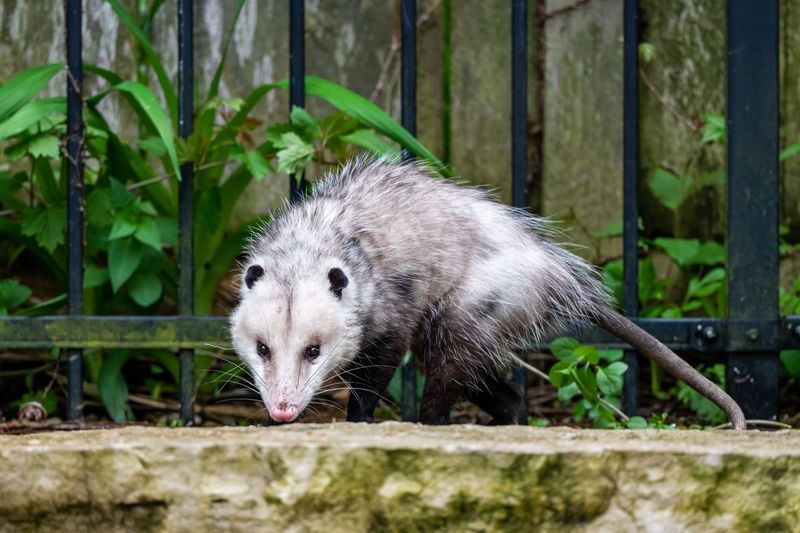
You flip on the porch light and spot a pale, pointy-nosed animal shuffling across the lawn. Many gardeners have heard that opossums gobble up ticks and slugs, which sounds like a free cleanup crew.
The real story is more mixed, and knowing it helps you protect your yard, your pets, and your family. Here is what opossums actually eat, what science does and does not show, and what to do when one visits.
A nighttime visitor follows an opportunistic menu
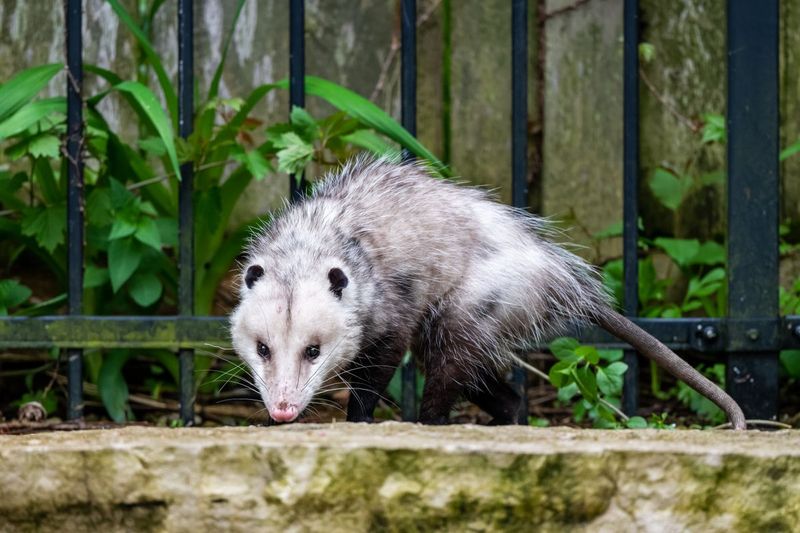
Virginia opossums are nocturnal, so most people only catch them in porch lights or on trail cameras. They are also opportunistic omnivores, which means they eat whatever is easy to find.
Texas Parks and Wildlife lists insects, fruit, berries, vegetables, and various small animals in their diet.
Florida wildlife experts describe the same flexible pattern. UF/IFAS Extension notes fruit, insects, worms, and human garbage on the menu.
That is a wide range, and it changes with place, season, and what food is nearby.
Here is the catch for your backyard. A list of foods opossums can eat is not a report on what the one crossing your patio tonight is eating.
Without seeing it feed, you cannot know if it found a slug, a fallen fig, or a bowl of cat food left on the steps.
Opossums may eat slugs, but that does not make them slug control
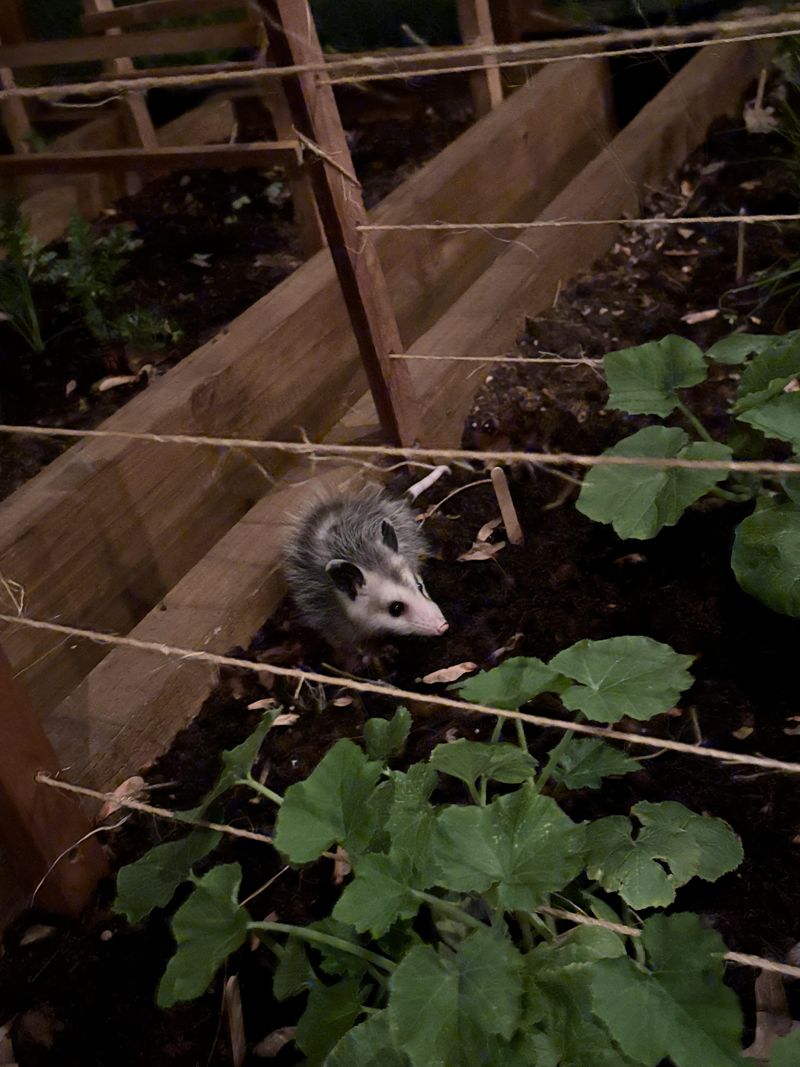
Slugs do show up in opossum diets, and the proof comes from a stomach-content study. Researchers examined 64 opossums collected around Portland, Oregon, in 1974 to 1976, and that study found slugs and snails were a major food group, especially in summer.
Fruit was on the menu too.
That is a real finding, but it has limits. Portland has cool, wet weather and different plants than Florida or Texas, and diet shifts with location, season, and food supply.
The study shows opossums can eat slugs. It does not show they will clear slugs from a garden.
Think of it as a happy possibility, not a plan. If slugs are chewing your lettuce or hostas, handle them with the tools you already trust, such as hand-picking at night, removing damp hiding spots, and watering in the morning.
Any slug an opossum eats is a bonus at best.
The tick-protection claim goes beyond the evidence
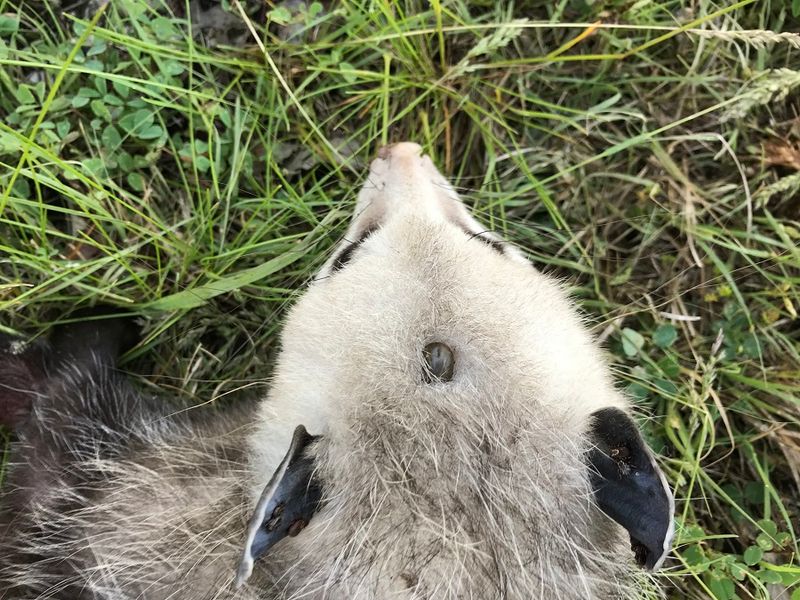
You may have seen the claim that one opossum eats thousands of ticks. It traces back to a 2009 experiment in which tick larvae were placed on captured animals.
Researchers reported that 83 to 96 percent of larvae trying to attach and feed on certain hosts, opossums included, were killed. That tells us about ticks trying to feed on an opossum, not about opossums eating ticks in the wild.
Field work points the other way. A 2021 study checked stomach contents of 32 wild Virginia opossums and found no ticks or tick parts.
Its review of 23 diet studies found no reported ticks either. That does not prove an opossum never swallows one, but it undercuts the idea of reliable tick control.
Whether opossums lower Lyme disease risk more broadly is still an open question, according to a review of wildlife hosts and ticks. No single study settles it either way.
A possible helper can still visit for other food
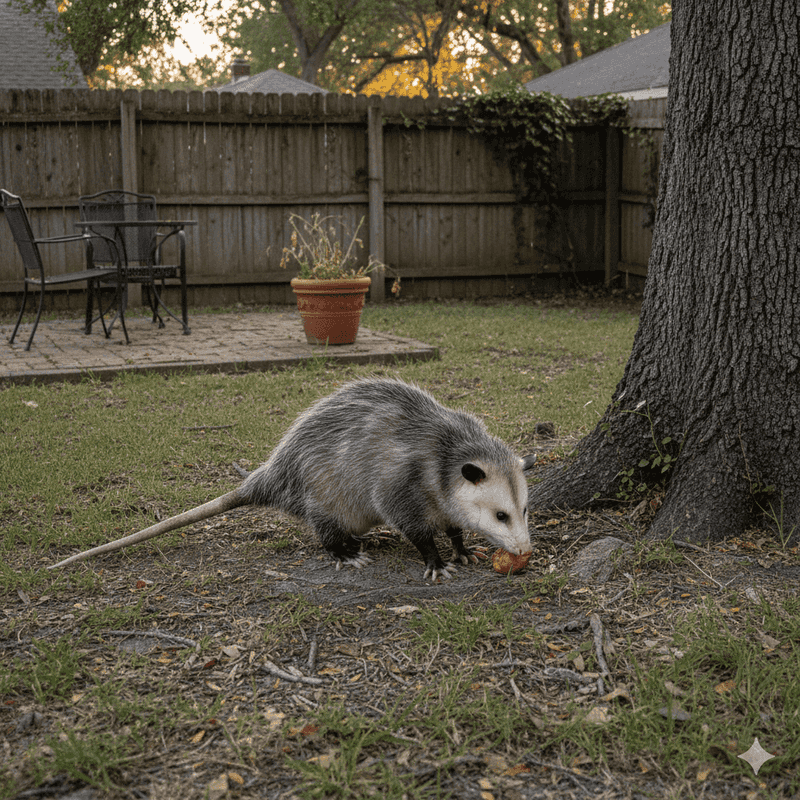
Even if an opossum snacks on a slug now and then, the same animal may be eyeing your harvest. UF/IFAS notes that opossums may eat garden vegetables, eggs, and other small animals, and they may visit food or garbage left outdoors.
That matters if you keep backyard chickens, grow ripe tomatoes, or leave a pet bowl on the patio. A visit could mean a cleaned-up pile of fallen fruit, or it could mean a raided nest box and nibbled squash.
A fair way to size up a visitor is to look for clues. Torn trash bags, an empty pet dish, or missing eggs point to a food hunt.
Tidy beds and no damage suggest it was just passing through. Either way, the yard does not automatically come out ahead.
Remove food that attracts wildlife
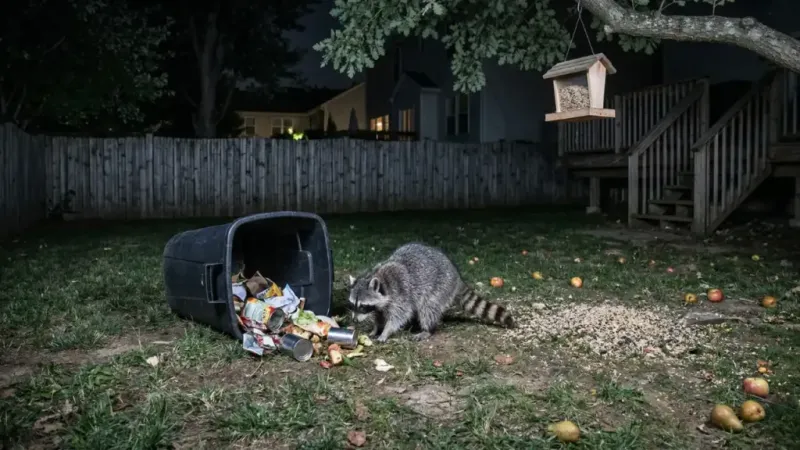
The easiest way to change what visits your yard is to change what is on offer. Florida Fish and Wildlife lists unsecured garbage, pet food, fruits, and vegetables as wildlife attractants.
These steps may reduce visits, though they cannot guarantee an opossum will stay away.
Start with trash. Use cans with tight, latching lids, and set them out on pickup morning rather than the night before.
Next, bring pet food and water bowls indoors by nightfall, since UC IPM advises doing exactly that.
Then walk the yard for fallen fruit. In Florida and Texas, citrus, figs, loquats, and persimmons can drop for weeks, so a quick daily pickup helps.
Also check compost bins and bird feeder spillage, which are easy to overlook.
Observe from a distance and keep tick precautions
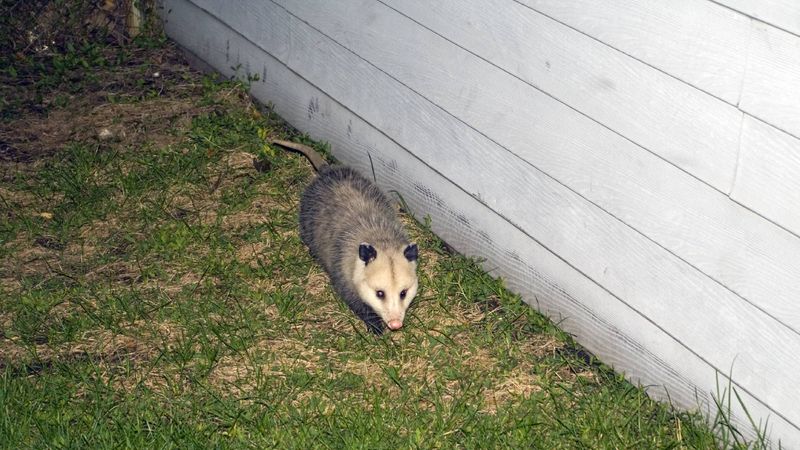
If an opossum wanders through, watching from a window is the safest approach. CDC guidance says to keep your distance, not feed wildlife, and keep pets from interacting with wild animals.
Bring dogs and cats in at night so a curious sniff does not turn into a scuffle.
Opossums rarely carry rabies, but they are not immune. Never corner, capture, or handle one.
If you get bitten or scratched, wash the wound well with soap and water and call a doctor, as outlined in rabies exposure guidance from the Washington State Department of Health.
Finally, keep your usual tick habits. Use an EPA-registered repellent outdoors and check yourself, kids, and pets for ticks after time outside.
An opossum may be a quiet neighbor, but it is not a bodyguard.