
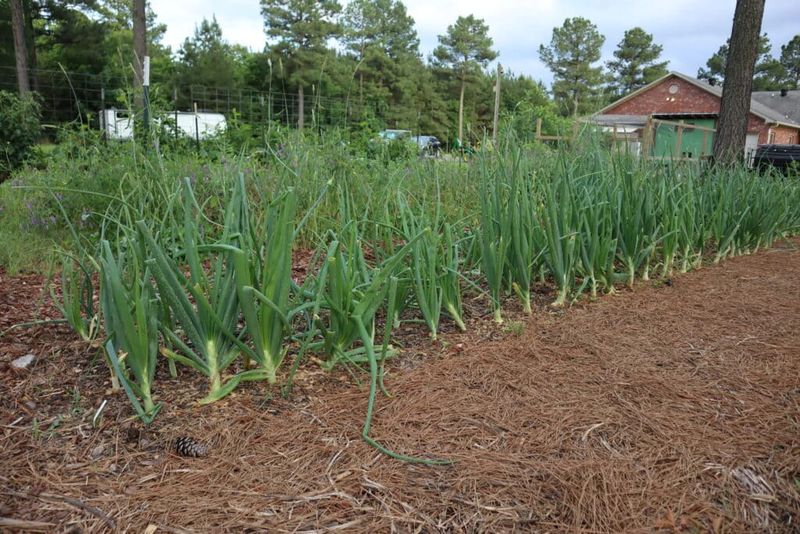
Few things sting like watching your onions send up flower stalks instead of swelling into fat bulbs. Weather often gets the blame, but the size of the little sets you plant matters too.
Texas and Florida gardeners also follow very different calendars, so one planting date will not fit both states. Here is how to choose the right planting material and timing for firm, dry bulbs.
Larger sets can raise bolting risk, not guarantee it
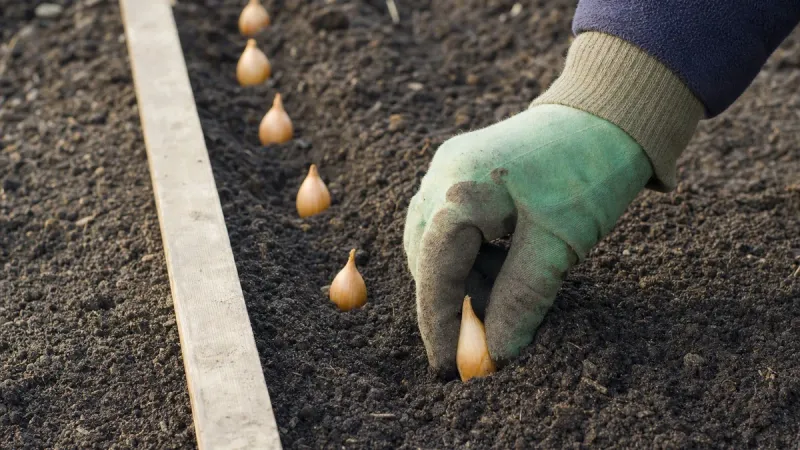
Two onion sets from the same bag can behave very differently. As a rule, bigger sets are more prone to bolting than smaller ones, and that matters most when you want dry bulbs for the kitchen.
Illinois Extension onion guidance points gardeners toward smaller sets for bulb production and larger ones for green onions.
Notice the wording, though. Size raises the odds of a flower stalk, but it does not seal the fate of any single plant.
A larger set may grow into a perfectly fine bulb, and a small one can still bolt if conditions push it that way.
Think of set size as one lever you control. Picking smaller sets can improve your chances of harvesting dry bulbs, but variety, plant maturity, cold exposure, and planting time all join the outcome.
The next sections cover each of those so you can stack the odds in your favor.
Cold can trigger flowering, while day length drives bulbing
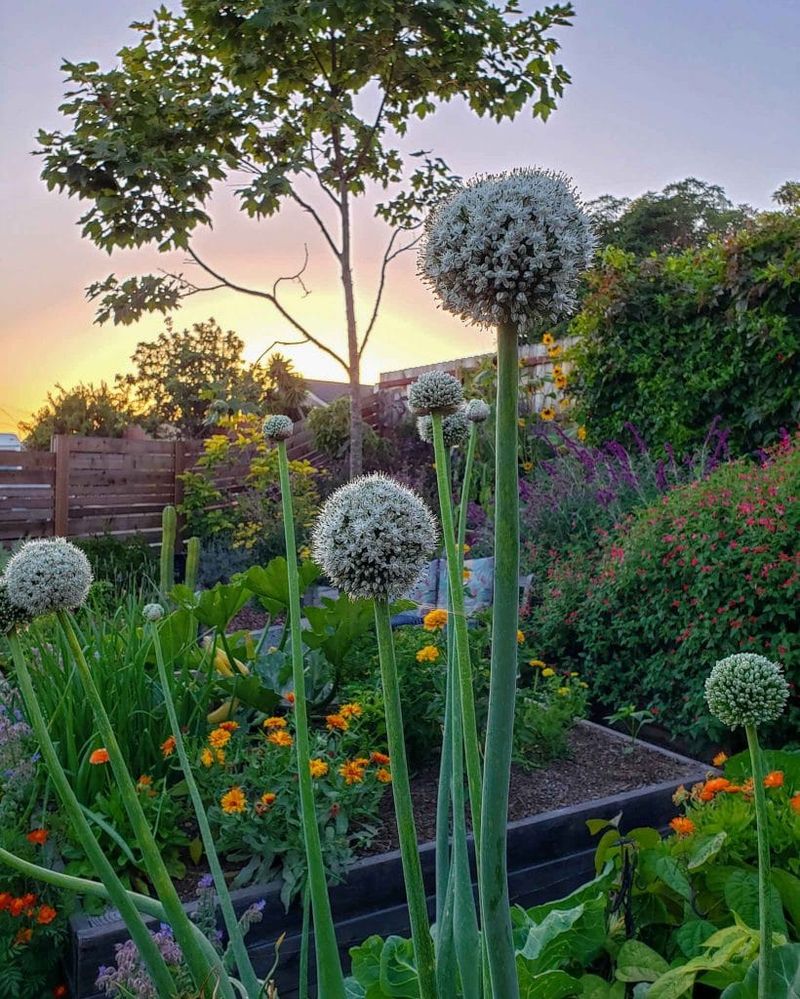
Gardeners who blame a cold winter are not wrong. Prolonged cool weather can push onions that are big enough to respond into making a flower stalk.
Texas A&M’s commercial onion guide describes higher risk when pencil-size plants sit through extended temperatures in the low to mid-40s F.
That risk is not a switch. It shifts with plant size, how long the cool spell lasts, and the conditions around the bed, so a single cold snap does not guarantee bolting.
Other extension sources list different temperatures and durations, which tells you there is no magic number.
Bulbing is a separate job. As University of Missouri Extension explains, a suitable variety starts forming a bulb once it receives the day length that triggers it.
Cold drives flowering, and day length sets the bulbing clock, so keep the two ideas apart when you troubleshoot.
Use the dime as a sorting cue, not a cutoff
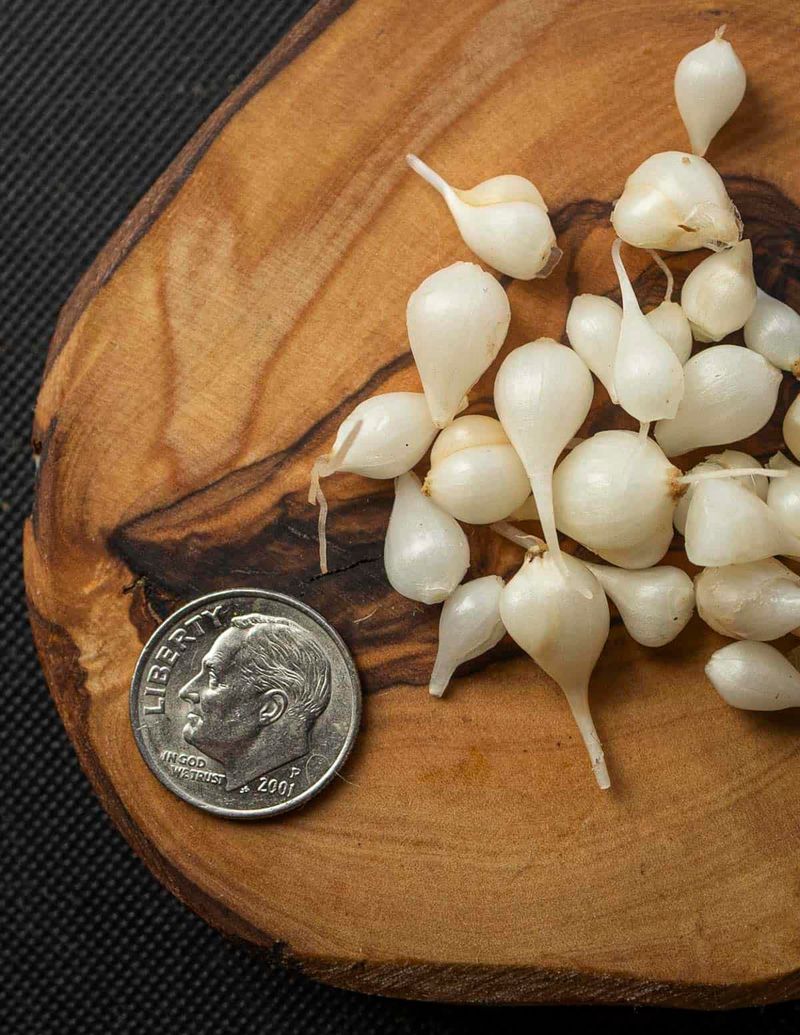
Keep a dime in your pocket at the garden center. Sets that look smaller than the coin are good candidates for dry bulbs, while bigger ones can go into a separate row for green onions.
Illinois Extension uses that kind of small-versus-large sorting.
Treat the dime as a handy visual guide, not a law of nature. Iowa State advice says sets under roughly half to three-quarters of an inch have better prospects for mature onions.
Wisconsin Extension suggests a quarter inch or smaller to cut bolting.
Those numbers differ, and none was written specifically for every Texas or Florida variety. So sort your bag into small, medium, and large piles.
Plant the smallest for bulbs, and use the biggest for scallions you can pull early.
Choose short-day varieties and identify your planting material
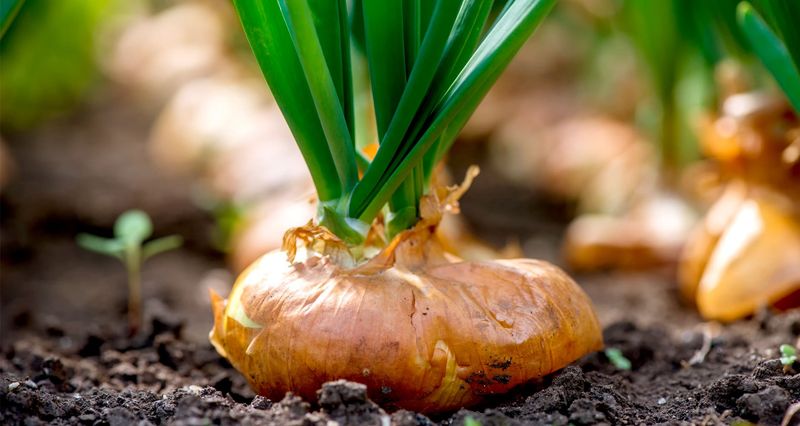
Variety choice comes before any sizing. Onions differ in the day length that starts bulbing, and southern gardeners do best with short-day types.
UF/IFAS Gardening Solutions points to short-day varieties for Florida’s fall-growing season, and Texas A&M AgriLife’s growing guide lists short-day choices for Texas.
Next, check what you are actually buying. Sets are small bulbs, while transplants are young plants with leaves and roots.
Texas A&M notes that gardeners sometimes use the words interchangeably, but they are not the same material.
That difference matters for the dime test. Size sorting applies to sets only, so do not judge a pencil-size transplant by the same rule.
Read the plant tag or ask the seller so you know which one is in your hand.
Texas guidance points to a midwinter planting window
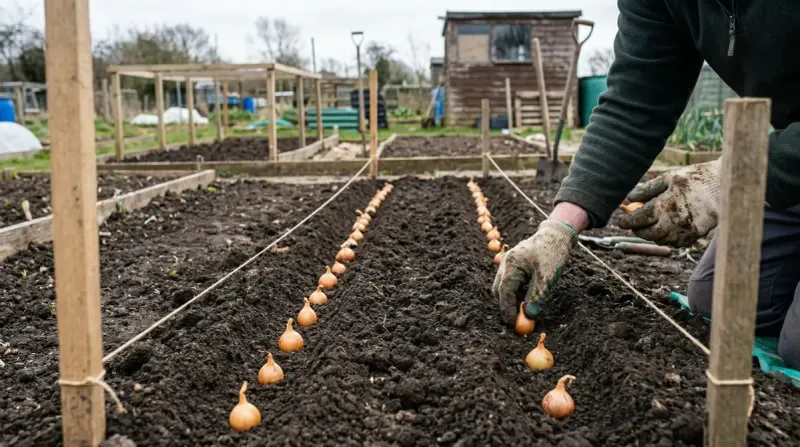
For Texas home gardens, Texas A&M AgriLife’s home-garden guide recommends planting sets or transplants from mid-January to early February. That is the window to aim for rather than a fall date.
The same guide suggests setting them about three-quarters of an inch deep and about three inches apart. Onions seeded in October through December, or transplanted in January and February, may produce bulbs in May through July.
Texas is huge, and conditions in the Panhandle, the Hill Country, and the Gulf Coast are not identical. Treat the dates as a starting point and adjust for your own local frost patterns and soil.
If your area runs unusually mild or cold in a given year, a week or two either way is a sensible judgment call.
Florida dates vary by region and planting method
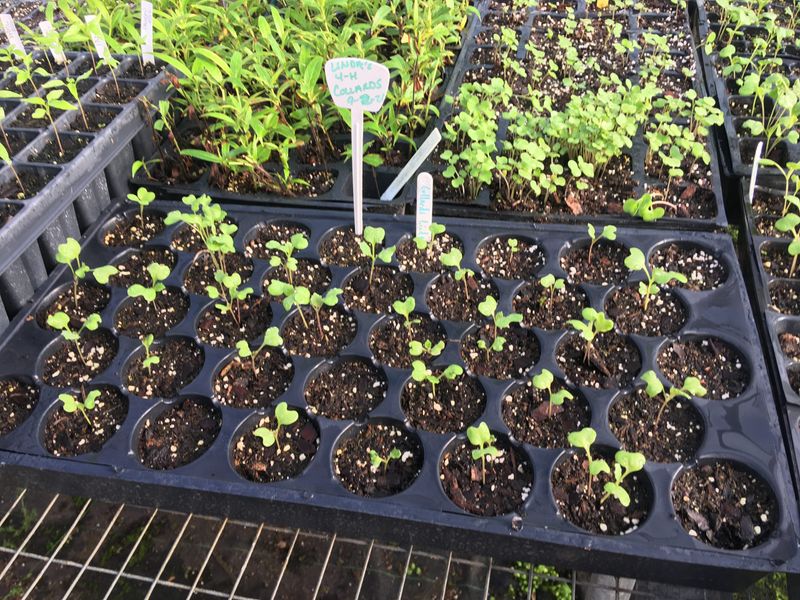
Florida stretches a long way, so one calendar cannot cover it. According to UF/IFAS plant details for bulbing onions, seeding runs from September to mid-November in North Florida, and in October for Central and South Florida.
Transplants follow a different schedule. The UF/IFAS commercial production chapter lists November through January in North Florida and December through January in Central and South Florida.
Those windows come from commercial-style guidance, so treat them as a reliable frame, not a promise for every garden, cultivar, or year. Check with your county extension office for local timing.
And do not borrow the Texas January window for a Florida bed without matching it to your region first.
Use bolting onions promptly
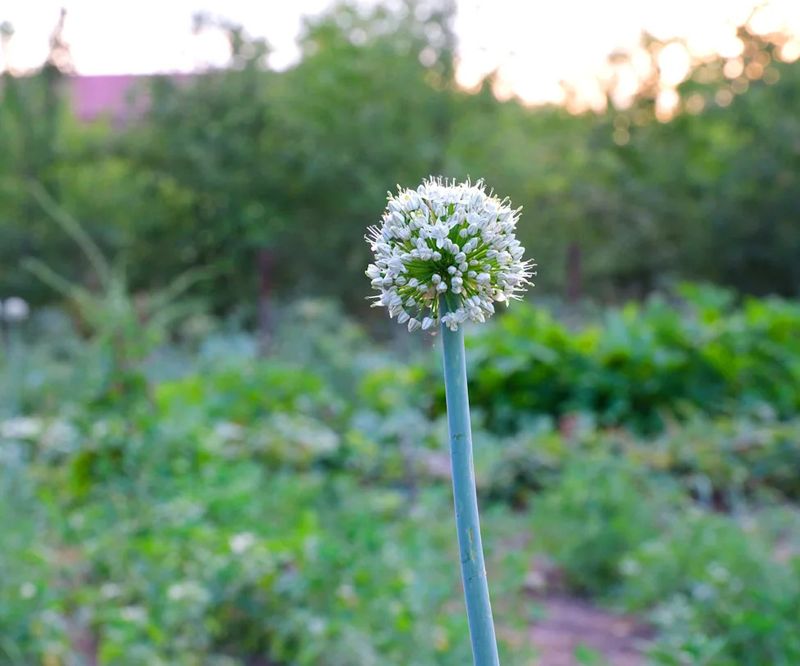
Spotting a flower stalk can feel like a failure, but you still have options. Snapping or cutting off the stalk may help the plant put a little more energy into the bulb.
University of Missouri Extension says the effect is limited.
So do not count on a full-size bulb that will store for months. A bolting onion often has a tough, woody center, and it will not keep well.
Pull it, use it soon, and enjoy it in cooking while it is still good.
Choosing smaller sets and planting at the right time for your region lowers the risk of bolting, but nothing removes it entirely. Plant a few extra, and a stray flower stalk will not sink your harvest.