
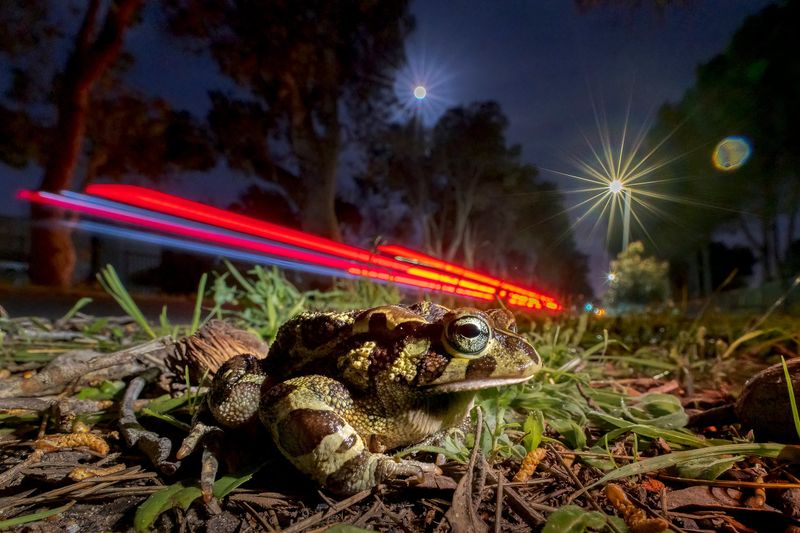
Lift a flowerpot in your California yard and a lumpy, warty toad might blink back at you. Many gardeners shoo it away, while others hope it will guard their young plants.
The truth sits in the middle: a western toad is a native neighbor worth respecting, but it is not a promised fix for chewed seedlings. Here is how to share your garden with it and still protect your plants.
A pot can offer cover to a western toad
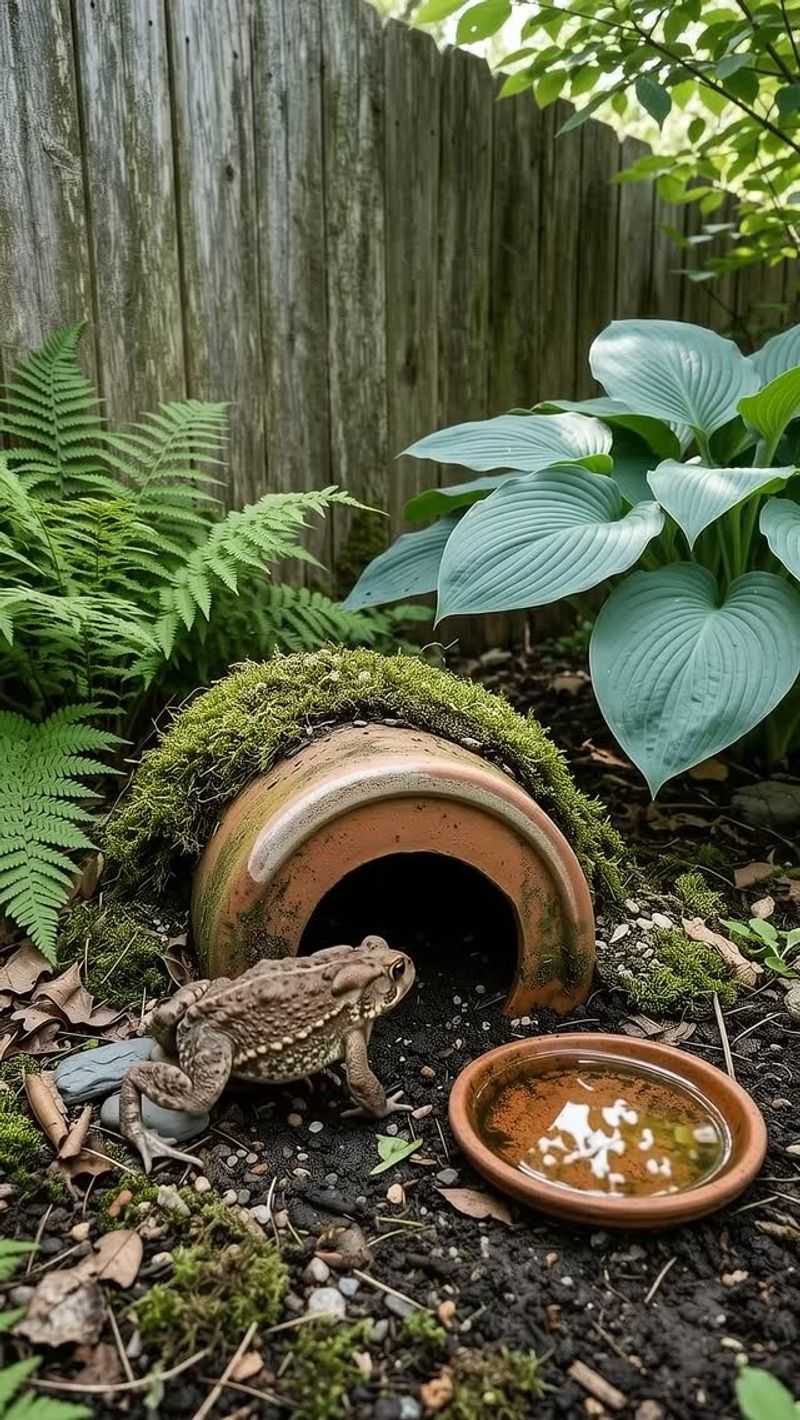
Finding a toad under a pot is a plausible garden encounter, but it does not prove the pot attracted the animal. California Department of Fish and Wildlife’s life-history account describes western toads as active mostly at night over much of their range.
They spend their days tucked into cover, then move about when it is dark and damp.
Toads need moist ground to keep their skin from drying out. They are known to shelter under or inside objects such as boards, logs, and rocks.
A pot resting on cool, shaded soil can offer similar protection, especially in a corner that stays damp.
That said, nothing in the sources shows that pots are a preferred or especially useful hiding place. A toad might just as easily settle under a stack of lumber, a stone, or a thick clump of groundcover.
The pot happened to be there when the toad needed a spot.
The National Park Service’s western toad page also notes the animal’s use of moist habitats and hiding places. Seeing one in your yard means your garden offers at least some of what a toad looks for: dampness, shade, and hiding spots.
For a homeowner who cares about native wildlife, that is a nice sign. The toad is simply a resident of the local ecosystem that happened to land in your yard.
Welcome it as a neighbor, and keep reading to see what it can and cannot do for your plants.
Rainfall and toad activity vary across California
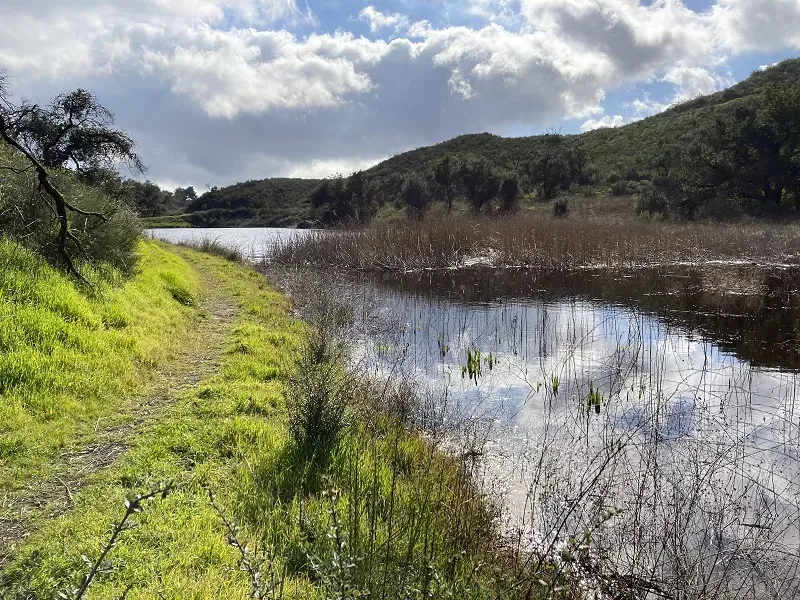
Rain and toads are linked in some California settings, but the link is local. In the Santa Monica Mountains, the National Park Service reports that western toads generally breed after winter rains.
Activity at breeding sites depends on water actually forming there.
Timing changes from place to place. CDFW gives a California breeding season of January through July, depending on local conditions.
NPS observations add that breeding may begin in late January in Southern California but not until early summer at higher elevations.
Dry years matter too. When pools do not fill, toads at breeding sites may have little reason to gather.
A coastal yard, a foothill property, and a mountain cabin could each see very different toad behavior in the same season.
So a rainy week does not mean toads are headed to your garden. It also does not line up with when you set out seedlings.
If you do spot a toad after a storm, enjoy the sighting, but treat it as a bonus rather than a calendar for planting or pest control.
Your own neighborhood is the best guide. Watch what shows up where you live, and note the dates for next year.
A clipped seedling is a clue, not a diagnosis
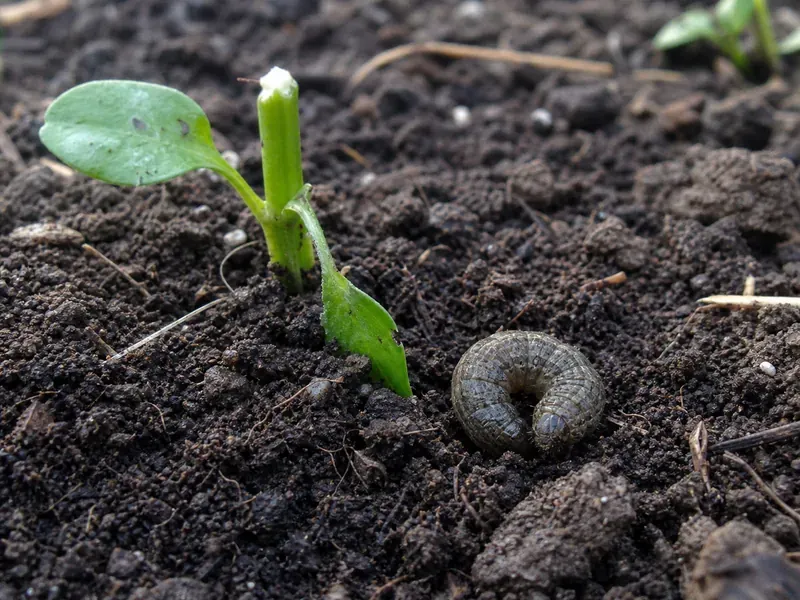
A seedling lying on its side with the stem cut off is a classic worry. Cutworm larvae can clip stems at or just below the soil line, according to UC IPM’s cutworm guidance.
Still, a clipped stem by itself does not prove cutworms did it.
Slugs and snails can leave damage that looks a lot like caterpillar feeding. UC IPM’s snail and slug page points out that confusion.
One handy clue is a silvery slime trail on leaves, soil, or pot rims, which suggests mollusks were feeding.
Seasonal timing is another reason to stay open-minded. UC IPM describes cutworms as pests mainly in spring and advises keeping gardens weed-free in winter.
Local conditions vary, so winter cutworm trouble should not be assumed anywhere in California.
Before you pick a fix, play detective. Look at the damage in daylight, then check again after dark with a flashlight.
Dig gently around the base of a clipped plant to see whether a curled caterpillar is hiding in the soil.
Note what you find. Slime trails, ragged holes, a plump caterpillar, or nothing at all each point toward a different next step.
A toad is a visitor, not a cutworm-control plan
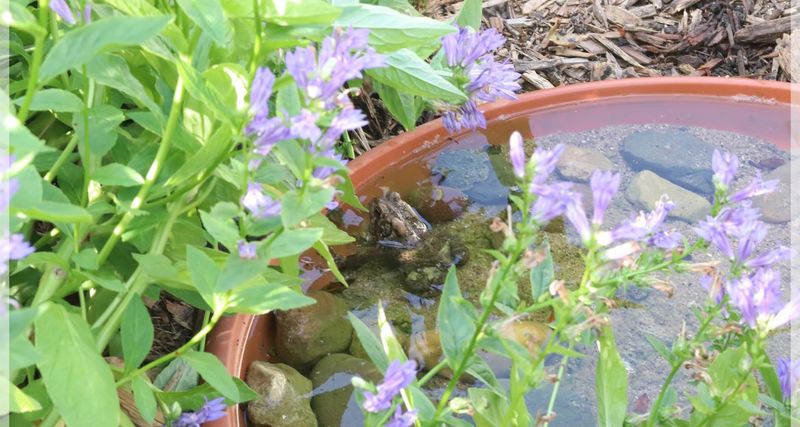
Toads do eat pests, which is part of their charm. CDFW says western toads eat a range of terrestrial insects and other small arthropods, and less commonly earthworms, snails, and slugs.
They are broad eaters, grabbing what is small enough and nearby.
That is very different from hunting cutworms on purpose. The sources do not show that western toads reliably control cutworms, or that they eat enough to stop damage to seedlings.
A toad might snack on a caterpillar one night and ignore the next one.
Slugs follow the same rule. UC IPM lists toads among slug predators but says natural enemies rarely give satisfactory garden control.
Even a toad living right beside your lettuce bed will not guarantee a clean harvest.
The UC IPM cutworm page focuses on identifying the pest and blocking it from plants, not on counting on predators.
Think of the toad as a guest. Welcoming wildlife is a good reason to leave a shady corner alone.
Depending on that wildlife to protect small, tender seedlings is a gamble, so keep your own protections in place.
Protect seedlings with direct, physical controls
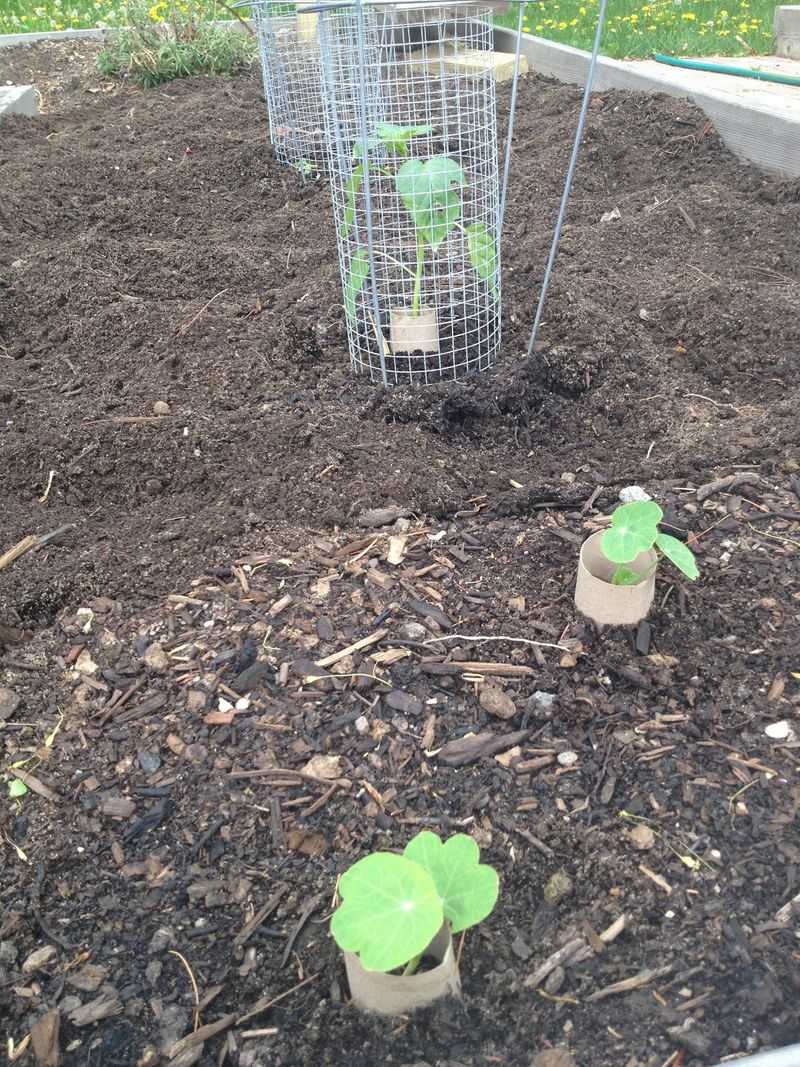
Protection that works does not rely on luck. For suspected cutworms, UC IPM recommends checking plants at night with a flashlight, when the larvae come out to feed.
It also advises protecting seedlings with cardboard collars, screens, or protective cloth.
A collar can be as simple as a cardboard tube pushed slightly into the soil so it circles the stem. Screens or cloth can cover tender plants until they thicken up.
These barriers block the pest physically, so they work whether or not a toad ever wanders by.
Match the control to what you find. If your flashlight reveals slime trails and slugs instead of caterpillars, a cutworm collar will not solve the problem.
Identify first, then choose a barrier or hand removal that fits the culprit.
A few habits help in any case. Check seedlings daily in their first weeks, since young plants are the most vulnerable.
Keep beds tidy, and keep weeds down around them, because weedy ground gives pests easy cover.
If a toad shows up while you work, let it be. Your seedlings stay safe because of your protections, and the toad stays a bonus.
Use pesticides cautiously around amphibians
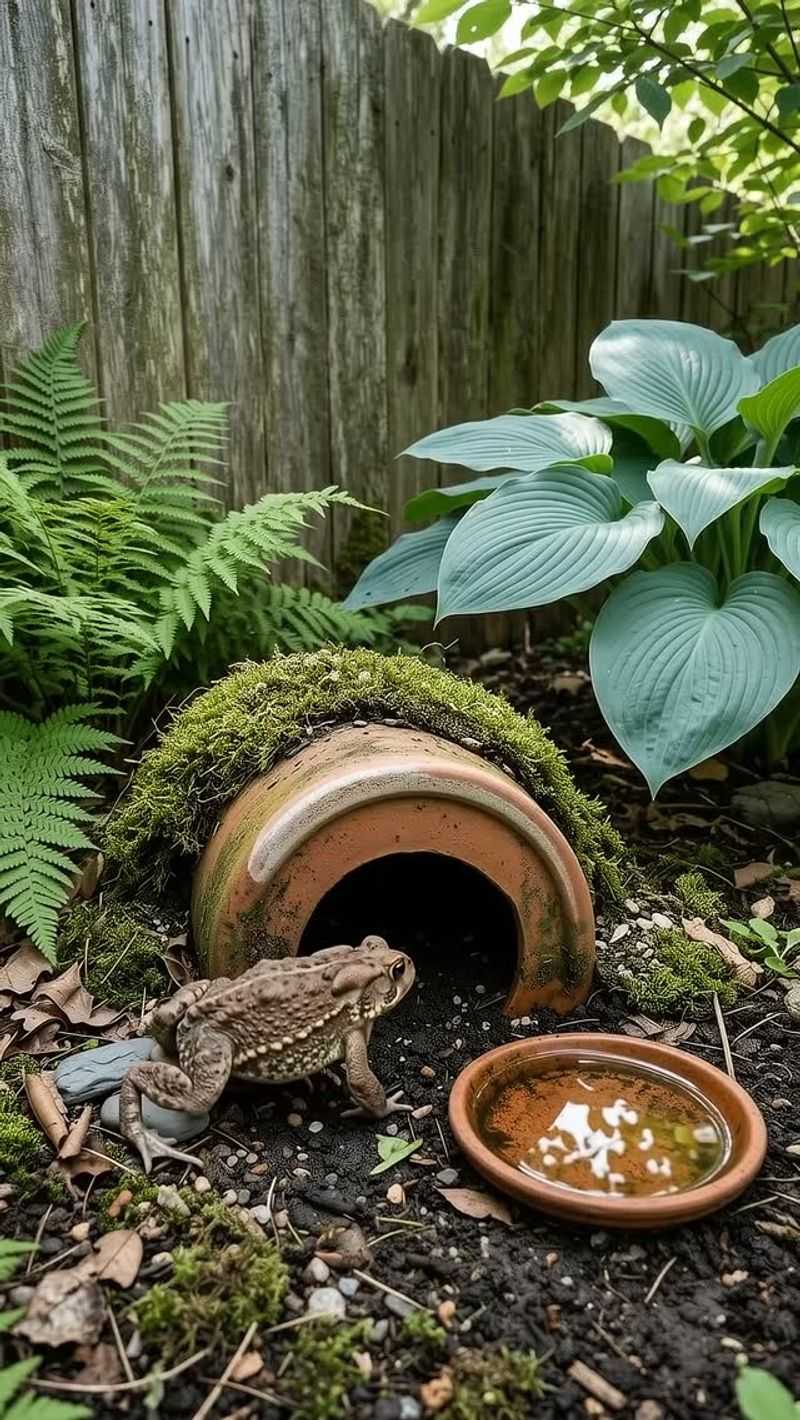
Because physical controls often handle the job, pesticides can wait until you know what the pest is. Amphibians have thin skin, and the National Park Service notes that they can absorb substances through it.
The agency suggests reducing pesticide use and providing shady cover for wildlife.
That does not mean every product harms every toad. Risk depends on the ingredient, the amount, and how an animal is exposed.
A cautious approach simply keeps unnecessary chemicals out of a yard where a toad may live.
One study shows why caution is reasonable. A study abstract on PubMed reports that frogs took up certain tested pesticide ingredients through the skin after contact with contaminated soil.
Those results apply to the ingredients and conditions tested, not to every product on the shelf.
EPA guidance on frogs and pesticide hazards advises keeping pesticides out of water and not spraying when heavy rain is expected, since runoff can carry products into places they were never meant to go.
If you do decide to use a product, read the label, apply only what is needed, and skip the application before a storm. Targeting the confirmed pest keeps both your plants and your wildlife neighbors safer.
Check beneath the pot, then leave the toad alone
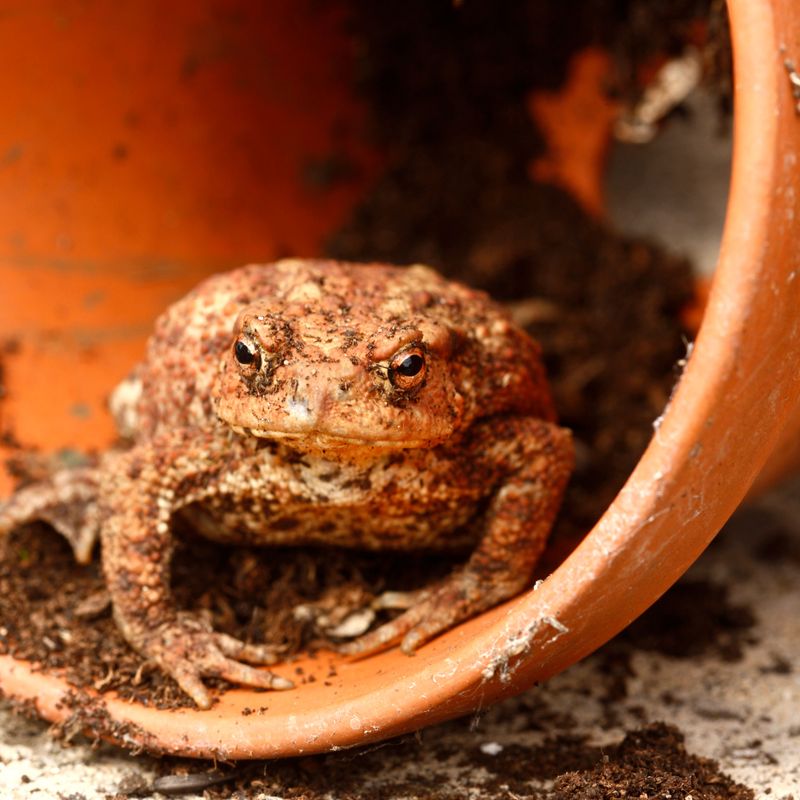
Before you shift a pot, tilt it slowly and look underneath so you do not crush anything hiding there. If a toad is present, step back and watch.
NPS advises looking but not touching, since amphibians can absorb salts, oils, and lotions through their skin.
Skip picking it up, moving it elsewhere, or bringing in toads from other places. If contact cannot be avoided, CDFW advises washing your hands thoroughly afterward.
Set the pot back gently, or leave it be if you do not need to move it. A toad can share your yard, but your seedlings are safe only when you find the real pest and deal with it.