
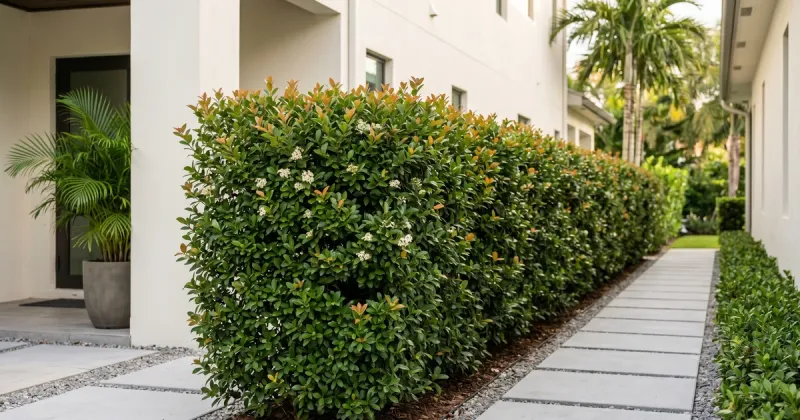
A brown, patchy hedge can make the whole front yard look tired. Boxwoods can struggle with Florida’s heat, wet summers, and poorly drained soil, especially when the variety does not fit the site.
Native evergreen shrubs offer better options, from small rounded borders to thick privacy screens. These seven choices can keep your yard looking full year-round when you match them to your part of Florida and give them room to grow.
1. Dwarf Yaupon Holly
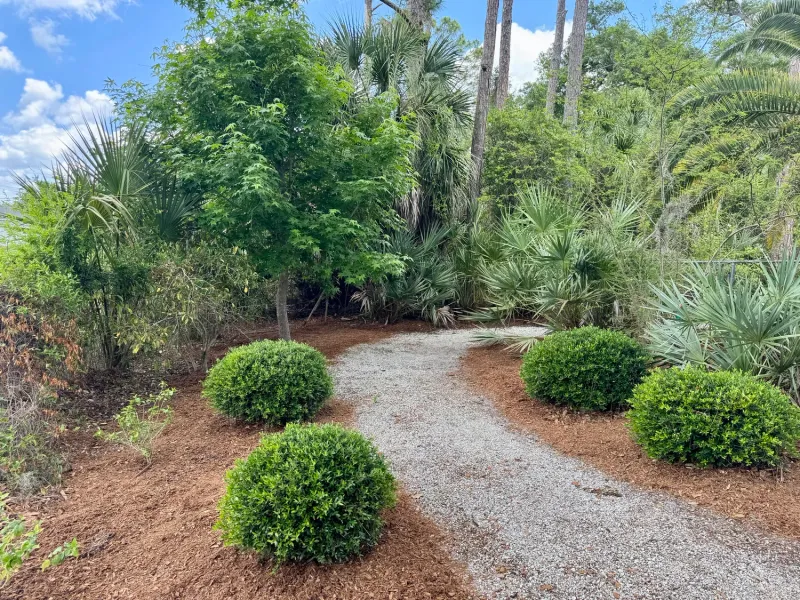
For that tidy, rounded look beside a front walk, few native choices come closer to boxwood than a dwarf yaupon holly. Its tiny leaves and tight branching create a neat outline without demanding constant clipping.
The species, Ilex vomitoria, is native to Florida, while named dwarf selections offer shorter, more predictable growth. Depending on the cultivar, plants commonly reach about 2 to 5 feet tall, so check the label rather than assuming every dwarf stays ankle-high.
Full sun encourages thick growth, and established plants handle heat and periods of dry weather well. Give new shrubs regular water while their roots spread, and avoid planting them deeper than they grew in the pot.
Choose a cultivar that fits the space, then use selective cuts to remove stray shoots instead of repeatedly shaving the outside. Many common dwarf selections are male and produce no berries, making this a strong choice where a clean walkway matters more than fruit for birds.
2. Inkberry Holly
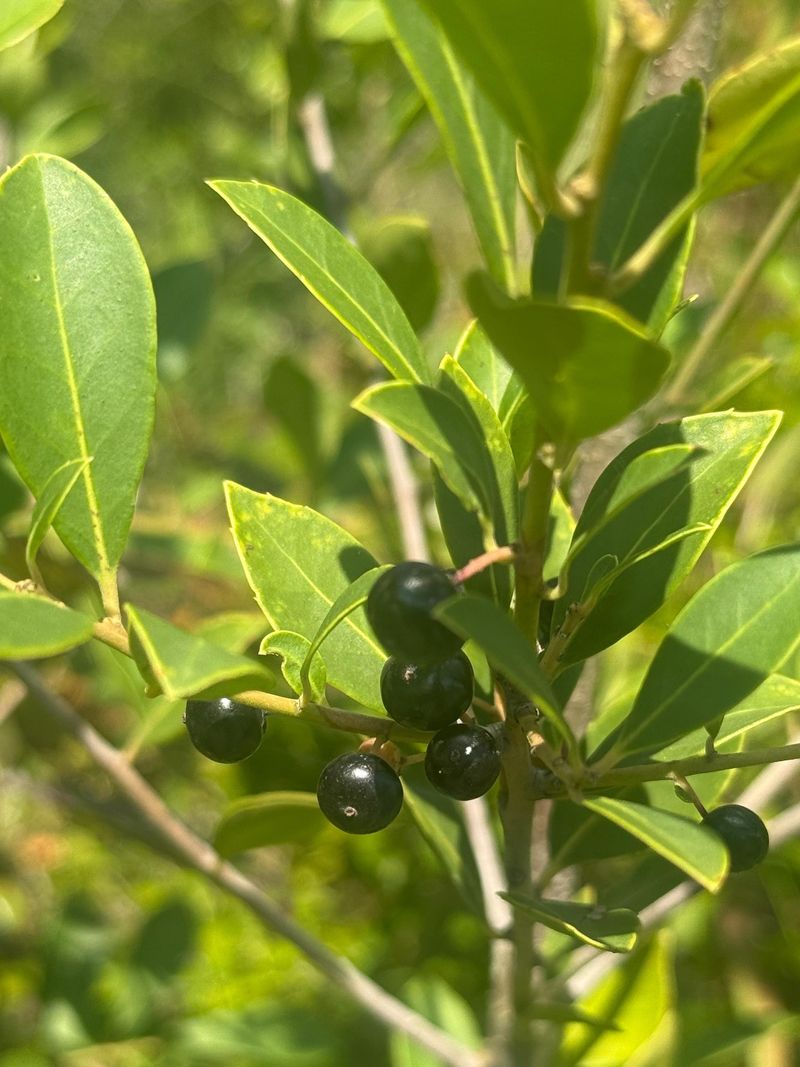
A damp planting bed needs a different solution than a hot, sandy strip beside the driveway. Inkberry holly earns its place where acidic soil stays moist and boxwood roots would struggle.
Known botanically as Ilex glabra, this Florida native has small evergreen leaves without the sharp points many people expect from hollies. It is especially useful in North and Central Florida, provided the soil and moisture suit it.
Typical plants can reach 5 to 8 feet tall, while compact selections stay smaller. Ask a local native nursery which forms remain dense near the ground, since older inkberries can develop bare lower stems, especially in shade.
Plant in sun to partial shade and allow enough width for the chosen selection. Acidic, moist soil is the key requirement, so skip this shrub in alkaline fill or a dry bed that rarely receives water.
Female plants can bear black fruit when a compatible male blooms nearby. Light pruning supports a fuller hedge, but tight, repeated shearing can hide its softer natural character.
3. Simpson’s Stopper
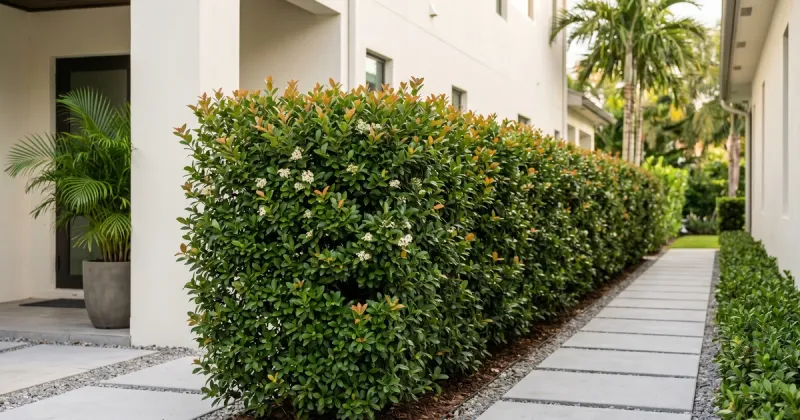
Small white flowers bring a bonus to a hedge that already looks polished. Simpson’s stopper adds fragrant blooms, colorful fruit, and dense evergreen foliage, giving a clipped border more life than a plain green wall.
Myrcianthes fragrans is native to Florida and works especially well in Central and South Florida landscapes. It accepts full sun to partial shade, although brighter sites generally encourage a fuller shape.
Left alone, the species can become a large shrub or small tree, often reaching 10 to 20 feet. Choose a compact selection for a smaller foundation bed rather than relying on frequent hard cuts to force a large plant into a narrow space.
Provide well-drained soil and steady establishment watering. Once rooted, it tolerates dry spells, but it is not a good answer for a bed that stays waterlogged.
Use hand pruners to shorten wandering branches while keeping the base broad. Constant shearing removes flowers and developing berries, so a slightly relaxed outline gives birds and pollinators more to enjoy while still looking intentional.
4. Cocoplum
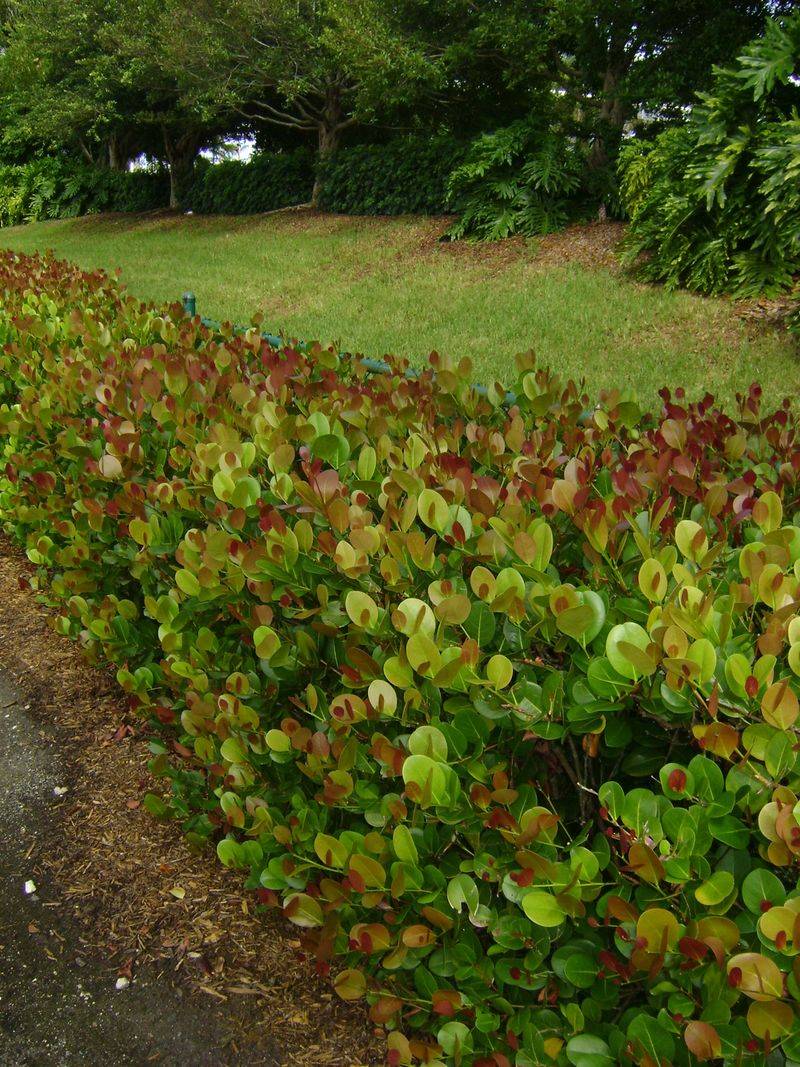
Along a sunny South Florida property line, a hedge often needs more muscle than miniature leaves. Cocoplum supplies thick coverage with rounded, leathery foliage that stands up well to heat.
Chrysobalanus icaco is native to Florida, but cold limits its use farther north. It belongs mainly in South Florida and suitable warm coastal locations, not as a statewide replacement for boxwood.
Plant form matters here: upright selections suit screening, while spreading coastal forms work better as broad, low masses. Ask about mature height and width before buying, because a plant sold simply as cocoplum may not grow into the hedge you pictured.
Full sun produces dense growth, and well-drained soil helps roots establish. Salt tolerance varies by form, so confirm the selection’s suitability if ocean spray reaches your yard.
For a clean appearance, keep the hedge slightly wider at the bottom so light reaches the lower leaves. Allow enough depth between the planting and a walkway; cocoplum looks better when it can stay full instead of being cut back to bare branches.
5. Florida Privet

Do not let the word privet send you straight past this plant at the nursery. Florida privet, Forestiera segregata, is a native species, not one of the nonnative Ligustrum privets that cause problems in natural areas.
Its small leaves and branching habit make it useful for a green boundary that looks orderly without resembling a solid block. It grows in sun or partial shade and suits many well-drained Florida sites, including coastal landscapes.
Expect a substantial shrub, often around 8 to 15 feet tall unless pruned. That makes it a better match for a side-yard screen or taller border than a tiny planting pocket beneath a window.
Established plants tolerate drought, but new installations still need watering while roots expand into surrounding soil. Avoid treating native status as permission to leave a fresh nursery plant dry.
Selective pruning preserves its leafy outline and leaves more fruit for birds. Female plants need a male nearby for fruit production; if berries are a priority, buy from a nursery that can help identify suitable plants.
6. Silver Buttonwood
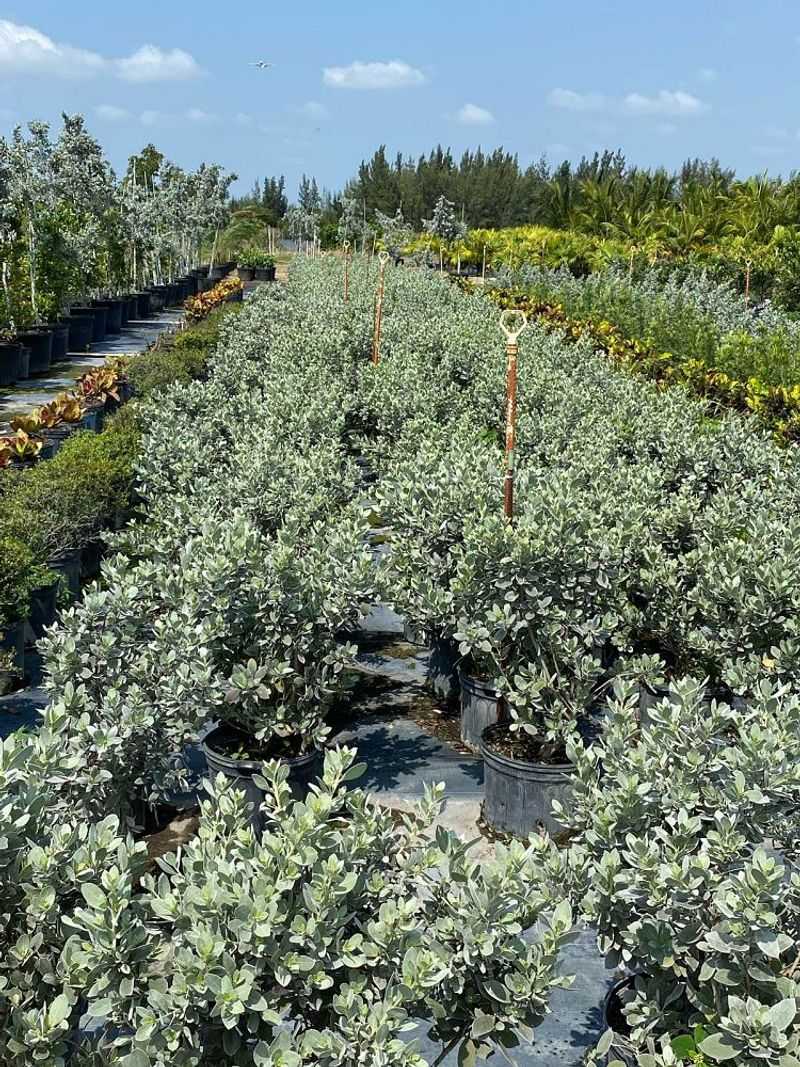
Not every replacement hedge has to be green. Silver buttonwood brings pale, velvety foliage that makes dark shutters, colorful flowers, and simple entryways stand out.
This silver-leaved form of the Florida-native Conocarpus erectus is best suited to warm South Florida landscapes. Strong sunlight brings out its silvery color, and its tolerance of salt and coastal exposure makes it useful near the shore.
Give it well-drained ground rather than assuming a coastal native wants constantly wet roots. The silver form performs best without prolonged soggy conditions, and cold snaps can damage foliage and stems.
Plan for size before planting: buttonwood naturally becomes a large shrub or tree, so maintaining a hedge takes regular pruning. It is a sensible choice for a generous boundary bed, not a low-effort substitute in a two-foot-wide foundation strip.
Trim lightly and regularly to guide the outline, allowing the bottom to remain wider than the top. Where a small hedge is the goal, choose another plant instead of committing to a lifetime of heavy size control.
7. Myrsine
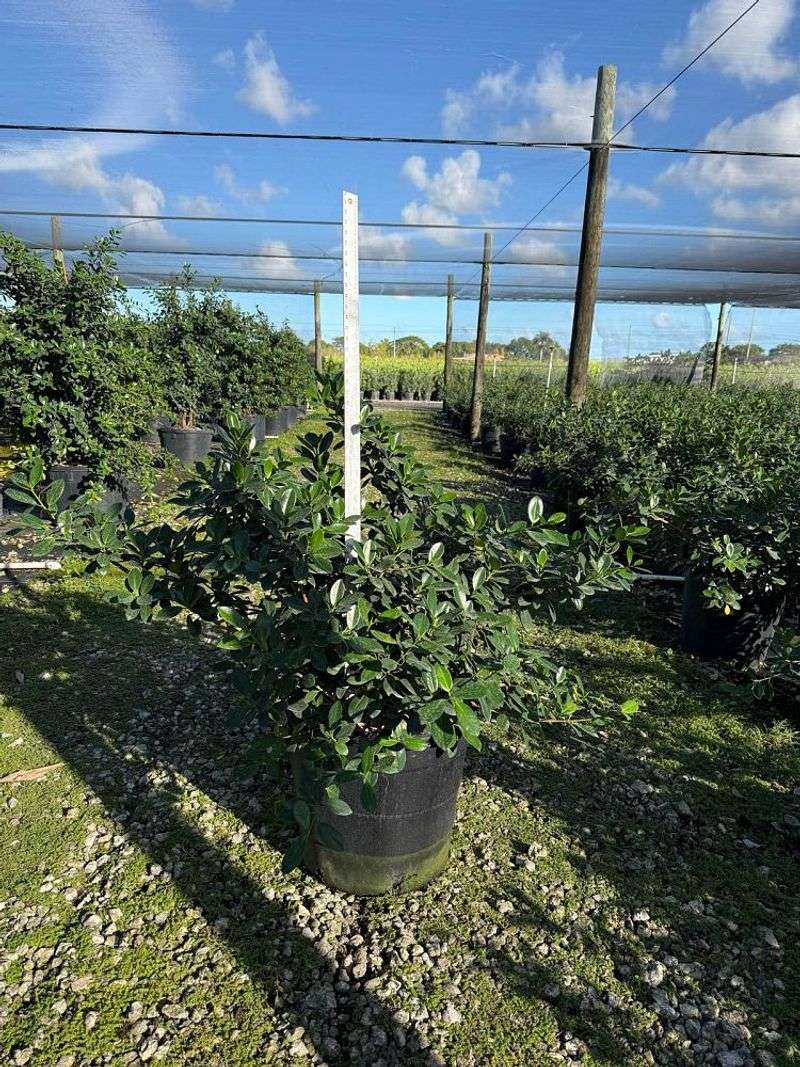
A narrow upright screen can be more useful than another clipped globe. Myrsine offers a vertical shape and leathery evergreen leaves for Florida gardeners who want privacy with a more natural finish.
Myrsine cubana, also sold under the older name Rapanea punctata, is native to Florida. It is especially useful in Central and South Florida, though local cold exposure should guide the final choice.
Plants commonly reach 8 to 20 feet tall, with size shaped by growing conditions and pruning. Use it along a boundary or behind shorter plants, where its height becomes an asset rather than a maintenance problem.
Sun to partial shade and well-drained soil suit it well. Water during establishment, then adjust irrigation to rainfall and soil moisture instead of keeping the root zone constantly wet.
Small fruits on female plants feed birds when pollination occurs. Keep pruning selective and modest, since myrsine is better as a leafy screen than a sharply carved miniature hedge; matching that natural habit to the space is what makes upkeep easier.