
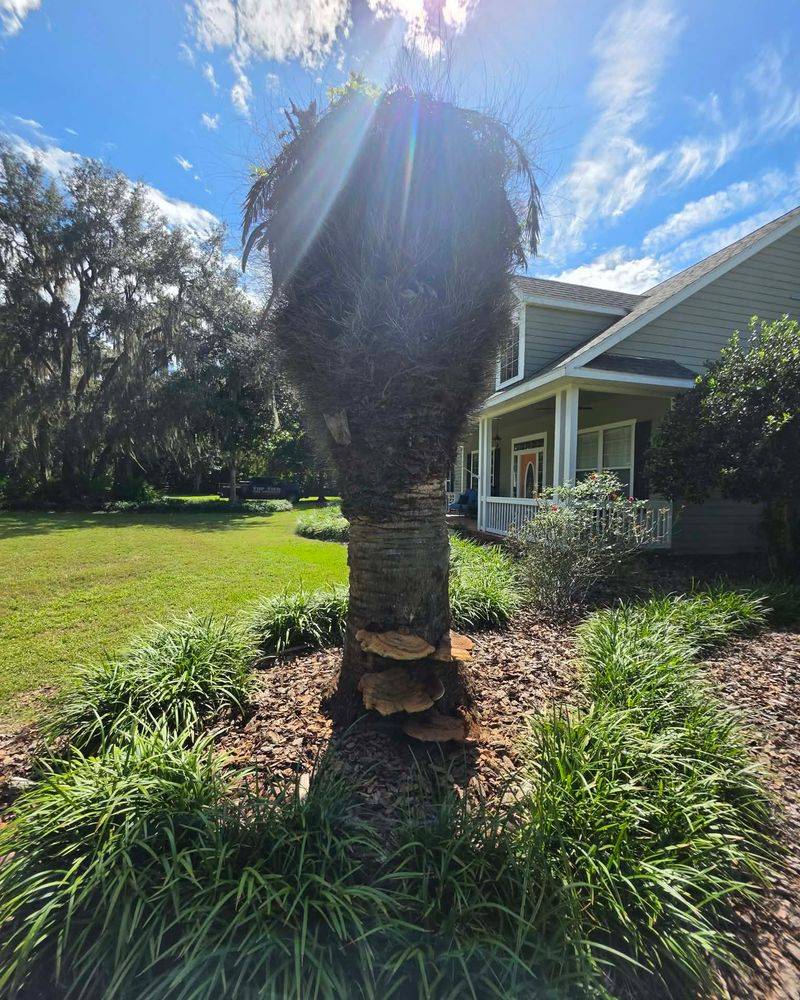
A hard, shelf-like growth at the base of a living palm in your Florida yard is a strong sign of Ganoderma butt rot, a disease with no known cure. The fungus slowly breaks down the lower trunk, which makes the palm weaker and less safe over time.
In practice, that means the palm’s days as a safe landscape tree are numbered, even if the crown still looks green. Here is how to recognize the growth, what it can and cannot tell you, and what to do next.
A conk on a living palm is a strong warning sign
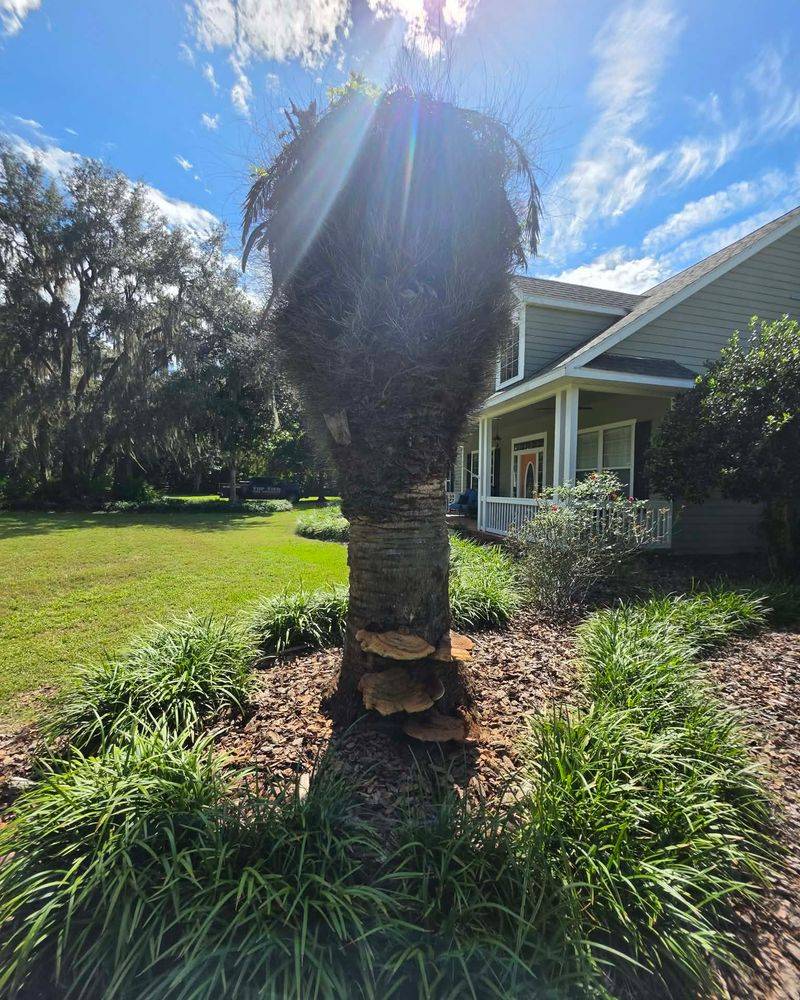
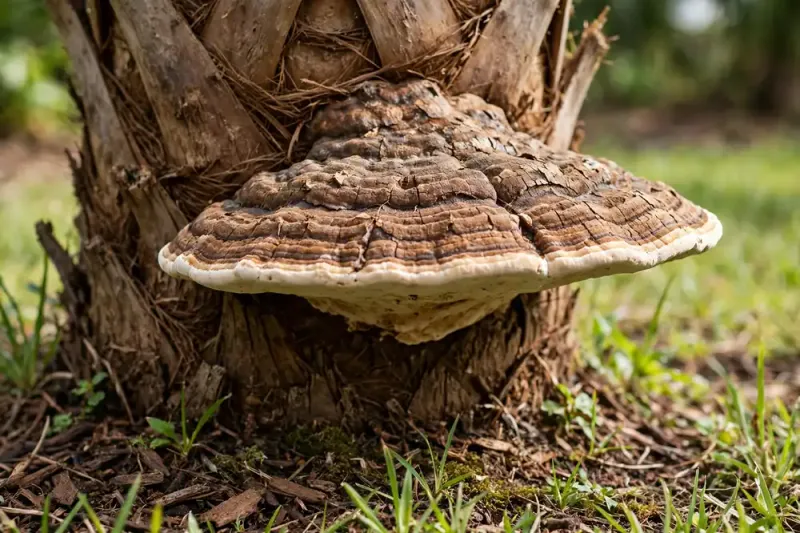
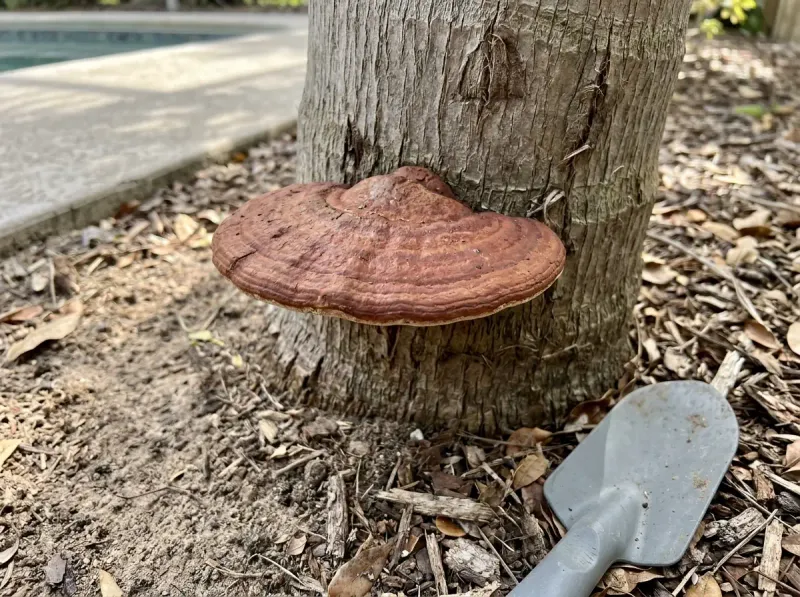
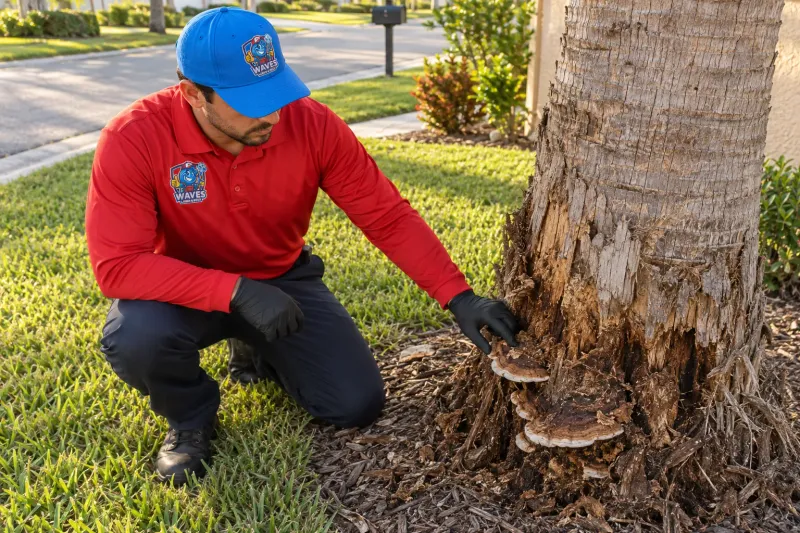
Picture a hard, shelf-shaped growth sticking out of the lower trunk, reddish-brown on top and white underneath. That is how a mature conk of Ganoderma zonatum typically looks, according to UF/IFAS Extension.
The conk is the fungus’s fruiting body, and it grows right out of the trunk near the ground.
Where the growth sits matters a lot. A conk attached to a living palm is probably Ganoderma zonatum, and that is strong evidence of butt rot.
A similar growth on a stump or on dead palm material does not point to the same diagnosis, because other Ganoderma species can live on dead palm tissue.
Shape alone is not proof, so look at the whole palm too. A conk together with decline, such as a thinning crown or fronds that look off, supports the diagnosis.
Browning, wilting, or general decline by itself cannot diagnose Ganoderma, since many other palm problems cause the same look.
Not every infected palm shows a conk before it is badly declined. For a struggling palm with no conk, UF/IFAS describes a sawdust-sample assay that can look for the fungus inside the trunk.
That test helps investigate a mystery decline. It is not a reason to wait when a conk is already in plain view on a living palm.
The trunk can be weakened before it looks rotten
Ganoderma butt rot does its work out of sight. The fungus breaks down roughly the lower four to five feet of the trunk, according to UF/IFAS.
A palm can still feel solid when you knock on it, because this disease does not turn the trunk into obvious mush.
That is the tricky part for homeowners. A trunk that feels hard and looks upright may already have lost strength where it matters most, at the base that carries the whole crown.
Reduced strength is the reason removal advice centers on safety, especially for palms near a house, driveway, play area, or power line.
People often assume the roots are the rotting part. They are not.
UF/IFAS says the fungus does not rot the roots themselves. Instead, fungal growth can travel over palm roots toward trunk tissue, then start the decay where the trunk meets the ground.
Ganoderma is also a large group of wood decay fungi with many species, and they affect different trees in different ways, as the UF/IFAS guide to southeastern Ganoderma explains. So keep the palm-specific details here tied to palms.
A conk on an oak or a log is a separate question for an arborist.
There is no cure, but the conk is not a fall countdown
For Ganoderma butt rot of palms, UF/IFAS reports no known cure and no chemical treatment that prevents the disease or reverses it in an infected palm. Their guidance is clear that this limit applies to palm butt rot, not to every Ganoderma species or tree.
That means cutting off the visible conk does not save the palm, because the decay is inside the trunk. Fungicide, trunk injections, extra fertilizer, and ordinary good care will not cure an infected palm either.
Money spent on those fixes is better spent on a safe removal.
Now the other side. A conk tells you decay is present and that the palm deserves prompt action.
It cannot tell you the day or season the palm will fail. Some palms stand for a good while and others do not, and no one can read that from the fungus alone.
You may come across a figure of six months to a year from first symptoms to death. According to UF/IFAS sampling guidance, that interval starts with initial symptoms, not with the first visible conk, and it is not a reliable prediction for any single palm.
Treat it as background, not as a clock.
Arrange professional assessment and prompt removal
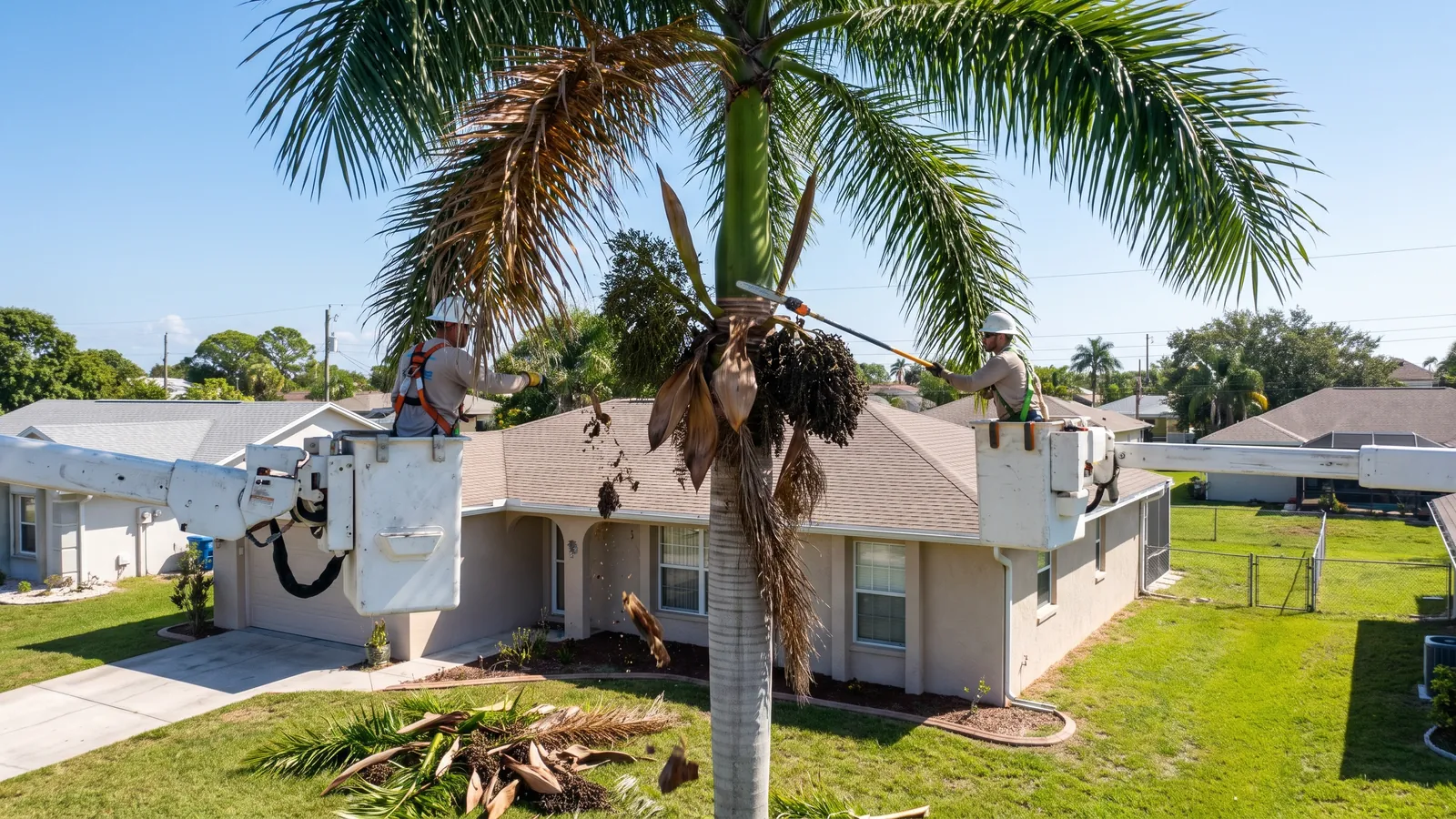
If you spot a conk on a living palm, your next move is a phone call, not a project. Ask a qualified professional, such as a certified arborist with palm experience, to assess the palm.
If they confirm it, arrange removal soon rather than waiting for more decline.
UF/IFAS advises removing a palm once a conk appears, mainly for safety, as described in its Ganoderma butt rot publication. The decayed lower trunk has lost strength, and a weakened palm can be a hazard to people, cars, and structures.
Removal is a safety step first and a disease-management step second.
Please skip the do-it-yourself route. Climbing, cutting, or felling a large palm with a compromised base is risky, and a trained crew has the equipment to bring it down in a controlled way.
Tall species are especially tricky, and the royal palm profile is a reminder of how big these trees can get.
Removing the palm does not mean every palm nearby is now infected. The broader UF/IFAS Ganoderma guide shows how varied this fungus group is, so stick to the palm-specific facts.
Ask the crew how they handle debris, and mention that you want the diseased lower trunk kept out of mulch.
Keep infected palm material out of landscape mulch

Cleanup matters because the conk is where spores come from. If a conk is on a stump or on palm material that will stay in place, UF/IFAS says to remove it and put it in trash headed for a landfill or incineration.
Do not send it to landscape recycling, where it could end up spread around other beds.
The stump deserves attention too. Remove as much stump and root material as practical, or have the stump ground.
Then keep an eye on the spot, since new conks can appear later, as laid out in UF/IFAS guidance on Ganoderma butt rot.
Mulch is where many Florida homeowners slip up, because chipped palm looks like free material. Do not use the diseased lower trunk as landscape mulch.
That lower section is where the fungus has been working.
There is a useful exception. UF/IFAS says the upper trunk, which stays free of the fungus, can be chipped for mulch.
Ask your removal crew to separate the two parts, or to haul everything away if sorting on site is not practical.
Spores are the main way this fungus spreads, so the goal is simple: keep conks and the decayed base out of places where they could shed more spores.
Choose a non-palm replacement and keep monitoring
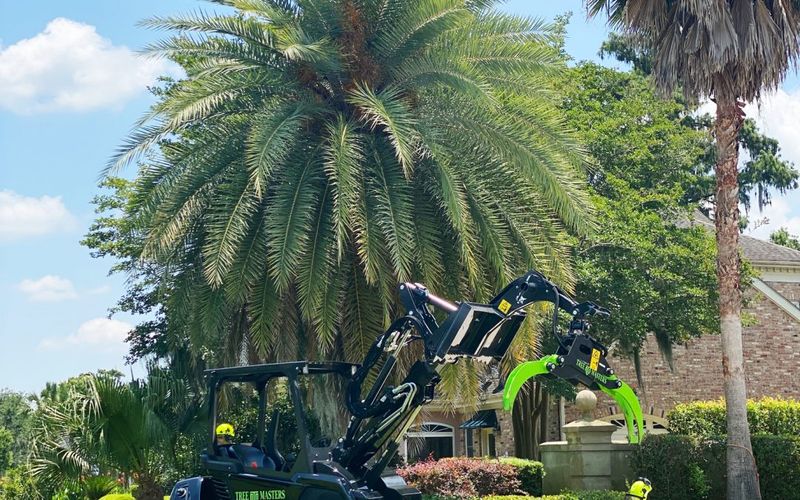
Once the palm is gone, the empty spot is not off limits forever. It just calls for a smarter pick than another palm.
UF/IFAS notes that the fungus can persist in soil or palm debris, and the safe waiting period before planting a palm there is unknown. It is likely multiple years, not months, according to UF/IFAS.
A non-palm replacement is the safer choice. Ganoderma zonatum is not a primary pathogen of other plant families, so a native shade tree, a flowering tree, or a shrub border can fill the space without the same worry.
Choose something suited to Florida’s sandy, fast-draining soil and to storm season, and match the mature size to the room you have.
Monitoring is the other half of the plan. Where Ganoderma has not been seen, check your palms at least every six months.
After a conk has appeared on your property, or after a palm has been cut or has fallen, check at least monthly.
On each check, walk around the base of every palm and look for shelf-like growths, along with crown changes. If you see a new conk on a living palm, repeat the same steps: get it assessed and arrange professional removal.
A quick monthly walk with a phone camera makes changes easy to spot.
Treat the conk as a reason to act, not to guess
Get a conk on a living palm assessed, line up a professional to remove the palm promptly, and handle the stump and trunk pieces with care afterward. There is no known cure for palm butt rot, and the conk will not tell you when one particular palm will fail.
UF/IFAS guidance backs that plan.
A conk is a message from the trunk, and the best answer is a phone call made today.