
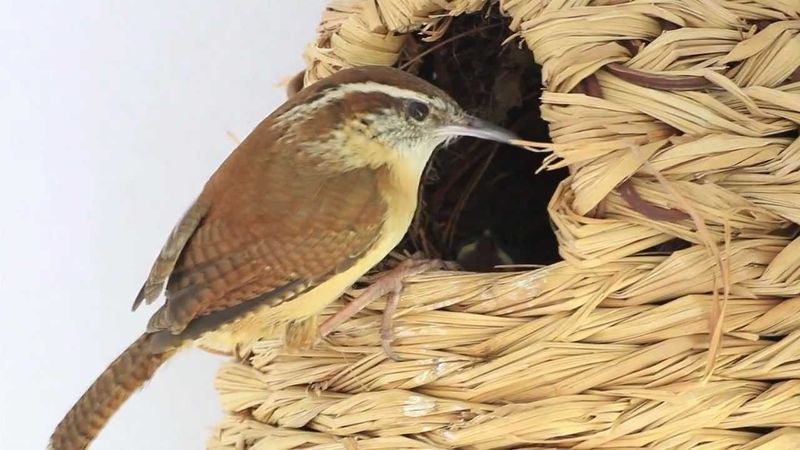
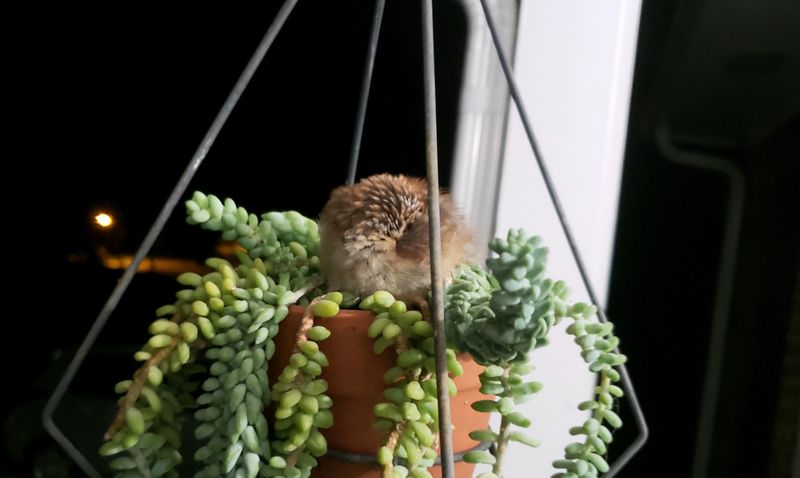
A Carolina wren sleeping in your hanging basket is most likely using a sheltered, partly enclosed spot as a nighttime roost. It is a sweet surprise to find, but the visit tells you less than you might hope about your yard or the bird’s plans.
Knowing what the sighting can and cannot show helps you protect the bird, especially if a nest is involved. Here is how to read the clues, stay out of the wren’s way, and help winter birds in better ways.
A basket may offer a sheltered place to roost
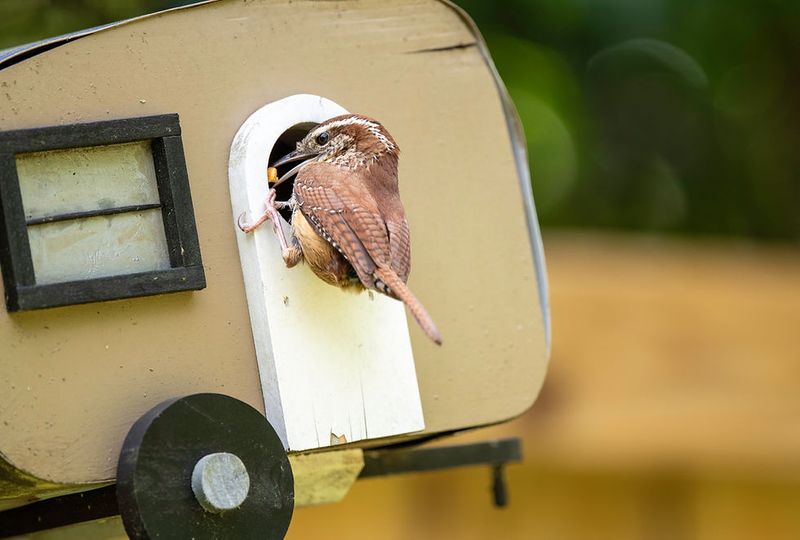
Carolina wrens are not picky about where they tuck in. Cornell’s NestWatch program lists flowerpots, mailboxes, propane-tank covers, and even old boots among the human-made spots they use.
It also notes that nest boxes can serve as winter roosts.
That background makes a hanging basket a believable choice. A basket with a thick plant, a coir liner, or a deep rim can make a partly enclosed nook, and a wren may simply see a sheltered cavity-like space.
Think of it as a possible refuge from wind and exposure, not a heated bedroom. Nobody has measured whether a basket keeps a wren warm or prevents freezing, so it is best not to promise that.
It also helps to know how thin the basket-specific evidence is. A published report by Labisky and Arnett describes wrens roosting in a hanging flower basket, but that was one observation in Florida in March, during nesting activity.
It does not show that sleeping in baskets is common in North Carolina in winter.
So the fair summary is this: your wren is doing something plausible, and it fits the species’ flexible habits. It is not a documented winter pattern for our state.
Enjoy the sighting, and hold the explanation loosely.
The visit is not a verdict on your yard
Calling the visit a compliment is a nice way to put it, but it is only a figure of speech. The wren has not rated your landscaping, and it has not decided you are a good host.
A bird choosing a nook tells us about the nook.
What the sighting may show is narrower. The basket probably offers some cover, and the wren found it useful on a cold night.
Cornell’s NestWatch species page shows how many odd places these birds will accept, so a single basket is not a surprising pick for a bird that improvises.
That means one roosting wren cannot tell you your yard is healthy, rich in insects, or free of problems. A tidy porch and a messy brush pile might draw the very same bird.
If you want a real read on your yard, look at the habitat itself: shelter, natural food, and clean water. NC State Extension’s winter wildlife advice is a good checklist for that.
Feel free to smile at the visit anyway. Just keep the warm feeling separate from the facts, and let the bird be a bird.
An overnight visit does not prove there is a nest
Sleeping in a spot and raising young in it are two different jobs. A roost is a place to get through the night.
A nest is a built structure meant to hold eggs and chicks, and it changes how careful you need to be.
Seeing a wren in your basket at dusk and again at dawn cannot settle the question. It does not tell you whether the bird is building, whether it has a mate, or even whether it is the same bird each night.
Those answers only come from watching over time.
So watch from a distance, from a window or across the porch, and keep visits short. Signs that nesting has begun include a bird carrying twigs, grass, leaves, or other material to the basket, a bundle of material appearing in it, or adults making frequent trips in and out.
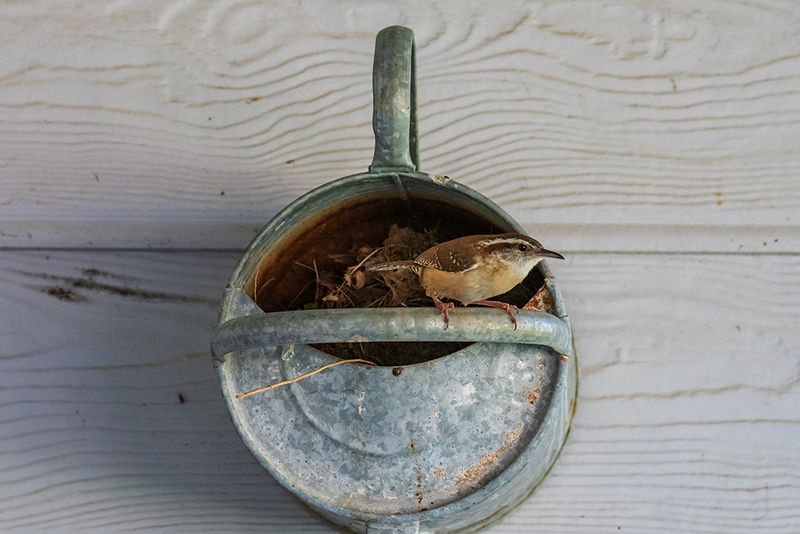
Later signs include faint chirping or adults carrying food. NestWatch notes that wrens readily nest in containers like these, so it is a real possibility.
Please do not peek by lifting foliage or tipping the basket. A quick look can scare off the adult.
U.S. Fish and Wildlife Service guidance separates active nests from inactive ones, and you cannot judge that by poking around.
When in doubt, treat the basket as occupied.
Give the bird space and keep sprays away from nests
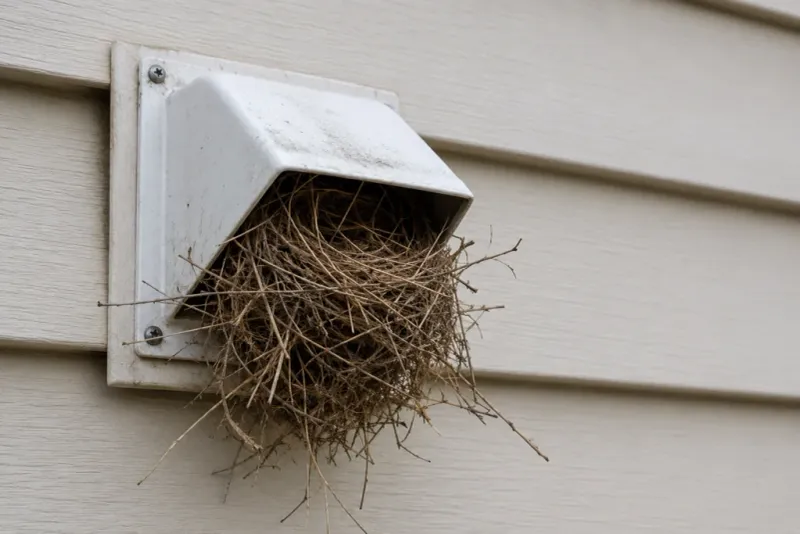
Once you know the difference between a roost and a nest, the safe steps are simple. Do not handle the bird, and do not keep flushing it out by checking the basket again and again.
Repeated disturbance can make a bird give up a favorite spot.
If you see nest-building, eggs, or young, do not disturb, remove, or move the nest. That includes the early stage when only a few twigs have been added.
Move your watering to the edges, skip rearranging the plants, and use another door if the porch traffic is heavy.
There is a legal side too, and it is short. The U.S.
Fish and Wildlife Service describes active nests as protected and says destroying one may require a permit. If you are unsure of your situation, treat the nest as active and leave it alone.
Sprays deserve a pause as well. North Carolina’s pesticide use and safety guidance advises homeowners to look for nests before spraying and to avoid applications near them.
On a porch, that means checking baskets, wreaths, and eaves before you treat for wasps, spiders, or weeds. If a nest is there, wait or choose a spot well away from it.
A few feet of space and a skipped chore cost you very little. For a tiny bird, they can make the whole difference.
Evergreen cover offers another nighttime refuge

Suppose your wren moves on, or you would simply like to give birds more choices than a porch basket. Planting for cover is a lasting fix.
NC State Extension recommends dense evergreen cover and describes it as nighttime roosting habitat for winter birds.
In practice, that means shrubs and small trees that hold their foliage and branch thickly. Native choices such as American holly, eastern red cedar, and wax myrtle fit many North Carolina yards.
Group a few together near a corner or fence line so birds have layers to slip into.
Resist the urge to trim everything tight. A shrub sheared into a hard, open shape has less hiding room than one allowed to fill out.
Leaving a brush pile in a back corner adds another tangle of cover that wrens often investigate.
Keep expectations modest. Extra cover supports winter birds in general, but it does not promise that a particular wren will move in or stay safe.
It is a long-term habitat choice, and young plants take a few seasons to thicken.
If you have a spot in mind, fall and winter are good times to plan. Even a single well-placed evergreen is a useful start.
Food is not the only way to help
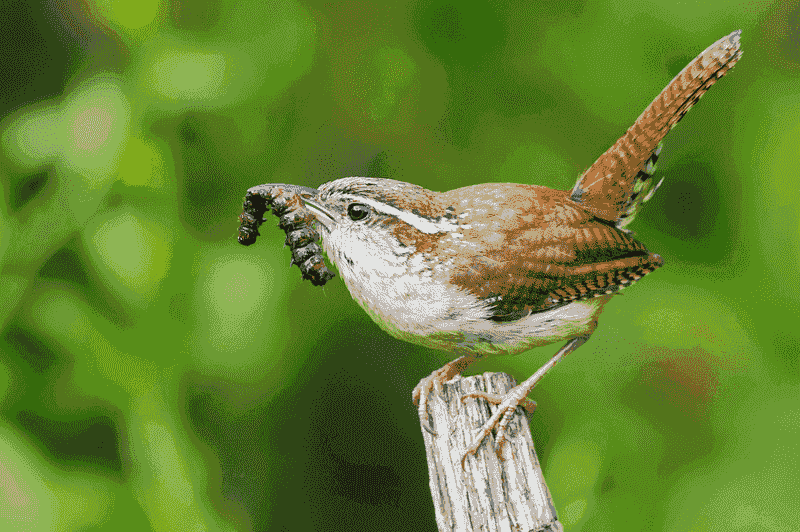
A wren sleeping in a basket is not necessarily asking for food. Its menu is mostly insects and spiders, according to Audubon’s field guide, with berries and some seeds added, especially in winter.
That is why a seed-filled platform often does not interest them much.
Where you can help is by leaving natural food in place. Leaf litter shelters insects and spiders, and berry-producing shrubs give another winter option.
A small, undisturbed corner of the yard does a lot of quiet work.
Feeders are optional. If you enjoy having one, NC State Extension notes that suet attracts wrens and describes feeders as a supplement to natural food.
It also recommends cleaning feeders every two to three weeks to cut down on disease. Mark the date on your calendar so it does not slip.
Please do not think of a feeder as a safety net for this one bird. Offering food will not guarantee that it stays warm, healthy, or out of harm’s way, and the bird may never touch it.
The basket, the cover, and the quiet space around them matter just as much.
In the end, the best thing you can do for a wren on a cold porch is mostly to leave it alone.