
Your neighbor’s kitchen window should not have a clear view of your patio chairs. The good news is that fall is one of the smartest times to plant a living fence, because cool air and warm soil help roots settle in fast.
Get the right shrubs in the ground before it freezes, and they will wake up in spring ready to grow like crazy. Here are ten tough, quick-growing picks that can turn an open yard into a private green retreat by next summer.
1. Green Giant Arborvitae
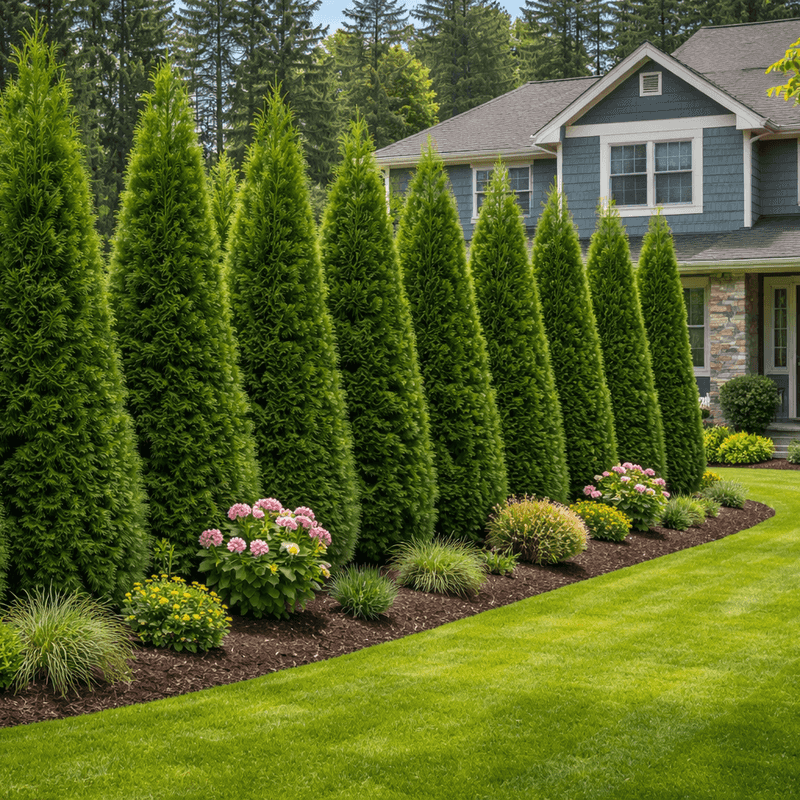
Ask any landscaper which evergreen gets the most calls for privacy, and Green Giant will probably come up first. It can add three to five feet a year once its roots settle in, which is wild for an evergreen.
Fall planting gives it a big head start. The soil stays warm for weeks after the air cools, so roots keep spreading while the top rests.
By the time spring arrives, the plant is ready to push out fresh, feathery growth instead of struggling to get established.
Space plants about five to six feet apart for a solid wall, or a bit closer if you want results sooner. Give them full sun to light shade and soil that drains well.
Water deeply once a week until the ground freezes, then let winter do its thing.
Here is a fun bit of history. Green Giant is a hybrid that came out of Denmark and was later shared by the U.S.
National Arboretum. Gardeners loved it because deer usually leave it alone, unlike the common Emerald arborvitae they treat like a salad bar.
It handles cold down to Zone 5 and heat into Zone 7, so it works in a huge part of the country.
2. Privet
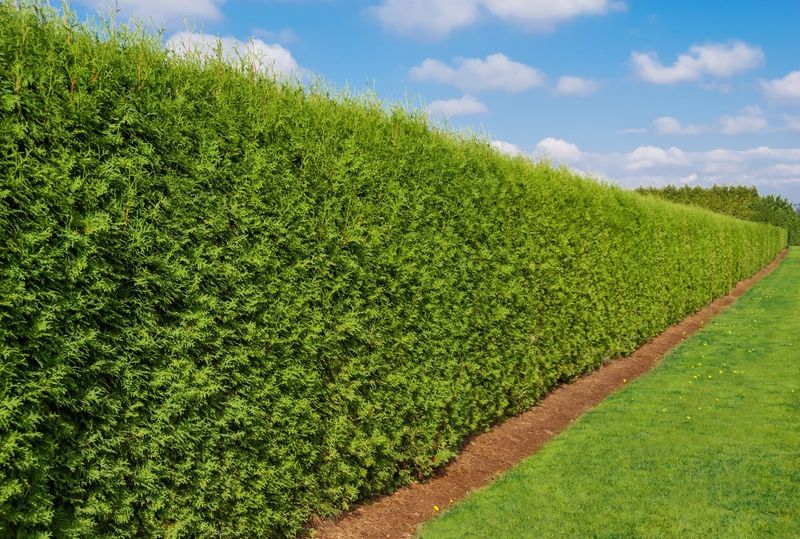
Grandma’s house probably had one. Privet is the old-school hedge that lined sidewalks and front yards for generations, and it earned that spot by growing fast and forgiving almost every mistake.
Many types can put on two to three feet in a single season. You can shear it into a crisp, formal box or let it grow looser for a softer look.
Either way, it fills gaps quickly, which is exactly what you want when the goal is to block a view by July.
Fall is a great window to plant bare-root or potted privet. Set plants about one to two feet apart in a trench for a tight hedge.
Water well, add mulch, and it will root in before winter.
A quick word of caution keeps this pick honest. Some privet species spread by seed and are considered invasive in parts of the Southeast and mid-Atlantic.
Check your local extension list, and consider a sterile or non-invasive variety like ‘Golden Vicary’ or keep up with trimming so it never sets berries. Handled responsibly, privet is still one of the quickest, cheapest ways to build a living wall.
3. Leyland Cypress
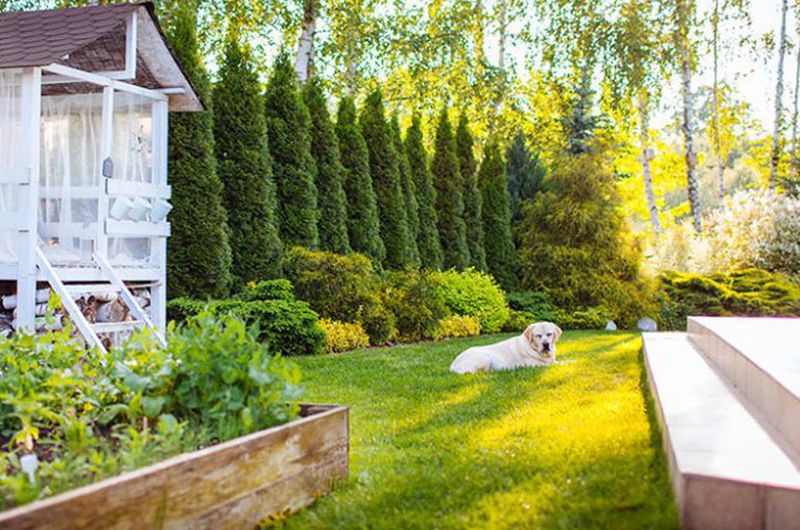
Picture a three-foot nursery plant turning into a twelve-foot screen in about three years. That is the Leyland cypress story, and it is why so many new subdivisions are lined with them.
Few evergreens grow faster. Under good conditions, Leylands can stretch three to four feet a year, with soft, feathery branches that look graceful rather than stiff.
They also make a nice windbreak, which is a bonus if your yard gets hammered by winter gusts.
Plant them in fall while roots can still grow, and give them room. Six to eight feet apart is a smart spacing, because crowding invites disease.
Full sun and well-drained soil keep them happiest.
Now for the honest part. Leylands can struggle with canker and needle blight in humid regions, especially when stressed by drought.
Water during dry spells, avoid soggy soil, and mix them with other shrubs instead of planting one long monoculture. That way, if one plant has a bad year, your whole screen does not go down with it.
Fun fact: the Leyland cypress is a natural accident. It popped up in Wales in the 1800s when two different cypress species crossed on their own.
4. Cherry Laurel
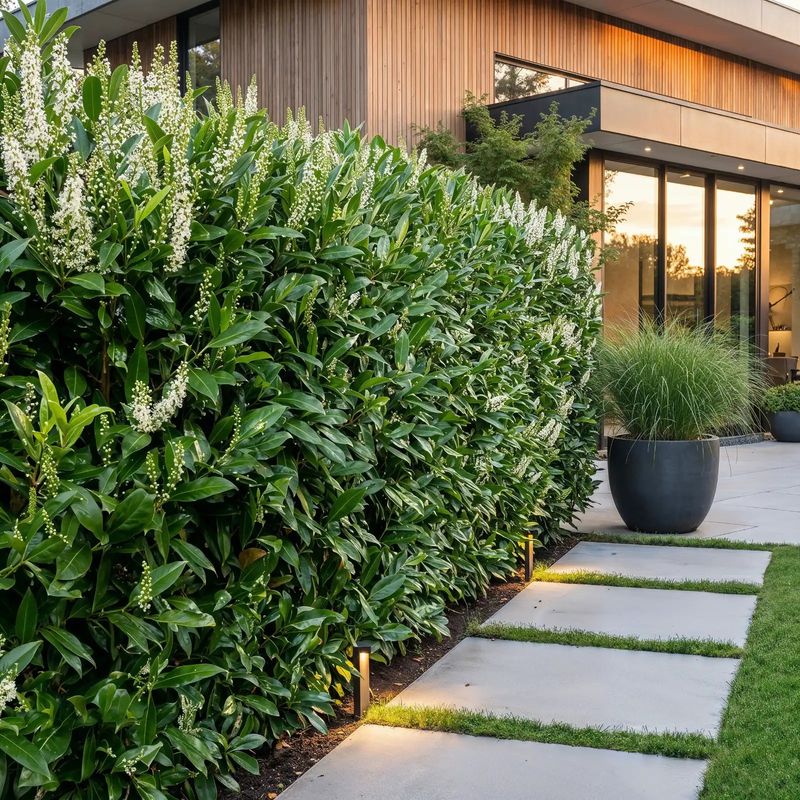
Big, shiny leaves catch the light like they have been polished. Cherry laurel brings a lush, almost tropical feel to a privacy hedge, and it grows quickly enough to make impatient gardeners smile.
Expect around two feet of growth a year once it settles. The broad leaves block views better than needles do, so even a younger hedge feels private sooner.
In spring, upright spikes of small white flowers add a sweet bonus.
Fall planting works well in Zones 6 through 8, and some varieties push into Zone 5 with protection. Look for tougher types like ‘Schip’ or ‘Otto Luyken’ if you want less fuss.
Space larger varieties three to four feet apart for a full look.
Shade tolerance is where cherry laurel really shines. It handles partial shade better than many fast growers, which makes it handy under tall trees or along the shady side of a house.
Keep it out of soggy spots, since wet feet can cause root trouble.
One safety note matters for families. The leaves and seeds are toxic if eaten, so keep pets and small kids from snacking.
Trim with pruners instead of shears to avoid chopped, browned leaf edges.
5. Spartan Juniper
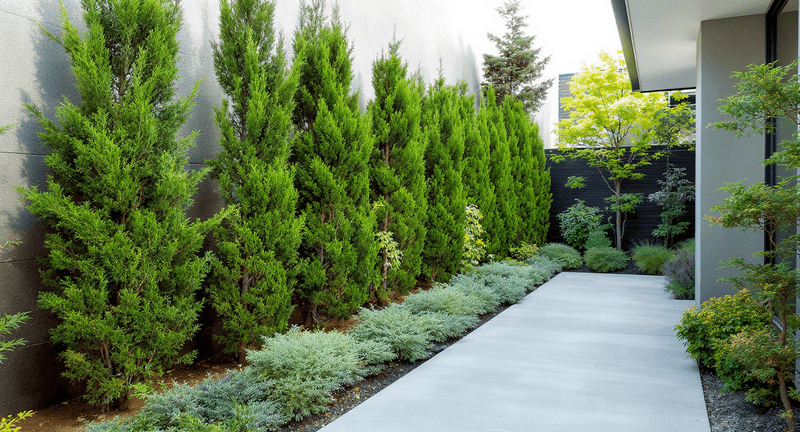
Got a skinny side yard where most hedges would swallow the path? Spartan juniper was practically made for that problem.
It grows in a tight, narrow column, usually staying three to five feet wide while climbing toward fifteen feet tall. That shape lets you block a neighbor’s window without losing your walkway.
Growth runs about a foot or more a year, which is quick for such a tidy plant.
Drought toughness sets it apart from thirstier picks on this list. Once established, Spartan junipers shrug off hot, dry summers and poor soil.
They want full sun and good drainage, and they really dislike wet ground.
Plant them in fall about three feet apart for a solid screen. Water regularly through autumn, then ease off once winter sets in.
Next year, a deep soak during heat waves is usually enough.
Little pruning is needed, since the plant holds its shape naturally. That makes it a smart choice if you would rather spend summer weekends grilling than trimming.
The dense, dark green foliage also gives small birds a cozy place to shelter in winter storms, so your new screen doubles as wildlife housing.
6. Nellie Stevens Holly
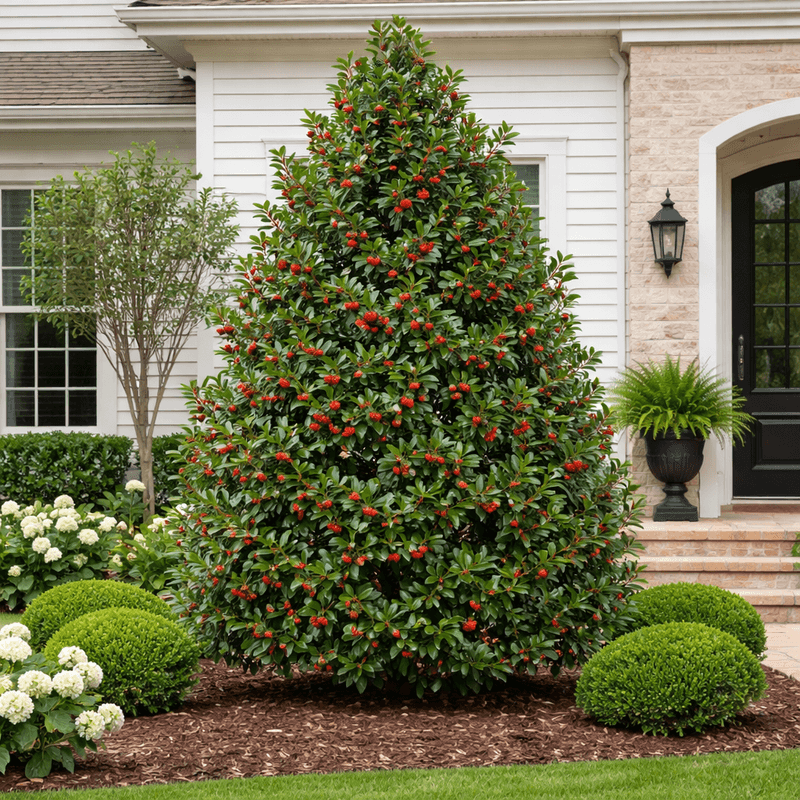
Red berries against glossy green leaves in January can brighten the gloomiest winter day. Nellie R.
Stevens holly delivers that holiday look plus a privacy wall that grows faster than most hollies dare.
Plan on two to three feet of growth per year in good conditions. It forms a natural pyramid shape that fills out wide at the base, so you get privacy from the ground up.
The spiny leaves also make it a tough barrier that people and critters think twice about pushing through.
Fall planting suits it nicely. Give it full sun to part shade and space plants about six feet apart.
It handles heat and humidity well, so it is a favorite in the South and mid-Atlantic, and it holds on into Zone 6.
Here is a quirky origin story. The original plant grew from a seed Miss Nellie Stevens collected in Maryland around 1900, and it turned out to be a cross between two holly species.
It can set berries even without a nearby male holly, though having one boosts the show.
Wear gloves when pruning. Those leaf points are serious, and your hands will thank you.
7. Skip Laurel
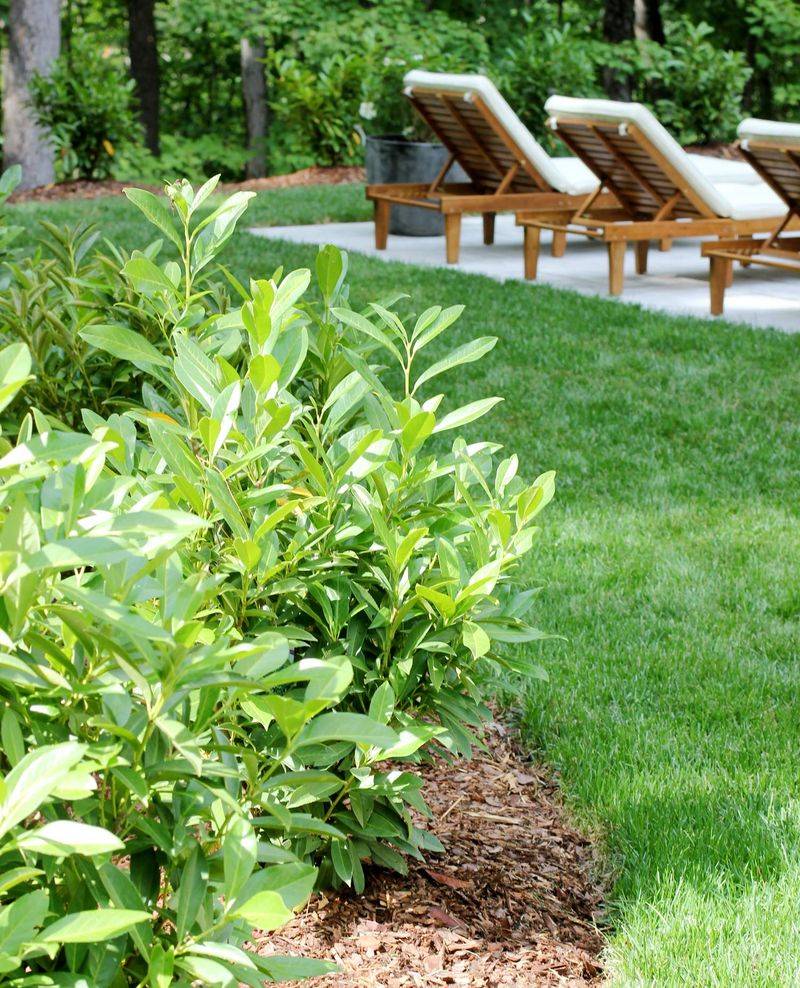
Think of skip laurel as cherry laurel’s more manageable cousin. It keeps the shiny leaves and quick growth but settles into a size that fits ordinary suburban lots.
Most plants reach about ten to fifteen feet tall and five to eight feet wide, growing roughly two feet per year. That makes it ideal around patios, pools, and hot tubs where you want a cozy green room without a towering wall.
The narrower leaves also give it a slightly finer, neater texture.
Cold hardiness is better than many broadleaf evergreens, often reaching Zone 6 and sometimes Zone 5. Planting in early fall gives roots time to anchor before frost.
Set plants three to four feet apart for a hedge that knits together by summer.
Landscapers lean on it because it takes pruning well and bounces back fast. You can keep it sharp and formal or let it grow a bit loose and natural.
Fragrant white flower spikes show up in spring, and bees go crazy for them.
Avoid heavy clay that stays wet. Mix compost into the planting area and add a few inches of mulch to protect roots through the first winter.
8. Red Twig Dogwood
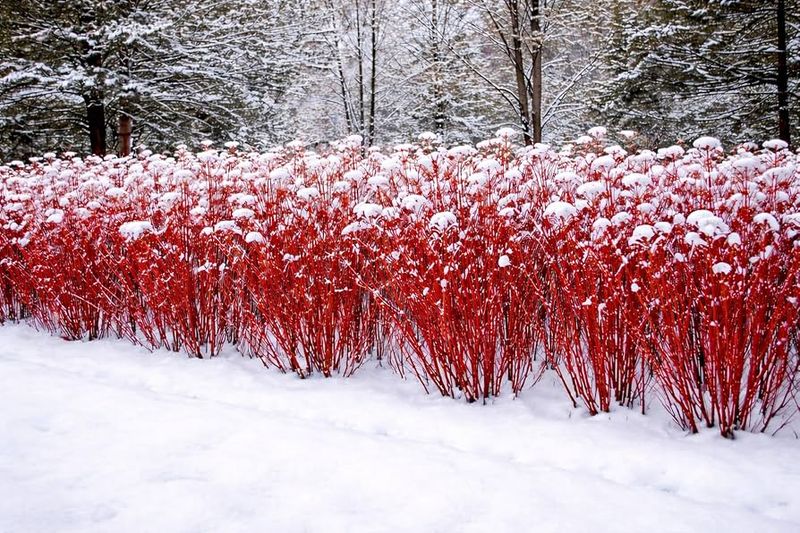
Not every privacy screen has to stay green all year. Red twig dogwood loses its leaves in fall, then shows off brilliant scarlet stems that glow against snow like holiday lights.
During the growing season, it fills out fast, often adding two to three feet a year. By midsummer, the leafy thickets block views from patios and garden beds when you are outside the most.
It is a fine choice where you want seasonal privacy rather than a solid wall.
Wet spots are no problem at all. While many shrubs on this list sulk in soggy soil, dogwood happily grows along ditches, rain gardens, and low corners.
It is also tough as nails in cold climates, often hardy into Zone 3.
Plant in fall about four to five feet apart. Each spring, cut a third of the oldest stems to the ground.
Fresh new stems have the brightest color, and the shrub stays full.
Birds benefit too. White berries in late summer feed robins and other songbirds, which makes this an easy way to welcome wildlife.
Native types also support local pollinators, so your new screen does good work beyond hiding the neighbor’s trampoline.
9. Forsythia
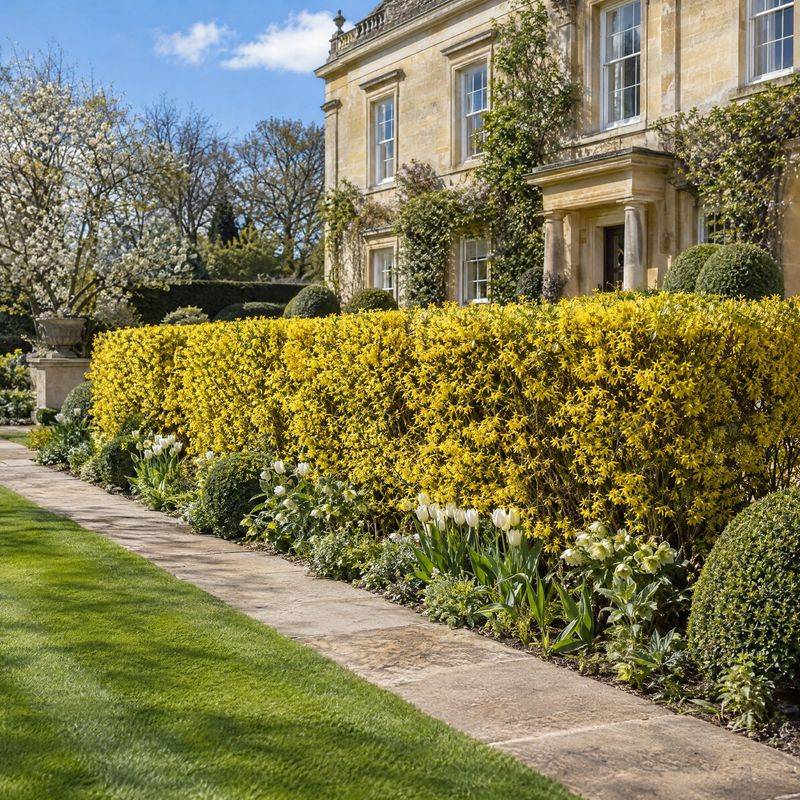
Bright yellow forsythia is often the first thing that blooms in spring, practically shouting that winter is over. Behind that sunny show is one of the fastest, toughest shrubs you can plant.
Growth can top two feet per year, and the arching branches spread wide. Mature plants often reach eight to ten feet tall and just as wide.
That loose, fountain-like shape makes a relaxed, informal screen along a property line.
Planting before the ground freezes is easy, since forsythia roots readily and handles a wide range of soils. Full sun gives the best flowers, though it tolerates some shade.
Space plants about five feet apart.
Here is a clever trick worth knowing. Forsythia roots wherever a branch touches the ground, so you can bend a low stem down, pin it under soil, and get a free new plant by next year.
Gardeners have used this layering method for ages to stretch their hedges on a budget.
Timing your pruning matters. Trim right after flowering in spring, because next year’s blooms form on this summer’s growth.
Shearing in fall cuts off the flower buds, leaving a green hedge with no yellow celebration.
10. Viburnum
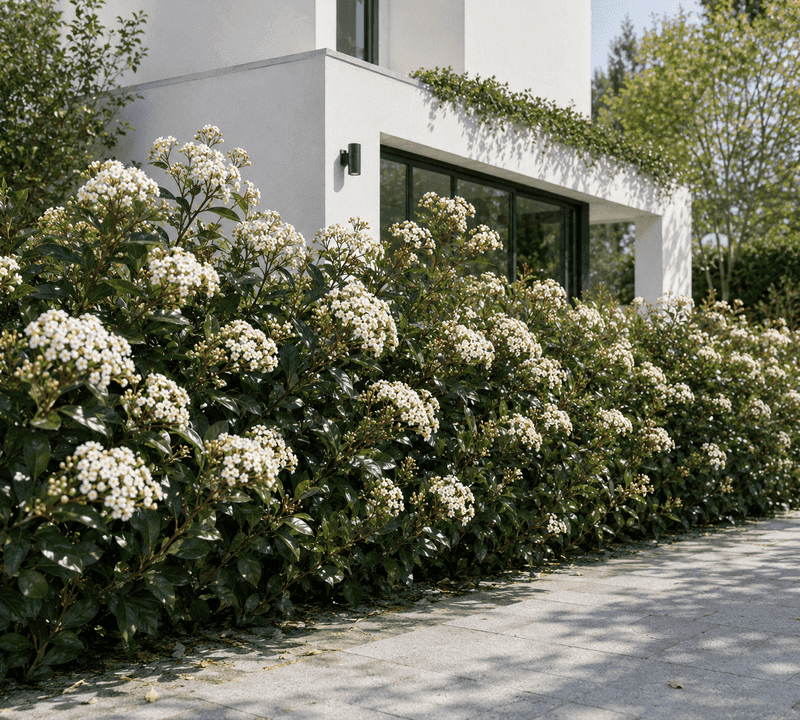
Few shrubs give you as much for one planting hole as viburnum. Flowers, fragrance, fall color, berries for birds, and a thick leafy screen all come in the same package.
Many varieties grow one to two feet per year, and some, like arrowwood and Chinese snowball viburnum, move even faster. Evergreen types such as Awabuki fit warmer zones, while deciduous types handle cold winters far north.
With so many species, there is one for nearly every US backyard.
Spring brings big clusters of white or pinkish flowers, some smelling sweet enough to stop you on the sidewalk. In fall, leaves often turn burgundy or orange, and berries draw cardinals, bluebirds, and cedar waxwings.
Plant in fall, spaced four to six feet apart depending on the variety’s mature size. Most viburnums like full sun to part shade and moist, well-drained soil.
A layer of mulch helps hold moisture through winter.
Mixing two or three viburnum types makes a smart, resilient hedge. Planting different kinds also helps berry production, since many need a partner for cross-pollination.
You end up with a screen that changes with the seasons instead of looking the same all year.