

Wrapping your fig in late fall can help keep its stems alive through a North Carolina winter, and living stems are what carry some of next summer’s earliest figs. Cold can kill a fig back hard in the Piedmont and mountains, so a little work now can save you a lot of disappointment later.
Protection lowers the odds of damage, but it cannot promise a harvest. Here is how to do it well, plant by plant.
What protecting stems means for next year’s figs
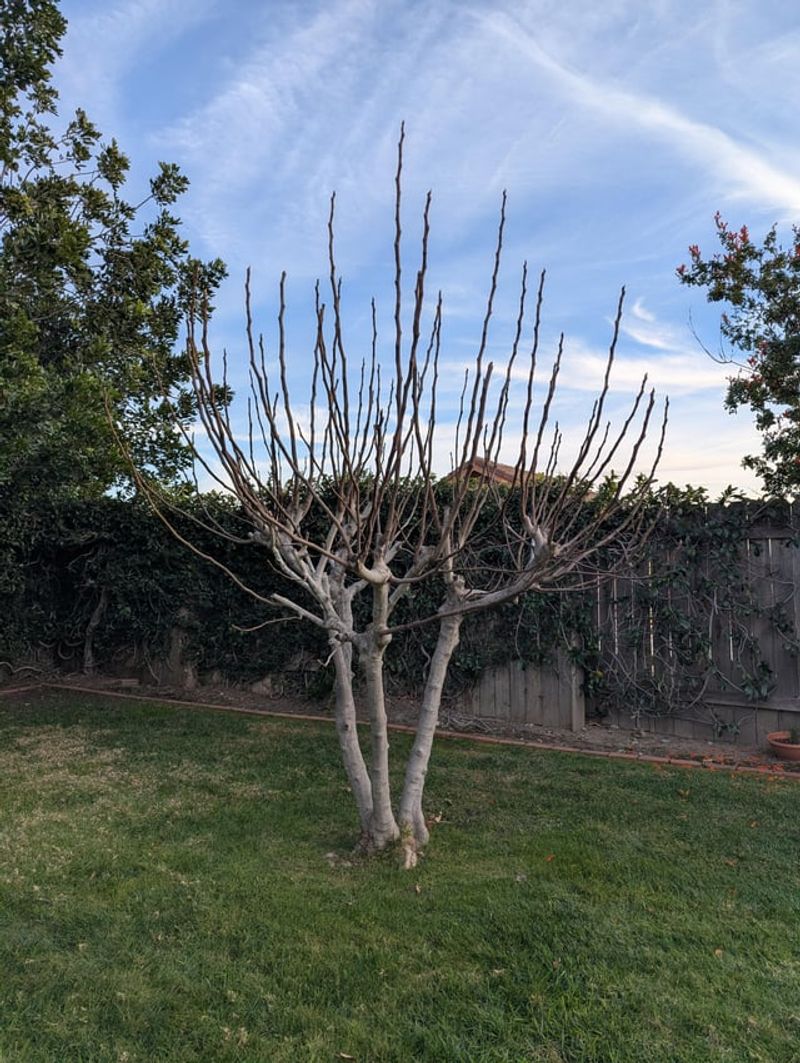
Figs make fruit in two different ways, and that is the key to understanding why stems matter. Some cultivars set a first round of figs, called breba figs, on last year’s wood.
According to Maryland Extension, the main crop forms on the current season’s growth instead.
That means saving old branches matters most if your variety bears a breba crop. If you lose those stems to cold, you may lose that early round of fruit.
The main crop can still form on new shoots, though severe dieback can push it later and shrink the odds that the figs ripen before fall.
The same Maryland guidance says figs with little to moderate stem injury can still give a modest crop the following summer. Shoots that restart from the roots after severe injury rarely ripen fruit in that same season.
So the more wood you keep alive, the better your head start.
Not every fig in North Carolina bears breba figs, and not every yard gets cold enough to hurt the stems. Check what your cultivar does, and think about how exposed your tree is.
You can also read how local gardeners handle this in NC State’s home garden fig guide.
Think of wrapping as lowering your risk, not buying insurance. A protected fig can still lose wood in a rough winter, and an unprotected one in a mild yard may sail through.
The goal is to give the stems a better chance, then see what spring brings.
Protect stems after leaf drop and before severe cold
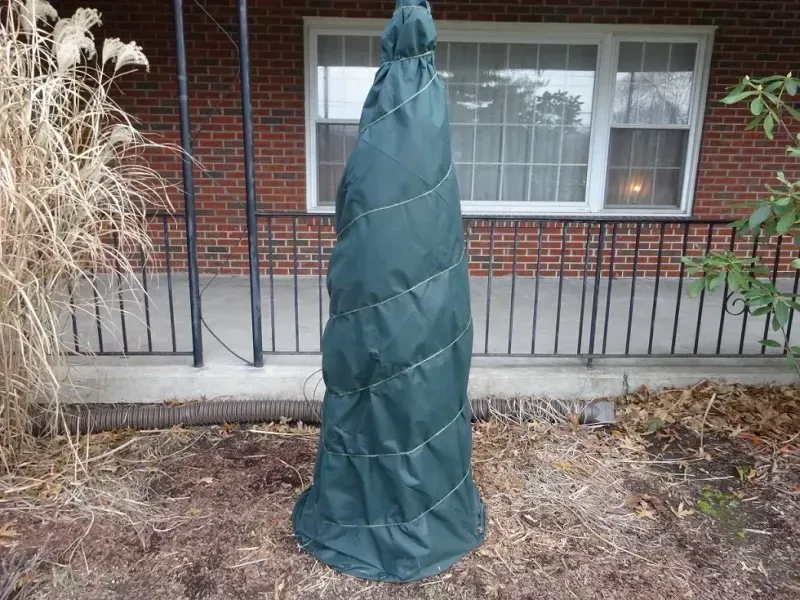
Timing is a window, not a single date. The best moment is late fall, after the leaves have dropped and before severe cold arrives.
The first hard freeze is not a universal deadline, and many fig growers get a little more time than that.
Leaf drop matters because a fig still holding leaves is not fully settled for winter. Wrapping too early can trap moisture and heat around stems that are still active.
Watch the forecast, and have your materials ready so you can act when a cold snap is on the way.
Young plants and exposed stems need the most attention. NC State Extension says young bushes and trees are especially prone to winter injury, and that figs may freeze back to the ground at 20°F or lower.
Cold injury is also named as a particular concern in the Piedmont and mountains by NC State’s fig disease guide.
Treat 20°F as a warning sign, not a guaranteed damage line. How long the cold lasts, your cultivar, the health of the plant, and the spot it sits in all change the outcome.
Maryland Extension describes injury under sustained cold below 20°F.
North Carolina is not one climate. A fig on a sheltered south wall in Charlotte faces different odds than one in an open mountain yard.
Match your effort to your site, and give the most care to the youngest, most exposed plants.
Protect young in-ground figs at the base
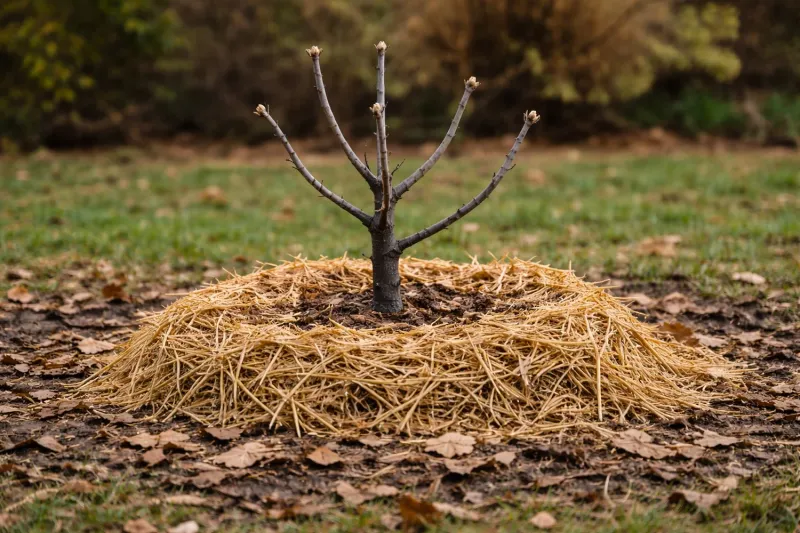
For young figs planted in the ground, the base is the part worth saving first. NC State Extension recommends mounding loose soil or mulch 1 to 2 feet around the trunk in late fall, as described in Fig Culture in North Carolina.
The idea is simple: bury the lowest part of the stems so a cold snap cannot reach them.
Use loose material like garden soil, shredded leaves, or bark mulch. Avoid packing it down hard or using heavy, soggy clumps that stay wet.
Pull it up in a neat cone and leave the upper branches as they are.
Why the base? Buds near the ground stay warmer than the tips of branches high in the air.
If the top freezes, a protected base gives the plant a place to regrow from. That keeps the plant going, though it does not promise a crop that same summer.
This method is best for young bushes and small trees. It will not shield every stem, so branches above the mound can still be injured in a hard winter.
Think of it as a safety net for the foundation.
Come spring, remove the mound once frost is no longer a hazard. Leaving it in place can hold moisture against the bark and slow growth.
Pull it back gradually if late cold is still possible, and keep an eye on the weather.
Choose stem protection that fits the plant

Once the base is covered, you may want to shield the stems too. There are a few ways to do it, and the right one depends on the plant.
Maryland Extension lists three options worth trying.
If your branches bend easily, pin them down to the ground and cover them. You can also wrap the stems with bagged leaves.
A third method is to build a cylinder of wire fencing around the plant and fill it with leaves or straw.
Multi-stem bushes are much easier to protect than large tree-form figs. A tall single trunk is awkward to bend or surround, and a big canopy catches more wind.
If yours is a big tree, you may do best to focus on the lower trunk and accept that upper branches might take some damage.
When severe weather is in the forecast, NC State Extension also suggests covering plants with suitable materials. Choose something breathable, and remove any cover during warm spells so heat and moisture do not build up inside.
One caution: insulation can shelter voles. These small rodents can feed on tender bark over the winter.
Check your protected plants from time to time, look for runways or gnawed spots, and be ready to adjust.
No single method fits every yard. A sheltered backyard may need only light protection, while an open hillside may call for more.
Start with what suits your fig, then watch how it does.
Protect container figs and their roots
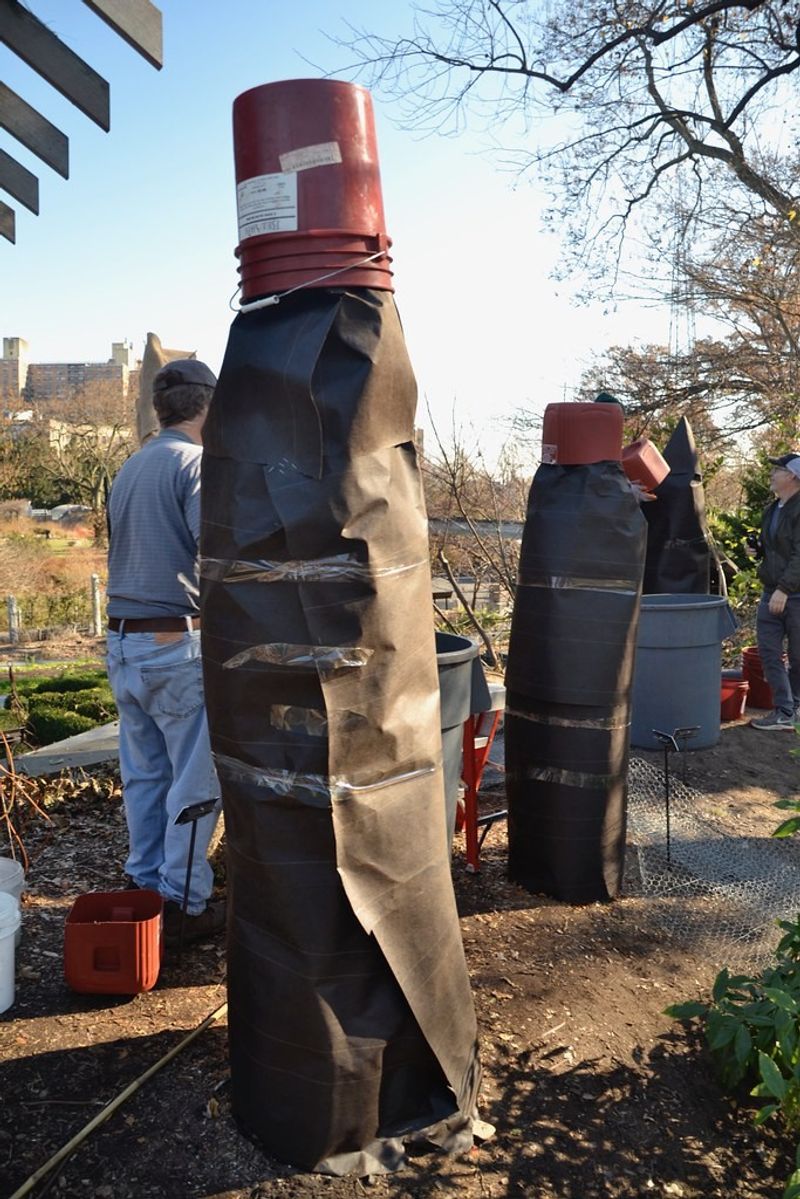
A fig in a pot lives by different rules. Its roots sit above ground, where air can chill them from every side.
That makes container figs more vulnerable to cold than roots tucked into soil, according to Maryland Extension.
The first step is moving the pot to a protected spot after the leaves drop. An unheated garage, a shed, or a covered porch against the house can work.
The goal is shelter from the harshest cold, not warmth, since a dormant fig does not need to be kept cozy.
If you cannot move the pot, insulate around it. Wrap the container with burlap, bubble wrap, or a thick layer of bagged leaves, and set it on a board or stand instead of bare ground.
Group several pots together near a wall to help them hold in what little warmth there is.
Lighter pots are far easier to move, so a rolling plant caddy can save your back. Water sparingly over winter, just enough that the soil does not dry out completely.
Soggy soil in a cold pot is as risky as a freeze.
Keep this advice for container plants. Established in-ground trees need a different approach, like the mounding and stem covers described earlier.
Check your potted figs now and then, and watch for mold, mice, or a pot that has cracked in the cold.
Check for damage and prune in spring
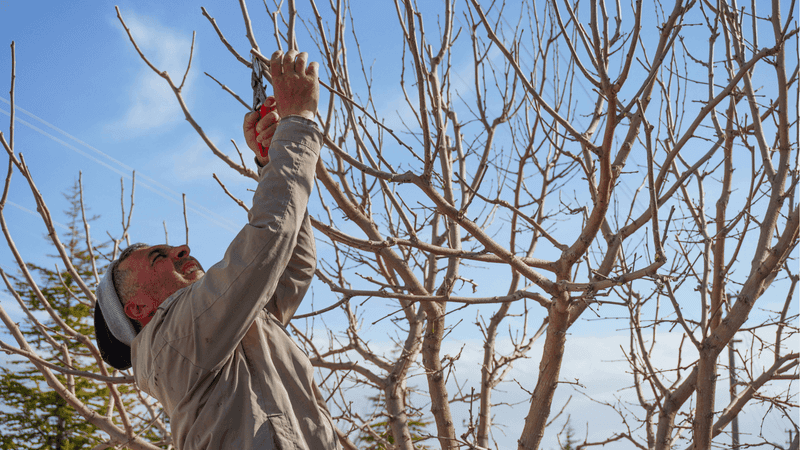
Resist the urge to prune in fall. Spring tells you far more about what survived.
Wait until new growth starts to show, then take a careful look at each branch.
Lightly scratch beneath the bark on several stems, as Maryland Extension suggests. Green, moist tissue means the stem is alive.
Brown and dry means it is not. Check a few spots along each branch, since the tips may be dead while the lower parts are fine.
In early spring, prune out branches that are dead or injured. NC State Extension advises this as well.
Cut back to healthy wood, just above a live bud or a green section.
A top that looks dead does not always mean the whole fig is gone. NC State notes that figs often recover from above-ground injury, though fruiting is delayed until new growth emerges.
Be patient, because some plants leaf out late.
Shoots that come up from the roots after severe damage may not ripen fruit that season. Protection can help save stems, but it cannot guarantee a harvest.
Even so, a fig that comes back green is a pretty good reward for a chilly afternoon of wrapping.