
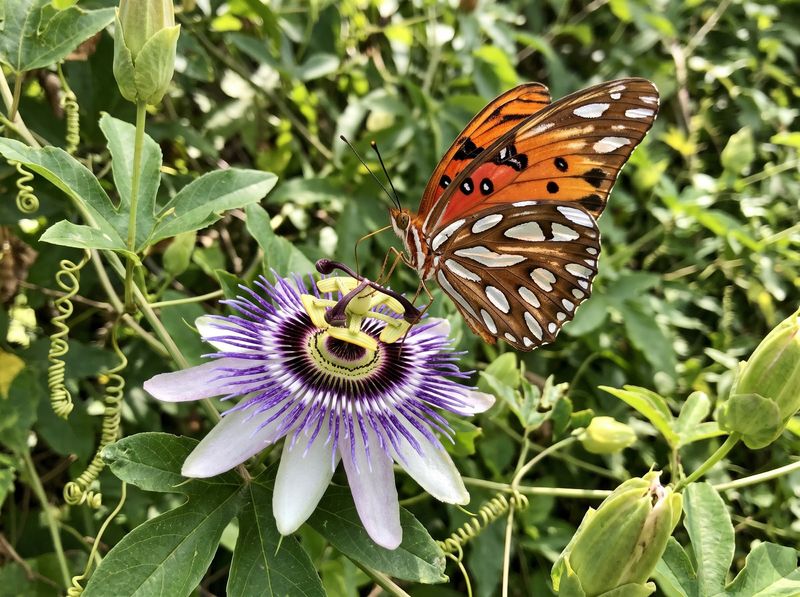
Maypop, a native Texas passionflower, can climb your fence, screen the view from next door, and feed Gulf fritillary caterpillars all at once. It does this on a seasonal schedule, so the leaves come and go with the weather.
If you plant in fall, the roots get a head start in cooler months. Here is how to decide if this butterfly-friendly vine fits your fence.
Maypop is the vine that can do both jobs
Maypop, also called purple passionflower (Passiflora incarnata), is the plant this article is about. Not every passionflower is the same, and many fancy tropical types sold at garden centers are different species with different habits.
Maypop is the one with a long Texas history.
According to the Lady Bird Johnson Wildflower Center plant profile, maypop is native to Texas, including the eastern part of the state, and it climbs by tendrils. The same profile lists Gulf fritillary as a butterfly that uses it as a larval host.
That means the caterpillars of this orange butterfly eat its leaves.
The Wildflower Center’s Central Texas native plant collection also includes maypop, so it is not just an East Texas plant. Still, where you live matters, and sun, soil, and water all change how well it does.
Think of these as possible benefits, not promises. A new vine will not cover a fence overnight, and it will not make a solid wall.
What you get is a native climber with striking flowers that can lend some screening and a place for butterflies to raise young.
How much privacy can a deciduous vine provide?
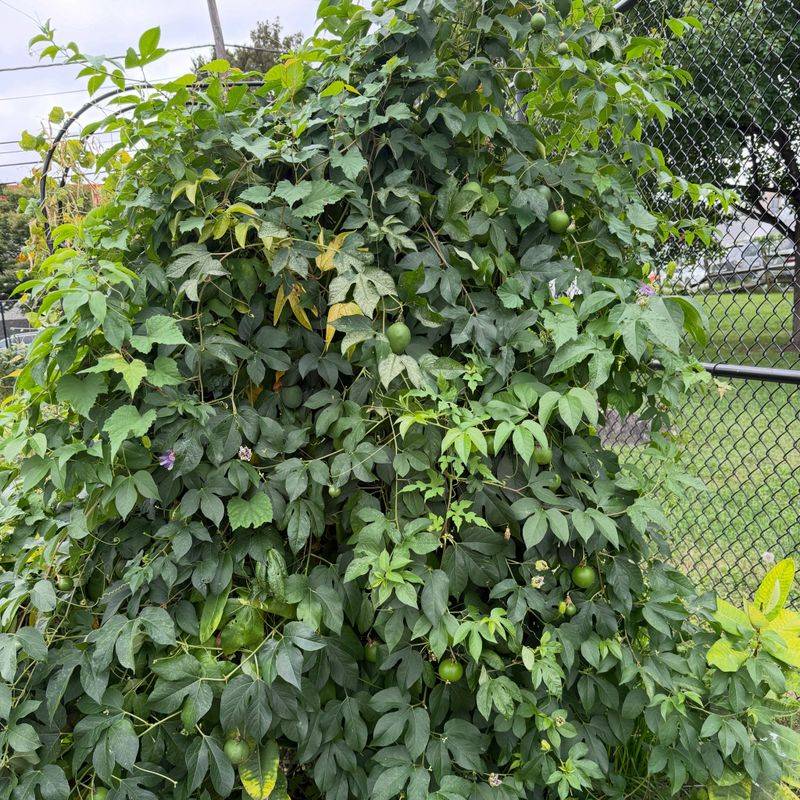
Maypop climbs with tendrils, those curly little threads that grab onto wire, lattice, or slats. A fence gives it plenty to hold.
The University of Florida IFAS Extension suggests planting passionflower at the base of a fence, trellis, or arbor.
The Wildflower Center lists a potential vine length of about 25 feet. That number sounds great, but it describes what the plant can do, not what it will do on your fence.
Coverage depends on sun, water, soil, and how many caterpillars visit.
Maypop is also deciduous. Its foliage dies back in cold weather, and the plant can go dormant for the season.
Come winter, expect gaps and a tangle of bare stems, and in spring the new growth starts over from the roots.
So call it a seasonal screen, not a year-round privacy barrier. If you need a solid wall in January, pair it with an evergreen shrub or keep a privacy panel in place.
If a green curtain from late spring through fall sounds good, maypop is worth a look.
Choose a fence line that can tolerate spread
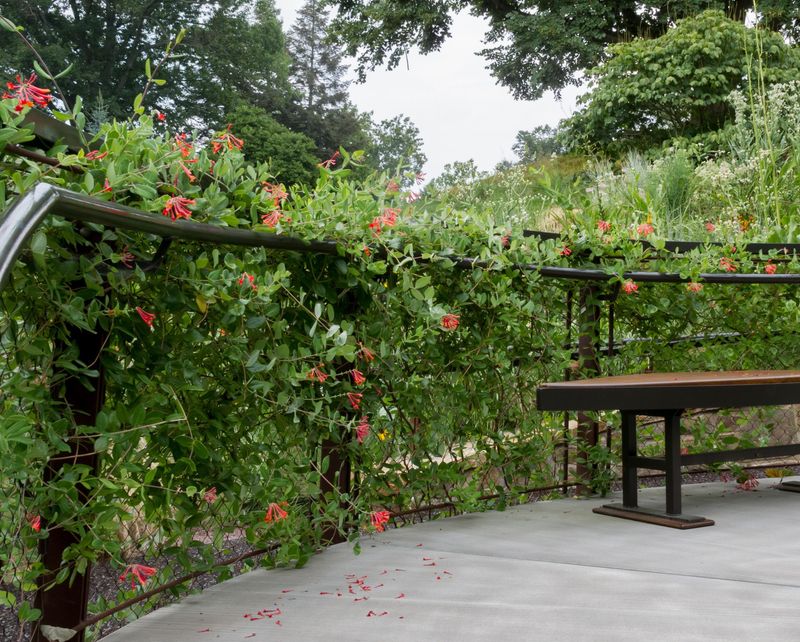
Before you dig, walk your fence and picture where the vine will wander. Plant it at the base of a fence, trellis, or arbor, as UF/IFAS advises, and give it room.
Expect to prune now and then.
The bigger surprise is underground. Maypop can spread by root suckers, and Texas A&M AgriLife describes a deep perennial rootstock that sends up sprouts.
New shoots can show up a few feet from the parent plant, sometimes in a flower bed or lawn.
That is why the spot matters. A fence line with a mowed strip or a gravel edge makes stray shoots easy to spot and pull.
A fence beside a prized flower bed or a neighbor’s lawn is a trickier choice.
The Wildflower Center profile lists sun to part shade and dry to moist soil, but real yards vary. Check how much sun the fence gets, whether water drains or pools after rain, and whether you can irrigate.
Conditions in Houston, DFW, Central Texas, and the Hill Country differ, so adjust to your own yard.
Fall planting buys roots time, not a guarantee
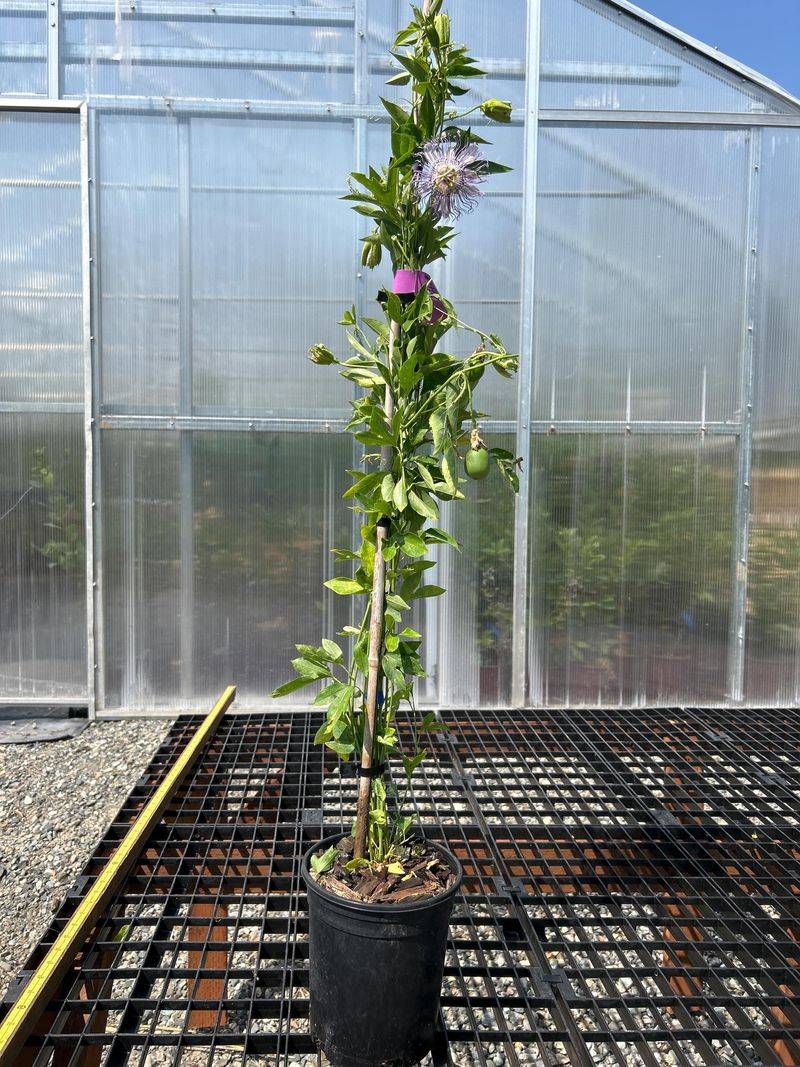
Fall is a smart window for many Texas perennials. The Lady Bird Johnson Wildflower Center explains that fall and early winter planting gives plants time to grow roots before summer heat arrives.
Cooler air means less stress on the plant while it settles in.
The roots are doing the work during those months, even when the top of the plant looks quiet. A maypop planted in autumn may die back after the first frost, which is normal for a deciduous vine.
Underground, though, it can keep building.
The Wildflower Center also has a Central Texas article on the best time to plant in fall, which backs up the timing idea for the region.
Treat this as an opportunity, not a promise. A fall planting does not mean full establishment by summer, and it does not mean a covered fence by June.
A harsh freeze, soggy soil, or a dry autumn can slow things down. Roots get a head start, and the results still depend on your yard.
Keep a new planting watered as it establishes
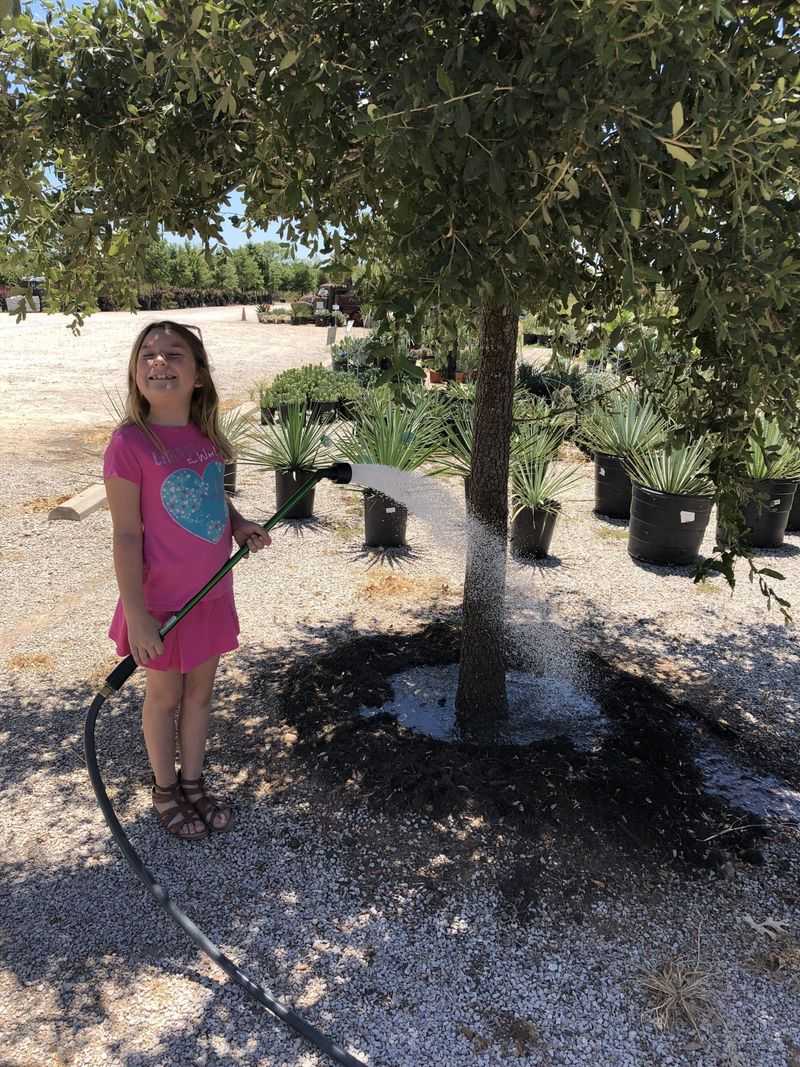
A new plant has small roots, and small roots cannot reach far for water. Even a native needs help while it settles in.
The Wildflower Center’s fall planting guidance stresses that new plants still need water as they establish.
Do not count on fall rain to do the job. Texas autumns can swing from dry spells to downpours.
Poke a finger a couple of inches into the soil near the plant, and water when it feels dry there, rather than following a fixed calendar.
Do not assume drought tolerance will protect a baby vine either. The Wildflower Center’s Texas fall article makes the same point about newly planted natives.
No single schedule fits every yard. Sun exposure, drainage, irrigation, and regional climate all change how fast soil dries out.
The plant profile notes that maypop handles dry to moist soils, which gives you room to adjust. Sandy ground may need more attention than heavy clay, and a spot that stays soggy may need a different location.
Gulf fritillary caterpillars may feed on the vine
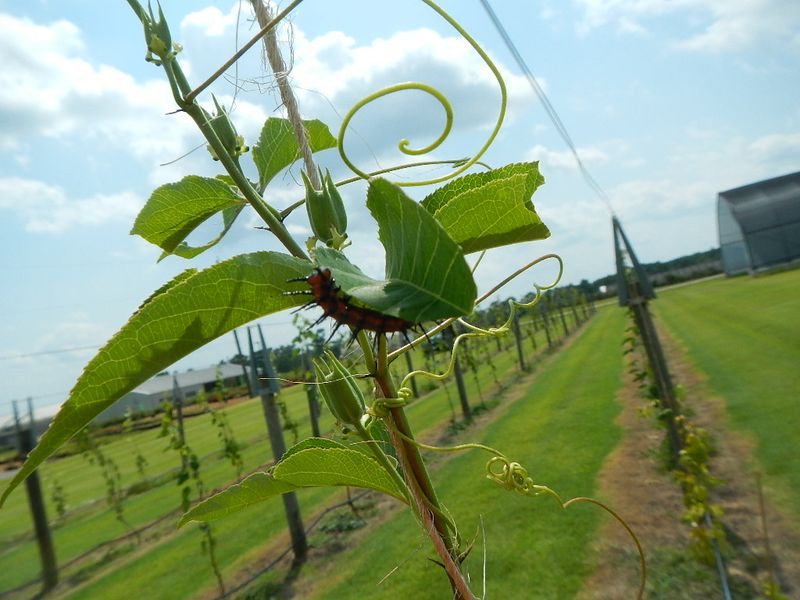
Maypop earns its butterfly-nursery label because the caterpillars eat it. The Wildflower Center lists Gulf fritillary as a larval host on its maypop profile.
If adult butterflies are in your area, they may lay eggs on the vine.
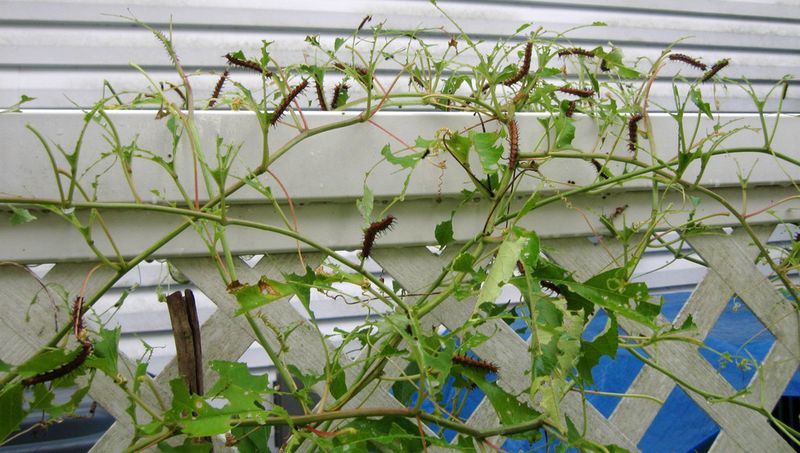
Feeding is a possibility, not a given. Some seasons you may see lots of orange caterpillars with black spines, and in others you may see none.
When they do show up, UF/IFAS notes that Gulf fritillary larvae feed on passionflower and can rapidly defoliate host vines.
A chewed-up vine can look rough, and a fence that was green last week can look thin. The plant often survives, and UF/IFAS says passionflower tolerates caterpillar feeding.
But survival is not the same as staying lush, so do not count on a steady curtain of leaves.
If you want the butterflies, accept the nibbled look as part of the deal. If the thinning bothers you, consider adding a second screening plant nearby so the fence is not relying on one vine.
Maypop fruit and foliage are different safety questions
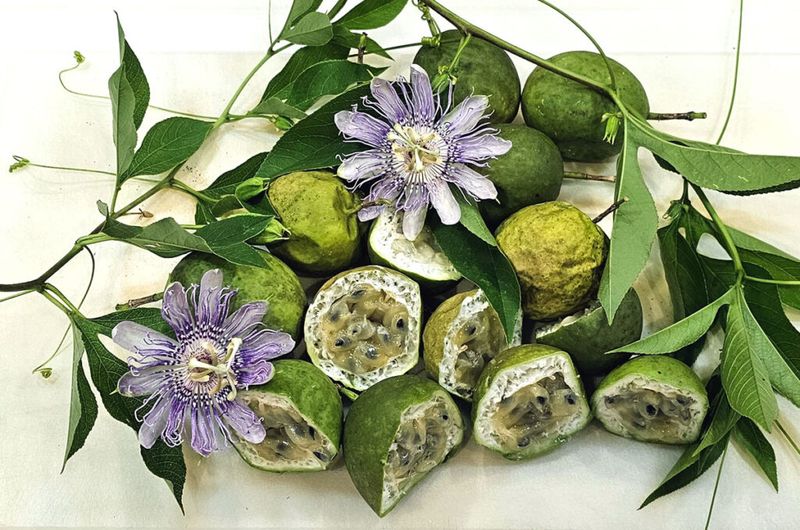
Maypop produces egg-shaped fruit, and the Wildflower Center’s plant profile describes the pulp as edible. That statement is about the fruit pulp of Passiflora incarnata only.
The leaves and stems are another story. North Carolina State Extension warns against consuming them, citing cyanogenic glycosides.
So do not eat the foliage, and do not make teas or home remedies from it.
Do not stretch the fruit claim to other passionflowers either. Different Passiflora species vary, and a fruit you see on another vine is not proven safe just because maypop pulp is described as edible.
If you are unsure about any plant part, leave it alone and ask a local extension office. A vine can be a good fence plant without being a kitchen plant.
A seasonal screen can also be habitat

Maypop suits a gardener who can trade constant privacy for a living fence that changes with the seasons. It offers a native climber with dramatic blooms, plus leaves that Gulf fritillary caterpillars may eat.
A fall planting gives it a fair start.
You will need patience with the winter gaps, a plan for wandering shoots, and some tolerance for chewed leaves. A bare fence in January is the price of orange wings in summer.