
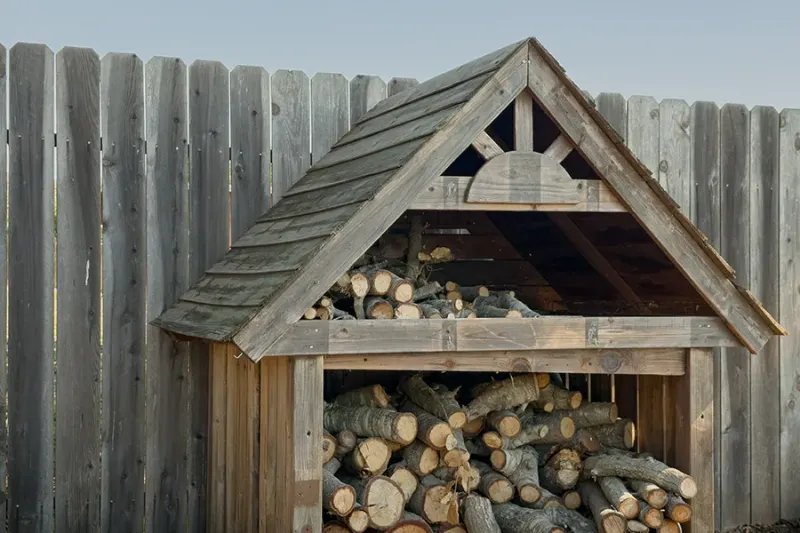
A woodpile leaning against your house gives mice and other pests cover and an easy approach to your walls. Wood stacked on the ground near the foundation can also give termites a possible route toward the structure.
Neither problem is guaranteed, and a few smart habits can lower the odds a lot. Here is what experts say about where to stack wood, what to seal, and how to handle the logs you bring inside.
A woodpile can give rodents cover
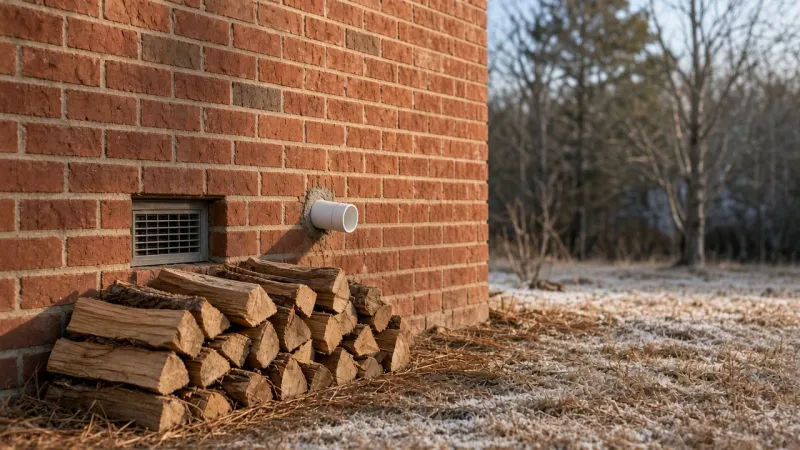
Picture a mouse crossing an open lawn in December. It is exposed, cold, and hunting for a way in.
A stack of logs right beside the house breaks up that open ground, and Nebraska Extension says a pile next to a house can give mice and rats cover while they search for entry points.
That makes the pile an opportunity for rodents, not proof that they live there or will get inside. Whether they do depends on other things too, such as nearby food sources and openings in the home itself.
Spilled birdseed, pet food, and open trash bins can make a spot more appealing. Gaps around pipes, vents, and doors give them somewhere to go once they arrive.
EPA rodent guidance points to removing shelter and food sources as part of prevention.
A quick check helps. Look for droppings, gnaw marks, or tunnels in the base of the stack.
Finding them is a sign to adjust the setup, not a reason to panic.
Termites pose a different concern
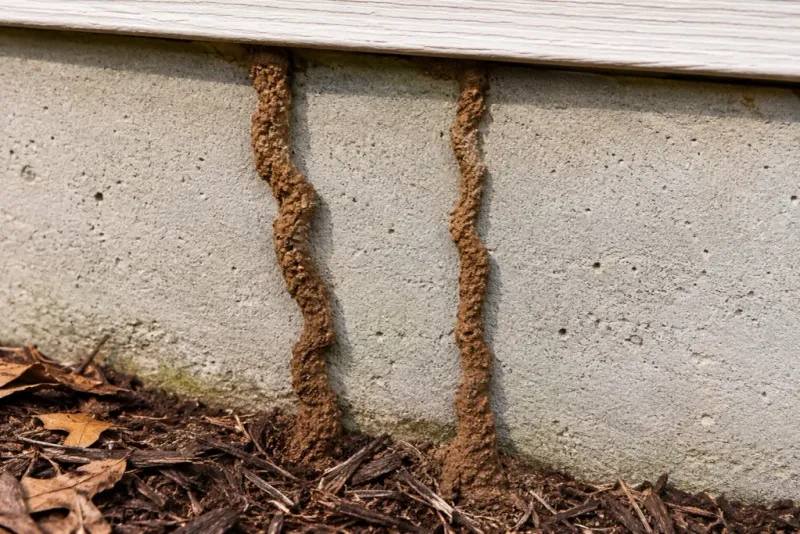
Termites are a separate story from mice. Their concern centers on wood that sits on the ground, since subterranean termites live in soil and feed on wood they can reach.
The National Pesticide Information Center describes nearby wood as a potential bridge between soil and a house.
Notice the wording: possible route, not certain path. A pile that touches the ground and leans on the foundation or siding gives termites a way to travel toward structural wood.
It does not mean they will find the house or damage it.
Moisture matters here too. Damp soil and wet wood near the foundation make conditions friendlier for termite workers, so drainage and gutters play a role.
Keep this apart from termites riding indoors on a single log. Iowa State Extension says termites carried inside in firewood cannot start a new nest, and it treats that as different from a woodpile that sits next to the house.
How far away should you store the main pile?
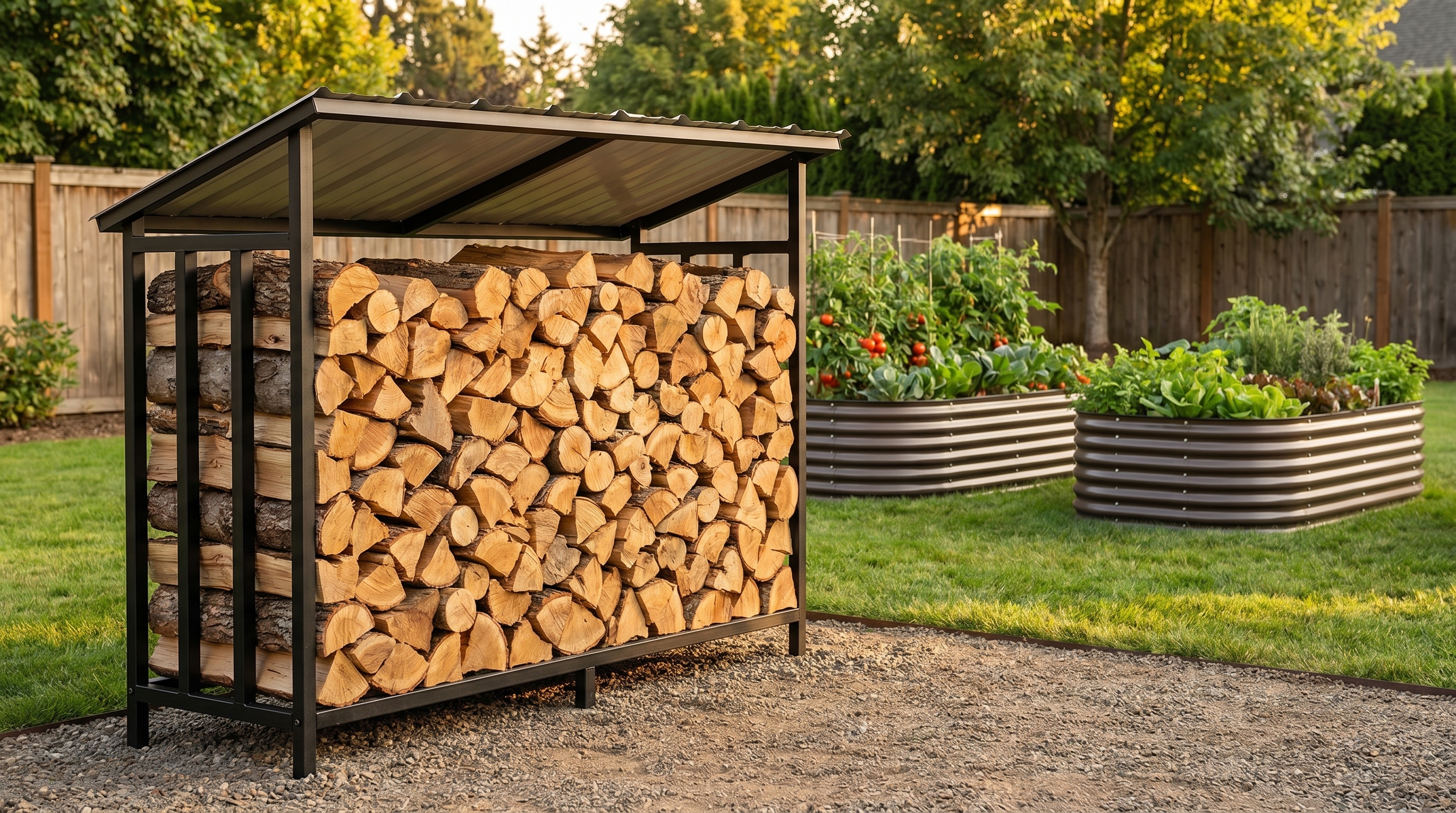
Experts do not agree on one number, and that is fine. The National Pesticide Information Center advises storing firewood several feet from buildings and off the ground.
That is aimed mainly at keeping a path to the structure from forming.
Nebraska Extension goes further. It recommends keeping the bulk of your wood at least 30 feet from the house to reduce rodent problems.
It also allows a small convenience supply, about a day or two of wood, near the door, refilled from the main stack.
These are extension guidelines, not building codes, and neither one is a promise of a pest-free yard.
Your best distance depends on your lot, your main pest worry, and local rules. A raised rack on gravel or pavers keeps wood off damp soil.
Covering only the top of the stack lets air move through and the logs dry.
If the yard is small, aim for the farthest practical spot and keep the pile off the ground. Distance, ground contact, moisture, and food sources all affect risk together.
Seal openings around the house
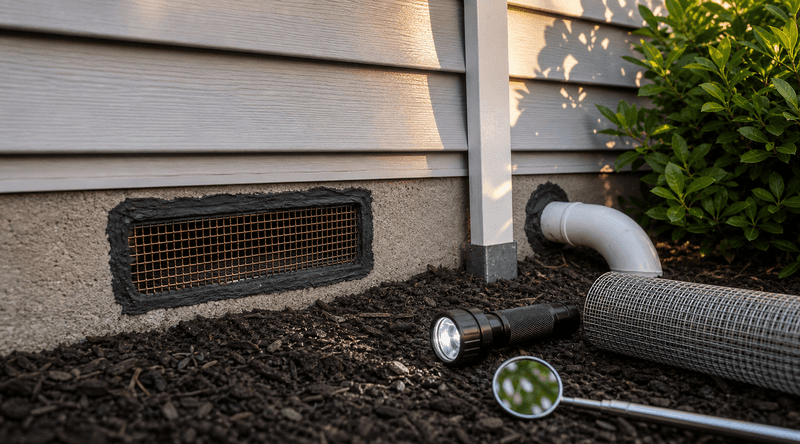
Moving a woodpile handles only half the job. Pests still need a way in, and small gaps are plenty.
An EPA pest-entry bulletin notes that mice can squeeze through gaps as small as a quarter inch, about the width of a pencil.
Walk the outside of your home with a flashlight. Check where utility lines and pipes enter, around dryer vents, under doors, and along the foundation where siding meets the ground.
Steel wool packed into a gap and covered with caulk or a metal patch holds up better than foam alone, which rodents can chew through.
Sealing works best alongside cutting back shelter and food. EPA guidance on preventing rodent infestations pairs repairs with removing things that attract them, like loose pet food, tidy storage bins, and clutter near walls.
No single step guarantees a pest-free home. Together, a farther woodpile, sealed gaps, and fewer snacks make your house a much harder target.
Bring indoors only the wood you need
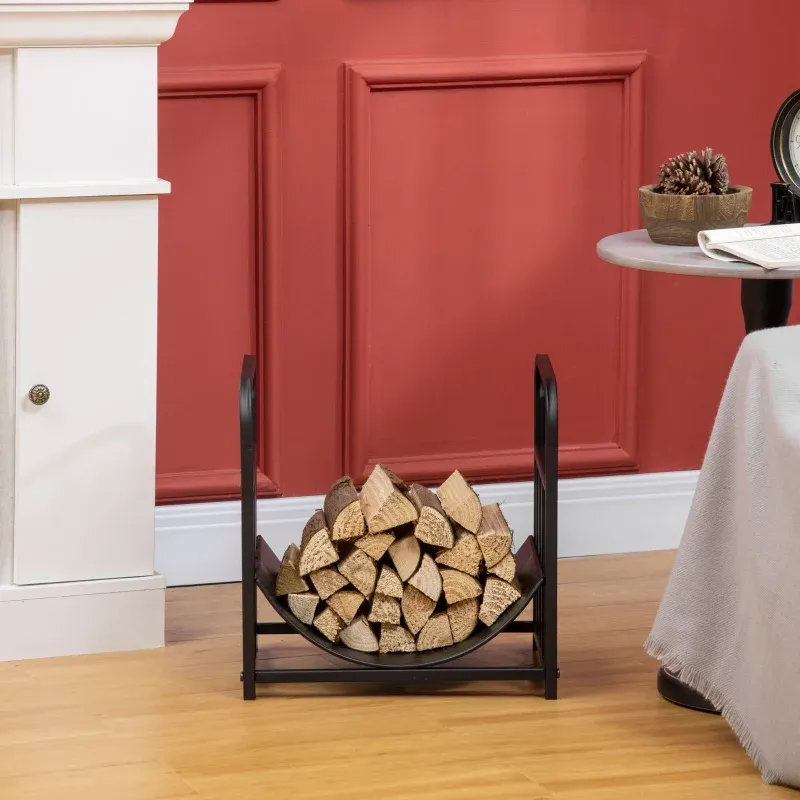
A big indoor stack looks cozy, but it can also carry hitchhikers into a warm room. Both Nebraska and Purdue Extension suggest keeping only a small amount of wood inside and bringing it in as you need it, as Nebraska Extension explains.
If a beetle or ant crawls out of a log, stay calm. Insects emerging from firewood are usually nuisance visitors and do not prove your house is infested.
According to Purdue Extension, termites accidentally carried indoors in firewood generally do not establish a structural infestation, and UGA Extension also calls that outcome unlikely.
Do not spray or treat the wood with insecticides. If a log shows termites or large carpenter ants, simply carry it back outside.
Stacking indoor wood on a tray or rack, away from walls, makes it easy to spot anything crawling out and keeps bark debris off the floor.
Local fire guidance may require more distance

Pest advice is not the only rule that matters. In wildfire-prone areas, fire safety may call for much more separation than pest guidance does.
The Minnesota DNR advises keeping woodpiles at least 25 feet from the home, while Oregon’s defensible space homeowner guide says at least 30 feet.
Those numbers are examples, not nationwide rules. Requirements vary by county, city, and fire district, so check with your local fire department or forestry office and follow any defensible-space advice for your area.
Pest distance should never override a stricter fire clearance. Where the two overlap, the larger gap usually serves both goals.
A simple order of action works well. Move the bulk pile to a suitable spot, like the 30 feet Nebraska Extension suggests, seal gaps using EPA’s entry-prevention tips, then carry in only the wood you will burn soon.
A woodpile is happiest when it is near enough to be handy and far enough to be forgotten.