
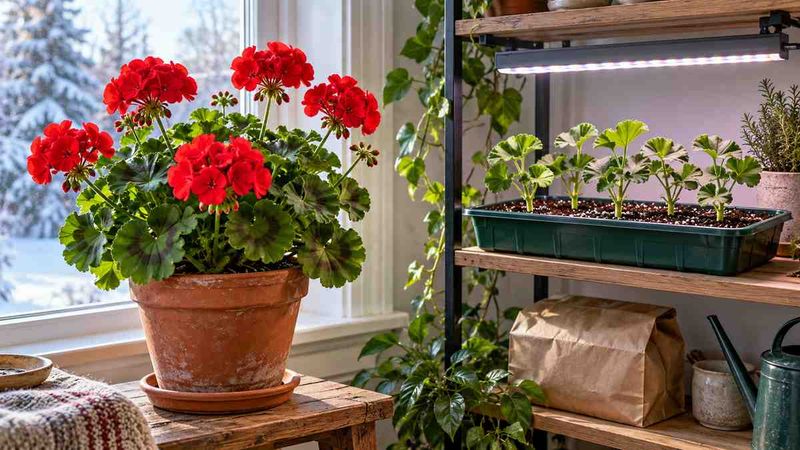
Pricey porch geraniums often die when the first hard frost arrives, and not everyone has a sunny window to spare. Some gardeners lift the plants, shake off the soil, and tuck them away bare-root in a paper bag.
It can save the plant without taking up any winter space. Here is how it works, where it falls short, and what May really means.
What bare-root storage does—and does not do
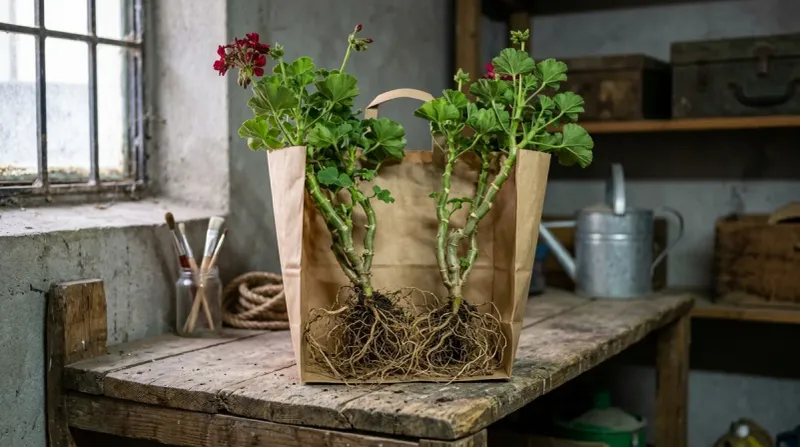
Bare-root storage means carrying a living plant through winter without its pot and most of its soil. In spring, you prune it, pot it, and wake it back up.
The plant is kept alive as stem and leaf tissue, since Purdue Extension notes that Pelargoniums have no bulb or tuber-like resting structure.
This is different from rooting stem cuttings, where you start new little plants from snipped pieces. It is also different from keeping a leafy potted plant growing indoors all winter, which needs light.
A paper bag is simply one compact, breathable container for storage. Nothing shows that the bag causes dormancy or beats other breathable setups.
Keep in mind that this method applies to tender Pelargonium, the common garden geranium, not the hardy perennial Geranium that stays outside. The space savings also have a limit.
As Illinois Extension describes, plants need a bright window or supplemental light once they are potted in spring. Winter is the part where you save room.
Select and lift a healthy plant before frost
Autumn is your deadline. Tender geraniums are killed by frost, so plan to lift them before one arrives.
Pick your best plants, the ones with firm stems and healthy leaves and no sign of insects or disease.
Both Illinois Extension and Purdue warn that unhealthy plants are harder to overwinter and can spread problems to the others. A weak, pest-ridden plant is better left behind.
Starting with a strong one improves your odds, but it does not guarantee success.
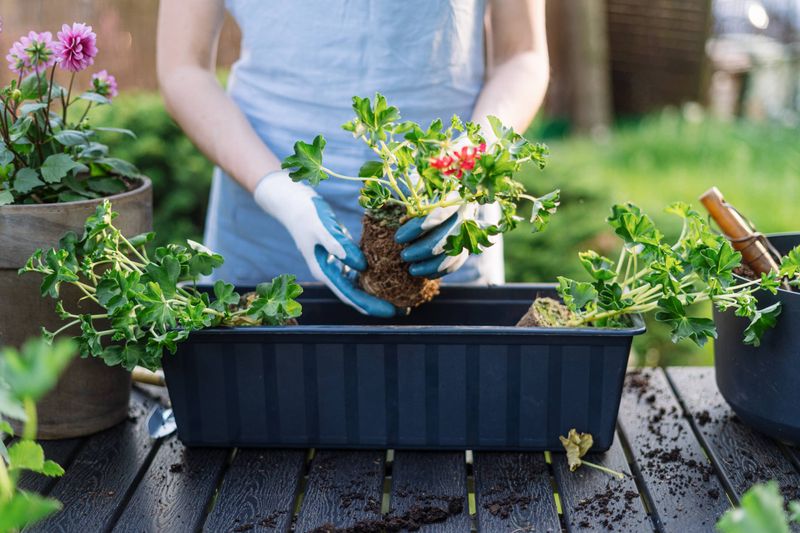
Once you have chosen, slide the plant out of its pot or dig it from the bed. Iowa State guidance calls for shaking excess soil from the roots before storage.
Work gently so you do not snap the stems.
If you are lifting several plants, label them as you go. Many gardeners treat the first year as an experiment, since not every plant will make it through.
Store the bare roots in a cool, breathable place
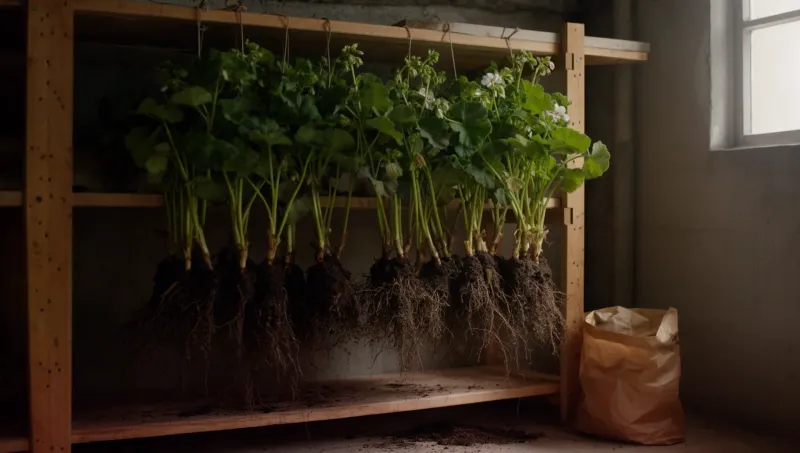
Slip each soil-shaken plant into a paper bag, or hang it upside down, another documented option. Leave the bag open or loosely closed so air can move.
Store it somewhere dark, cool, and frost-free.
Published ranges differ a little. Iowa State suggests roughly 45 to 55°F, while Illinois Extension suggests about 45 to 50°F.
Treat those numbers as a guide, not an exact rule for every home.
Skip sealed plastic. Rutgers warns that plastic can trap humidity and lead to rot, and it also notes that not all plants survive.
A basement works only if it fits the job. Put a thermometer there for a few days first.
If it gets near freezing, or runs warm and damp, an unheated but insulated closet or a similar spot may serve better.
Balance dryness with airflow
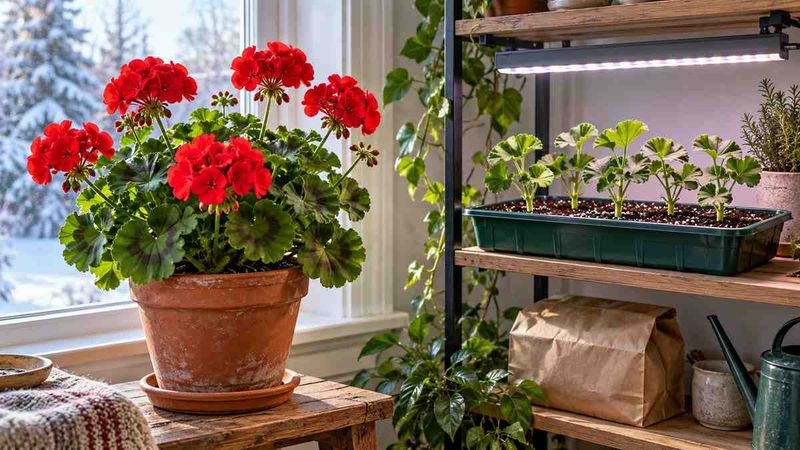
Moisture is where the experts do not fully agree. Iowa State and Illinois Extension describe cool, dry storage.
Minnesota Extension says the method may call for a cold, damp basement and occasional root soaking so the roots never dry out completely. Wisconsin Extension mentions soaking as something some gardeners do, and calls the method challenging.
No source gives a firm watering schedule, so do not invent one. Instead, follow the points they share.
Keep the plants frost-free. Use breathable storage.
Avoid soggy or sealed conditions.
Also remember that too much drying can hurt. Check the bags now and then.
Stems that stay firm are a good sign, while mushy or moldy tissue means too much moisture, and fully shriveled stems suggest roots that dried out.
Prune, pot, and provide bright light in spring
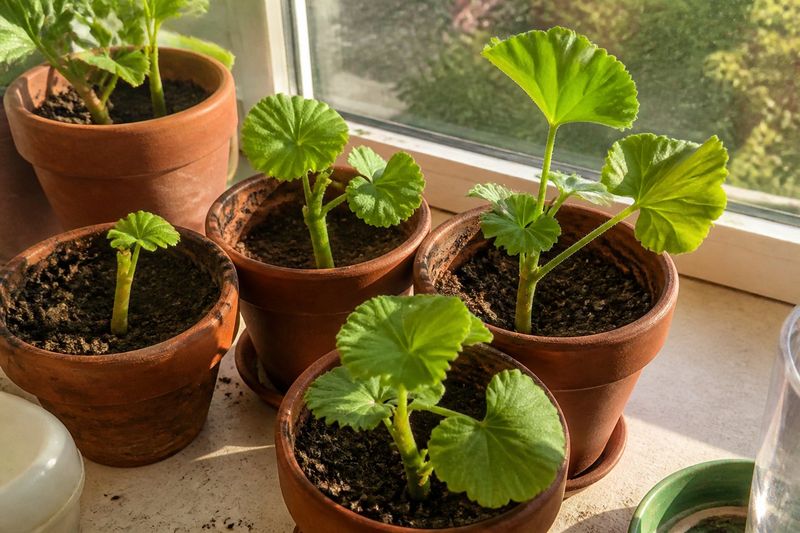
Spring is when the plant wakes up, and timing varies by region. Iowa State points to mid-March, but that is its guidance, not a universal date.
Start by removing anything dead or shriveled. Then cut back to firm, green tissue.
Pot the plant in fresh potting mix and water it thoroughly.
Now the space you saved all winter is needed. The potted plant must sit in bright light while growth resumes, either a sunny window or a grow light.
Wisconsin Extension says bare-root plants can take a while to begin growing, so give yours time.
Skip heavy feeding at the start. Fertilizer is not what makes this method work.
As Illinois Extension describes, bright light is what the restart needs.
Treat May as a possible planting time, not a bloom deadline
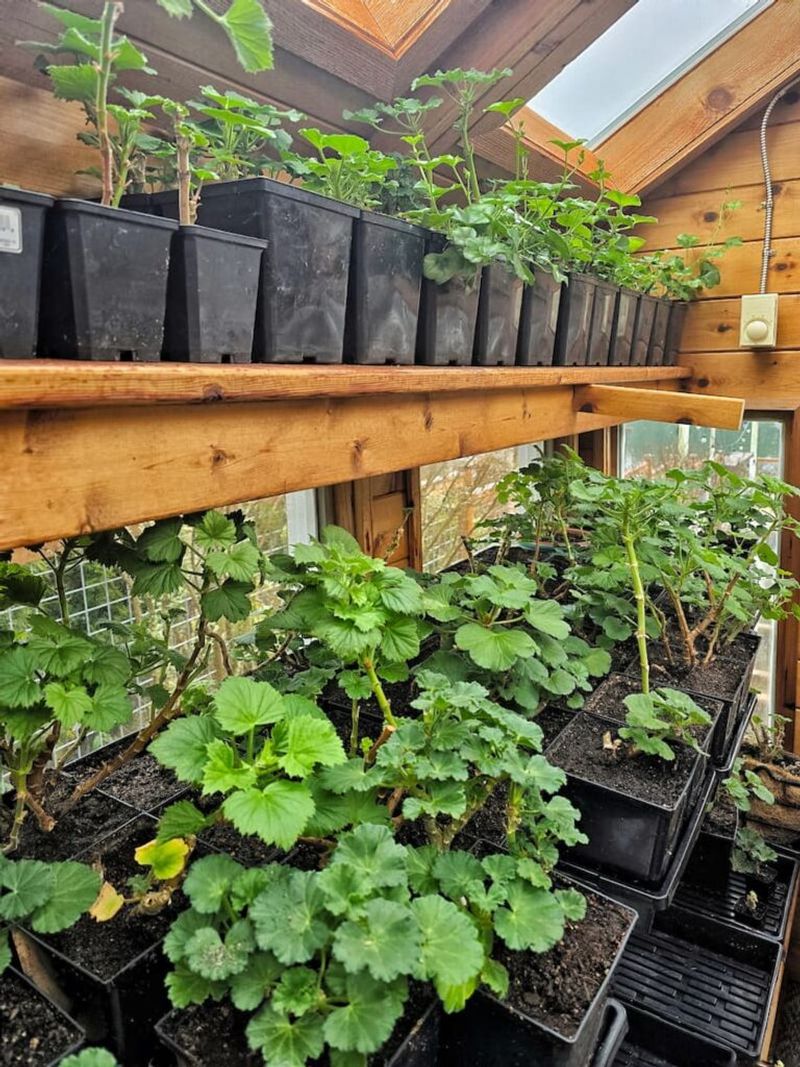
Iowa State says plants brought out of storage in mid-March may be ready to plant outdoors in May. That is a possible planting time for Iowa, not a promise of flowers, and not a national date.
Recovery can be slow. Wisconsin Extension warns that bare-root plants may take time to resume growth, so some may bloom later than you hoped.
Wait until your local frost danger has passed before moving plants outside, and ease them out gradually. Your own last-frost date matters more than the calendar page.
If one plant is special to you, take a backup cutting in fall. Rutgers notes that not all stored plants survive.
Treat the paper bag as a low-cost gamble that sometimes pays off with a plant you already love.