
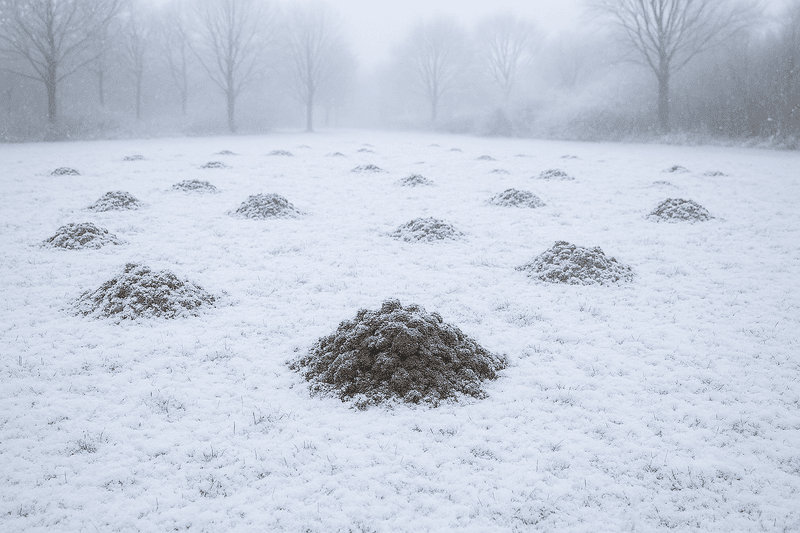
Moles tunneling under your lawn this winter are hunting grubs, and grubs are one of the foods they eat. But those raised ridges tell you less than you might think, because moles also go after earthworms and other critters in the soil.
Knowing what the ridges can and cannot show helps you avoid wasting money on the wrong fix. Here is how to read the signs, check your turf, and plan a sensible spring.
What a winter ridge can tell you
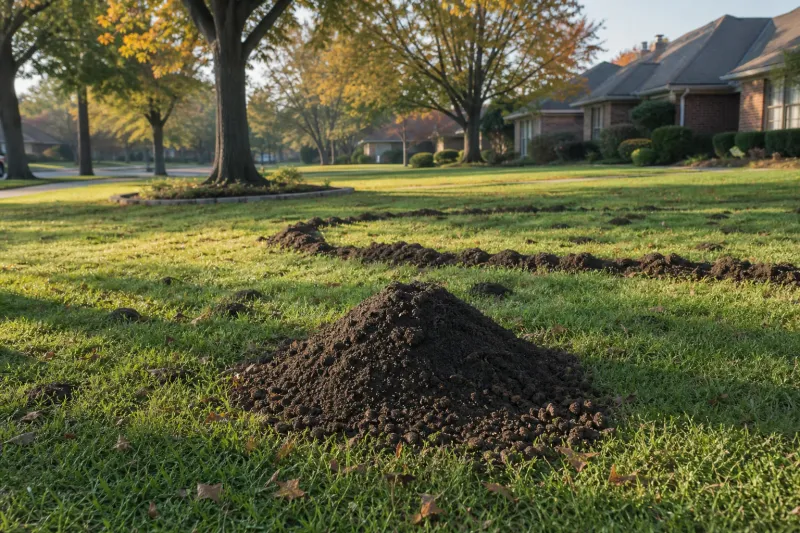
A fresh ridge in the grass tells you one solid thing: a mole has tunneled through that spot. Moles do eat grubs, so the headline idea is not wrong.
The trouble starts when we treat the ridge as a lab report.
A ridge cannot tell you what the mole found to eat down there. It also cannot show that your lawn has a grub infestation, or that the turf will be damaged come spring.
It is a trail, not a diagnosis.
Moles are not picky. According to Missouri Extension guidance on nuisance moles, they eat earthworms and a range of other soil invertebrates, grubs included.
Earthworms are often a major food source.
That means a lawn with zero grubs can still attract moles. Healthy, earthworm-rich soil may be exactly what draws them in.
So if you see ridges, take it as a sign of tunneling and nothing more, then look at the grass itself for real clues.
Why winter activity appears at the surface
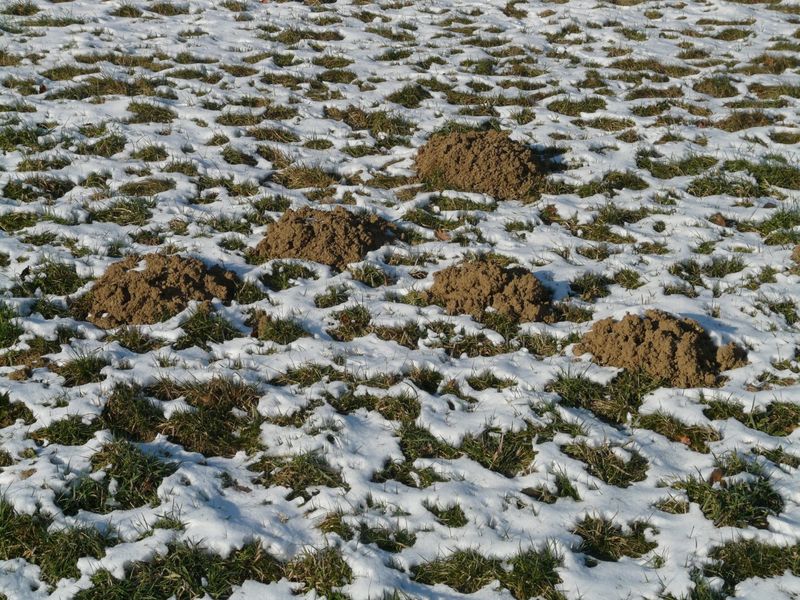
Moles stay active all year. They do not hibernate, so something is always going on beneath your feet, even when the lawn looks asleep.
What changes is where they dig. UC IPM notes that surface activity often slows in extreme cold, and moles may use deeper tunnels when the soil is frozen.
You may see nothing for weeks, then a burst of ridges after a change in the weather.
Soil moisture matters too. Mild, wet, or thawing spells soften the ground and make shallow digging easier, so new ridges tend to pop up then.
Dry or frozen stretches push the action out of sight.
A fresh ridge on a damp January afternoon is plausible and not alarming. Still, it does not tell you what the mole ate, and it does not prove the animal only just started hunting near the surface.
It may have been tunneling nearby all along, just deeper.
Identify the lawn damage before choosing a fix
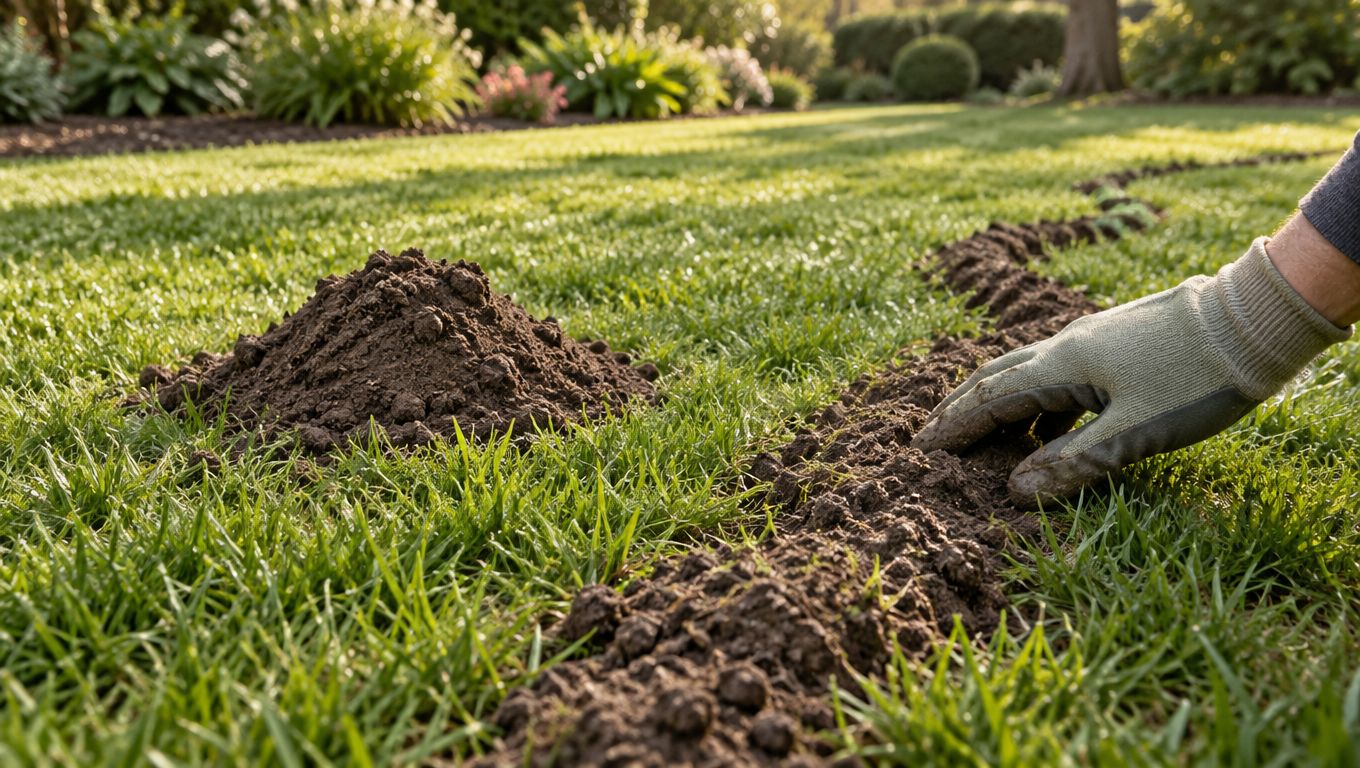
Lawn damage is frustrating, and it is natural to blame the nearest culprit. Before you pick a fix, though, work out what you are actually looking at.
Raised, winding ridges and rounded molehills of loose soil are the classic clues to mole tunneling. As Penn State Extension explains, tunneling can dislodge plants or expose roots, so a ridge can leave a brown or wobbly strip of grass behind.
Other damage has other causes. Clipped grass or chewed roots may point to a different animal, and neither one is proof of moles or grubs.
A thin, ragged patch with no ridges nearby deserves a closer look instead of a quick guess.
Walk the area slowly. Note where ridges run, where soil is piled, and where the turf looks stressed.
Photos help if you later ask your local extension office. Matching the damage to its cause first keeps you from treating the wrong problem.
Check the turf for signs of grub injury

If grubs worry you, test the turf directly. Ridges will not answer the question, but a small dig can.
Pick a spot near the boundary between damaged and healthy grass. Cut a square-foot section on three sides and lift it, then look at the roots and the soil underneath.
UMN Extension describes how grub injury can make turf lift or roll back like a carpet, because the roots have been eaten.
That loose, rolling turf is direct evidence of root injury. A mole ridge is not.
One tells you about the grass, the other only about a tunnel.
Check a few spots, not just one, and put the turf back and water it afterward. If the roots look chewed or you find grubs, do not rush to buy a product.
Contact your local extension office, share what you saw, and ask what makes sense for your area.
Grub treatment timing depends on your region
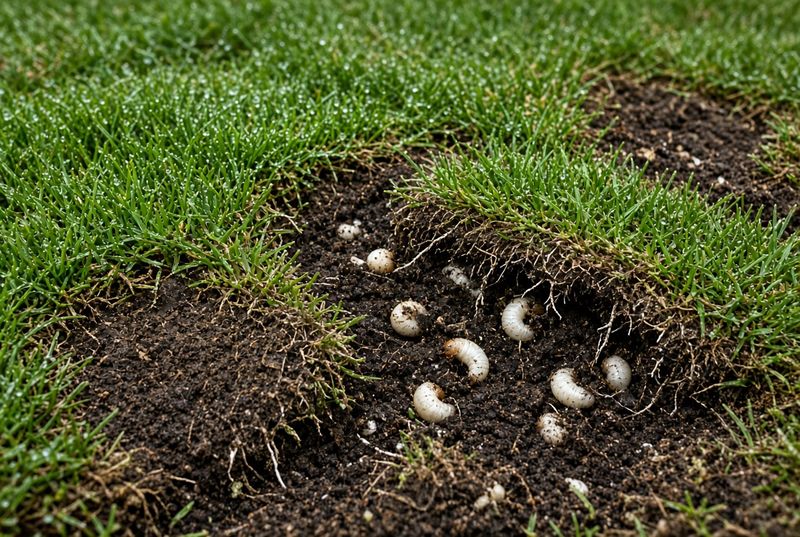
Grub advice is not one-size-fits-all. Thresholds and timing shift with the grub species, your region, the condition of your turf, and the season.
Here is one example. Penn State Extension says that 5 to 10 grubs per square foot is often used as a curative-treatment threshold in Pennsylvania.
It also notes that the number varies, and that sampling from August to early September helps time treatment there.
That is a Pennsylvania guideline. It is not a national rule, and it is not a spring schedule.
Other states differ. Missouri Extension guidance says spring grubs are not generally a reason for treatment there, and it points to a different target window.
So skip the calendar you found online. Search for your state’s extension service, read its grub page, and match your timing and numbers to what it recommends before you treat anything.
Choose mole control only when the damage warrants it
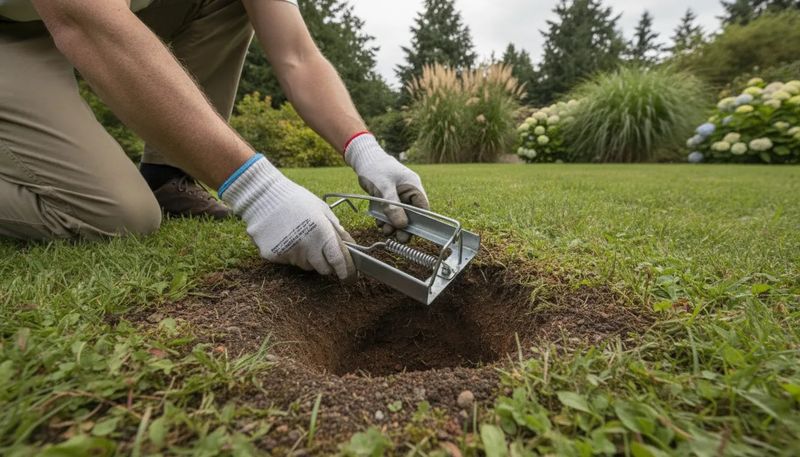
Start by asking whether the damage is bad enough to act on. A few ridges in winter turf may flatten out with a roll or a light step, and not every tunnel needs a battle plan.
If you decide to trap, confirm the tunnel is in use first. UC IPM describes tamping down a section of ridge and checking back for renewed activity.
If the mole pushes it up again, you have found an active run. Follow the trap instructions closely.
Resist the urge to spread insecticide just to drive moles off. Missouri Extension warns that it can affect earthworms and other beneficial organisms, and moles may dig more while they search for food.
If a pesticide is justified for another reason, such as a confirmed grub problem, read the label. EPA safety tips stress following its precautions and restrictions.
For region-specific advice, check with your local extension office.
A ridge is a trail, so read it before you react.