
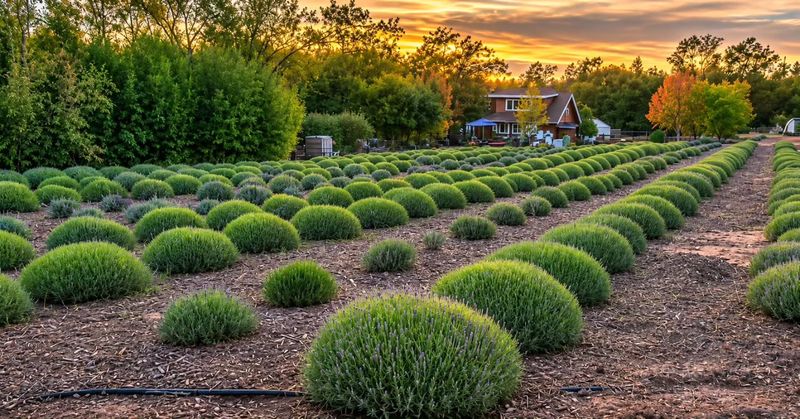
If your lavender has already finished blooming for the year, skip the big late-fall haircut and let spring show you what needs to go. The best pruning time for most California gardeners is right after flowering, and that date changes from yard to yard.
Late fall is not a forbidden time, though, and a few careful rules make the choice easier. Here is a simple path for deciding what to do with your plants.
Prune after flowering, not by a statewide date
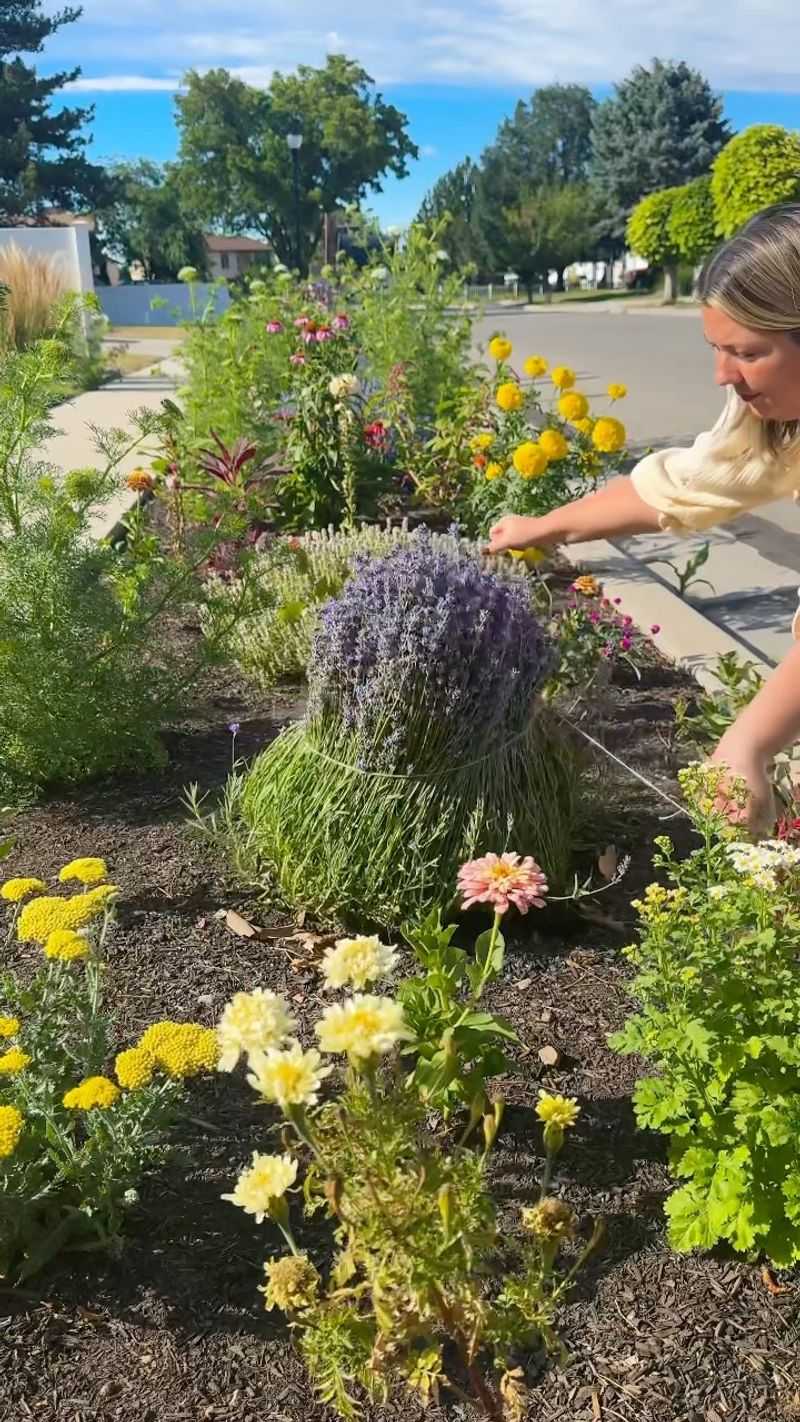
The most widely supported timing rule for lavender in California is simple: prune soon after the plant finishes flowering. UC’s guide to lavenders for California gardens points to the end of the flowering cycle as the best time for garden pruning.
Pruning then helps keep the plant shaped and full of leafy growth.
The catch is that California has no single bloom calendar. UC Marin Master Gardeners describe English lavender as blooming in early summer, sometimes again later, while Spanish lavender can start as early as spring.
A coastal yard and an inland valley yard will not hit the same stage in the same month.
So watch the plant instead of the calendar. When most of the flower spikes have faded, that plant’s pruning window is open.
Cut amounts also vary by type and location, and UC Sonoma County Master Gardeners suggest taking no more than one-third of a larger plant’s height at a time.
Now picture it is late fall and you never got around to pruning. That does not mean spring is automatically the perfect pruning season.
It just means you have a decision to make, and the next sections walk through it.
A late-fall trim is not automatically fatal
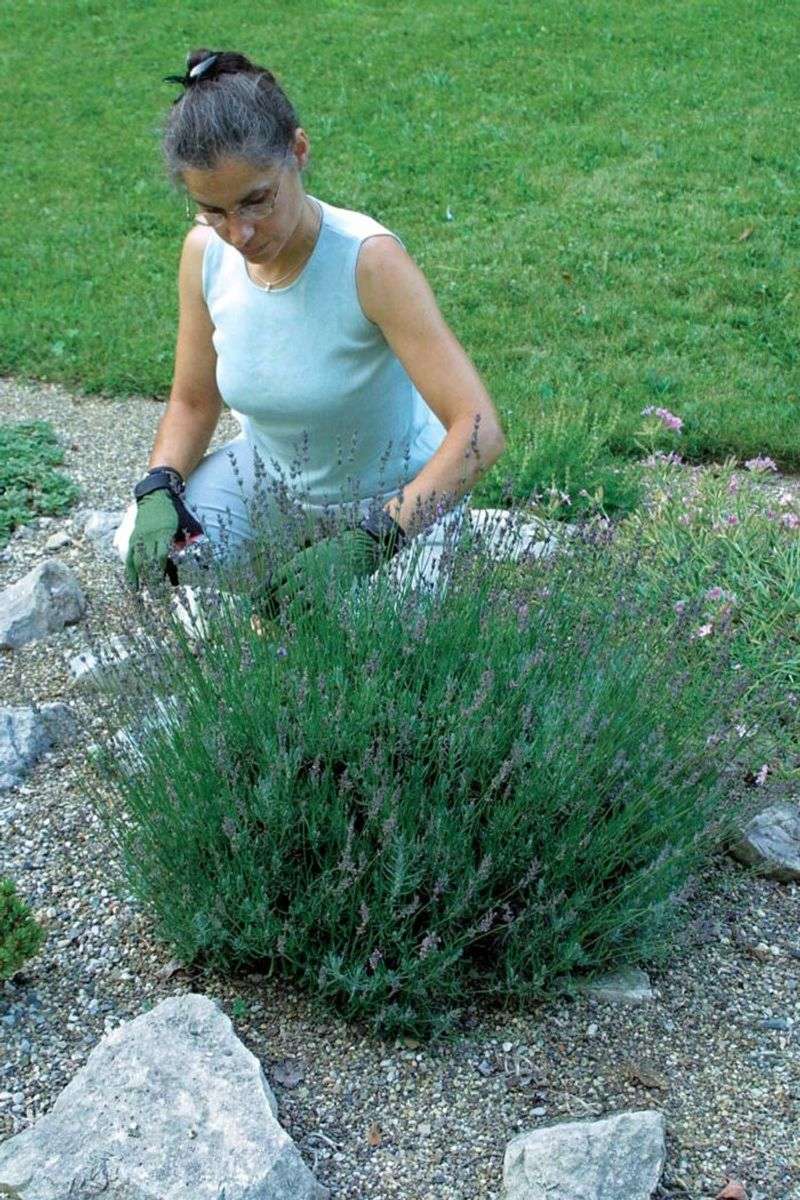
Here is the practical answer. If your lavender’s post-bloom window has passed, skip a major late-fall tidy-up and wait for spring.
Heavy cuts made without a clear reason leave you guessing about what is alive.
That said, there is no proof that a late-fall trim alone kills lavender. UC Master Gardeners of Sonoma County allow late-fall pruning as long as cuts are made above visible lower-stem buds.
So a light trim in that situation fits the guidance.
Think of it as two different jobs. A light shaping cut above healthy buds is one thing, and a deep cut into the bare lower plant is another.
The first can be fine in some yards, while the second is the kind of cut to avoid at any time of year.
Mild-winter areas and cold-winter areas also behave differently, and lavender types are not all alike. Because of that, neither “always prune now” nor “never prune now” works as a statewide rule.
Check for buds, keep cuts modest, and when in doubt, leave the plant alone until spring.
Cut leafy growth, not the bare woody base
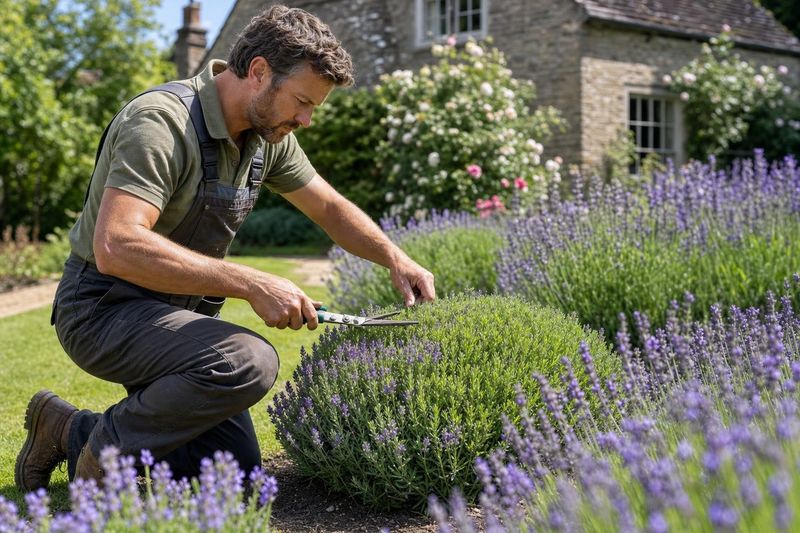
Wherever and whenever you prune, aim for the green part. Make cuts where leafy growth remains, and shape the plant into a soft, rounded mound rather than shearing it flat.
UC Marin Master Gardeners note that lavender does not produce new growth from woody stems.
University of Maine Extension gives the same kind of advice, which is to prune in green shoot tissue. Bare old wood is where gardeners get stuck with brown, leafless stubs.
On amounts, UC Sonoma County Master Gardeners suggest removing no more than one-third of a larger plant’s height at a time. Treat that as a handy starting point rather than a rule for every plant.
UC Marin gives different end-of-season amounts for Spanish and French lavender than for English types.
You may hear that a hard cutback can revive a tired plant. Guidance is mixed.
A UC Shasta Master Gardener article says some English lavender may regrow after cuts into wood, while other UC guidance says lavender generally will not. For an old plant or one with an unknown variety, do not count on it.
If you missed the window, let spring reveal winter damage
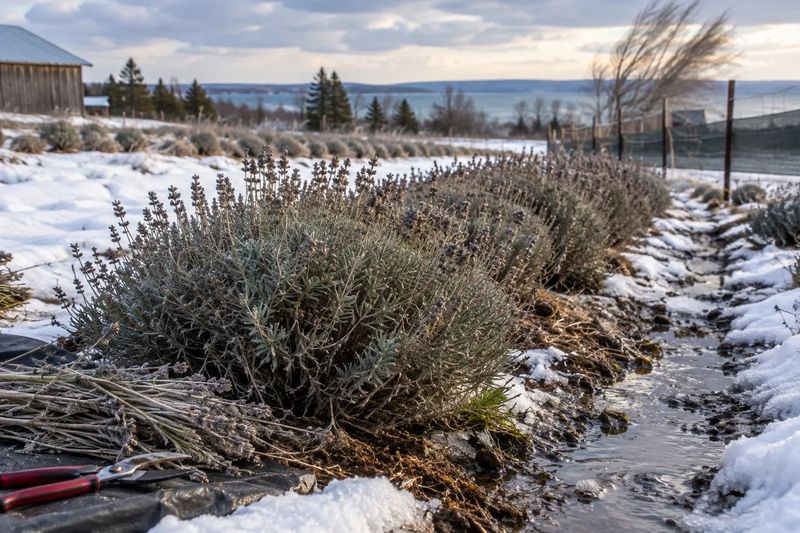
Missed the post-bloom window? You are in good company, and the fix is patience.
In winter, a stem that looks dead may still be alive, and a stem that looks fine may not be. Spring growth settles the question.
University of Maryland Extension advises waiting for spring growth before removing winter damage. University of Maine Extension likewise recommends waiting for new growth to show which tissue is still viable.
When the new leaves appear, look closely. Tips that stay gray and brittle with no sign of buds can be snipped off, and cuts should stop just above fresh green growth.
Think of this as a damage check rather than a full pruning session.
Spring is not the routine best time to prune every lavender. It is simply a good moment to see clearly.
California winters are mild in many areas, so some plants will have little damage at all, and that is a perfectly good outcome.
Poor drainage can contribute to lavender decline
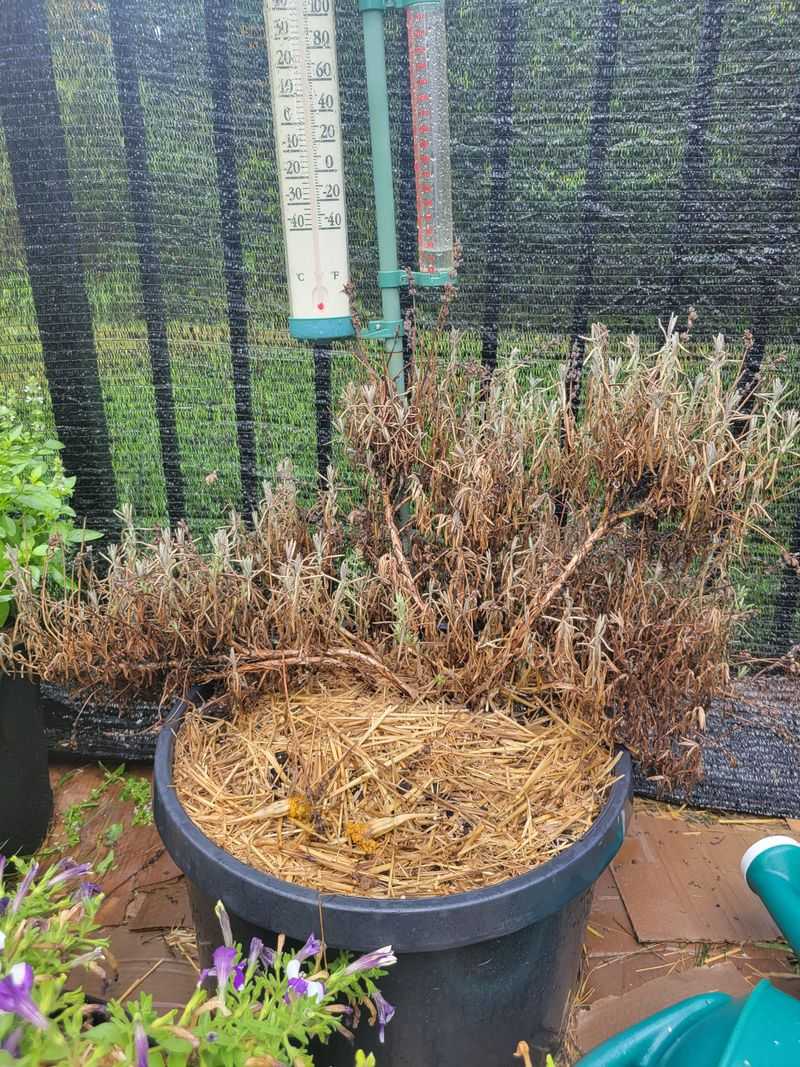
Pruning is only part of the winter story. Wet soil is a separate risk that deserves its own attention, especially in California’s winter-rain climate.
Excess moisture and poor drainage can contribute to root or crown rot.
UC Master Gardeners of Tulare and Kings Counties and UC’s lavender publication both tie wet, poorly drained soil to trouble for these plants. Lavender evolved in dry, rocky ground, so soggy roots are a poor match.
Practical steps are easy to try. UC Sonoma County Master Gardeners describe planting on raised mounds, and keeping drip emitters away from the stem helps the crown stay drier.
None of this guarantees a healthy plant, and good drainage will not replace sensible pruning. A plant that sags or yellows after heavy rain may be telling you about its roots, not your shears.
Use the plant’s growth cycle to decide
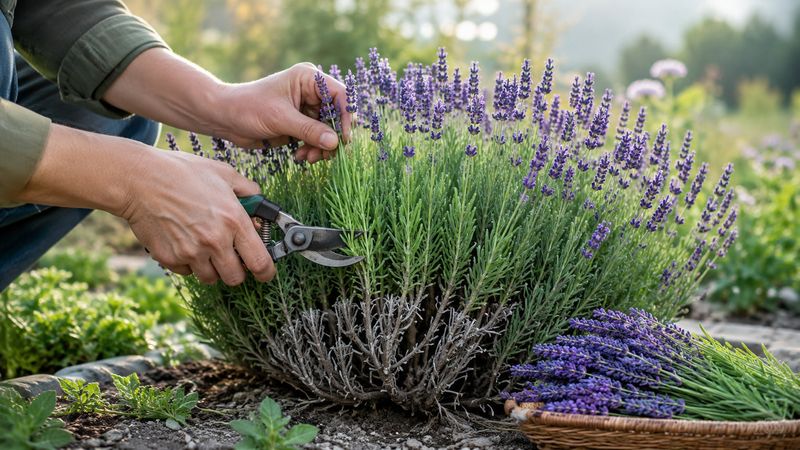
Let the plant set the schedule. If flowering just ended, prune lightly in leafy growth.
If that window has passed and nothing needs urgent removal, wait for spring growth and then clear out damaged tips, as University of Maryland Extension suggests.
Your lavender type and local weather matter, as UC Marin Master Gardeners explain. Keep cuts out of bare wood, and fix wet spots in the soil, as UC Sonoma County Master Gardeners advise.
Lavender rewards a gardener who watches more than one who rushes.