
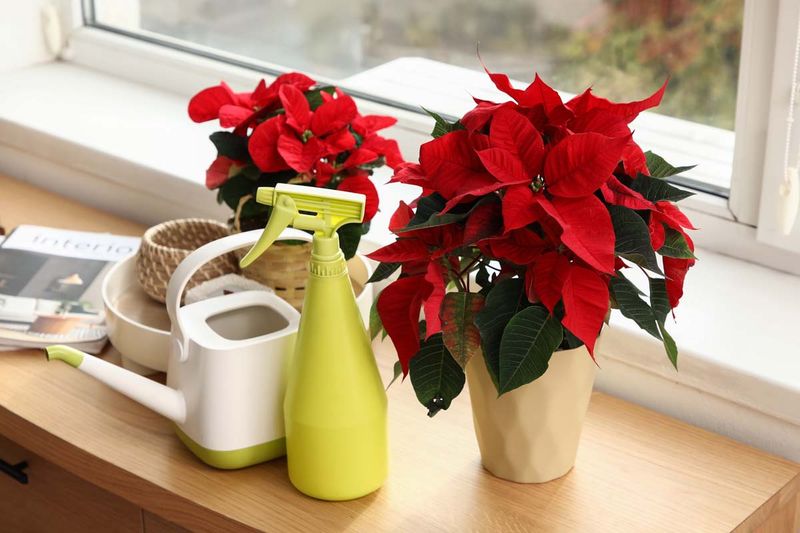
Soggy roots are one of the fastest ways to ruin a gift poinsettia, and a simple check-and-drain routine is the best way to protect it. You check the potting mix, water when it feels dry enough to need water, let the extra water drain out, and empty the saucer.
That small habit cuts down on avoidable stress while the plant sits in your living room. Here is how to do it, plus what watering can and cannot do for those bright bracts.
Wet roots can cause trouble, but dry soil can too
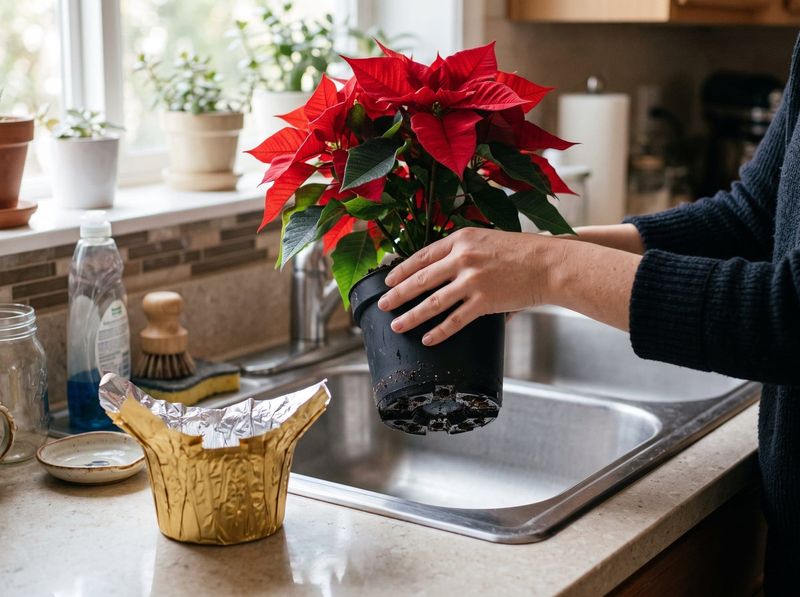
Persistently soggy potting mix and poor drainage can damage poinsettia roots, and damaged roots often lead to yellowing leaves and early leaf or bract drop. Roots need air as well as water, and a pot that stays wet all the time crowds the air out.
Soggy mix is only half the story. NC State Extension points to letting the plant dry out too much as probably the main reason poinsettias die early in homes.
Meanwhile, Mississippi State Extension names overwatering as a major cause of early leaf and bract drop.
So two respected sources stress opposite risks, and neither one shows which cause accounts for most household losses. You do not need to settle that debate.
You only need to stop guessing and look at the mix before you reach for the watering can.
That is the heart of the routine: let the soil tell you what the plant needs, rather than blaming one cause or following a hunch.
Check the potting mix before you water
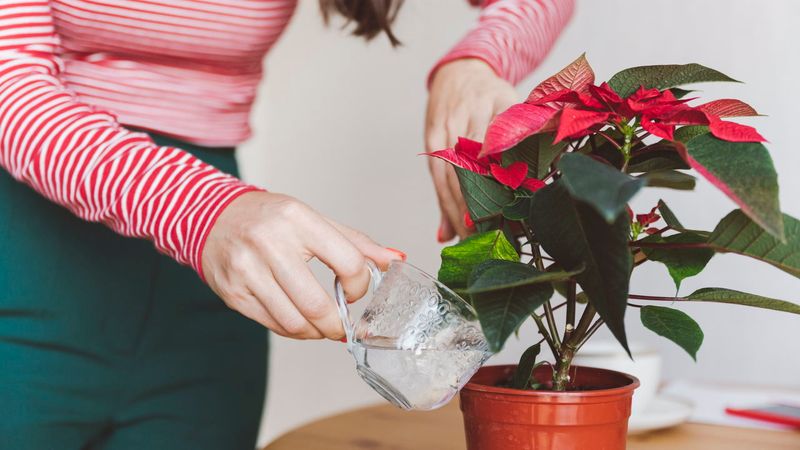
A calendar cannot tell you when a poinsettia is thirsty, but the potting mix can. Poke a finger into it and judge how dry it feels.
If it is still damp, wait and check again the next day.
Advice on how deep to check varies. Some extension guides say to water when the surface feels dry, while others suggest checking an inch or two down.
Since no single depth works for every plant, treat these as starting points and learn how your own pot behaves. University of Delaware Extension also cautions that letting the plant wilt can lead to premature leaf drop.
Pot size, the type of mix, the size of the plant, and the warmth and dryness of your room all change how fast the mix dries out. A small pot in a warm room may need a check every day or two, while a bigger pot in a cool room can go longer.
Some guides say slight wilting does no harm, as Oklahoma State Extension notes, but there is no reason to test it. Let the soil, not drooping leaves, be your signal.
Water thoroughly, then let the pot drain
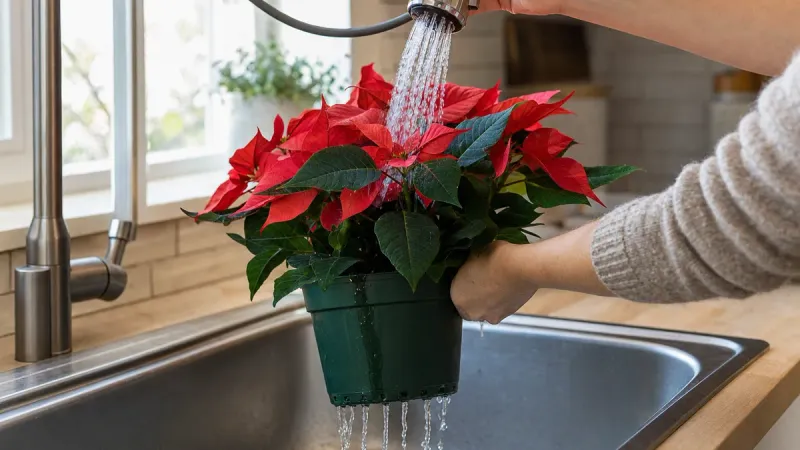
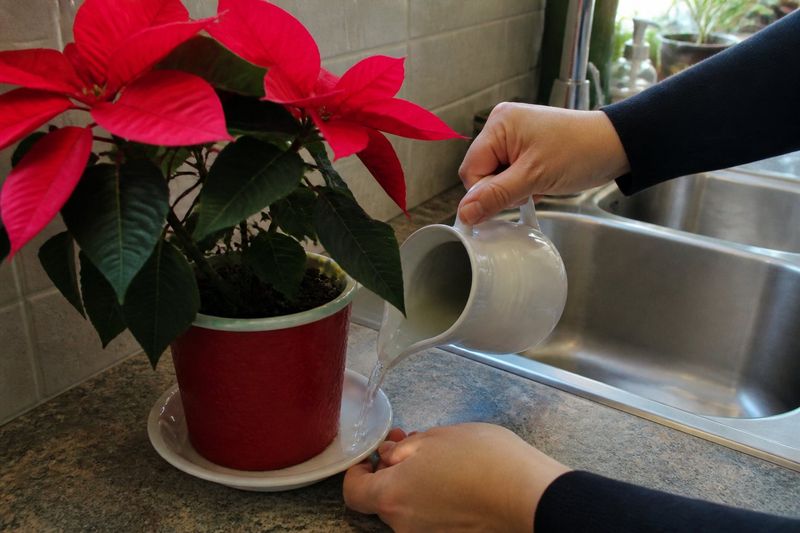
Once the mix feels dry enough, give the plant a real drink. Water slowly until it runs out of the drainage holes at the bottom.
A light sprinkle only wets the top and leaves the lower roots dry.
Next comes the part that matters most: let the pot drain. Setting it in a sink for a few minutes works well.
Then empty the saucer so the pot is not sitting in a puddle.
Purdue Extension warns against letting the plant stand in water, and University of Delaware guidance also calls for good drainage. Standing water and mix that stays wet for long stretches can starve roots of oxygen and set the stage for root rot.
There is no magic amount of water. A bigger pot takes more, a small one less.
Judge by the drainage and by how the mix feels next time you check, not by a measuring cup or a weekly date.
Make sure decorative foil does not trap water
That shiny foil wrapper is not the enemy. The trouble starts only when it holds water that cannot escape, leaving the roots sitting in a hidden pool.
The simple fix is to slip the foil off while you water. Let the pot drain fully, then put it back.
If you would rather leave the foil on, University of Maryland Extension advises making sure it has holes in the bottom so water can get out.
Foil can hide the problem, so check it. Tip the pot slightly and peek into the wrapping, or lift the plant out and see whether water has collected underneath.
Pour off anything that has gathered around the pot.
Remember that Mississippi State Extension lists poor drainage as one of several things that can hurt poinsettias. Foil is one way drainage goes wrong, but it is far from the only one, and a quick look each time you water takes care of it.
Choose a bright spot away from drafts and heat
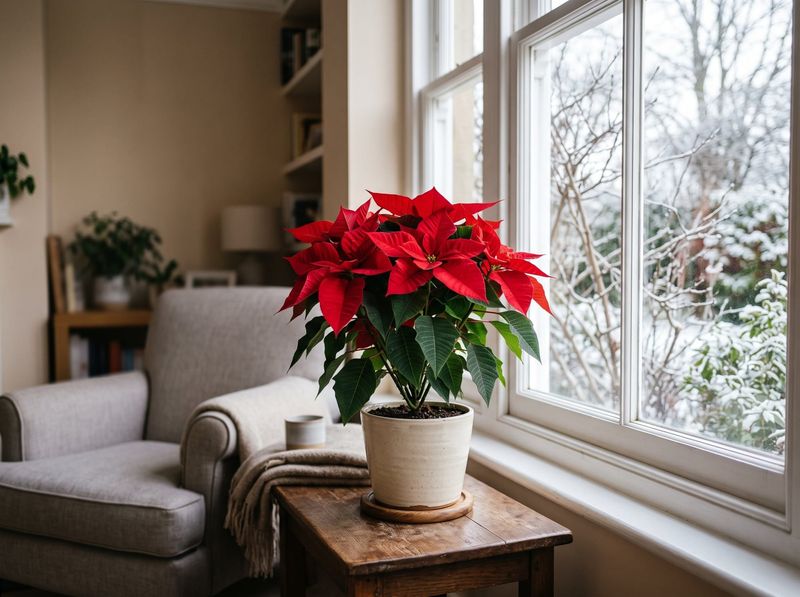
Good watering is only part of keeping a poinsettia happy indoors. Where you put the plant matters too, because it can drop leaves and bracts when its surroundings turn harsh.
Pick a spot with bright light, such as a room with a sunny window. Keep it away from cold glass, drafty doors, and heating vents.
Purdue Extension notes that cold exposure can damage the plant, and NC State Extension ties unsuitable light and temperature to leaf and bract drop.
A handy example: the carryout from the store to your car on a frosty day can chill the plant, so wrap it well. At home, a windowsill that feels cold at night may be a poor choice, even if it is bright in the afternoon.
A good location will not guarantee a lasting display. It simply removes some avoidable stress, which pairs well with the check-and-drain routine.
Watering cannot control how long the red bracts last
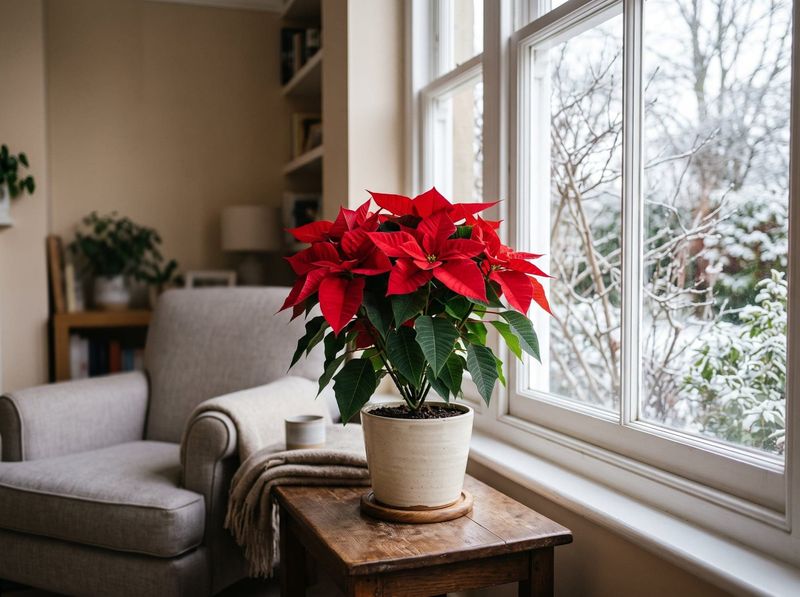
The bright red parts of a poinsettia are not petals. They are modified leaves called bracts, and the small structures in the middle are the true flowers.
Mississippi State Extension describes the display this way.
Color comes from the plant’s seasonal light cycle, not from the watering can. Long nights in the fall trigger the change, as Utah State Extension explains.
How long the display lasts also depends on the cultivar and on growing and home conditions, a point echoed by Oklahoma State Extension.
One safety note: poinsettias are not deadly. Still, keep the plant out of reach of children and pets, since chewing on it can upset a stomach and the sap can irritate skin.
A check-and-drain routine reduces avoidable stress and helps preserve the display you were given, but it cannot promise red bracts on New Year’s Day. Treat it as good housekeeping for the plant, and enjoy the color for as long as it stays.