
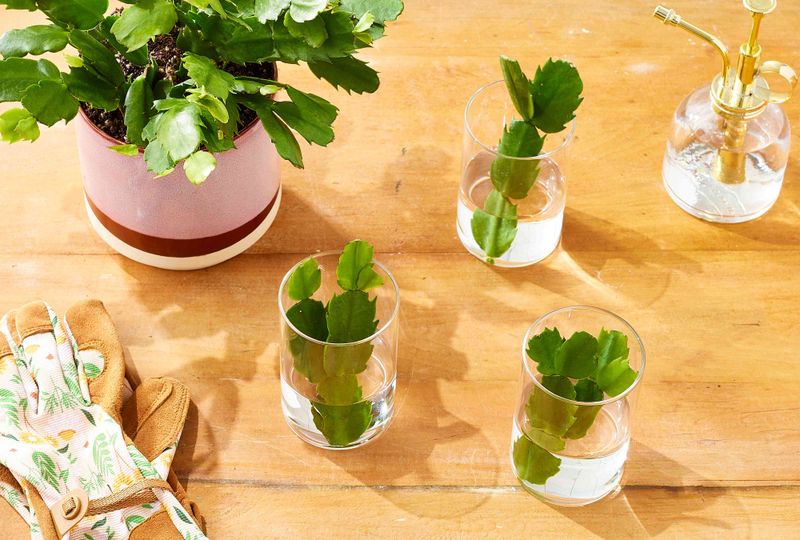
Your Christmas cactus cuttings can root in a glass of water over the holidays, and a rooted start can become a gift by spring. All it takes is a small trimming, a glass, and a little patience.
Many gardeners already have the plant and the supplies on hand, so a homemade gift is within reach. Here is how to do it, and what to expect along the way.
Water can start a holiday cactus cutting, but spring is no guarantee
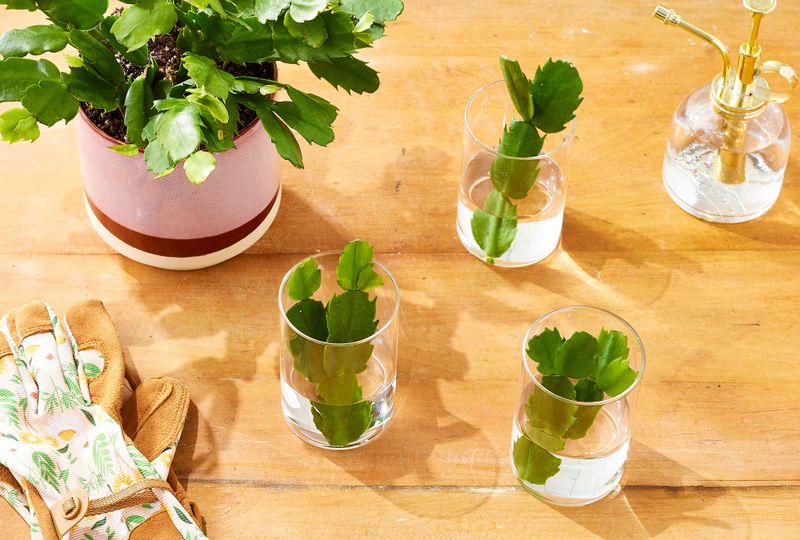
Holiday cactus cuttings can root in water. UC Master Gardeners of Sacramento County describe the method, and Penn State Extension also covers rooting a cutting in water before moving it to potting mix.
Some cuttings can root this way, but none of these sources promise that every one will, and they give no water-rooting timeline. A rooted start is the realistic goal for a spring gift.
A mature plant or spring flowers is not something to count on.
Water is one workable path, not the only one. Later sections walk through the glass method step by step, then cover a rooting-medium option, which Iowa State and the Royal Horticultural Society both describe.
Choose a healthy segment and leave set buds alone
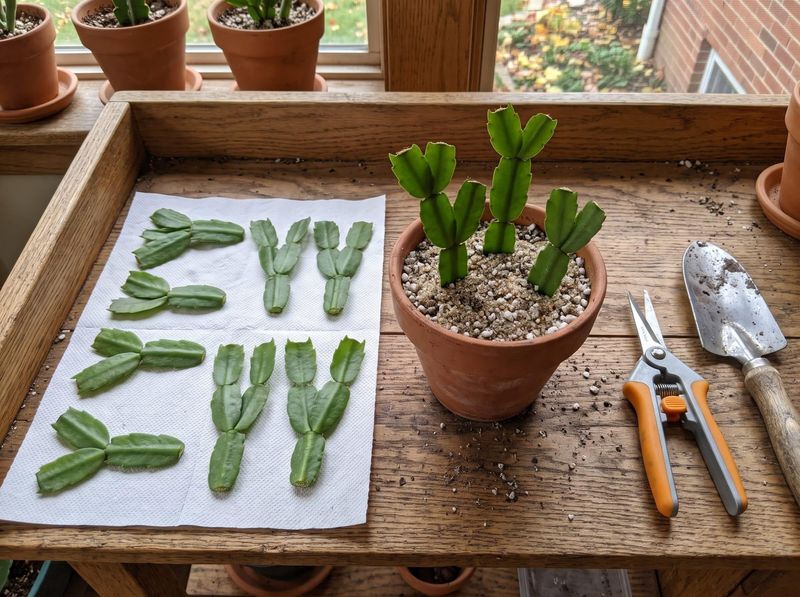
Look for a firm, plump, healthy stem. Shorten a branch to its newest three to five segments, snipping or twisting at a joint, as UC Master Gardeners suggest.
A modest cutting is plenty.
Check the plant for flower buds first. If buds have already formed, avoid substantial pruning and wait until spring or the next fall.
Taking a cutting for sharing is a small trim, which is different from routine pruning, but a budded plant should still be left mostly intact.
A quick naming note: holiday cactus is the more precise term for the whole group. Many plants sold as Christmas cactus are really Thanksgiving cactus or hybrids, and their similar looks and mixed parentage make them tricky to tell apart, as Iowa State and Clemson Extension explain.
Whichever one you have, the cutting steps stay the same.
Keep the lowest segment half-covered by water
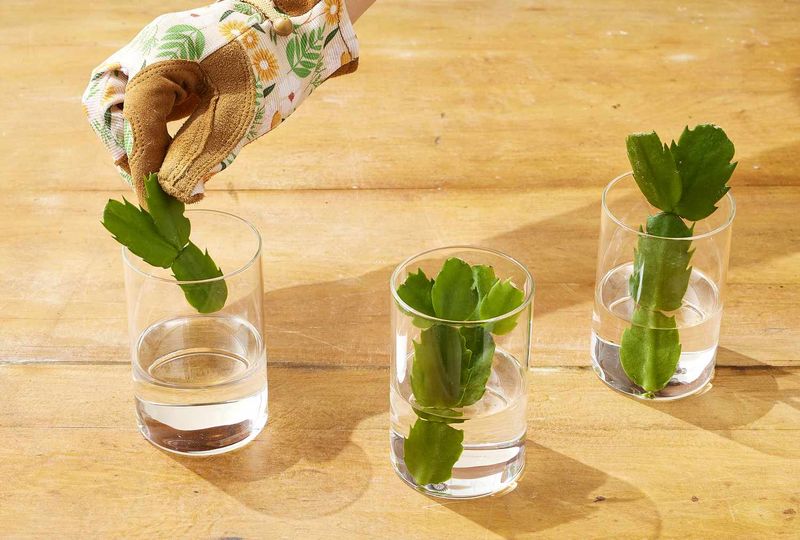
Set the cutting so its base reaches the water and the lowest segment is half covered. That is the setup UC Master Gardeners describe, with roots forming at the end resting near the bottom of the jar.
Penn State Extension also supports rooting a cutting in water and then transplanting it into well-drained mix. Together, the two sources make water a solid, documented option.
Keep it simple. The sources do not call for a special vessel or a set water-changing routine, so there is nothing extra to chase.
Callusing is also not part of the water instructions. Just place the cutting, check that the half-covered mark holds, and let it be.
Results vary, so a cutting that fails is not a sign you did something wrong. Taking two or three cuttings gives you better odds of having a start to hand out.
Bright, indirect light supports the waiting period
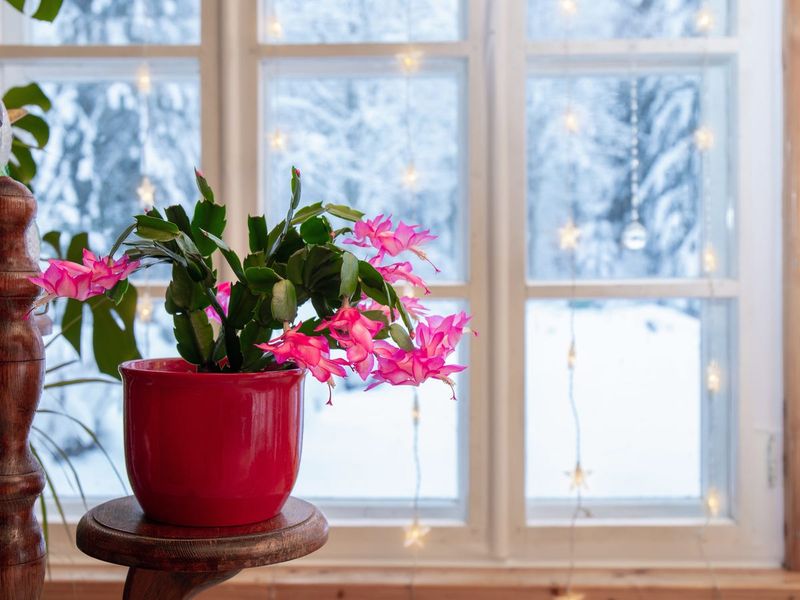
Park the glass where light is bright but not direct. Schlumbergera, the plant group that includes holiday cactus, prefers bright indirect light, and North Carolina State Extension notes that direct sun can harm it.
A spot near a window with a sheer curtain works well.
As for how long the wait will be, the sources give no dependable schedule for water rooting. Check the base now and then and resist the urge to tug.
You may see timelines elsewhere, but they belong to a different method. Iowa State says its perlite or coarse sand method usually roots in six to eight weeks.
The RHS gives three to 12 weeks for its compost and sand method. Neither number predicts how long a glass of water will take.
Move established roots into well-drained potting mix
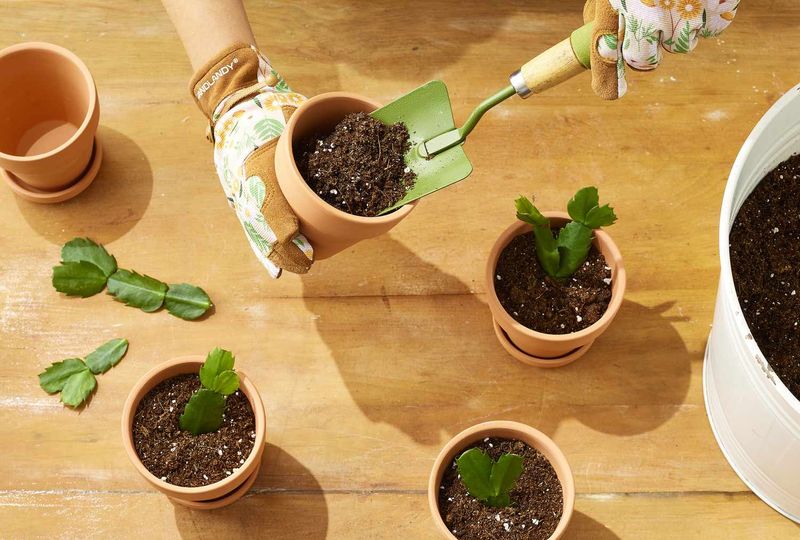
Once the cutting has established roots, it is ready to leave the glass. Penn State Extension describes rooting in water and then transplanting into well-drained mix, so drainage matters for the pot and the soil.
How much root is enough? Iowa State advises potting up when roots reach at least one inch, but that guidance is for its rooting-medium method.
It is not a tested threshold for water-rooted cuttings, so treat it as a handy rule of thumb.
Use a small pot with drainage holes and a loose mix. Settle the roots in gently, since water-grown roots can be tender.
Rooting media offer another option
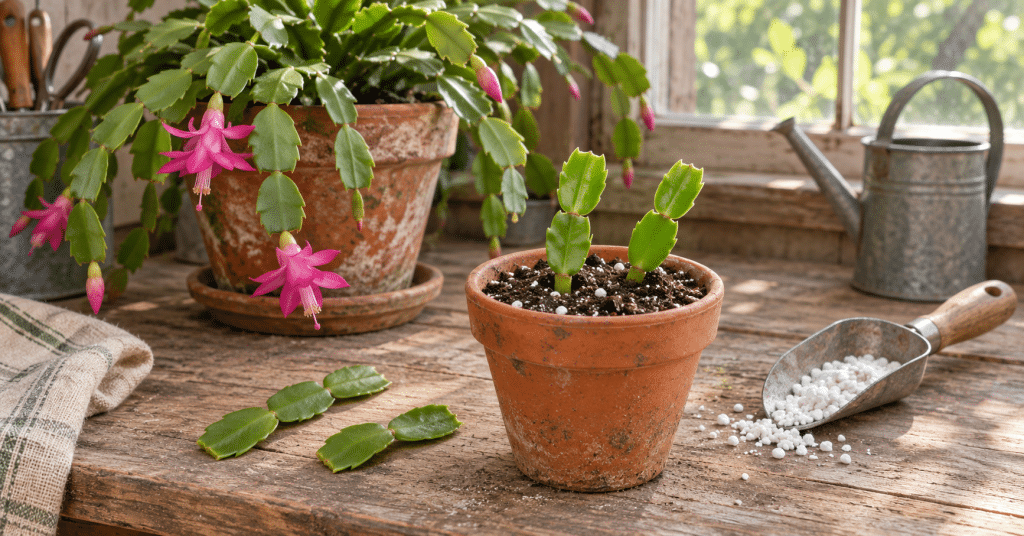
Prefer not to use a glass? Iowa State recommends cuttings of two to five stem segments.
Let the cut end callus overnight, then root it in perlite or coarse sand. Its stated rooting time is about six to eight weeks.
The Royal Horticultural Society describes a compost and sand mix, with an estimate of three to 12 weeks.
Callusing belongs to these medium methods and is not part of the water instructions. Each timeline is tied to its own method, so neither shows that water is faster or slower.
Pick whichever setup suits your space.
Give a rooted start, not a promise of spring flowers
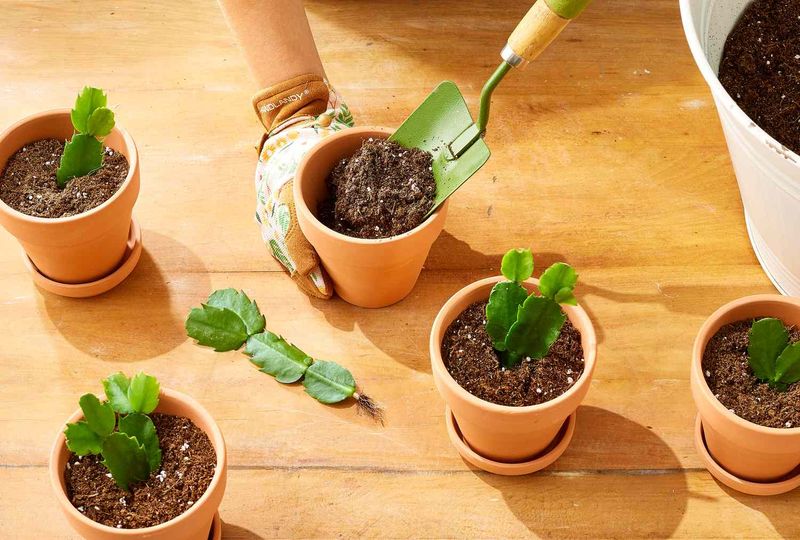
A rooted cutting in a small pot makes a thoughtful plant start to share. The sources do not say it will be mature or flowering by spring, so present it as a start.
You are using supplies you may already have, though a pot and mix can still cost a little.
The plan is simple: take a modest cutting, root it in water as UC Master Gardeners describe, and pot it once roots establish. Not every cutting will succeed, so start a few.
A small green start is a gift that keeps growing long after the holidays.