
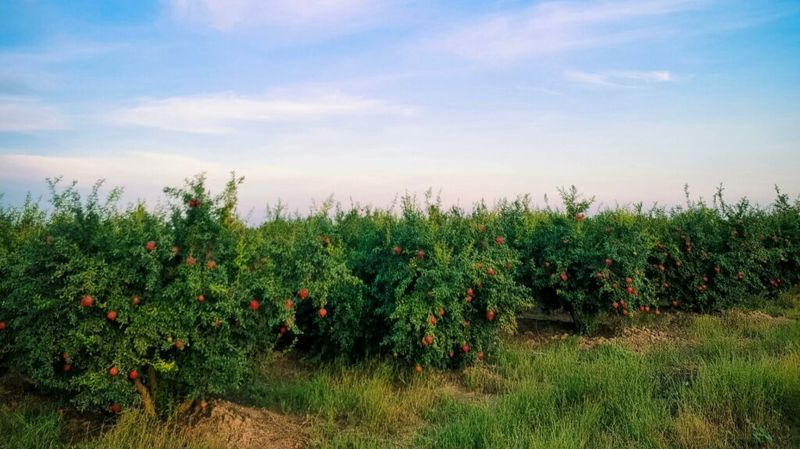
Pomegranates grew in California’s Spanish mission orchards, but the story is more detailed than a single date. The tree is also a real option for a dry-summer yard, though it is not a plant that grows fruit without water.
Knowing the history and the growing needs helps you decide if one belongs in your garden. Here is what the records show and what it means for your yard.
The mission connection is real, but 1769 is not a planting date
A popular story says pomegranates arrived in California in 1769. That year does matter, but it marks the start of California’s Franciscan mission period, not a documented pomegranate planting.
A historic orchard handbook for California lists pomegranate among the common fruits of mission orchards. The only specific orchard record it gives for 1769 is a peach orchard at Mission San Gabriel.
For pomegranates, the same handbook documents trees at Mission San Buenaventura by 1792. That is a firm date, and it is later than 1769.
It also does not say the tree first reached California there, only that it was growing there by then.
Records from outside California add some support. A National Park Service account of Tumacácori mission says historical accounts mention pomegranate trees still growing there in 1849.
The same account stresses that mission garden and orchard layouts are only partly understood.
Taken together, these sources show that pomegranates belonged to mission-era orchards. They do not give us a single arrival year for the whole state.
That is a more careful story than the popular one, and it is still a good one.
Mission orchards had a human cost
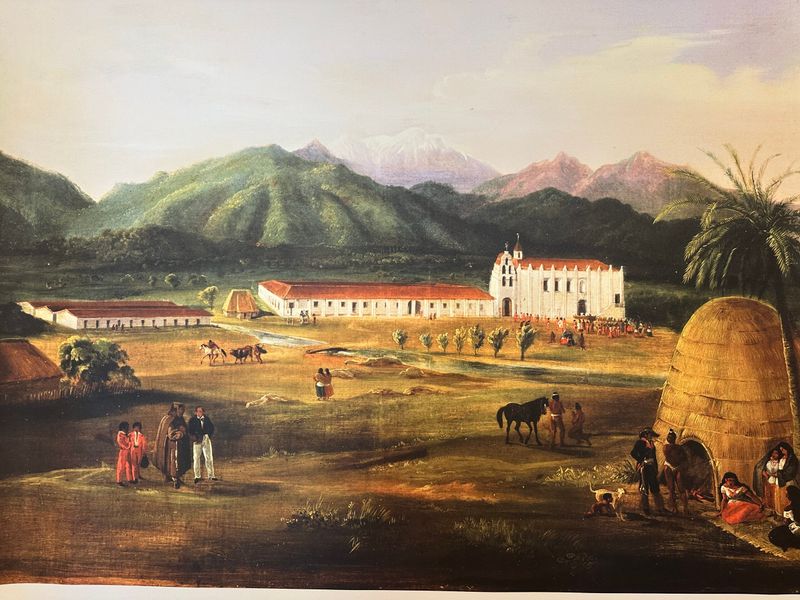
Orchards at the missions are easy to picture as peaceful places, with fruit trees lined up beside whitewashed walls. The record tells a harder story.
The California historic orchard handbook notes that Indigenous people attached to the missions tended the orchards, fields, and gardens under coercive conditions. Their labor kept these landscapes going, and they did not freely choose the work.
That context changes how we read the fruit trees. A pomegranate growing at a mission was part of a system that controlled where people lived and how they spent their days.
The trees are real history, but they are not a simple symbol of abundance.
None of this erases the agricultural story. It adds the people who did the work and the conditions they faced.
If you plant a pomegranate today and enjoy the connection to California’s past, it helps to remember who actually tended those first orchards.
Drought tolerance does not mean fruit without water
Gardeners often hear that pomegranates shrug off drought. That is only partly right.
Once established, the tree handles dry stretches well, but surviving is different from producing good fruit.
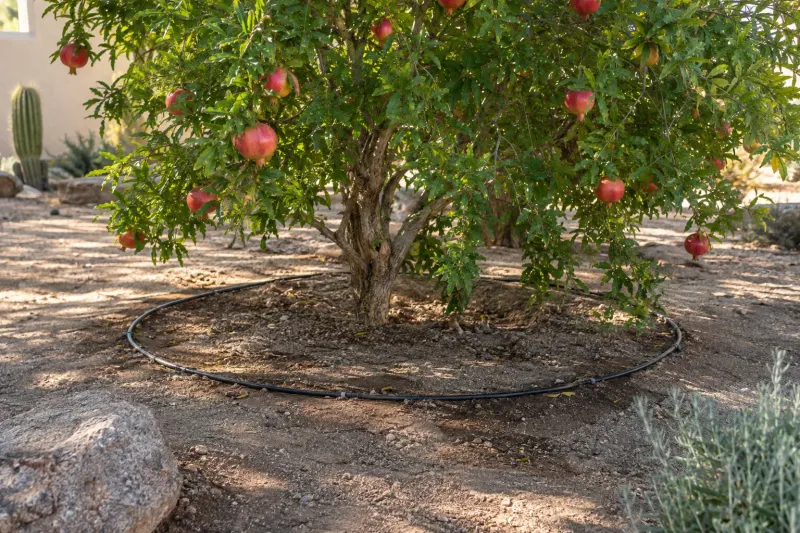
UC guidance in a UC Master Gardener fact sheet recommends deep watering after the tree is established. Young trees need water to build roots in the first place, so a new planting should not be left to fend for itself.
Commercial research gives a useful contrast. USDA Agricultural Research Service studies from California and Spain found that pomegranate irrigation needs can reach the full evapotranspiration demand, which is the water lost from soil and leaves.
Growers use substantial irrigation to maximize yield and quality.
Those orchard numbers are not a recipe for a home yard. A backyard tree is a different situation, and one or two trees do not need a farm schedule.
The takeaway is simpler: if you want a harvest, plan to water, and expect that a tree left bone dry may live but give you less and smaller fruit.
A sunny, warm site makes fruit more likely
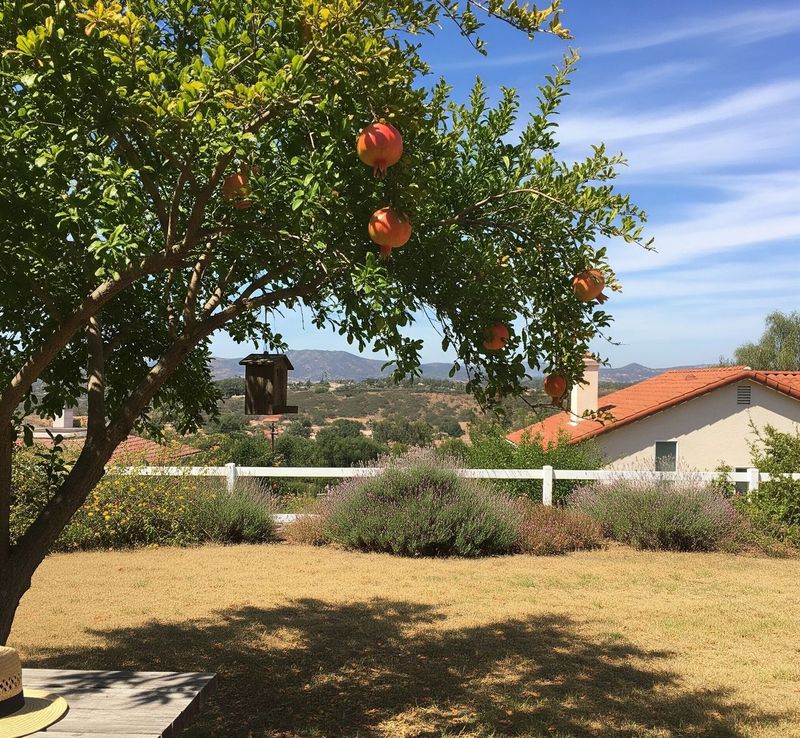
Walk your yard at midday and look for the sunniest spot. UC recommends at least six hours of direct sun a day, according to its pomegranate fact sheet.
Less sun usually means less fruit.
Climate matters too. UC Cooperative Extension notes that hot interior valleys are especially favorable for fruit maturity and quality.
In cooler coastal areas the plant can still work as an attractive landscape shrub, but mild summers may limit how much fruit ripens.
Leave room for the size it will reach. A pomegranate grows as a shrub or small tree, roughly 15 to 20 feet tall at maturity, though pruning can shape it.
Keep it away from walls, pipes, and walkways.
Soil is the next check. Pomegranates tolerate many soils, but deep loam is best.
Poor drainage or high alkalinity can reduce growth, yield, and fruit quality, so a wet corner of the yard is a poor choice.
Cold needs a careful look as well. Dormant trees tolerate temperatures down to about 10 degrees Fahrenheit, but trees are more vulnerable to frost before full dormancy and when buds swell in spring.
If your area gets late frosts, pick a spot with some shelter.
Choose a fruiting cultivar, not just a pomegranate
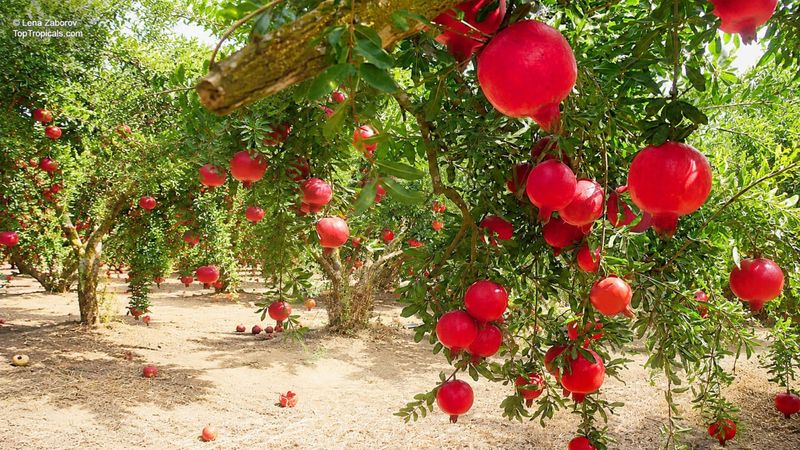
Not every pomegranate at the nursery is meant for eating. According to UC Statewide IPM, ornamental cultivars often produce mostly inedible fruit.
They can be pretty in bloom, but they will not give you much to eat.
If a harvest is your goal, check the label for a named bearing variety. The UC fact sheet lists ‘Wonderful,’ ‘Eversweet,’ ‘Granada,’ and ‘Ambrosia’ as recommended varieties.
No single one is best for every yard. Local climate, the space you have, and what you want from the fruit all play a part.
A good local nursery or your county UC Master Gardener program can tell you which varieties do well nearby.
A practical check at the nursery: ask the staff whether the plant is sold for fruit or for ornament, and write down the cultivar name before you buy. If the tag only says pomegranate, ask more questions.
Establish roots, then water deeply and steadily
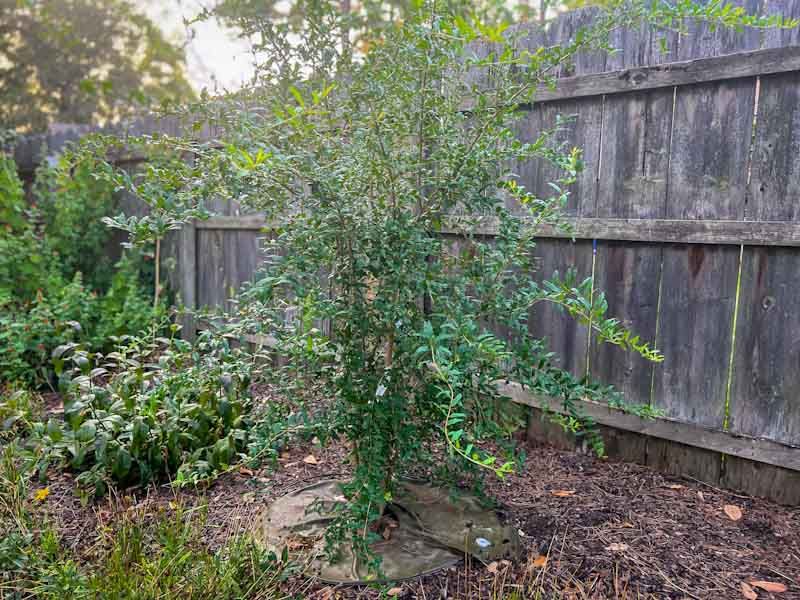
The first season is about roots. A newly planted tree needs adequate water to develop them, and the UC fact sheet advises deep watering rather than frequent shallow sprinkles.
Shallow watering keeps roots near the surface, where they dry out fastest.
For established trees, UC Master Gardener guidance suggests deep watering about every 10 to 15 days. Treat that as a starting point.
Sandy soil, a heat wave, a young tree, or local water restrictions can all change what your tree needs.
A simple diagnostic helps: push a trowel or screwdriver into the soil a few inches from the trunk. If it is dry well below the surface and the leaves look limp, it is time to water.
Once fruit starts to form, steady moisture matters. UC’s pomegranate production manual links swings between very wet and very dry soil to cracked fruit.
Rain followed by sun can also split fruit.
You cannot control the weather, but you can keep irrigation even. Mulch helps hold moisture.
No schedule guarantees a crop, since climate, cultivar, and site all affect fruit quality.
A historical tree with present-day potential
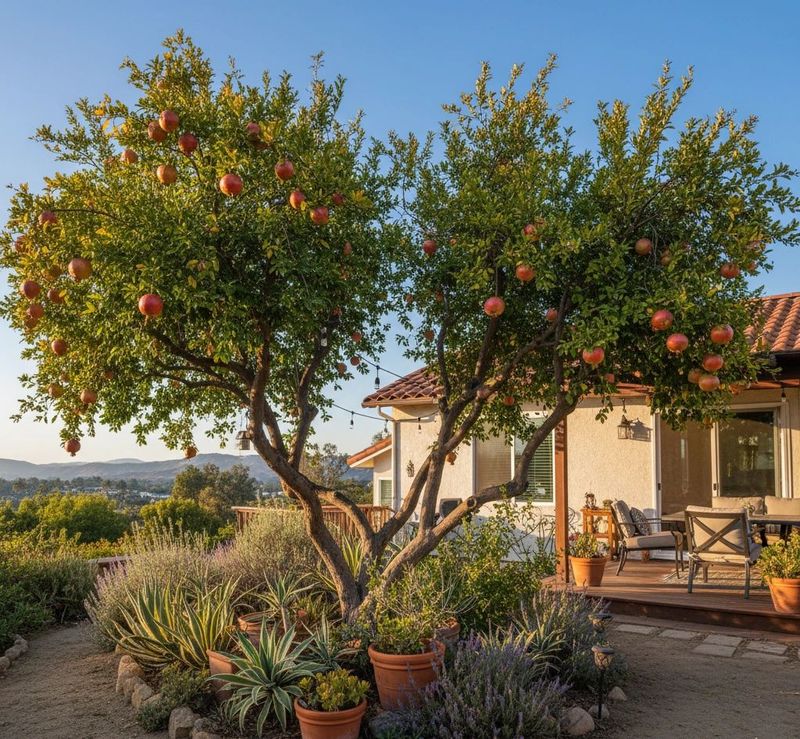
Pomegranates have a documented place in California’s mission-era orchards, and they can still grow well in many yards today. What the sources do not show is that the tree was ever forgotten, or that a statewide backyard revival is under way.
No planting or nursery sales numbers were found.
The practical question is about your own yard. UC guidance in its fact sheet and its production page points to climate, space, cultivar, and watering as the deciding factors.
Check those four before you buy. A hot, sunny yard with room, a fruiting variety, and a plan to water deeply gives you the best odds.
A pomegranate rewards the gardener who plans ahead, not the one who plants and walks away.